
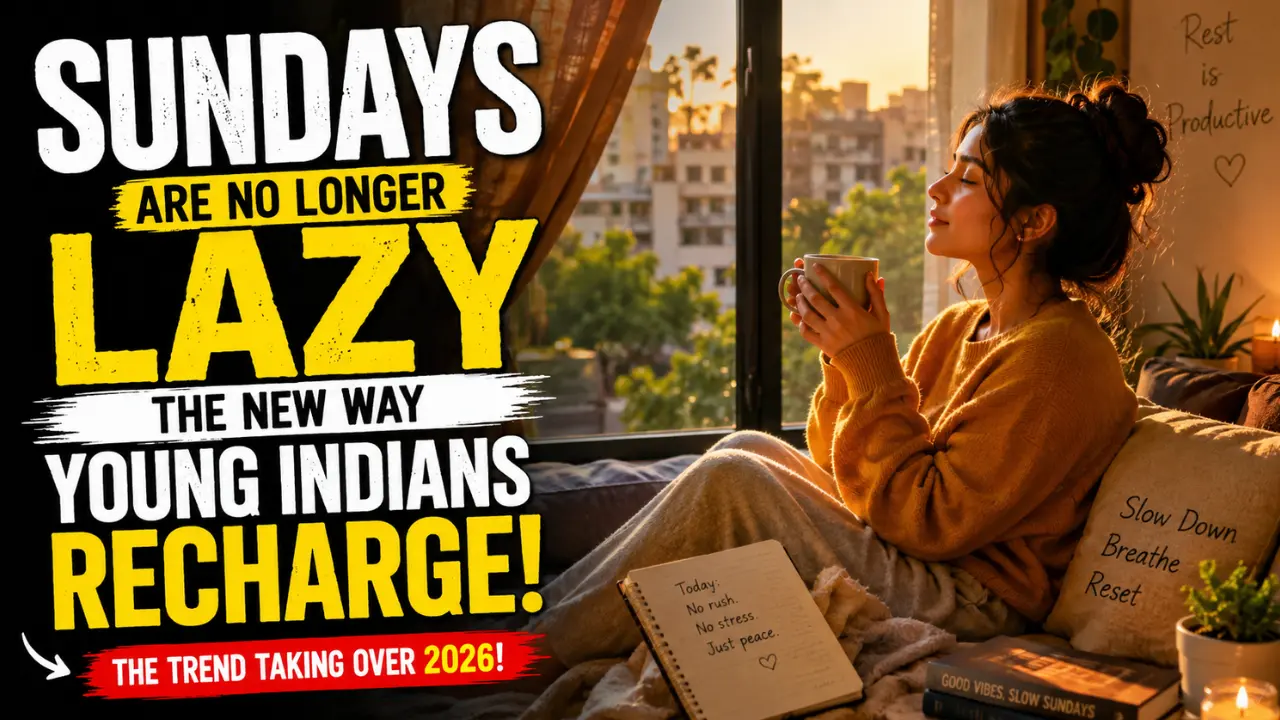

For many young Indians, Sundays no longer feel like carefree weekends. The pressure of constant notifications, unfinished office work, crowded schedules and social expectations has slowly erased the feeling of genuine rest. Even on holidays, people often find themselves scrolling endlessly, replying to messages or mentally preparing for Monday before the day has properly begun. In response to this exhaustion, a quieter lifestyle shift is emerging across Indian cities. More people are intentionally turning Sundays into slower, calmer and emotionally restorative days instead of treating them like an extension of the workweek.
The idea of a “Slow Sunday” is not built around productivity. It is about reducing noise, lowering pressure and creating space for ordinary experiences that feel comforting. Some people spend the morning making chai without rushing, while others avoid social media for a few hours, read in silence, cook family meals or simply sit outdoors after sunrise. These routines may appear simple from the outside but they reflect a deeper emotional need that many urban Indians are beginning to recognize. After years of overstimulation, people are searching for rhythms that feel more human again.
The modern Indian weekend has quietly lost its softness
Work-life boundaries have become increasingly blurred, especially for professionals in metro cities. Remote work culture, side hustles, late-night deadlines, and the expectation of constant availability have made it difficult for many people to disconnect mentally. Sundays often become “catch-up days” filled with pending tasks, laundry, emails, errands and emotional fatigue rather than actual recovery. By Sunday evening, many already feel anxious about the coming week. This familiar heaviness has made people rethink what a weekend should actually give them.
Instead of packing Sundays with brunches, shopping plans and back-to-back social visits, some are deliberately choosing fewer commitments. The shift is subtle, but it says a lot about the current emotional mood of young India. Rest is slowly being seen as something worth protecting, not something to feel guilty about. Silence is also gaining a new value in homes that are usually filled with screens, calls and constant alerts. A slower Sunday gives people permission to stop proving that they are busy.
Slow Sundays are bringing back forgotten comforts
One reason this trend feels emotionally powerful is because it reconnects people with experiences they once overlooked. A slow breakfast at home, afternoon naps during summer heat, long phone conversations with parents or evening walks without headphones are becoming deeply comforting again. These moments create emotional grounding in a lifestyle that often feels rushed and fragmented. They do not look impressive online, but they often feel more satisfying than an expensive outing. In a culture where people are constantly encouraged to do more, doing less can feel surprisingly healing.
There is also a growing appreciation for boredom. For years, constant entertainment and digital stimulation left very little room for stillness. Now, many people are rediscovering how calming it feels to spend a few hours without multitasking. Even activities like watering plants, reorganizing shelves, folding clothes slowly or listening to old music playlists have started to feel therapeutic. These ordinary rituals help the mind settle without making rest feel like another task.
Indian homes already understand this rhythm
What makes the Slow Sunday movement in India unique is that it adapts easily to different lifestyles and family structures. In some homes, Sundays revolve around elaborate family lunches, fresh bedsheets and afternoon rest. In others, they involve early market visits, homemade snacks, temple visits, or spending more time with grandparents and children. Unlike imported wellness trends that often feel expensive or exclusive, Slow Sundays feel culturally familiar. They belong as much to a small-town home as they do to a city apartment.
This familiarity matters because people are not trying to reinvent their lives completely. Instead, they are reclaiming routines that already existed before modern schedules became overwhelming. Many Indians grew up with slower Sundays, when shops opened later, families stayed home longer, and evenings felt unhurried. The memory of those days still carries emotional warmth. The current shift feels less like a new lifestyle trend and more like a return to balance.
Social media fatigue is shaping the mood more than people admit
Another reason Slow Sundays are resonating strongly is because many young Indians are tired of being constantly online. Endless scrolling, comparison culture, reels, updates and the pressure to stay visible have made digital life emotionally crowded. Sundays now feel like the safest time to step back temporarily from that cycle. Some people avoid social media until evening, while others keep their phones away during breakfast or family time. These small breaks can make the day feel longer, calmer and more personal.
This disconnection often brings unexpected relief. Without constant notifications, ordinary moments become easier to notice. Meals feel slower, conversations become more attentive, and silence stops feeling uncomfortable. Many people are realizing that rest is not only about sleeping more or staying home. Mental quietness matters just as much, especially after a week spent moving between work chats, news alerts and social feeds.
Cafés, bookstores, and local spaces are reflecting the slower mood
Across cities like Pune, Bengaluru, Kolkata, Hyderabad, and parts of Delhi NCR, weekend spaces are subtly adapting to this cultural shift. Independent cafés are seeing more people arrive alone with books, journals or laptops used for personal writing rather than office work. Bookstores, plant nurseries, breakfast spots, and quiet neighbourhood cafés are becoming part of slower Sunday routines because they offer calm without complete isolation. These places give people a gentle reason to step out without turning the day into a packed plan. The mood is social, but not rushed.
Many young adults are also choosing experiences that feel emotionally nourishing rather than overstimulating. A peaceful dosa breakfast, a bookstore visit, a short drive, or a cup of filter coffee with a friend can feel more valuable than an exhausting full-day outing. This does not mean social life is disappearing. It means people are becoming more selective about where they spend their energy. Comfort, ease and meaningful connection are beginning to matter more than constant activity.
The emotional impact is stronger than it looks
People who embrace slower Sundays often describe feeling mentally lighter during the week. The change does not come from dramatic transformation, but from creating one reliable day that feels emotionally safe. Reducing unnecessary commitments, limiting screen exposure, and allowing the body to rest properly can influence mood, sleep, and stress levels more than people initially expect. A calm Sunday can make Monday feel less abrupt. It gives the mind a clearer boundary between recovery and responsibility.
There is also a quiet change in how people define success. Earlier, a full calendar often looked impressive. Now, a peaceful weekend is starting to feel like a luxury in its own way. Young Indians are becoming less interested in performing relaxation for social media and more interested in actually feeling restored. That desire for authenticity is shaping how weekends look in 2026.
Monsoon Sundays may make the habit even more meaningful
As monsoon months approach in many parts of India, the emotional appeal of slower weekends may grow even stronger. Rainy Sunday mornings already carry a deep nostalgia in Indian homes. Chai, pakoras, old songs, fresh laundry, cloudy windows, and staying indoors naturally encourage a softer rhythm. The season gives people a reason to pause without needing to explain themselves. In many ways, Indian culture has always held space for slow living, even before the phrase became popular online.
This emotional connection is part of why the trend feels genuine rather than manufactured. People are not adopting complicated wellness systems or expensive routines. They are rediscovering the comfort of ordinary habits that had slowly disappeared beneath modern pressure. A slow Sunday does not need to be perfect to be meaningful. It simply needs to give people a little more room to breathe.
Slowness is starting to feel aspirational again
For years, busyness was treated like proof of ambition. Packed schedules, nonstop productivity, and constant availability became part of modern identity, especially in urban India. Now, many people are beginning to question whether that pace is sustainable emotionally. The growing popularity of Slow Sundays reflects a wider cultural mood where peace, energy, and mental clarity are becoming more valuable than appearing constantly occupied. It is a softer idea of success, but perhaps a more honest one.
This shift may continue long after wellness trends change. Slow Sundays are not about escaping ambition or avoiding responsibilities. They are about creating small pockets of recovery in a fast-moving world. In a year where many Indians feel emotionally stretched, the simple decision to slow down for one day each week is starting to feel quietly powerful. Sometimes, the most meaningful lifestyle change is not adding something new, but allowing one day to feel human again.
