
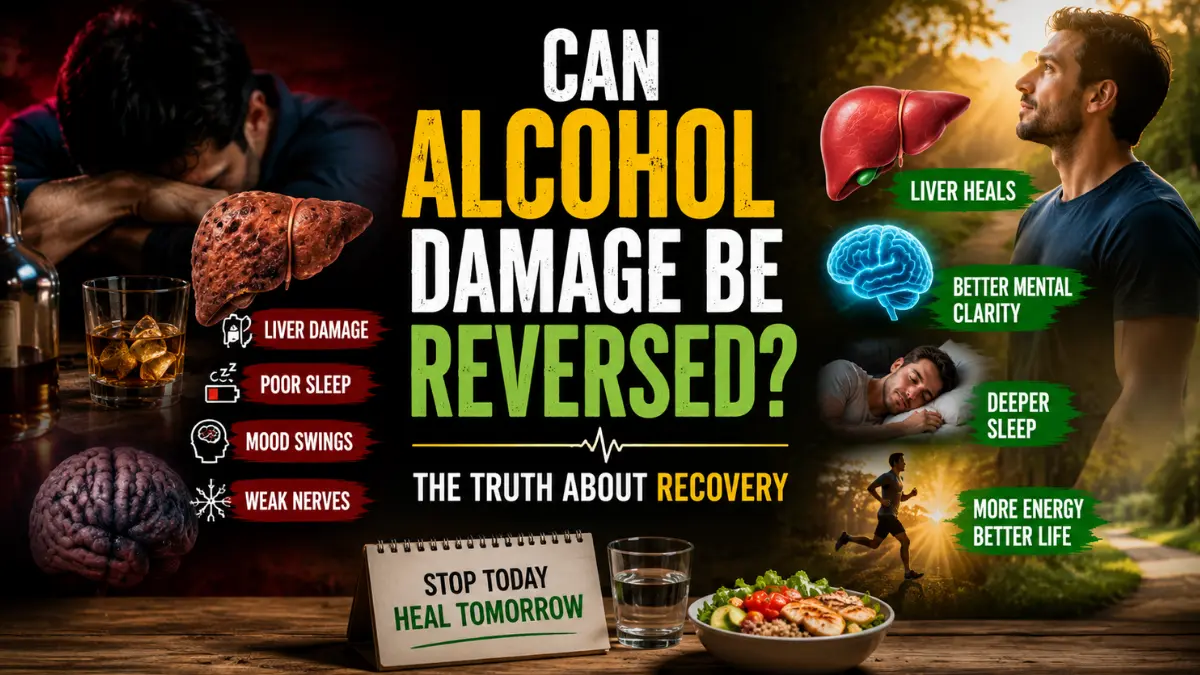

Alcohol damage can be reversed in some cases, but not always. The answer depends on what part of the body is affected, how long the drinking has continued, how much alcohol was used, and whether the person stops before permanent injury develops.
This is the most important truth: the body can recover from many effects of alcohol, especially when the damage is caught early. Sleep can improve. Digestion can settle. Blood pressure may improve. Mood can become more stable. The liver can heal from early fatty changes. The brain can regain better focus and emotional balance.
But alcohol damage is not always fully reversible. Advanced liver scarring, severe nerve damage, some brain damage, and certain long-term disease risks may not completely disappear. Stopping alcohol can still help, but it may slow the damage rather than erase everything.
So the honest answer is not “yes” or “no.” The better answer is this: some alcohol damage can improve greatly after stopping, some damage can partially improve, and some damage may become permanent if drinking continues too long.
Also Read: 13 Ways Daily Alcohol Can Affect Your Body and Mind
Alcohol Damage Is Easier to Reverse Early
The body is built with repair systems. The liver can regenerate to a certain extent. The stomach lining can calm down. Sleep rhythm can return. The brain can adjust after alcohol is removed. Inflammation can reduce. Energy can improve.
But repair needs time and consistency. The body cannot heal properly while alcohol keeps coming in every day.
This is why early action matters. A person who stops after mild or moderate alcohol-related problems has a much better chance of recovery than someone who waits until serious organ damage appears.
Many people make the mistake of waiting for pain, jaundice, vomiting blood, memory loss, or a frightening medical report before changing. Alcohol damage often begins quietly. By the time symptoms become obvious, the damage may already be more advanced.
The best time to reduce or stop alcohol is not when the body collapses. It is when the habit is still easier to control.
Liver Damage Can Improve, but Only Up to a Point
The liver is the organ most people think about first when they hear alcohol damage. That is reasonable because the liver does the main work of breaking down alcohol.
Early alcohol-related fatty liver can often improve after stopping alcohol. This stage happens when fat builds up in liver cells because the liver is under stress. Many people with fatty liver do not feel serious symptoms, which makes it easy to ignore.
If alcohol is stopped early, the liver may reduce fat, inflammation may settle, and liver function may improve. This is one of the strongest examples of alcohol damage that can be reversed.
But if drinking continues, fatty liver can progress into inflammation and scarring. Once the liver develops serious scarring, known as cirrhosis, the damage is much harder to reverse. In advanced cases, the liver structure itself has changed. At that stage, stopping alcohol is still very important, but it may not fully restore the liver to normal.
This is why liver recovery depends heavily on timing. Early damage may heal. Advanced damage may only be controlled.
Also Read: What Happens When You Drink Warm Water Daily Morning
Stopping Alcohol Still Helps Even If Damage Is Advanced
Some people think, “If the damage is already done, what is the point of stopping?” That thinking is dangerous.
Even when alcohol damage cannot be fully reversed, stopping can still protect what remains. It can reduce further injury, lower inflammation, improve treatment response, and reduce the risk of complications.
For example, a person with advanced liver disease may not get a completely normal liver again, but stopping alcohol can still help prevent faster decline. A person with high blood pressure may still need medicine, but stopping alcohol can reduce extra pressure on the heart. A person with mood problems may still need support, but removing alcohol can make emotional recovery easier.
Stopping alcohol is not only about reversing the past. It is also about protecting the future.
Brain and Mood Can Recover
Alcohol affects the brain’s chemistry, sleep regulation, memory, emotional control, and decision-making. When drinking becomes regular, the brain slowly adjusts to alcohol being present.
This is why some people feel anxious, irritated, low, restless, or unable to sleep when they stop. The brain is trying to rebalance without alcohol.
The good news is that many brain and mood changes can improve after alcohol is reduced or stopped. Focus may improve. Sleep may become deeper. Emotional reactions may become more stable. Motivation may return. Decision-making may become clearer.
But this does not always happen overnight. If alcohol has been used for years as a way to sleep, relax, escape stress, or avoid emotional pain, the mind may need time to rebuild natural coping ability.
Some heavy drinkers may also have memory problems, poor concentration, or nerve-related symptoms. Some of these can improve, but severe long-term damage may not fully reverse.
The brain can heal, but it needs alcohol-free time, nutrition, sleep, support, and patience.
Also Read: What Happens If You Drink Lemon Water Every Morning for 30 Days
Sleep Usually Improves After Alcohol Is Removed
Alcohol can make a person sleepy, but it does not create healthy sleep. It can disturb deep rest, increase night waking, worsen snoring, cause dehydration, and make mornings feel heavy.
When a person stops drinking, sleep may first become uncomfortable. This is especially true if alcohol was used every night as a sleep aid. The person may feel restless for a few days or longer because the body is learning to sleep naturally again.
After the adjustment period, sleep quality often improves. The person may wake up clearer, feel less tired in the morning, and have better energy through the day.
This is one of the most noticeable recoveries after stopping daily alcohol. The body begins to rest instead of spending the night processing alcohol.
Digestive Problems May Improve
Alcohol can irritate the stomach, increase acidity, disturb appetite, and worsen reflux. It can also affect the gut and make digestion feel unstable.
When alcohol is stopped, many people notice less acidity, less nausea, better appetite, reduced bloating, and more predictable digestion. This is especially true when alcohol was taken with oily, spicy, salty, or late-night food.
However, not every digestive problem is caused by alcohol. If someone has ulcers, severe gastritis, liver disease, pancreatitis, or long-term digestive symptoms, stopping alcohol may help, but medical care may still be needed.
Alcohol removal gives the digestive system a chance to calm down. But serious digestive damage needs proper diagnosis and treatment.
Also Read: Daily Jeera Water Benefits for Gut and Metabolism
Blood Pressure and Heart Strain Can Improve
Alcohol can increase blood pressure and put strain on the heart, especially when drinking is frequent or heavy. It can also disturb sleep, increase weight, reduce exercise consistency, and worsen stress control. These indirect effects also matter for heart health.
After stopping or reducing alcohol, some people see improvement in blood pressure, heart rhythm stability, sleep quality, weight control, and exercise recovery.
But heart recovery depends on the level of damage. Mild alcohol-related strain may improve. Long-term heart muscle weakness, serious rhythm problems, or existing heart disease may need medical treatment even after stopping alcohol.
The heart benefits from alcohol reduction, but recovery should not be guessed. If symptoms like chest pain, breathlessness, fainting, fast heartbeat, or swelling appear, medical attention is necessary.
Weight and Face Puffiness Can Improve
Alcohol can contribute to weight gain because it adds extra calories and often leads to poor food choices. It can also make the face look puffy, skin look dull, and mornings feel heavy.
When alcohol is stopped, calorie intake may reduce. Late-night snacking may decrease. Hydration may improve. Sleep becomes better. The face may look less swollen. Skin may look fresher. Workout recovery may improve.
These changes are not magic. They happen because the body is no longer fighting alcohol every day.
However, weight loss is not automatic. If a person replaces alcohol with sugary drinks, overeating, or poor sleep, results may be slower. Alcohol removal creates a better foundation, but diet and movement still matter.
Nerve Damage May Improve Slowly or Partially
Long-term heavy alcohol use can affect nerves. Some people may feel tingling, burning, numbness, weakness, poor balance, or strange sensations in the hands and feet.
This kind of damage may improve after stopping alcohol, especially if it is caught early and the body gets proper nutrition. But nerve healing is usually slow. It can take months, and in some cases symptoms may not fully disappear.
This is one area where people should not delay. Nerve symptoms are warning signs. If someone keeps drinking despite numbness or burning sensations, the damage may become harder to reverse.
Good nutrition, medical care, and alcohol avoidance are important for nerve recovery.
Pancreas Damage May Not Fully Reverse
Alcohol can irritate the pancreas and contribute to pancreatitis. Pancreatitis can be painful and serious. In some cases, repeated inflammation can damage the pancreas long-term.
If the pancreas is repeatedly injured, the body may have problems with digestion, blood sugar control, and chronic pain. Some pancreatic damage may not fully reverse.
This is why severe upper abdominal pain, vomiting, fever, or pain going toward the back should never be ignored in someone who drinks heavily.
Stopping alcohol is important, but pancreas-related symptoms need medical attention.
Cancer Risk May Reduce
Alcohol is linked with increased risk of several cancers. When a person stops drinking, future risk may reduce over time, especially compared with continuing the habit.
But stopping alcohol does not instantly erase all past exposure. The body may repair some damage, but long-term cancer risk depends on many factors, including age, drinking history, smoking, diet, genetics, body weight, and overall health.
This is why alcohol should not be treated casually just because someone feels fine today. Some risks develop silently over many years.
Stopping alcohol is still a strong protective step. It reduces ongoing exposure and gives the body a better chance to repair and defend itself.
Mental Dependence Can Be Reversed With Support
Alcohol damage is not only physical. It can also become emotional and behavioral.
A person may use alcohol to sleep, relax, feel confident, escape sadness, reduce anxiety, or avoid overthinking. Over time, the mind may start believing alcohol is necessary.
This kind of dependence can be reversed, but it usually needs honesty and replacement habits. The person has to learn new ways to handle stress, loneliness, sleep, anger, and boredom.
Helpful replacements can include exercise, structured sleep, therapy, prayer or meditation, support groups, family accountability, hobbies, and better daily routine.
The goal is not only to remove alcohol. The goal is to rebuild a life where alcohol is no longer needed to feel normal.
How Long Does Recovery Take?
Recovery time depends on the person and the damage.
Some changes may improve quickly, such as better hydration, clearer mornings, and reduced bloating. Sleep and mood may take longer because the nervous system needs time to adjust. Liver fat may improve if damage is early. Weight, blood pressure, and energy may improve over weeks or months. Nerve and brain recovery can take longer. Advanced organ damage may need lifelong care.
The mistake is expecting the body to repair years of drinking in a few days. Healing is not only about stopping alcohol once. It is about giving the body enough alcohol-free time to rebuild.
Consistency matters more than one perfect week.
What Helps Alcohol Damage Reverse Faster?
The body heals better when alcohol is not replaced with another harmful habit. Stopping alcohol is the main step, but recovery becomes stronger when the whole routine improves.
Helpful recovery habits include:
- drinking enough water
- eating protein-rich meals
- improving sleep timing
- avoiding late-night heavy food
- walking or exercising regularly
- checking liver and blood reports if drinking was heavy
- reducing sugar and fried snacks
- getting medical help for withdrawal symptoms
- treating anxiety or depression instead of drinking through it
- building support instead of hiding the problem
The body does not recover only because alcohol is removed. It recovers because the daily environment becomes healthier.
When Stopping Suddenly Can Be Dangerous
If someone drinks heavily every day, stopping suddenly can sometimes be risky. Withdrawal symptoms can include shaking, sweating, anxiety, vomiting, fast heartbeat, confusion, sleep problems, and in serious cases seizures.
This is why heavy daily drinkers should not treat quitting as a simple willpower challenge. Medical guidance may be necessary, especially if the person has been drinking large amounts for a long time.
People who drink lightly or occasionally may be able to stop without serious issues. But people who feel physically unwell without alcohol should not ignore it.
Stopping alcohol is good. Stopping safely is better.
Signs You Should Not Wait Any Longer
Alcohol damage becomes more concerning when the body starts giving clear warning signs.
Do not ignore:
- yellow eyes or yellow skin
- swelling in the belly or legs
- vomiting blood
- black stools
- severe stomach pain
- frequent shaking without alcohol
- confusion or memory gaps
- numbness or burning in hands and feet
- chest pain or irregular heartbeat
- sudden weight loss
- repeated vomiting
- strong dependence on alcohol for sleep or mood
These signs need serious attention. They are not normal side effects of a casual habit.

1 thought on “16 Signs Your Body Is Recovering After Alcohol Damage”