
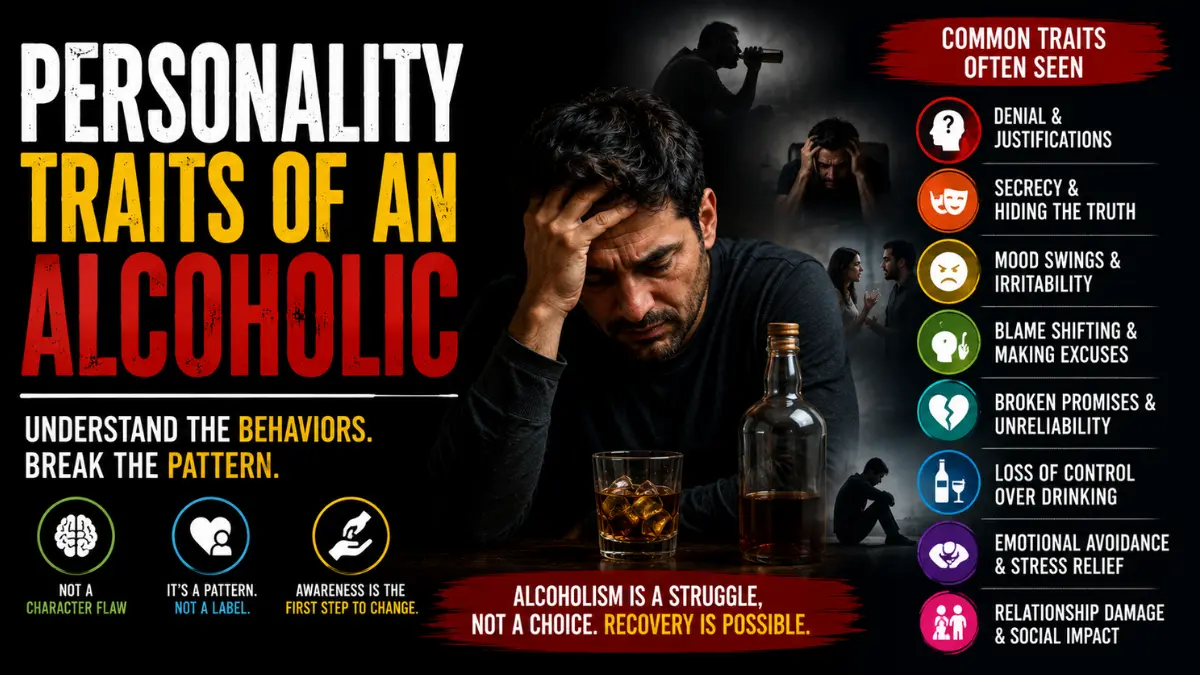

The phrase “personality traits of an alcoholic” is commonly searched, but it needs to be understood carefully. Alcoholism is not one personality type. A person does not become alcohol-dependent simply because they are weak, careless, selfish, or irresponsible. Alcohol dependence is a serious pattern where drinking becomes difficult to control even when it starts harming health, relationships, money, work, and daily life.
Still, people struggling with alcohol often show certain behavior patterns. These are not always their real personality. Many of them develop because alcohol changes mood, judgment, habits, emotional control, and decision-making over time.
So the better way to understand this topic is not “What kind of person becomes an alcoholic?” The better question is: “What traits and behaviors often appear when alcohol starts controlling a person’s life?”
Alcoholism Does Not Look the Same in Every Person
Not every alcoholic looks drunk all the time. Some people drink secretly. Some drink only at night. Some work every day and still drink heavily. Some are quiet. Some are aggressive. Some are emotional. Some appear successful outside but are slowly losing control inside.
This is why personality alone cannot prove someone is alcoholic. A person may have many of these traits and still not have alcohol dependence. Another person may hide the problem so well that the signs are visible only at home.
Alcohol dependence is usually recognized by patterns: craving, loss of control, repeated drinking despite harm, hiding alcohol use, needing more than before, and feeling uncomfortable without drinking.
The traits below should be understood as warning patterns, not as a label to attack someone.
Also Read: 15 Foods That May Help Reduce Alcohol Cravings
1. Denial
Denial is one of the most common traits seen in people with alcohol dependence. The person may insist they do not have a problem, even when the problem is already affecting their body, family, work, money, or behavior.
They may say:
- “I can stop anytime.”
- “Everyone drinks.”
- “I only drink to relax.”
- “I am not like those people.”
- “You are overreacting.”
- “I work and earn, so I am fine.”
Denial protects the habit. If the person accepts that alcohol is harming them, they would have to face change. That can feel uncomfortable, frightening, or shameful. So the mind creates excuses to keep the drinking pattern alive.
Denial does not always mean the person is intentionally lying. Sometimes they truly cannot see how much alcohol has started controlling them.
2. Defensiveness
A person with alcohol dependence may become defensive when someone questions their drinking. Even a gentle concern can feel like an attack.
They may become angry, sarcastic, silent, dismissive, or emotionally distant. The conversation may quickly turn into blame. Instead of discussing the drinking, they may point out other people’s mistakes.
This happens because alcohol becomes tied to the person’s comfort, identity, and coping system. When someone questions alcohol, it feels like they are questioning the person’s freedom or character.
Defensiveness is often a sign that the topic is sensitive because the person already knows something is wrong but is not ready to face it.
Also Read: 16 Signs Your Body Is Recovering After Alcohol Damage
3. Secretive Behavior
Alcohol dependence often leads to secrecy. The person may hide bottles, lie about how much they drank, drink before coming home, refill alcohol secretly, or underreport the amount.
They may also hide money spent on alcohol or create excuses for where they were.
Secretive drinking is a serious warning sign because it shows the person knows the behavior would concern others. Instead of reducing the habit, they protect it from being seen.
This secrecy can damage trust in relationships. Family members may begin checking, doubting, questioning, or watching the person closely. Over time, the home becomes tense because alcohol is no longer only a private habit. It becomes a hidden issue affecting everyone.
4. Mood Swings
Alcohol can affect emotional control. A person may become loving one moment, irritated the next, sad later, and angry after that. Their mood may depend on whether they have alcohol, are drinking, or are coming down from it.
Mood swings may show as:
- sudden anger
- emotional crying
- overreaction to small issues
- impatience
- guilt after drinking
- anxiety when alcohol is not available
- low mood the next day
- unusual confidence while drinking
These mood changes can confuse the people around them. Family members may feel they are dealing with two versions of the same person: the sober version and the alcohol-influenced version.
The painful part is that the person may not fully remember or accept how their behaviour felt to others.
Also Read: 13 Ways Daily Alcohol Can Affect Your Body and Mind
5. Impulsiveness
Alcohol lowers judgment and self-control. Over time, people who drink heavily may become more impulsive, even when they are not actively drunk.
Impulsiveness can appear in spending, arguments, risky driving, emotional decisions, late-night calls, unhealthy relationships, gambling, overeating, or saying things without thinking.
The person may later regret their actions, but the pattern repeats because alcohol weakens the pause between feeling and action.
This is why alcohol dependence can create repeated damage. The issue is not only drinking itself. It is what drinking makes easier to do.
6. Blame-Shifting
A person struggling with alcohol may blame others for their drinking.
They may say they drink because of stress, family pressure, a bad spouse, work tension, loneliness, financial problems, or disrespect from others.
Those problems may be real, but blame-shifting becomes harmful when it removes responsibility. Stress can explain why someone wants relief, but it does not make alcohol the only option.
Blame-shifting keeps the person from asking the harder question: “Why has alcohol become my main way of handling life?”
Until that question is faced, the drinking pattern usually continues.
Also Read: What Happens When You Drink Warm Water Daily Morning
7. Emotional Avoidance
Many people use alcohol to avoid feelings they do not want to face. They may drink to escape sadness, anger, shame, boredom, loneliness, guilt, grief, anxiety, or past pain.
From outside, it may look like they love alcohol. But inside, they may be using alcohol as emotional medicine.
This creates a serious problem because the person never truly processes the emotion. Alcohol delays the feeling, but it does not heal it. When the effect fades, the same feelings return, often with more guilt and physical tiredness.
Emotional avoidance can make a person less able to talk honestly. Instead of saying, “I am hurt,” they drink. Instead of saying, “I am stressed,” they drink. Instead of saying, “I need help,” they drink.
8. Unreliability
Alcohol dependence can slowly make a person unreliable. They may miss promises, arrive late, forget conversations, cancel plans, fail to complete responsibilities, or make commitments they do not follow.
This does not always happen because they do not care. Sometimes alcohol has weakened their routine, sleep, memory, and discipline.
But for family members, the result is still painful. People stop trusting their words. They may think, “Will this person really come?” “Will they stay sober?” “Will they remember?” “Will they create a scene?”
Trust is damaged not by one mistake, but by repeated broken reliability.
9. Manipulation
Some people with alcohol dependence become manipulative when they feel their drinking is being controlled or questioned. They may use guilt, anger, silence, emotional pressure, false promises, or dramatic apologies to avoid real change.
They may say:
- “You do not understand me.”
- “You are the reason I drink.”
- “I promise this is the last time.”
- “I only drank because you upset me.”
- “If you cared about me, you would leave me alone.”
Manipulation often appears when the person feels cornered. The goal is usually not to solve the problem. The goal is to escape accountability in that moment.
This is difficult for loved ones because they may feel guilty for setting boundaries. But boundaries are often necessary when alcohol has started controlling the relationship.
Also Read: What Happens If You Drink Lemon Water Every Morning for 30 Days
10. Irritability When Not Drinking
Some people become restless, irritated, angry, anxious, or uncomfortable when they cannot drink. This is a warning sign because alcohol is no longer just enjoyment. It has become something the body and mind expect.
They may become impatient before drinking time. They may feel disturbed if alcohol is not available. They may avoid places where they cannot drink. They may become angry if someone blocks the routine.
This irritability can make family members feel they must keep the person calm. Over time, the whole household may begin adjusting around alcohol.
That is when alcohol has moved from being a personal habit to becoming a family burden.
11. Social Masking
Some people with alcohol dependence become skilled at hiding the problem from the outside world. They may appear polite, successful, cheerful, and responsible in public, while their family sees a different reality at home.
This is called social masking in everyday terms. The person knows how to perform normal behavior when necessary, but the private pattern remains unhealthy.
This can make loved ones feel isolated because outsiders may not believe them. People may say, “But he seems fine,” or “She is so nice,” while the home environment tells another story.
Alcohol problems are not always visible in public. Sometimes the deepest damage happens behind closed doors.
12. Shame and Guilt
Not every alcoholic is careless. Many feel deep guilt. They may hate what alcohol is doing to them. They may apologize repeatedly. They may feel ashamed after arguments, money loss, health scares, or broken promises.
But shame alone does not create recovery. In many cases, shame becomes another trigger for drinking. The person feels bad, drinks to escape feeling bad, then feels worse again.
This cycle can continue for years.
Healthy recovery requires responsibility without constant self-hatred. The person needs to accept the problem clearly, but also believe change is possible.
13. Avoiding Honest Conversations
A person with alcohol dependence may avoid serious conversations about their drinking. They may change the topic, make jokes, get angry, leave the room, or promise change without discussing details.
They may avoid questions like:
- How much are you drinking?
- Why are you hiding it?
- Why do you keep breaking promises?
- Do you need help?
- What happens when you try to stop?
Avoidance protects the drinking pattern from being examined. But without honest conversation, the problem stays vague. And vague problems are easier to repeat.
Real change usually begins when the person stops hiding behind excuses and starts naming the truth clearly.
14. Dependence on Alcohol for Confidence
Some people use alcohol to feel socially confident. They may feel shy, nervous, awkward, or emotionally closed without it. After drinking, they may become more talkative, bold, romantic, funny, or expressive.
At first, this may feel helpful. But over time, the person may lose confidence in their sober self.
They may start believing they need alcohol to enjoy parties, talk freely, handle intimacy, express emotions, or face people.
This is a quiet form of dependence. Alcohol becomes not only a drink, but a borrowed personality.
15. Poor Boundaries
Alcohol dependence can weaken boundaries. The person may ignore limits around money, time, behavior, relationships, driving, health, or family responsibilities.
They may drink when they said they would not. They may spend money needed for the home. They may stay out too late. They may bring alcohol into situations where it creates conflict.
Poor boundaries are not only personal. They affect everyone around the person.
Loved ones also need boundaries. They should not cover up every mistake, lie for the person, give unlimited money, or accept repeated harmful behaviour without consequence.
Support is good. Enabling is different.
Also Read: Daily Jeera Water Benefits for Gut and Metabolism
16. Repeated Promises Without a Plan
One of the clearest behavior patterns is repeated promises to stop without any real plan.
The person may say:
- “From tomorrow, I will stop.”
- “This was the last time.”
- “I will reduce slowly.”
- “I will not drink this week.”
- “I only made a mistake.”
Promises can sound sincere in the moment. But without a plan, support, accountability, and changed routine, the same pattern often returns.
Real change is not proved by emotional promises. It is proved by repeated action: removing alcohol access, getting help, changing friends or routines, treating stress, improving sleep, and being honest about relapse risk.
Are These Traits Permanent?
No, these traits are not always permanent. Many of them improve when a person stops drinking and begins recovery. Mood can become calmer. Honesty can return. Sleep can improve. Emotional control can become stronger. Relationships can begin healing. Self-respect can rebuild.
But change requires more than saying sorry. The person must accept responsibility, remove excuses, get support if needed, and rebuild trust through consistent behavior.
Alcohol may explain some behavior, but it does not excuse ongoing harm. Recovery means the person takes responsibility for both the drinking and the damage caused by it.
How to Talk to Someone Showing These Traits
If someone you love shows these patterns, avoid attacking their character. Calling them weak, selfish, or hopeless may make them more defensive.
A better approach is to speak about specific behaviour.
- Instead of saying, “You are a bad person,” say, “When you drink and shout at night, the family feels unsafe.”
- Instead of saying, “You are always lying,” say, “When you hide how much you drink, it becomes hard to trust you.”
- Instead of saying, “You never change,” say, “Promises are not enough now. We need a real plan.”
Be calm, direct, and specific. The goal is not to win an argument. The goal is to make the problem impossible to ignore.
When the Situation Needs Serious Help
Some situations should not be treated as normal drinking problems. Help is important if the person drinks daily, becomes aggressive, drives after drinking, hides alcohol, cannot stop after promising, shakes or feels sick without alcohol, spends essential money on alcohol, or becomes emotionally or physically unsafe.
If there is violence, threats, or danger at home, safety comes first. Family members should not stay silent just to protect the person’s image.
Alcohol dependence can be treated, but it must be taken seriously.

1 thought on “16 Signs and Personality Traits of an Alcoholic”