
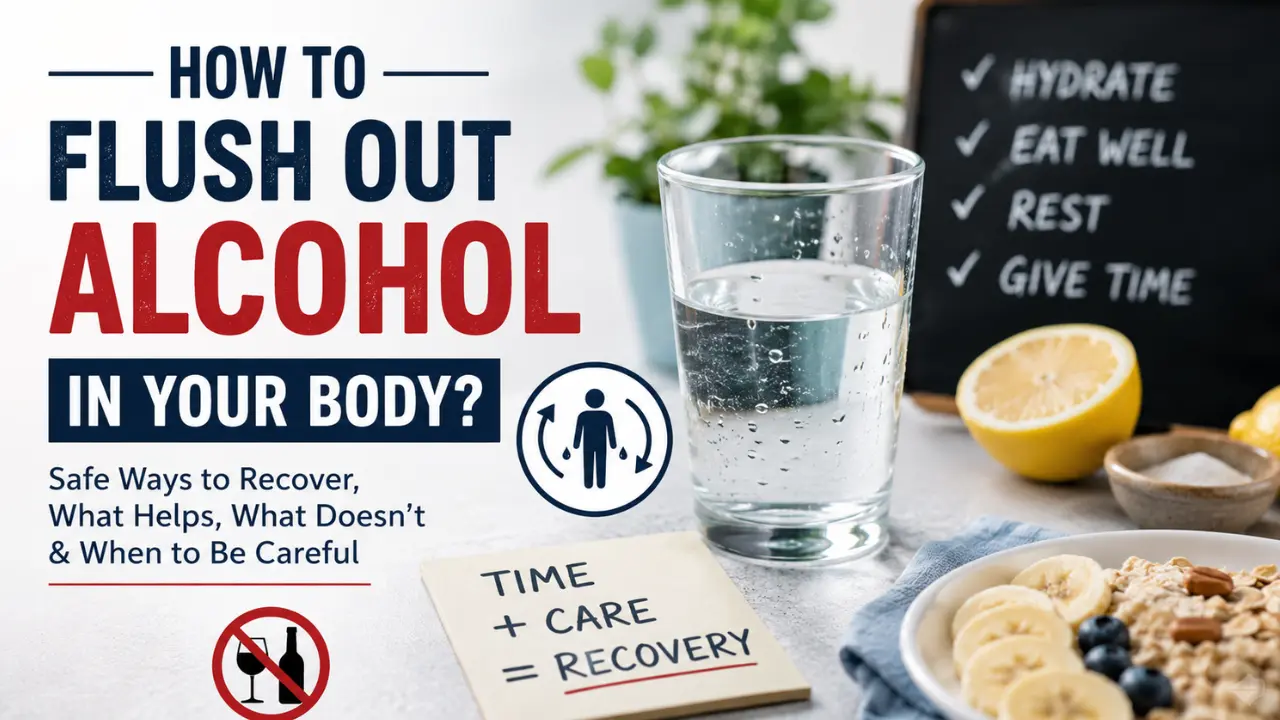

Many people search for how to flush out alcohol in your body after drinking too much, waking up with a hangover, or feeling anxious about how long alcohol stays in the system. The honest answer is simple: alcohol cannot be instantly flushed out with lemon water, coffee, sweating, cold showers or any quick detox trick.
The body removes alcohol mainly by metabolizing it through the liver. Water, food, rest and electrolytes can support recovery, but time is the only real way alcohol leaves your system. Alcohol metabolism varies from person to person, depending on factors such as the amount consumed, nutrition, genetics, body size and overall health.
Can You Really Flush Alcohol Out of Your Body Fast?
You can help your body recover after drinking, but you cannot force alcohol to leave your bloodstream faster than your body can process it. This is why common “sober up fast” tricks often create false confidence.
Coffee may make someone feel more awake, but it does not remove alcohol from the blood. A cold shower may shock the body, but it does not make the liver work faster. Sweating through exercise may make dehydration worse, especially after alcohol has already affected fluid balance. NIAAA warns that cold showers, hot coffee, and walking do not reverse alcohol overdose effects and can make things worse in serious cases.
The safest way to think about it is this: you are not trying to “flush” alcohol like dirt from a pipe. You are trying to support your body while the liver gradually breaks alcohol down.
Also Read: 16 Signs and Personality Traits of an Alcoholic
What Happens to Alcohol After You Drink It?
After drinking, alcohol enters the bloodstream and travels through the body. This is why it affects speech, balance, judgment, reaction time, emotions, sleep, and coordination. The liver then begins breaking alcohol down into other substances that can eventually be removed from the body.
This process is not instant. It depends on how much alcohol was consumed, how quickly it was consumed, whether food was eaten, and how the person’s body metabolizes alcohol. NIAAA explains that alcohol metabolism is influenced by both genetic and environmental factors, including the amount of alcohol consumed and overall nutrition.
This is also why two people can drink the same amount but feel completely different. One person may feel only slightly affected, while another may feel dizzy, nauseous, sleepy, or sick.
The Best Way to Help Your Body Recover After Alcohol
The goal after drinking is not to force alcohol out quickly. The real goal is to reduce dehydration, support digestion, rest the body, and avoid making symptoms worse.
Drink Water Slowly
Alcohol can contribute to dehydration, which is one reason people often wake up with headache, dry mouth, tiredness, and weakness after drinking. Drinking water can help with dehydration symptoms, but it does not instantly remove alcohol from the bloodstream.
Sip water slowly instead of forcing a large amount at once. Drinking too much water too quickly can make nausea worse. A steady intake is easier on the stomach.
A good approach is to drink one glass of water, rest for a while, and then drink more if the body can tolerate it.
Use Electrolytes When You Feel Weak
After alcohol, the body may feel drained, especially if there has been vomiting, sweating, poor sleep, or not enough food. Electrolytes can help replace fluids and salts lost through dehydration.
ORS, coconut water, clear soup, lemon water with a pinch of salt, or an electrolyte drink may help the body feel more stable. These do not remove alcohol faster, but they can support hydration and reduce the heavy, weak feeling that often comes with a hangover.
Eat Simple Food
Food does not erase alcohol already in the bloodstream, but it can support recovery. After drinking, the stomach may be irritated, so heavy oily food can make nausea worse for some people.
Choose simple foods such as rice, toast, banana, curd, soup, eggs, oats, or light khichdi. These are easier on the stomach and can help restore energy.
Avoid forcing food if you are vomiting or severely nauseous. Start with water or ORS, then move to light food when the stomach settles.
Sleep and Rest
Rest is one of the most important parts of recovery. Alcohol can disturb sleep quality, even if it makes someone feel sleepy at first. This is why people may sleep for many hours but still wake up tired, anxious, or mentally foggy.
Sleep allows the body to recover while the liver continues processing alcohol. Cleveland Clinic notes that time is the only true cure for a hangover because the body has to metabolize the alcohol consumed.
Do not drive, operate machinery, make serious decisions, or take risks just because you feel slightly better after coffee or food. Feeling awake is not the same as being sober.
Also Read: 15 Foods That May Help Reduce Alcohol Cravings
What Not to Do When Trying to Remove Alcohol From Your Body
Many alcohol recovery tips online sound confident but are not safe or accurate. Some can even make the situation worse.
Do Not Drink More Alcohol to “Balance” the Hangover
Some people believe another drink can reduce hangover symptoms. This only delays recovery and adds more alcohol for the liver to process. It may briefly numb discomfort, but it can deepen the cycle of drinking and make the next crash worse.
Do Not Exercise Hard to Sweat It Out
Sweating does not meaningfully remove alcohol from the bloodstream. Hard exercise after drinking can increase dehydration, dizziness, low energy, and injury risk.
A slow walk may be fine once you are fully alert and hydrated, but intense workouts are not a safe “detox” method.
Do Not Take Random Pills Without Thinking
Painkillers, sleeping pills, anti-anxiety medicines, and other drugs can interact badly with alcohol. This is especially important if alcohol is still in the body.
Avoid mixing alcohol with medication unless a doctor has clearly said it is safe. If there is severe headache, vomiting, confusion, chest pain, or difficulty breathing, seek medical help instead of trying to self-medicate.
Do Not Force Yourself to Vomit
Vomiting may happen naturally when the body is irritated, but forcing vomiting is unsafe. It can cause choking, throat irritation, dehydration, and more stress on the body.
If vomiting continues, focus on small sips of fluid and medical help if symptoms do not settle.
How Long Does Alcohol Stay in Your Body?
There is no exact single answer for everyone. Alcohol processing depends on many factors, including the amount consumed, body size, sex, liver health, food intake, medication use, and drinking speed.
A common general estimate is that the body processes alcohol gradually over hours, not minutes. The more alcohol someone drinks, the longer the body needs. This is why a person may still be affected the next morning after heavy drinking, especially if they drank late at night.
Alcohol can also continue affecting the body even after someone stops drinking. In serious cases, alcohol in the stomach can keep entering the bloodstream, which is one reason alcohol poisoning can become dangerous even when the person is no longer drinking. NIAAA warns not to wait for every symptom before seeking emergency help if alcohol overdose is suspected.
Also Read: 16 Signs Your Body Is Recovering After Alcohol Damage
Signs You Should Not Treat This Like a Normal Hangover
Most mild hangovers improve with fluids, food, and rest. But some symptoms are warning signs that need urgent attention.
Seek emergency help if someone has confusion, repeated vomiting, very slow or irregular breathing, pale or bluish skin, seizures, unconsciousness, very low body temperature, or cannot be awakened. Mayo Clinic describes alcohol poisoning as an emergency and warns not to assume the person can simply “sleep it off.”
If someone may have alcohol poisoning, do not leave them alone. Do not give them coffee or try to make them walk it off. Keep them on their side if they are unconscious or vomiting, and contact local emergency services immediately.
What If You Drink Often and Want to Stop?
There is a major difference between recovering from one drinking episode and trying to stop alcohol after regular heavy drinking. If someone drinks heavily or daily, suddenly stopping can cause withdrawal symptoms.
Alcohol withdrawal can include anxiety, sweating, shaking, nausea, irritability, trouble sleeping, hallucinations, seizures, and severe confusion. MedlinePlus explains that withdrawal is more likely when someone drinks often, and severe withdrawal can be dangerous.
A severe withdrawal condition called delirium tremens can involve sudden and serious mental and nervous system changes.
This means a person who has been drinking heavily for a long time should not always try to quit suddenly without medical guidance. A doctor or addiction professional can help make the process safer.
Also Read: 13 Ways Daily Alcohol Can Affect Your Body and Mind
Simple 24-Hour Recovery Plan After Drinking
This plan is for mild alcohol recovery or a normal hangover, not alcohol poisoning or withdrawal.
First few hours: Stop drinking completely. Sip water slowly. Avoid driving, arguments, risky decisions, and more alcohol.
If you feel nauseous: Try ORS, water, coconut water, or clear soup in small amounts. Avoid oily food until the stomach settles.
When hunger returns: Eat something light and simple, such as toast, rice, banana, curd, oats, eggs, soup or khichdi.
Before sleeping: Keep water nearby. Sleep in a safe position, especially if nausea is present. Do not take sleeping pills with alcohol in your system.
Next morning: Hydrate again, eat gently, rest, and avoid intense exercise. If symptoms are worsening instead of improving, seek medical advice.
Can Lemon Water, Green Tea or Detox Drinks Remove Alcohol?
Lemon water, green tea, herbal drinks, or detox juices may feel refreshing, but they do not quickly remove alcohol from the bloodstream. They may support hydration, but they cannot replace liver metabolism.
This matters because many people mistake “feeling fresh” for being sober. A person may drink lemon water, take a shower, and feel more alert, but alcohol can still affect reaction time and judgment.
A better way to use these drinks is as hydration support, not as a cure. Water, ORS, coconut water, and light fluids are useful because they help the body recover from dehydration. They should not be treated as magic alcohol flushers.
Why the “Flush Out Alcohol” Mindset Can Be Risky
The phrase “flush out alcohol” is popular because people want quick relief. But it can lead to unsafe choices. Someone may drink heavily and believe they can fix it later with water, coffee, sweating, or detox drinks.
That is not how alcohol works. Once alcohol enters the bloodstream, the body needs time to process it. Trying to beat that process can create overconfidence.
The safer mindset is prevention first: drink less, drink slowly, eat before drinking, keep water nearby, avoid mixing alcohol with medication, and never drive after drinking.
