
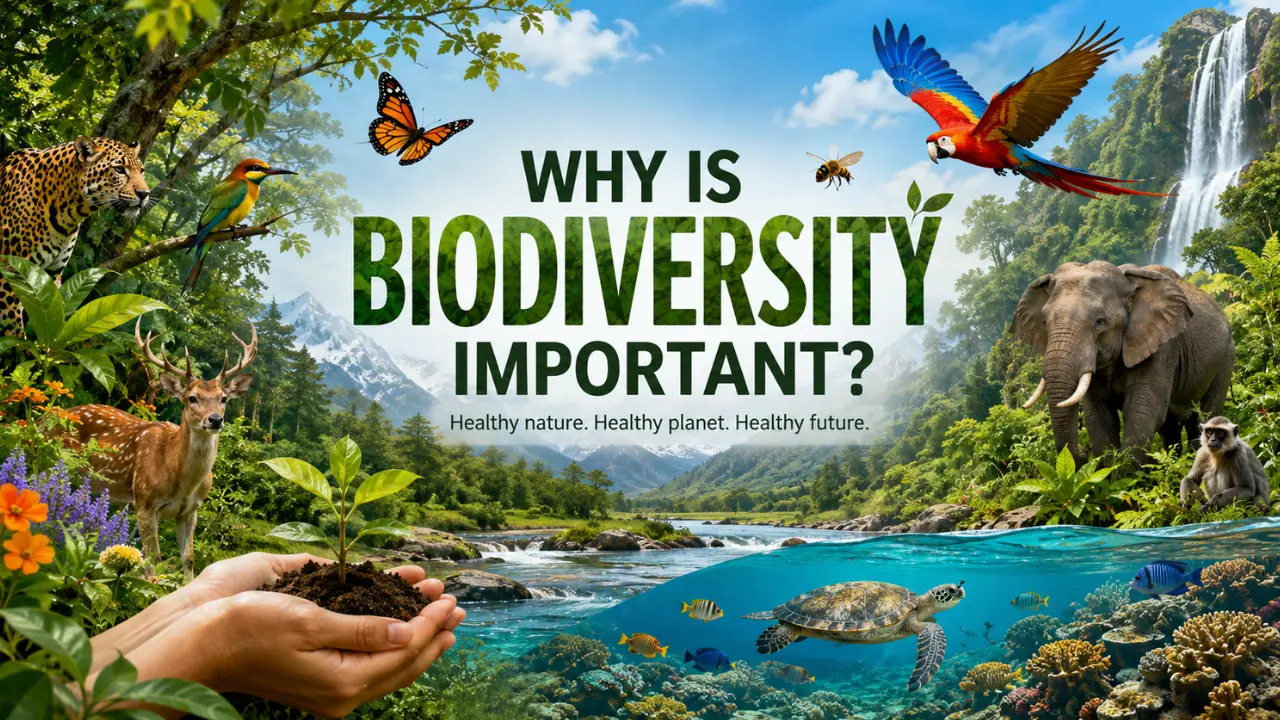

Biodiversity is important because it keeps life on Earth stable, healthy and productive. It supports food, clean water, medicine, fertile soil, climate balance and the survival of humans, animals and plants. When biodiversity declines, ecosystems become weaker, diseases can spread more easily, food systems become less secure and natural disasters can cause more damage.
What biodiversity means
Biodiversity means the variety of life in a place. It includes all living organisms and the different ways they interact with one another and with their environment. Biodiversity exists at several levels, from the genes within a species to entire ecosystems.
It includes:
- Different animals
- Different plants
- Fungi and microorganisms
- Genetic differences within species
- Different ecosystems such as forests, rivers, oceans, grasslands, and wetlands
A forest with many tree species, birds, insects, fungi, and animals has high biodiversity because many forms of life coexist and support one another. By contrast, a field with only one crop has low biodiversity because it contains relatively few species and less ecological variety.
Biodiversity is important because every species plays a role in nature. Some plants produce oxygen, insects pollinate crops, fungi recycle nutrients, and predators help keep animal populations in balance. Together, these relationships create healthy ecosystems that support life on Earth.
Also Read: Life Feels Heavy for No Reason? Here Is Why
Biodiversity supports food production
Many foods depend on biodiversity. Bees, butterflies, birds, bats, and other pollinators help plants produce fruits, vegetables, nuts, and seeds.
Without biodiversity:
- Crop production becomes weaker
- Pollination declines
- Soil loses nutrients
- Pests can spread faster
- Food variety becomes limited
For example, if pollinators disappear, many fruits and vegetables become harder and more expensive to produce.
Biodiversity keeps ecosystems balanced
Every species has a role. Some animals control pests. Some insects pollinate flowers. Some fungi break down dead matter. Some plants protect soil from erosion.
When one species disappears, it can affect many others.
For example, if predators disappear, prey animals may increase too much and damage plants. If plants decline, insects, birds, and animals that depend on them also suffer.
Biodiversity works like a natural support system. The more variety an ecosystem has, the stronger it usually becomes.
Biodiversity protects human health
Many medicines come from plants, animals, fungi, and microorganisms. Scientists study natural species to develop treatments for diseases.
Biodiversity also reduces health risks by helping ecosystems control disease naturally. When habitats are damaged, humans and wild animals come into closer contact, which can increase the chance of disease spread.
A healthy natural environment supports cleaner air, safer water, and better living conditions.
Biodiversity helps fight climate change
Forests, oceans, wetlands, and grasslands absorb and store carbon. This helps reduce the amount of carbon dioxide in the atmosphere.
Biodiversity makes these ecosystems stronger. A forest with many types of trees is usually more resistant to drought, pests, and disease than a forest with only one type of tree.
Wetlands also protect against floods, store carbon, and provide habitat for many species.
Biodiversity protects soil and water
Healthy soil depends on worms, insects, bacteria, fungi, and plant roots. These living organisms break down organic matter and keep soil fertile.
Biodiversity also helps filter water. Wetlands, forests, and river ecosystems naturally clean water by trapping pollution and reducing erosion.
Without biodiversity, soil becomes weaker, water quality declines, and farming becomes harder.
Biodiversity Supports Economies and Livelihoods
Many people depend directly on biodiversity for income and survival. Farming, fishing, forestry, tourism, herbal medicine, and many local businesses rely on healthy ecosystems. When nature is balanced, it provides resources people use every day for food, work, shelter, and trade.
When biodiversity declines, people can lose:
- Food sources
- Jobs
- Natural resources
- Tourism income
- Protection from floods and storms
For example, fewer fish can hurt fishing communities, damaged forests can affect timber and medicine sources, and polluted wetlands can reduce natural flood protection. Farmers may also suffer when pollinators such as bees and butterflies decline.
So biodiversity is not only an environmental issue. It is also an economic and survival issue. Protecting biodiversity helps protect the people, communities, and livelihoods that depend on nature.
Biodiversity makes nature more resilient
A biodiverse ecosystem can recover better from stress. If one species is affected by disease, drought, or climate change, other species may still support the ecosystem.
Low biodiversity makes nature fragile. When there are fewer species, one problem can damage the whole system more easily.
Simple Example
A garden with many plants attracts bees, birds, butterflies, and helpful insects. It has better pollination, healthier soil, and fewer pest problems because different organisms support one another in natural ways.
A garden with only one plant type is more vulnerable. If one disease or pest attacks that plant, the whole garden can fail because there is little variety to maintain balance.
The same principle applies to larger ecosystems such as forests, rivers, and oceans. Places with greater biodiversity are generally more stable and better able to recover from natural disturbances or environmental changes.
That is why biodiversity matters. Variety gives nature strength, making ecosystems healthier, more productive, and more resilient.

1 thought on “Importance of Biodiversity Explained in Simple Words”