
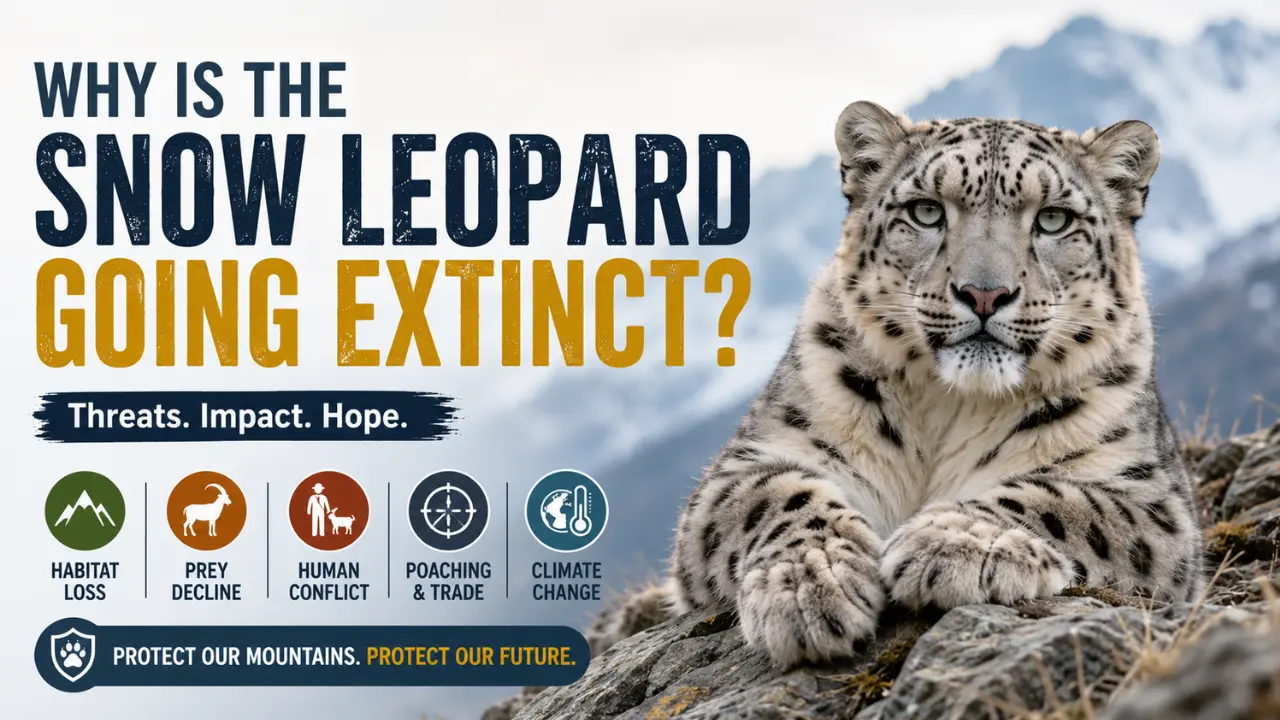

The snow leopard is at risk because its mountain habitat is shrinking, its wild prey is declining, and humans sometimes kill it for livestock attacks or illegal trade. Officially, the snow leopard is listed as Vulnerable, not Endangered, but the IUCN shows its population trend is still decreasing, so the species remains in serious danger.
Habitat Loss Is Reducing Its Safe Living Space
Snow leopards live in cold mountain regions across Central and South Asia. They need large, open, rocky territories to hunt, rest, breed, and move safely between valleys and ridges.
Their habitat is becoming weaker because of roads, mining, grazing, settlements, and human development. When mountain habitats become smaller or divided, snow leopards struggle to find prey, mates, and safe routes between territories.
Habitat fragmentation also pushes snow leopards closer to people and livestock. This can increase conflict, especially when wild prey is harder to find. WWF lists habitat loss and fragmentation among the main threats to snow leopards.
Their Natural Prey Is Declining
Snow leopards hunt wild mountain animals such as ibex, blue sheep, argali, and other hoofed animals. These animals are essential to the snow leopard’s survival because they provide its main source of food in harsh mountain environments.
When these prey animals decline, snow leopards face hunger and may move closer to human livestock. Wild prey can decrease because of overhunting, competition with domestic animals, habitat loss, and disturbance from human activity.
This creates a dangerous cycle. Less wild prey means more livestock attacks. More livestock attacks often lead to more conflict with herders.
Also Read: Why Do Camels Have Humps on Their Backs?
Herders Sometimes Kill Snow Leopards in Retaliation
Many herding families depend on goats, sheep, yaks, or horses for income. When a snow leopard kills livestock, the financial loss can be serious, especially in remote mountain communities where families may have few other resources.
Because of this, some herders kill snow leopards to protect their animals or in revenge after an attack. The Snow Leopard Trust explains that livestock conflict is a major threat because herders may see retaliation as their only option.
This does not mean herders are simply careless or cruel. In many cases, they are trying to protect their livelihood. That is why conservation efforts often focus on solutions that help both people and snow leopards, such as stronger livestock shelters, insurance programs, and better protection for wild prey.
Poaching and Illegal Trade Still Threaten Them
Snow leopards are also killed illegally for their fur and body parts. Their thick spotted coat makes them a target for wildlife traffickers, even though hunting and trade are prohibited.
Illegal trade adds extra pressure to a species that is already struggling with habitat loss, prey decline, and conflict with humans. Because snow leopards live in remote mountain areas, poaching can be difficult to detect and control.
WWF identifies poaching and illegal wildlife trade as major threats, along with habitat loss, prey decline, and retaliatory killing.
Also Read: Why Is the Giant Panda an Endangered Species?
Climate Change Is Making the Problem Worse
Snow leopards depend on cold mountain ecosystems. Climate change can affect vegetation, water, prey movement, and the quality of high-altitude habitat.
As conditions change, snow leopards may lose suitable living areas or face more competition with humans and livestock. Warmer temperatures can also shift habitats and bring more human activity into mountain regions.
WWF says climate change threatens snow leopard mountain habitats and can increase pressure from other threats like poaching, habitat degradation, and retaliatory killings.

1 thought on “Why Is the Snow Leopard Going Extinct? 5 Reasons”