
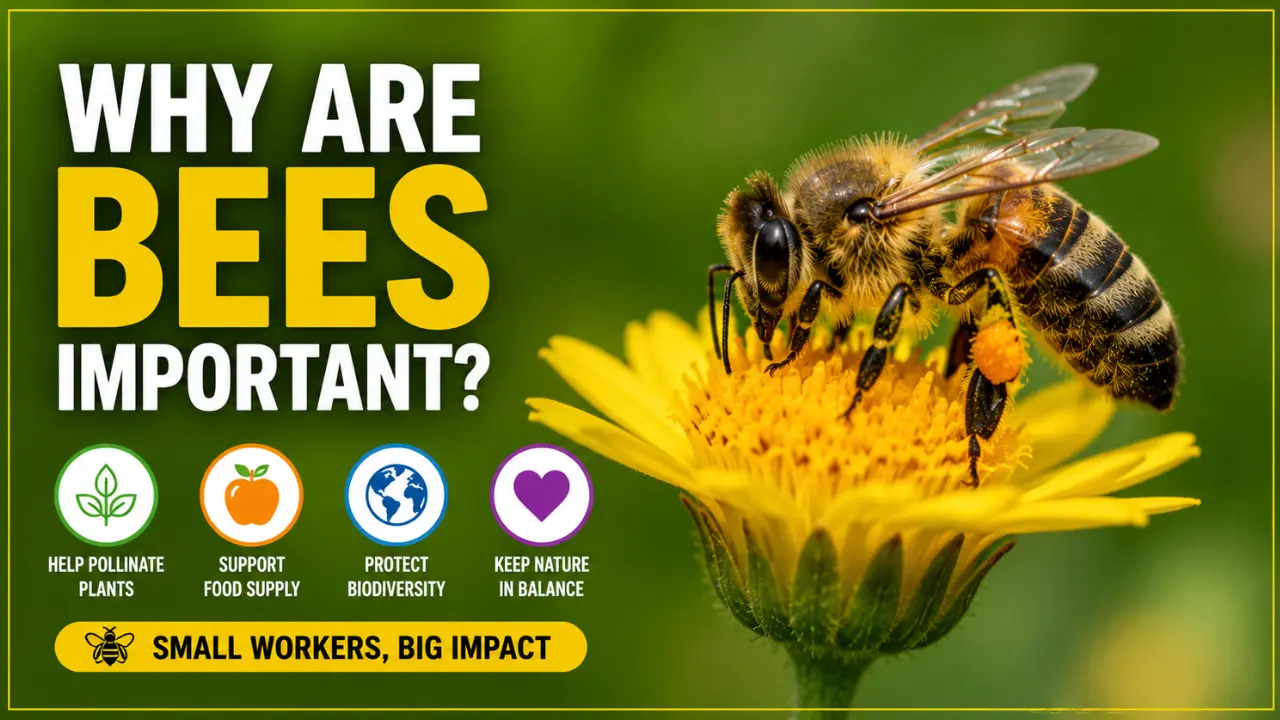

Bees are important because they pollinate many plants that humans, animals and ecosystems depend on. When bees move from flower to flower, they help plants produce fruits, vegetables, seeds, nuts and new plants. Without bees, food production would become weaker, many wild plants would decline and the natural balance of ecosystems would suffer.
Bees help grow food
The biggest reason bees are important is pollination. Many flowering plants cannot produce healthy fruits, vegetables, or seeds unless pollen moves from one flower to another. As bees travel from flower to flower collecting nectar and pollen, they naturally transfer pollen between blossoms, making pollination highly efficient.
This process helps plants reproduce and allows many crops to develop properly. Without effective pollination, some plants may produce fewer fruits, smaller harvests, or lower-quality seeds.
Bees help pollinate crops such as:
- Apples
- Almonds
- Blueberries
- Cucumbers
- Pumpkins
- Melons
- Cherries
- Strawberries
- Sunflowers
- Many vegetables and seed crops
Because of this, bees play an important role in both agriculture and food production. Farmers often rely on healthy bee populations to improve crop yields and produce better-quality fruits and seeds.
This does not mean all food would disappear without bees, because crops such as rice, wheat, and corn mainly depend on wind or self-pollination. However, many nutritious foods—including numerous fruits, vegetables, nuts, and seeds—would become less available, more expensive, and more difficult to grow.
For this reason, protecting bee populations is important not only for nature but also for global food security and a healthy, diverse food supply.
Also Read: Why Is the Snow Leopard Going Extinct? 5 Reasons
Bees Support Biodiversity
Bees also pollinate wild plants, not only farm crops. Wildflowers, shrubs, trees, and many natural plants depend on pollinators to reproduce, spread seeds, and continue growing from one season to the next.
When bees help wild plants grow, they also support:
- Birds that eat seeds and berries
- Insects that live on plants
- Animals that depend on fruits, flowers, and leaves
- Healthy forests, grasslands, and gardens
This makes bees important for biodiversity because they help many other living things survive. A single pollinated plant can provide food, shelter, and nesting material for several other species.
When bee populations decline, the effects can spread through the ecosystem. Fewer pollinated plants can mean less food for birds, insects, and animals. Healthy bee populations help keep natural habitats balanced, productive, and full of life.
Bees Strengthen Ecosystems
Bees are part of a larger natural system. Their pollination helps plants grow, and plants then provide oxygen, food, shelter, shade, soil protection, and habitats for other species.
If bee populations decline, some plants may produce fewer seeds and fruits. Over time, this can reduce plant variety and weaken the animals that depend on those plants. Birds, insects, small mammals, and other wildlife may lose important food sources and shelter.
So bees do not only help flowers. They help keep ecosystems productive and balanced. By supporting plant reproduction, bees help maintain the natural connections that allow many living things to survive together.
Also Read: Why Do Camels Have Humps on Their Backs?
Bees Support Farmers and the Economy
Farmers depend on bees to improve crop yield and quality. Good pollination can lead to better fruit size, better seed development, and stronger harvests. Many fruit, nut, vegetable, and seed crops perform better when enough pollinators are present.
When bee populations fall, farmers may face:
- Lower crop production
- Higher pollination costs
- Poorer fruit quality
- Reduced food variety
- More pressure on farming systems
This can affect not only farmers but also markets, food prices, and local jobs connected to agriculture. Crops that rely heavily on pollination may become harder or more expensive to produce.
This is why bees matter not only for nature, but also for agriculture and local economies. Healthy bee populations help support stable harvests, better food quality, and the livelihoods of people who depend on farming.
Bees help humans stay healthy
Many foods pollinated by bees are rich in vitamins, minerals, fiber, and antioxidants. Fruits, vegetables, nuts, and seeds form an important part of a healthy diet.
If pollinators decline, diets can become less diverse. People may still have basic calories from grains, but they could lose easier access to many nutrient-rich foods.
Bees are indicators of environmental health
Bees are sensitive to changes in the environment. When bees decline in an area, it can signal deeper problems such as pesticide overuse, habitat loss, pollution, disease, climate stress, or lack of flowering plants.
Healthy bee populations often show that an environment has enough flowers, clean habitat, and balanced natural conditions.
Also Read: Why Is the Giant Panda an Endangered Species?
Why Bees Are Declining
Bee populations are declining in many parts of the world because they face several environmental pressures at the same time. These challenges make it harder for bees to find food, reproduce successfully, and survive throughout the year.
Bees face several threats, including:
- Loss of wildflower habitats
- Heavy pesticide use
- Climate change
- Diseases and parasites
- Pollution
- Lack of plant variety
- Destruction of nesting places
Habitat loss is one of the biggest problems. As forests, grasslands, and flowering meadows are replaced by roads, buildings, or large areas of single crops, bees have fewer places to find nectar, pollen, and safe nesting sites.
Chemical pesticides can also harm bees directly or affect their ability to find food and return to their nests. In addition, climate change can alter flowering seasons, making it harder for bees to find food when they need it most.
Different bee species face different risks, but habitat loss and chemical exposure remain two of the greatest concerns. Protecting natural habitats and planting more flowering plants can help support healthy bee populations and the ecosystems that depend on them.

1 thought on “6 Reasons Bees Are Important to Nature And Human”