
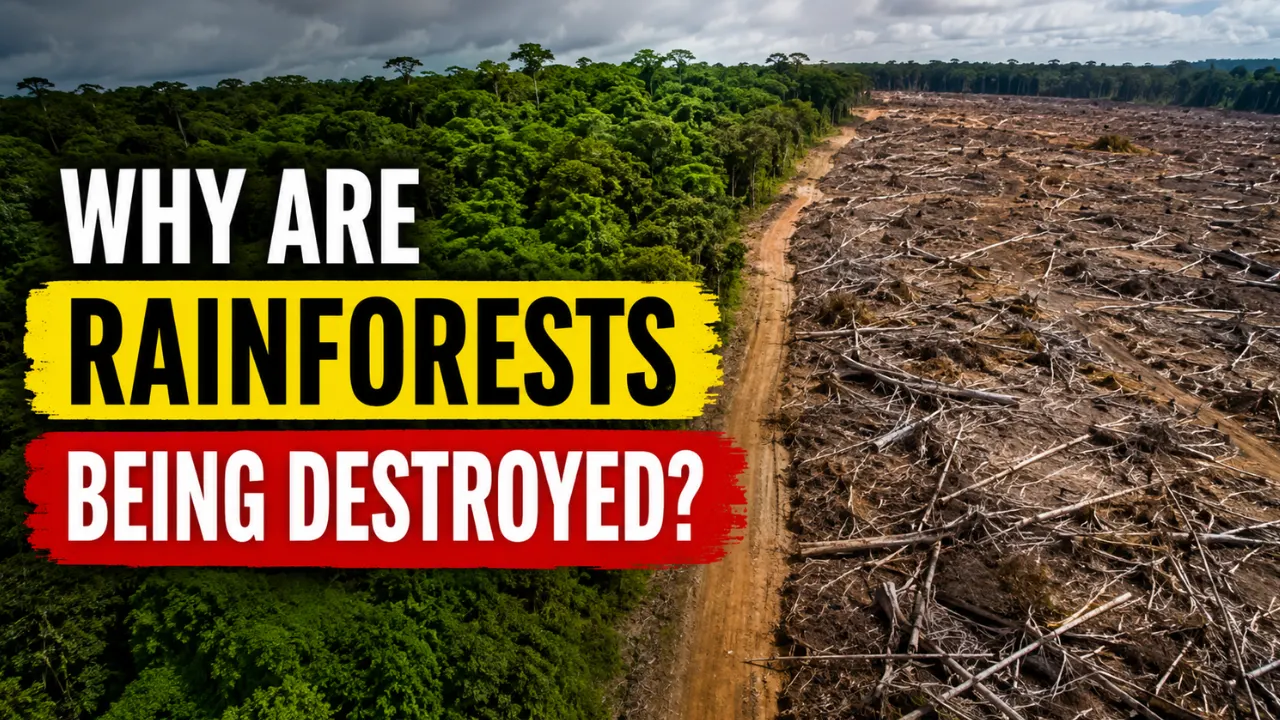

Rainforests are being destroyed mainly because people clear land for farming, cattle, timber, mining, roads and commercial development. The deeper reason is economic pressure. Rainforest land often becomes more profitable when people turn it into farms, plantations, grazing fields, mines or transport routes.
This destruction does not happen for one single reason. It usually comes from a chain of choices: demand for food and products rises, companies look for cheap land, local communities need income, governments build roads and weak enforcement allows illegal clearing to continue. The result is a steady loss of forests that support wildlife, rainfall, soil health and millions of people.
Rainforests Are Cleared for Agriculture
Agriculture causes a large share of rainforest destruction. Farmers and companies remove trees because they need open land to grow crops or raise animals.
In many regions, people clear rainforests for:
- cattle grazing
- soy farming
- palm oil plantations
- cocoa farms
- coffee production
- rubber plantations
- small-scale subsistence farming
Some clearing comes from large commercial agriculture. Some comes from poor farmers who need land to grow food. Both cases create pressure on the forest, but large-scale commercial farming usually causes wider and faster damage.
When people burn or cut forest for farmland, they remove the tree cover that protects the soil. Rainforest soil often loses fertility quickly after clearing because heavy rain washes nutrients away. This means farmers may clear more land later, which keeps the cycle going.
Also Read: 6 Reasons Bees Are Important to Nature And Human
Cattle Ranching Takes Large Areas of Land
Cattle ranching needs open space. In rainforest regions, people often cut trees and burn vegetation to create pasture for cattle.
This matters because cattle need far more land than many crops. Once ranchers turn forest into grazing land, the original rainforest rarely returns naturally. The land may look useful for a short time, but it often loses soil quality, water balance, and biodiversity.
Cattle ranching also connects to global meat demand. When demand for beef rises, ranchers and landowners look for more grazing land. In some places, clearing forest also helps people claim ownership of land, even when the land use itself remains inefficient.
Palm Oil, Soy and Other Cash Crops Drive Forest Loss
Many everyday products depend on crops grown in tropical regions. Palm oil appears in packaged foods, soaps, cosmetics, and other consumer goods. Soy supports animal feed, cooking oil, and processed food production. Cocoa and coffee also come from tropical climates.
These crops create income, but they also create land pressure. When companies expand plantations into rainforest areas, they replace a complex ecosystem with a single crop. This reduces wildlife habitat, weakens soil health, and changes the local water cycle.
Plantations do not function like natural rainforests. A rainforest contains thousands of plant and animal species living together. A plantation usually grows one main crop in rows. It may look green, but it cannot replace the ecological role of a rainforest.
Logging Removes Valuable Trees First
Logging destroys rainforests in two ways. Legal and illegal loggers often target valuable trees first, such as hardwoods used for furniture, flooring, and construction. This selective cutting may not remove the whole forest at once, but it opens the forest and damages the structure of the ecosystem.
Logging roads also create a bigger problem. Once workers build roads into deep forest areas, other activities follow more easily. Farmers, miners, hunters, and land grabbers can enter places that were once difficult to reach.
So even when logging starts with a few valuable trees, it can become the first step toward wider forest destruction.
Also Read: Why Is the Snow Leopard Going Extinct? 5 Reasons
Mining Damages Forests and Rivers
Mining companies and small-scale miners clear rainforest to reach minerals, metals, and other underground resources. Gold mining, iron ore extraction, bauxite mining, and other forms of mining can remove large areas of forest.
Mining also harms rivers. In some areas, miners use harmful chemicals that pollute water and damage fish, wildlife, and nearby communities. Forest destruction from mining may look smaller than agriculture in some regions, but the damage can spread through waterways.
Roads, camps, machinery, and waste sites also expand the mining footprint. This makes mining a serious cause of rainforest degradation, not just tree loss.
Roads and Infrastructure Open the Forest
Road building does not always look like the main cause of rainforest destruction, but it often starts the process. A new road gives people access to remote forest areas. After that, logging, farming, mining, hunting, and settlement become easier.
Governments may build roads to connect towns, support trade, or develop remote regions. These goals may help people economically, but they also create long-term forest pressure when planning and enforcement remain weak.
Roads divide wildlife habitats, increase human activity, and make illegal clearing harder to control. In many rainforest regions, destruction spreads outward from roads like a pattern of branches.
Fires Are Used to Clear Land Quickly
Many people use fire because it clears land cheaply and quickly. After cutting trees or brush, they burn the remaining vegetation to prepare land for farming or pasture.
The problem is that fire can spread beyond the intended area. Rainforests naturally stay humid, but drought, heat, logging damage, and forest edges can make them more vulnerable. Once fire enters a rainforest, it can kill trees that did not evolve to survive repeated burning.
Fires also release stored carbon into the atmosphere. This adds another layer of harm because rainforest destruction contributes to climate change, and climate change can make forests drier and more fire-prone.
Poverty and Local Survival Needs Add Pressure
Not every person clearing rainforest acts out of greed. In many places, people clear forest because they need land, food, fuelwood, or income. Poor communities may have few choices. If they cannot access stable jobs, secure land rights, better farming methods, or fair markets, forest clearing may seem like the only way to survive.
This makes rainforest protection more difficult. Conservation cannot only tell people to stop cutting trees. It must also address poverty, land rights, education, farming support, and local income.
When communities benefit from protecting forests, they often become strong defenders of the land. When they receive no benefit, they may feel forced to use the forest for short-term survival.
Weak Laws and Illegal Clearing Make the Damage Worse
Rainforest destruction grows faster when governments fail to enforce environmental laws. Illegal logging, illegal mining, land grabbing, and unapproved burning can continue when corruption, poor monitoring, or weak penalties allow offenders to escape consequences.
Some countries have strong environmental rules on paper, but enforcement remains difficult in remote forest areas. Officials may lack funding, technology, staff, or political support. In other cases, powerful landowners or companies influence decisions.
When law enforcement weakens, responsible businesses and local communities suffer too. Illegal operators can cut costs, destroy land, and compete unfairly with people who follow the rules.
Global Consumer Demand Plays a Hidden Role
Rainforest destruction often feels like a local problem, but global demand drives much of it. Consumers around the world buy meat, leather, chocolate, coffee, packaged foods, furniture, paper, cosmetics, electronics, and jewelry. Many of these products can connect indirectly to rainforest land.
The connection does not always appear on the label. A buyer may never know whether a product came from cleared forest land. This hidden supply chain makes rainforest protection harder.
Companies, governments, and consumers all share responsibility. Companies must check supply chains. Governments must regulate imports and production. Consumers can support certified and transparent products, but individual choices alone cannot solve the whole problem.
Climate Change Makes Rainforests More Vulnerable
Climate change does not usually start rainforest destruction, but it can make the damage worse. Higher temperatures, irregular rainfall, longer dry seasons, and stronger droughts can stress forests.
A healthy rainforest creates part of its own rainfall through moisture released by trees. When large areas disappear, the region can become drier. That dryness can increase fire risk and weaken remaining forest.
This creates a dangerous cycle: people clear forest, the local climate becomes drier, fires become more likely, and more forest gets damaged.
Why Rainforest Destruction Matters
Rainforests matter because they support life far beyond their borders. They store carbon, regulate rainfall, protect rivers, support Indigenous communities, and provide habitat for countless species.
When rainforests disappear, the world loses:
- wildlife habitat
- medicinal plant potential
- natural carbon storage
- clean water systems
- soil protection
- rainfall stability
- Indigenous cultural lands
- long-term climate balance
The damage does not only affect animals and trees. It affects farming, water security, public health, and the future stability of local and global ecosystems.
Can Rainforest Destruction Be Stopped?
Rainforest destruction can slow down when governments, companies, communities, and consumers act together. The solution needs more than planting trees. It requires protecting existing forests, enforcing laws, improving farming methods, respecting Indigenous land rights, and making supply chains more transparent.
Important solutions include:
- protecting Indigenous and local community land rights
- stopping illegal logging and mining
- improving forest monitoring
- supporting sustainable farming
- restoring damaged land instead of clearing new forest
- reducing demand for products linked to deforestation
- making companies prove where their materials come from
- creating economic value from standing forests
The most effective approach protects both forests and people. Rainforest communities need real income, legal security, education, and support. Without that, conservation can become unfair and difficult to maintain.

2 thoughts on “11 Main Reasons Rainforests Are Being Destroyed”