
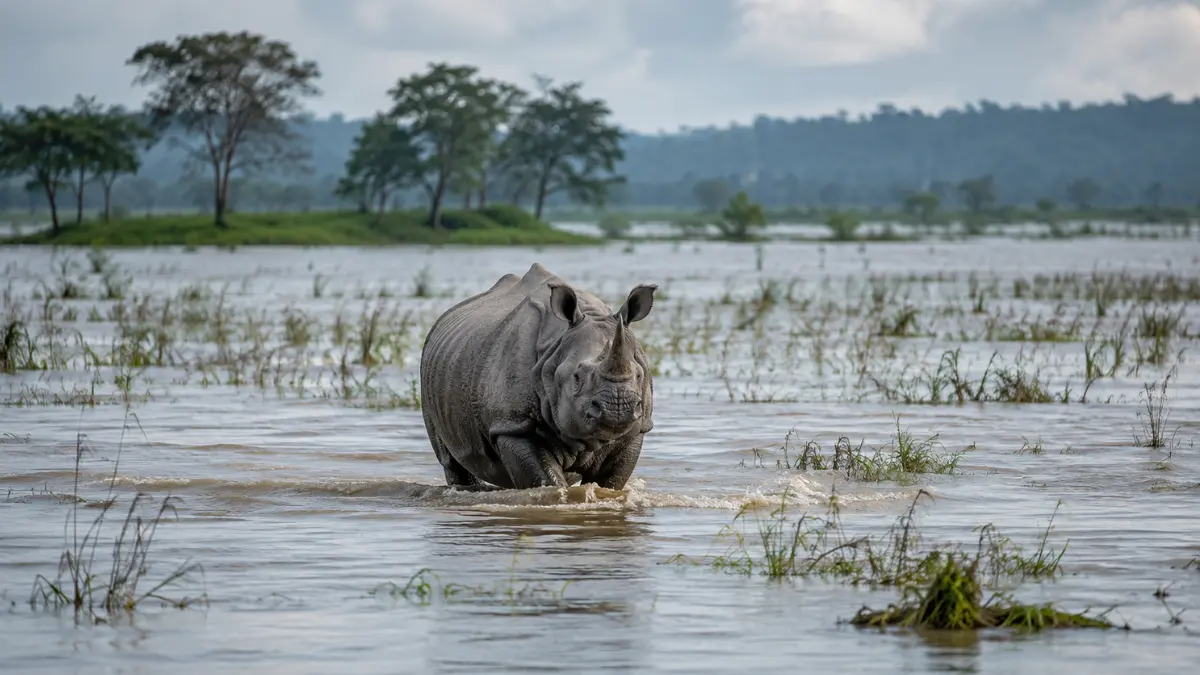

Kaziranga National Park floods almost every year because it lies on the natural floodplain of the Brahmaputra River. During the monsoon, rising river water spreads through the park’s low-lying grasslands, wetlands and channels.
These floods can displace or kill wildlife but they are not entirely harmful. Seasonal flooding also reshapes Kaziranga’s wetlands, supports its grassland habitats and maintains the river processes on which the park depends.
The greatest danger begins when the water rises too deeply, remains for too long or prevents animals from reaching higher ground safely.
Why Is Kaziranga Flooded So Often?
Kaziranga sits within the Brahmaputra Valley floodplain in Assam. A floodplain is low-lying land beside a river that naturally receives water when the river rises beyond its usual channel.
Kaziranga therefore does not simply stand near a flood-prone river. The park forms part of a landscape that the Brahmaputra has shaped through repeated flooding, erosion and sediment deposition.
Heavy monsoon rain increases the amount of water flowing through the Brahmaputra and its connected waterways. As river levels rise, water enters the park’s grasslands, marshes, shallow pools and forested areas.
The depth and extent of flooding vary each year. Upstream rainfall, river levels, local rain and the speed at which water recedes all influence how much of the park becomes submerged.
Is Kaziranga’s Annual Flood a Flash Flood?
Kaziranga’s annual flooding usually develops as riverine flooding across the Brahmaputra floodplain. A flash flood rises much more suddenly, often after intense local rain sends water rapidly through a stream, slope, valley or drainage system.
Conditions in Kaziranga can still worsen quickly when heavy rain and high river levels occur together. However, the park’s recurring monsoon inundation remains different from the more localised process explained in DesiVibe’s guide to how flash floods form and why they become dangerous.
Why Seasonal Flooding Matters to Kaziranga
Images of rhinos, deer and other animals moving through deep water can make every flood appear entirely destructive. Severe floods do cause deaths, injuries and displacement, but moderate seasonal flooding also performs important ecological work.
Kaziranga’s grasslands, wetlands and river channels developed under the influence of recurring Brahmaputra floods. The park depends on this movement of water to remain a living floodplain rather than a fixed landscape.
Floodwater reshapes the land
The Brahmaputra continually erodes some areas and deposits sediment in others. This movement reshapes riverbanks, grasslands, shallow pools and newly formed land across the floodplain.
As the water recedes, different areas become suitable for short grass, tall grass, wetlands or new vegetation. Kaziranga therefore changes naturally from one season to another.
Some channels become deeper, while others collect silt. New patches of land may appear, and existing wet areas may expand or shrink depending on the river’s movement.
Floods maintain wetlands and channels
Kaziranga contains marshes, shallow pools, river channels and seasonally flooded ground. Monsoon water reconnects and refills many of these habitats.
Fish, amphibians, waterbirds and aquatic plants depend on these wet areas. Grazing animals also benefit from the fresh vegetation that grows around wetlands after the water recedes.
Flooding does not improve every area equally, but the recurring movement of water helps maintain the mixture of wet and dry habitats that supports Kaziranga’s biodiversity.
Flooding helps maintain the grassland mosaic
Annual flooding works together with grazing and carefully managed burning to maintain Kaziranga’s grassland mosaic.
Flood duration influences where short and tall grasses develop, while controlled burning limits excessive woody growth in selected areas. Grazing by large herbivores also shapes the height and density of vegetation.
These processes create different feeding and shelter conditions for rhinos, deer, elephants, wild buffaloes, birds and smaller animals.
Without this combination of flooding, grazing and habitat management, parts of the open grassland could gradually change into denser shrub or woodland habitat.
What Happens to Animals When Kaziranga Floods?
Wildlife begins moving as water covers feeding and resting areas.
Large animals such as rhinos, elephants and wild buffaloes can walk or swim through substantial depths. Smaller animals may also swim, but strong currents and long distances create greater risks for deer, wild boar, reptiles and young animals.
Animals usually respond by moving toward raised areas inside the park or travelling south toward higher land in the Karbi Anglong landscape.
Animals gather on higher ground
Natural high ground and artificial highlands provide temporary shelter when nearby grasslands disappear beneath water.
Animals can rest on these raised areas while they wait for water levels to fall. The highlands can reduce immediate drowning risk, especially when wildlife cannot quickly reach the park’s southern edge.
However, they offer limited space and food during prolonged flooding. Large numbers of animals may gather in the same area, increasing pressure on available vegetation.
Artificial highlands support wildlife during emergencies, but they cannot replace protected routes to the larger Karbi Anglong landscape.
Wildlife moves toward Karbi Anglong
As lower parts of Kaziranga become submerged, many animals move south toward the higher Karbi Anglong landscape.
These routes allow wildlife to escape deep water and return when conditions improve. Rhinos, elephants, deer, wild buffaloes and other animals may use the same broad movement corridors during flood seasons.
The relationship between Kaziranga and Karbi Anglong extends beyond temporary flood refuge. Animals also use the connected landscape for feeding, breeding and seasonal movement.
Protecting these routes matters because wildlife cannot survive safely if roads, buildings and other barriers isolate the park from nearby higher ground.
Some animals enter roads and settlements
Floodwater can push animals beyond the park boundary and into tea estates, agricultural fields, villages or roadside areas.
An animal outside Kaziranga may not be lost. It may be following a traditional route toward dry land or trying to return to the park after water levels fall.
Crowds, loud noises and close-range photography can frighten the animal or block its movement. People should keep a safe distance and allow forest officials to manage the situation.
Nobody should chase, feed or attempt to guide a wild animal without training.
When Does a Natural Flood Become Dangerous?
Annual flooding forms part of Kaziranga’s ecology, but not every flood produces the same result.
A moderate flood may renew parts of the landscape while leaving enough safe ground for animals. An extreme flood may cover most available shelter, create strong currents and force exhausted wildlife into dangerous crossings.
Water becomes too deep or fast
Deep water can submerge feeding grounds and smaller areas of high land. Strong currents can sweep away young, injured or weak animals.
Rhino calves and young deer face greater danger because they cannot move with the strength or endurance of healthy adults. Animals may also become separated from their mothers while crossing flooded areas.
Reptiles and smaller mammals can become trapped in isolated patches of vegetation as water continues to rise.
Flooding lasts too long
Wildlife may survive the first rise in water but struggle when high water remains for many days.
Animals crowded onto limited dry ground have less access to grass and other food. Repeated swimming or walking through water drains energy and increases the risk of injury, stress and illness.
Several flood waves in one season can make the situation worse because animals may not receive enough time to recover between them.
Roads interrupt movement to higher ground
Animals moving toward Karbi Anglong must cross transport routes near the park.
A road does not cause Kaziranga to flood, but speeding vehicles can turn a natural escape movement into a deadly event. Wildlife may enter the road suddenly, especially at night, during heavy rain or when tall vegetation limits visibility.
Rhinos, deer and smaller animals cannot predict the speed or direction of traffic. Drivers must therefore follow speed restrictions and temporary controls near animal corridors.
Development narrows wildlife corridors
Buildings, commercial activity and other development can reduce the space available along traditional movement routes.
When a corridor becomes narrower, animals may enter busier roads, tea gardens or settlements because they cannot use a safer path.
This increases the risk of vehicle collisions and human-wildlife conflict. Protecting the connection between Kaziranga and Karbi Anglong therefore matters as much as protecting habitat inside the national park.
How Do Authorities Protect Wildlife During Floods?
Wildlife protection begins before animals become stranded.
Officials monitor rainfall, river levels, affected forest camps and areas where animals may start moving. This information helps them prepare patrol teams, boats, veterinary support and traffic controls.
Monitoring rainfall and river conditions
Weather forecasts can warn authorities about conditions that may cause river levels to rise.
DesiVibe’s guide to IMD red, orange and yellow rain warnings explains how each alert level signals an increasing need for awareness, preparation or action.
However, a colour warning does not reveal exactly how much of Kaziranga will flood. Local river data, park observations and district instructions remain essential because rainfall can vary widely across Assam and upstream areas.
Maintaining artificial highlands
Artificial highlands provide temporary resting places when nearby grasslands become submerged.
Forest officials must keep these areas accessible and limit disturbance when wildlife gathers there. They must also monitor whether animals have enough space to rest without becoming trapped.
Highlands reduce immediate danger, but they work best as one part of a wider conservation system that also protects natural movement routes.
Controlling traffic near corridors
Speed restrictions, patrols, barriers and warning signs reduce the chance of vehicle collisions when animals cross roads.
Drivers should obey every restriction even when they cannot see wildlife. Darkness, rain, tall grass and floodwater can hide animals until they enter the road.
Temporary traffic controls may inconvenience travellers, but they can prevent avoidable wildlife deaths during the most dangerous flood periods.
Rescuing injured or stranded animals
Forest and veterinary teams may rescue animals that become injured, trapped, separated or too weak to continue moving.
Healthy wildlife does not always need capture. In many cases, the safest response involves keeping people away and allowing the animal to continue toward higher ground.
Unnecessary capture can increase stress and create danger for both the animal and rescue teams.
Can Authorities Stop Kaziranga from Flooding?
Authorities cannot stop all flooding without changing the natural system that sustains Kaziranga.
Large barriers designed to keep every drop of floodwater outside the park could interrupt sediment movement, alter wetlands and weaken the grassland ecology.
Embankments may protect selected communities or infrastructure, but covering the entire park with flood-control structures would conflict with its natural floodplain character.
The better goal involves reducing extreme risks while allowing seasonal water movement to continue.
This approach requires authorities to:
- Protect wildlife corridors
- Preserve access to Karbi Anglong
- Control traffic during animal movement
- Maintain artificial highlands
- Prevent damaging construction in critical corridors
- Monitor changing river channels
- Prepare rescue and veterinary teams
- Reduce crowding around displaced wildlife
Flood management must also consider nearby communities. Villages around Kaziranga can lose crops, livestock, homes and road access when water rises.
Conservation works best when flood planning protects people and wildlife across the wider landscape.
Why Safe Wildlife Movement Matters More Than Stopping Every Flood
Kaziranga forms part of a living Brahmaputra floodplain. Preventing all water from entering the park would interfere with the river processes that maintain its grasslands, wetlands and changing habitats.
The better conservation goal is to reduce avoidable deaths while allowing seasonal flooding to continue. Protected corridors, accessible high ground, controlled traffic and careful development can help animals respond to rising water naturally.
Kaziranga does not need to remain permanently dry. Its wildlife needs safe routes between the flooded plains and the higher Karbi Anglong landscape.

2 thoughts on “Why Does Kaziranga Flood Every Year? Ecology Explained”