
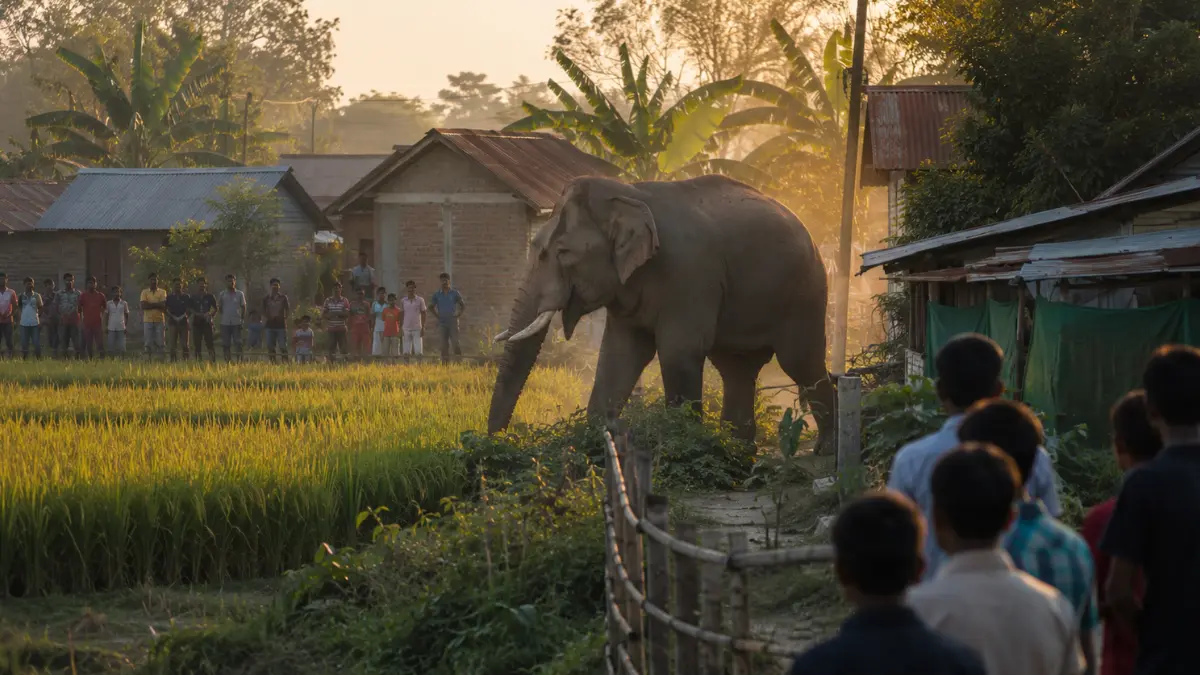

Human-elephant conflict is rising in Assam because farms, settlements, roads, railway lines and other development increasingly overlap with the landscapes elephants use for food, water and movement.
Elephants travel across large areas rather than remaining inside one forest throughout the year. When development divides their habitats or blocks familiar routes, herds often have to cross farms and village edges to reach another forest, water source or feeding ground.
Ripe crops can also attract elephants into agricultural areas. Once a herd enters a village or paddy field, frightened residents may gather, surround the animals or try to drive them away. These situations can quickly become dangerous for both people and elephants.
Why Assam Faces Frequent Elephant Encounters
Assam supports one of India’s largest populations of wild Asian elephants. The state also contains forests, grasslands, river valleys, foothills, tea-growing regions and agricultural areas that form part of wider elephant landscapes.
Elephants need these connected landscapes because one forest may not provide enough food, water and shelter throughout the year. Herds regularly travel between different habitats according to rainfall, vegetation, crop cycles and seasonal water availability.
Many elephant routes also cross administrative boundaries. A herd may move between districts or travel through landscapes connected with neighbouring states and Bhutan.
Human activity has expanded across many of these routes. Houses, roads, farms, railway lines, power infrastructure and commercial development now occupy areas that elephants may still use.
This overlap creates repeated encounters. The problem does not usually begin because elephants suddenly decide to enter human territory. In many cases, human land use has expanded into a landscape that elephants have used for generations.
Fragmented Forests Force Elephants to Cross Human Areas
Complete forest destruction can increase conflict, but habitat fragmentation creates a serious problem even when some forest remains.
A road, settlement, plantation or railway line can divide one large habitat into several smaller patches. Elephants may still find food and shelter inside those patches, but they cannot move safely between them.
A forest patch surrounded by farms and buildings cannot support the same movement that a connected landscape allows. Herds must cross cultivated land, roads or settlement edges to reach the next suitable habitat.
This explains why forest cover alone does not reveal whether elephants have enough secure space. A district may appear green on a map while its forests remain disconnected from one another.
Elephants need connected habitats, not isolated islands of vegetation.
Elephant Corridors Are Becoming Narrower
Elephant corridors connect larger habitats and allow herds to move between feeding grounds, water sources, resting areas and seasonal ranges.
These corridors do not always look like dense forests. Some pass through riverbanks, wooded strips, foothills, tea estates, farmland or lightly populated village edges.
Construction and expanding settlement can gradually narrow these routes. Fencing, walls, roads and buildings may eventually leave elephants with only a small opening through which they can move.
When people block that opening, elephants often search for another passage. The alternative route may take them through a paddy field, residential area or busy road.
Protecting a forest without protecting the routes connected to it cannot prevent conflict. Elephants must have a safe way to enter and leave important habitats.
Paddy Fields Provide an Easy Source of Food
Mature crops can draw elephants toward agricultural areas because a field offers a large amount of food in one place.
Ripe paddy can become especially attractive during the cultivation and harvesting seasons. Elephants can consume or damage a large part of a field within a short period.
Many vulnerable farms also lie close to forest edges or elephant movement routes. Herds may discover these crops while travelling between two habitats rather than leaving a healthy forest specifically to search for villages.
Once elephants find food in an accessible location, they may return during later crop seasons. Farmers can then experience repeated damage at roughly the same time each year.
The loss can severely affect rural families. A damaged field may represent months of work, household food supplies and a major part of the family’s annual income.
Human-elephant conflict therefore involves more than wildlife conservation. It also affects food security, rural livelihoods and public safety.
Seasonal Conditions Change Elephant Movement
Elephant movement can change with rainfall, crop maturity, water availability and vegetation conditions.
During the harvest season, mature crops can increase the likelihood of elephants entering farmland. During drier periods, herds may travel farther in search of water or fresh vegetation.
Floods can also affect wildlife movement in low-lying areas. Rising water may push animals toward higher ground or temporarily change the routes they normally use.
This movement becomes highly visible around Kaziranga during major floods. Animals leave inundated grasslands and move toward elevated areas outside the national park. DesiVibe explains this natural cycle in Why Does Kaziranga Flood Every Year? Ecology Explained.
However, flooding does not explain human-elephant conflict across the whole of Assam. Fragmented habitats, blocked corridors, attractive crops and expanding development remain the main statewide drivers.
Roads and Railway Lines Divide Elephant Landscapes
Roads and railway lines create dangerous barriers when they pass through elephant habitats or movement routes.
Elephants often travel in groups, and a herd may include calves that move more slowly. Crossing a railway track or busy road can therefore take time.
Fast-moving trains create a serious risk where tracks cross frequently used elephant routes. Low visibility at night, curves, vegetation beside the track and limited reaction time can increase the danger.
Roads can also change the surrounding landscape. New roads often bring more traffic, buildings, shops and settlements into previously quieter areas.
Authorities need to identify vulnerable stretches, monitor elephant movement and control vehicle or train speeds in sensitive zones. Forest, railway and local authorities must coordinate because one department cannot manage the problem alone.
Unsafe Electric Fencing Can Kill Elephants
Farmers need safe ways to protect crops, but illegal electric barriers can kill elephants, livestock and people.
Some individuals connect ordinary wires directly to high-voltage electricity. An elephant touching such a wire may die instantly.
Legal solar fencing works differently. A properly designed system produces a controlled pulse intended to discourage animals without delivering a fatal shock.
Even legal fencing needs careful planning. A fence may protect one field while redirecting elephants toward another village or an unsafe road.
Authorities must study active movement routes before installing long barriers. Communities must also maintain fences properly and prevent anyone from making dangerous alterations.
Fencing can support conflict management, but it cannot replace connected habitats and protected corridors.
Uncontrolled Crowds Make Encounters More Dangerous
Elephants entering a village often attract large crowds. People may gather with mobile phones, vehicles, bright lights and loud noises.
Crowds can block the direction in which the herd is trying to move. Elephants may become more defensive when people surround them or approach their calves.
Residents should not chase, provoke or attempt to photograph elephants from close range. They should remain indoors or maintain a safe distance and contact the local Forest Department.
People should also keep possible escape routes clear. Allowing the herd to move away can reduce the chance of a direct confrontation.
Trained response teams can assess the animals’ position and decide how to guide them safely. Untrained residents should not use firecrackers, fire or improvised deterrents independently.
Human-Elephant Conflict Harms Both Sides
Elephant encounters can cause deaths, injuries, damaged houses and destroyed crops.
Families in frequently affected villages may avoid travelling after dark or spend nights guarding their fields. Repeated crop losses can create long-term financial stress and resentment.
Elephants also suffer serious consequences. Electrocution, railway collisions, poisoning and retaliatory attacks can kill or injure them.
An injured elephant may struggle to find food, move with its herd or avoid future confrontations. A frightened herd may also become more difficult to guide through a crowded settlement.
Describing every elephant as an aggressive intruder hides the role of habitat fragmentation and blocked movement routes. At the same time, conservation efforts must recognise the genuine fear and loss experienced by local communities.
A lasting solution must protect people while giving elephants safe space to move.
How Assam Can Reduce Human-Elephant Conflict
No single method can solve human-elephant conflict across Assam. Each affected area has different crops, habitats, movement routes and settlement patterns.
Authorities need a combination of corridor protection, habitat restoration, early warnings, trained response teams and faster support for affected families.
Protect Active Elephant Corridors
Authorities must identify and protect routes that elephants still use.
They should prevent new construction from blocking critical passages and restore vegetation where damaged corridors can still reconnect larger habitats.
Infrastructure planning should consider elephant movement before construction begins. Altering a project during the planning stage usually causes less difficulty than trying to repair a blocked route later.
Improve Early-Warning Systems
Timely warnings can help residents avoid unexpected encounters.
Local observers, forest teams, mobile alerts and community communication networks can inform villages when elephants approach.
An effective warning system must also explain what residents should do. People need clear instructions to remain away, limit crowd formation and keep movement routes open.
Train Local Response Teams
Residents often know the fields, paths and seasonal movement patterns around their villages better than outside responders.
Trained community teams can share information quickly, support forest personnel and help keep people away from dangerous locations.
These teams need safety training, communication equipment and continuous official support. Authorities should not place the entire responsibility on villagers.
Restore Food, Water and Shelter
Degraded habitats may provide less natural food and water, which can increase pressure on nearby agricultural areas.
Restoring native vegetation, protecting water sources and improving habitat quality can reduce some of that pressure.
However, planting food species in one isolated forest cannot solve the wider problem. Elephants still need safe connections between habitats.
Plan Fencing Across the Wider Landscape
Authorities should plan fencing according to elephant movement rather than individual property boundaries alone.
A fence that protects one village may push the same herd toward an unprotected settlement. Officials must study where elephants are likely to move after encountering the barrier.
Regular inspection also matters. Damaged or poorly maintained fences can fail when communities need them most.
Provide Faster and Fairer Compensation
Families need timely assistance after crop loss, property damage, injury or death.
Long delays can increase frustration and weaken cooperation between affected communities and conservation authorities.
Clear reporting systems, prompt verification and predictable payments can help families recover. Incident records can also show where conflict happens repeatedly and where authorities should prioritise resources.
Why Chasing Elephants Away Does Not Solve the Problem
Driving elephants out of one field may reduce the immediate danger, but it does not repair a fragmented habitat or reopen a blocked corridor.
The herd still needs food, water and a route toward another suitable habitat. Without safe movement options, the elephants may enter another farm or settlement.
Assam needs to address the landscape conditions that bring people and elephants together. Authorities must protect corridors, improve habitat quality, manage infrastructure and support affected communities.
Human-elephant conflict is rising because people and elephants increasingly depend on the same changing landscape. Safer coexistence will require connected habitats, responsible development and practical protection for the families living closest to elephant routes.
