
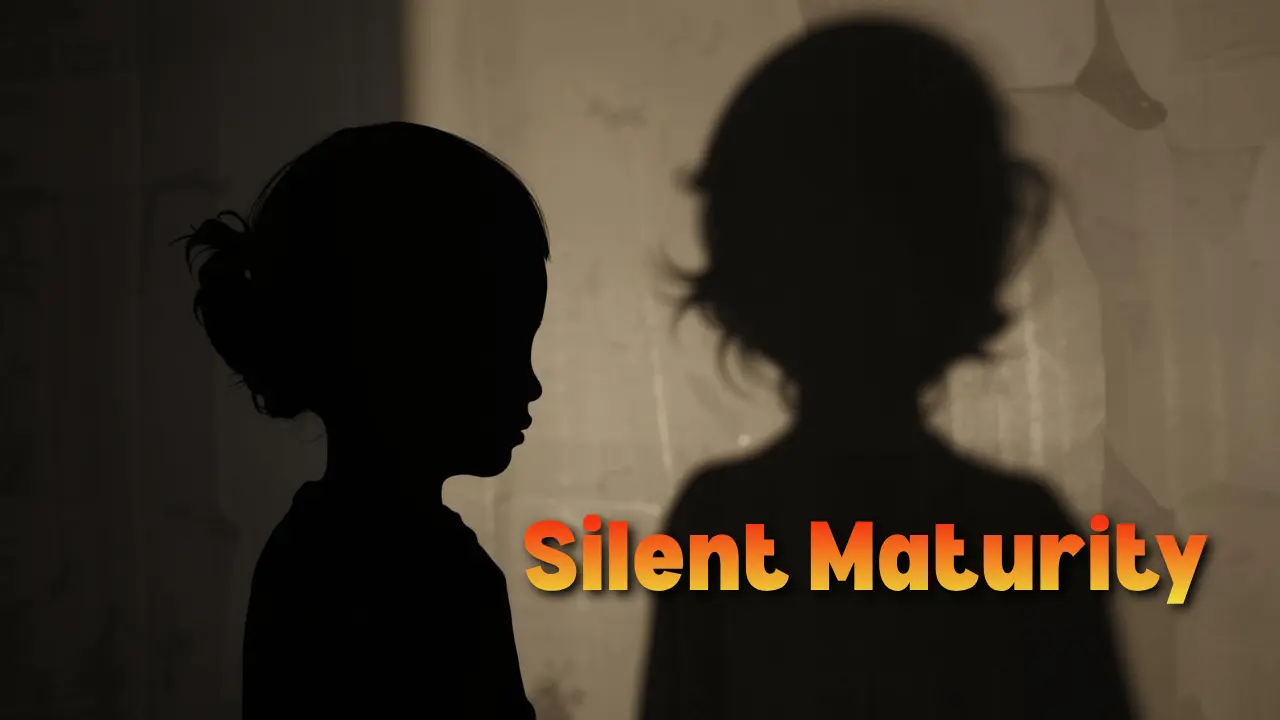

Some children grow up too fast. They sense tension, take on burdens, and try to keep everything together while losing their own peace. What looks like maturity is often just exhaustion and fear.
Psychologists call it emotional parentification—when a child becomes the caregiver instead of being cared for. The result is an adult who seems strong but carries the quiet ache of a childhood cut short.
The Lost Art of Being a Child
The classroom hums — pencils tapping, laughter filling the air — but in the back row sits a quiet child, hands folded, eyes observant. They watch like an old soul in a small body. When classmates cry, they offer tissues. When parents argue, they listen from the stairs and promise never to make that kind of noise.
Teachers call the child mature for their age.
But what that child truly is — is tired.
Some children learn early that peace depends on their calm, that love must be earned through control. So they hide their joy, silence their tears, and carry weights meant for grown shoulders. They seem wise, yet inside, they are weathering storms alone.
“Some children become adults to survive their childhood.”
The child who grows up too fast does not lose imagination — they bury it for safekeeping. In that quiet burial begins what psychologists call lost childhood psychology, where play fades and responsibility takes its place too soon.
The Hidden Psychology of Forced Maturity
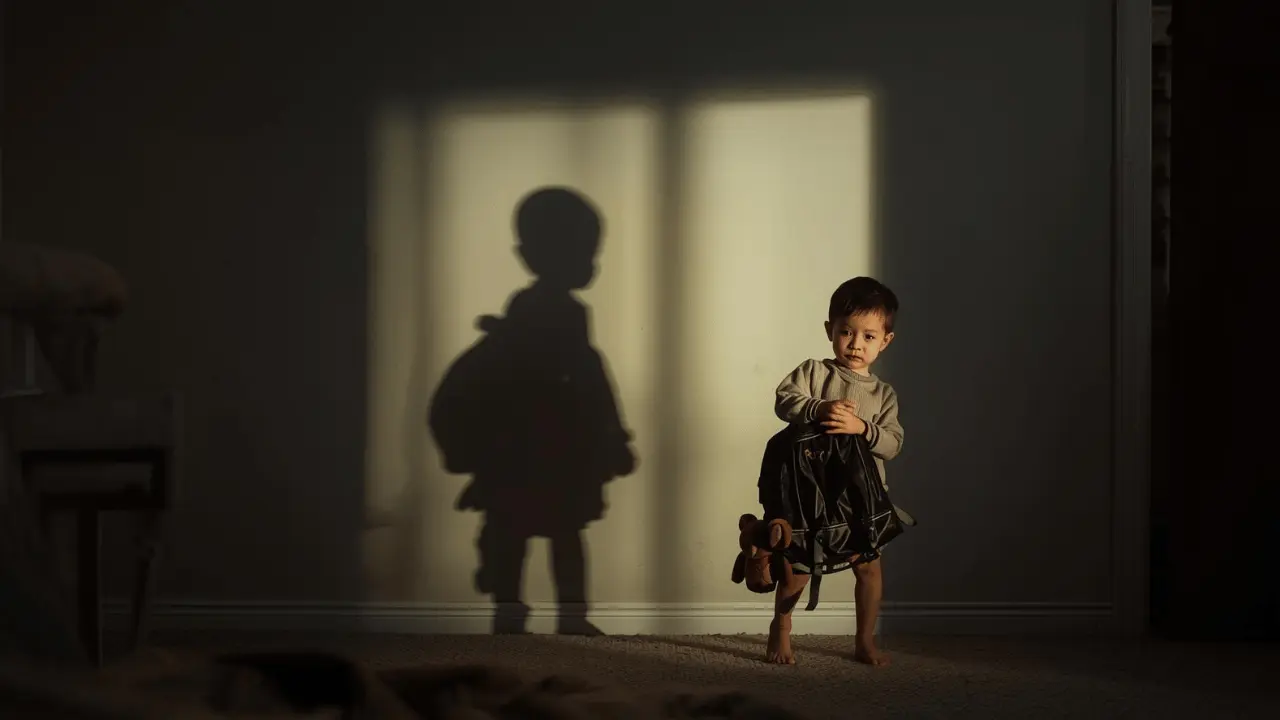
There is a name for this invisible inheritance: emotional parentification — when a child becomes the caretaker of siblings, parents, or even the family’s emotional balance.
Imagine an eight-year-old comforting their mother after a breakup.
A twelve-year-old cooking dinner because their father has passed out on the couch.
An oldest sibling mediating every argument, learning that love means maintenance.
These children do not rebel. They rescue.
Psychologists call this premature emotional development — a survival strategy that hardwires empathy and responsibility but costs them childhood ease. Research in the Family Process Journal shows that children who grow up this way often become adults who struggle with self-worth, boundaries, and guilt for meeting their own needs.
Forced maturity feels noble, but it quietly rewires identity, teaching a dangerous belief: “I am valuable only when I am useful.”
The Strong Child Who Is Secretly Struggling
The child who never needed help becomes the adult who no longer knows how to ask for it.
They are the ones who appear calm under pressure — the “strong friends” who carry everyone’s pain but rarely share their own. This pattern, known as over-responsibility psychology, echoes a childhood where love and support were conditional.
When Strength Becomes Armor
Beneath that composure often lives hyper-independence — the instinct to handle everything alone because relying on others once felt unsafe. Over time, this turns into emotional suppression, a quiet disconnect from one’s own feelings in exchange for control.
The result is adults who comfort others with ease but freeze when someone tries to comfort them.
And here lies the quiet tragedy — society mistakes this for resilience. We call it maturity, without seeing that it is often trauma disguised as strength.
How Society Rewards Pain Disguised as Strength
“You are so mature for your age.”
“You are such a little adult.”
We mean it as praise, yet it often celebrates survival, not growth.
When a child learns that strength earns approval, they begin to equate composure with worth. Their quiet endurance is applauded, while their hidden exhaustion goes unseen.
When Survival Looks Like Success
Our culture admires self-reliance — the child who raised siblings, the teen who worked two jobs, the adult who never complains. But behind those stories often lies a silent truth: “I did not have a choice.”
By glorifying “emotional resilience,” society teaches that pain carried gracefully is more admirable than pain expressed honestly. What looks like strength is often only survival wearing a brave face.
The Long-Term Emotional Consequences
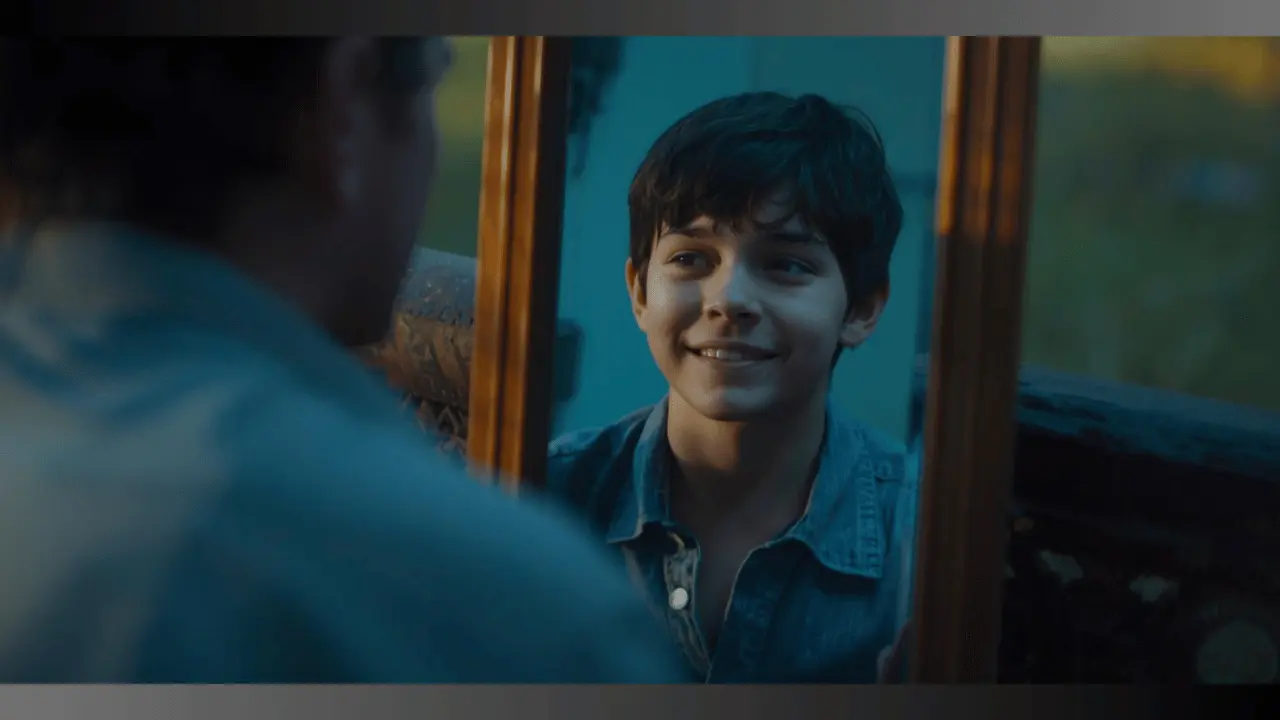
Growing up too fast does not end when childhood does. It lingers, quietly shaping adulthood in lasting ways.
The once-responsible child often becomes the perfectionist adult — unable to rest unless everyone else is content. Anxiety, guilt, and emotional detachment take root in the old belief that love must be earned through effort.
Inside, a quiet whisper remains:
“If I stop taking care of everyone, will I still be loved?”
This question captures the deep residue of parentification trauma. Adults who once served as caretakers often struggle to trust rest, joy, or vulnerability. They confuse safety with productivity and affection with obligation.
In time, this leads to emotional burnout — a life spent perpetually “on,” even in moments meant for peace.
Healing the Inner Child Who Never Got to Play
Recovery begins not with blame, but with compassion — the kind we were once too young to give ourselves.
Relearning Care and Vulnerability
Healing the inner child means re-parenting — meeting our own emotional needs with patience and gentleness. It begins with small, radical acts: resting without guilt, saying “no” without apology, allowing tears without shame.
According to Psychology Today, re-parenting involves three essential steps:
- Acknowledging the pain that shaped early roles.
- Allowing vulnerability by expressing emotions once forbidden.
- Setting boundaries that protect the present self from old patterns.
Over time, this process helps us reconnect with the child who was silenced — not to relive the past, but to rewrite it with compassion.
Author’s Message
You learned to be strong before you ever learned to be safe. You carried worlds that were never yours to hold — and you did it quietly, bravely, beautifully.
Yet the world built on survival does not have to be the one you live in forever. You deserve rest, softness, and laughter that does not come with responsibility attached.
“You were strong because you had to be — now you can be gentle because you choose to be.”
To every soul who grew up too fast: your maturity was never a flaw. It was proof of your heart — and that same heart now deserves the freedom to feel young again.
