
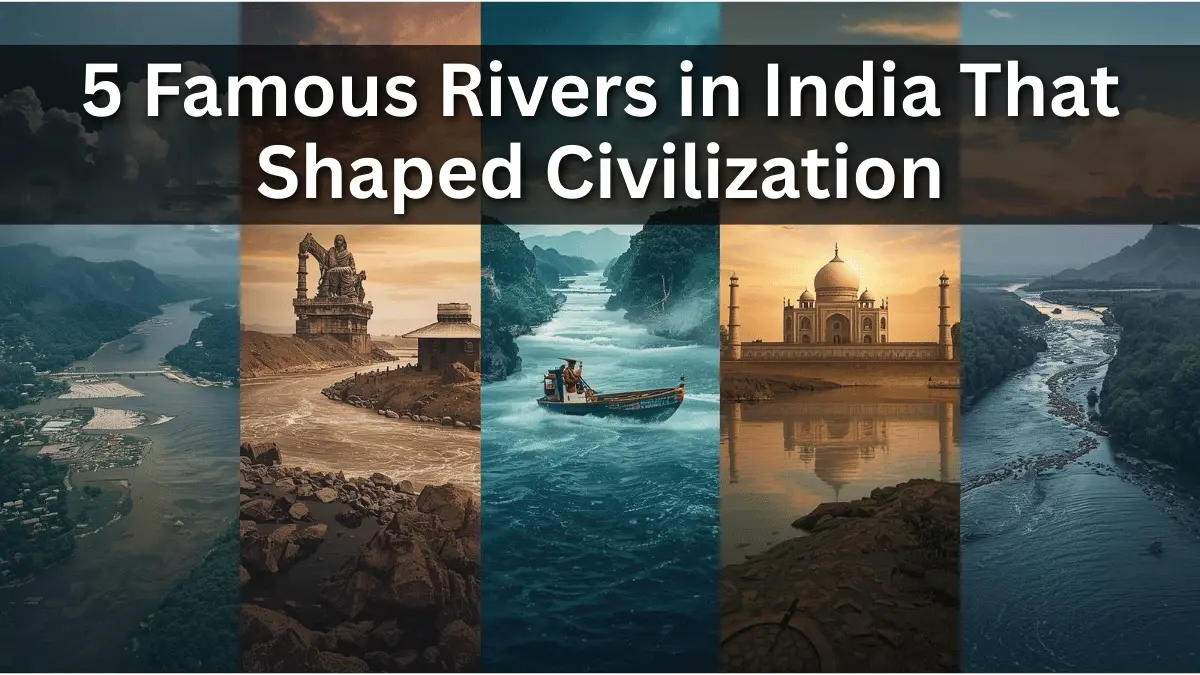

India is not just a land of rivers — it is a land built by rivers. Long before cities had names or borders had lines, rivers decided where people lived, how civilizations grew, and what cultures believed in. Even today, these rivers quietly shape agriculture, spirituality, politics, and daily survival.
1. The Ganga: More Than a River, a Belief System
The Ganga is not simply India’s most famous river — it is an emotion. Originating from the Gangotri Glacier in the Himalayas, the river travels over 2,500 kilometers before merging into the Bay of Bengal. Along the way, it touches millions of lives daily.
Why the Ganga Feels Eternal
For centuries, people have believed the Ganga cleanses not just the body, but the soul. Cities like Varanasi and Haridwar exist largely because of this belief. Life, death, prayer, and celebration all happen on its banks — often simultaneously.
The Modern Reality
Despite its spiritual importance, the Ganga faces pollution and ecological stress. What makes this river unique is the paradox: people revere it deeply, yet struggle to protect it fully. Government initiatives like the Namami Gange Mission aim to restore its health, proving that ancient faith and modern responsibility must meet halfway.
👉 The Ganga reminds us that belief alone isn’t enough — care must follow devotion.
2. Yamuna: The River That Watches History Unfold
Flowing parallel to the Ganga for much of its journey, the Yamuna has quietly observed empires rise and fall. From the Mughal era to modern India, this river has been a silent witness.
A River Framed by Icons
The Yamuna passes through Delhi, Agra, and Mathura — cities that hold immense political, cultural, and religious weight. The Taj Mahal stands gracefully beside it, proving how rivers influence not just survival, but beauty and architecture.
A River Under Pressure
Today, the Yamuna is one of India’s most polluted rivers, especially within urban stretches. Industrial waste and sewage have taken a toll, making it a symbol of how development without balance can harm even the most historic lifelines.
⚠️ The Yamuna teaches a tough lesson: progress that ignores nature always sends the bill later.
3. Brahmaputra: Wild, Powerful, and Unapologetic
If the Ganga is revered and the Yamuna is burdened, the Brahmaputra is simply untamed. Entering India through Arunachal Pradesh and flowing across Assam, this river is massive, unpredictable, and breathtaking.
Why the Brahmaputra Is Different
Unlike many Indian rivers, the Brahmaputra expands dramatically during monsoons, creating fertile plains but also devastating floods. It refuses to be controlled completely — and that’s exactly what makes it vital.
Lifeline of the Northeast
The river supports agriculture, fisheries, and transportation across Assam. It also shapes unique ecosystems like Majuli, one of the world’s largest river islands.
🌧️ The Brahmaputra reminds us that nature doesn’t need permission — it needs respect.
4. Godavari: The Southern Giant With Quiet Strength
Often called the “Ganga of the South,” the Godavari is the longest river in southern India. Originating in Maharashtra and flowing through Telangana and Andhra Pradesh, it plays a critical role in irrigation and food production.
Why Farmers Depend on It
The Godavari basin supports millions of farmers and feeds entire regions. Rice, sugarcane, and cotton owe much of their success to this river’s steady flow.
Culture Without the Spotlight
While it may not receive the same national attention as the Ganga, the Godavari is equally sacred. Events like the Pushkaram festival draw massive crowds, proving that spiritual significance doesn’t require constant headlines.
🌾 The Godavari shows that quiet contributors often carry the heaviest responsibility.
5. Narmada: The River That Flows Against the Norm
The Narmada is rare — not because of its size, but because it flows westward into the Arabian Sea, unlike most Indian rivers. This alone gives it a unique place in Indian geography.
A River of Pilgrimage
The Narmada Parikrama, a complete walk around the river, is considered one of the most demanding spiritual journeys in India. Devotees believe the river itself grants liberation.
Development and Debate
Major projects like the Sardar Sarovar Dam have turned the Narmada into a center of development discussions. While the dam provides electricity and water, it has also sparked debates about displacement and environmental cost.
⚖️ The Narmada stands at the crossroads of progress and preservation.
Why These Rivers Still Matter Today
These five rivers are not frozen in history. They influence:
- Food security and agriculture
- Urban development and water supply
- Religious identity and festivals
- Environmental policy and climate discussions
According to India’s Ministry of Jal Shakti, sustainable river management is now a national priority, highlighting how rivers are central to the country’s future, not just its past. You can explore official initiatives on river conservation through authoritative resources like the Government of India’s water mission portals.
Rivers Are Stories in Motion
India’s famous rivers are not just physical channels of water — they are stories that move, adapt, struggle, and survive. They connect ancient rituals with modern challenges, devotion with responsibility, and nature with humanity.
Understanding these rivers isn’t about memorizing names. It’s about recognizing how deeply they shape everyday life — often without us noticing.

2 thoughts on “5 Famous Rivers in India That Shaped Civilization, Culture And Curiosity”