
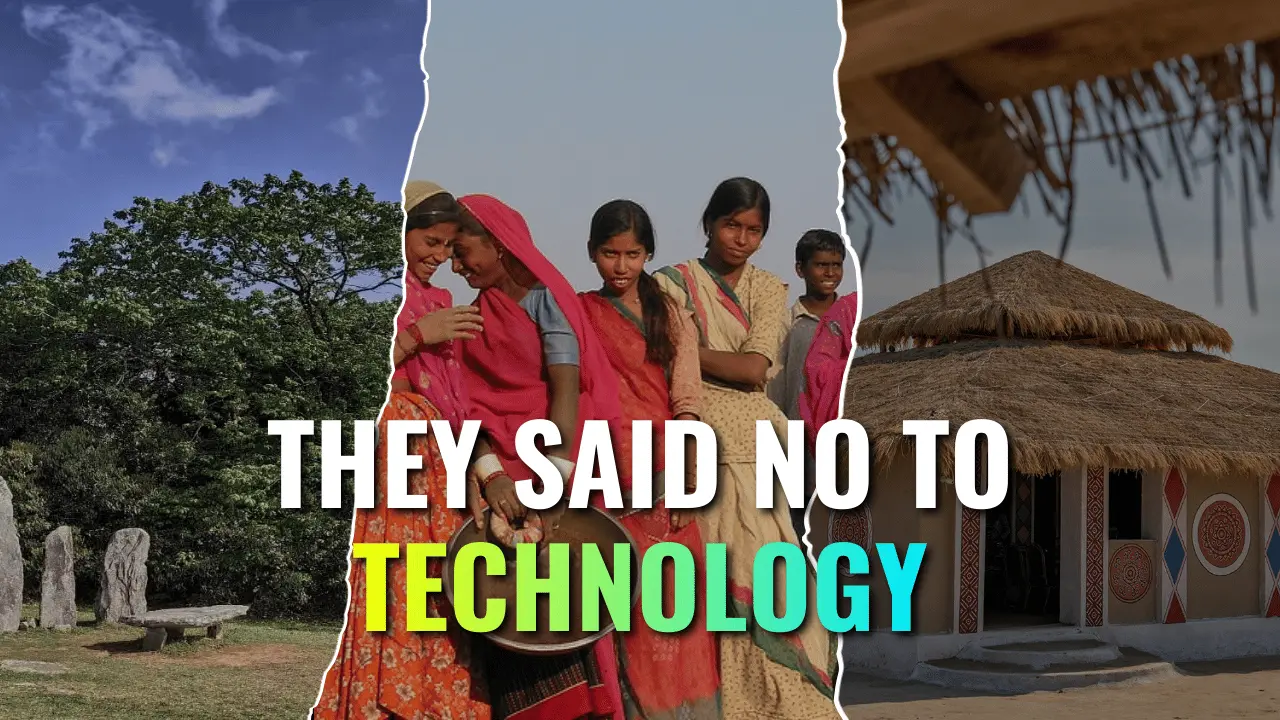

Modern technology spreads fast in India. Mobile towers rise quickly, internet reaches remote hills, and digital payments replace cash even in small towns. But not everywhere welcomed this change.
In some Indian villages, technology was not embraced blindly. Instead, it was questioned, limited, or deliberately kept out. These communities decided that certain aspects of modern life disrupted social balance, environment, or tradition.
1. Mawphlang, Meghalaya
Mawphlang is known for its sacred grove, protected for centuries by community belief. Technology here is not completely absent, but it is carefully restricted.
Villagers believe excessive modernization disturbs the spiritual and ecological balance of the forest. Construction, digital interference, and uncontrolled tourism are discouraged to preserve the grove’s sanctity.
Mawphlang shows how tradition can act as environmental protection. The village values continuity over convenience, proving that preservation sometimes requires refusal.
Also Read: Indian Towns That Are Vanishing Without Noise
2. Hodka, Gujarat: Minimal Technology
Located in the Kutch region, Hodka village consciously limits modern infrastructure to protect its cultural identity. Traditional homes, crafts, and community spaces dominate the landscape.
Technology is used selectively, not excessively. The focus remains on local skills, artisan work, and collective living rather than individual digital consumption.
Hodka demonstrates that development does not need to erase heritage. When technology is controlled, culture remains visible and strong.
3. Dharnai, Bihar
Dharnai gained attention when it challenged the traditional electricity grid model. For years, residents lived without reliable power, relying on community solutions instead.
Rather than waiting endlessly, the village experimented with alternative energy and limited technological dependence. Life revolved around daylight, shared spaces, and manual systems.
Dharnai reflects a powerful idea. Technology should serve people, not make them dependent on broken systems.
4. Remote Himalayan Villages
In parts of Uttarakhand and Himachal Pradesh, some villages remain disconnected not because of isolation alone, but because residents prefer it that way.
Mobile networks are weak or discouraged, and daily life revolves around farming, weather, and community schedules rather than screens. Information travels through conversation, not notifications.
These villages remind us that constant connectivity is not essential for social cohesion. Sometimes, distance strengthens relationships rather than weakens them.
5. Tribal Villages of Central India
Several tribal communities across central India accept technology slowly and selectively. They resist mass digital influence that threatens language, customs, and land relationships.
Technology is often introduced through health or education, while entertainment-driven exposure is limited. Elders play a central role in deciding what enters the community.
These villages show that rejection is not fear. It is control.
Also Read: 5 Famous Rivers in India That Shaped Civilization, Culture And Curiosity
Why These Villages Rejected Modern Technology
The reasons are practical, not romantic.
Many villages observed that uncontrolled technology led to:
- Cultural erosion
- Environmental damage
- Social isolation
- Loss of community authority
By limiting technology, they preserved balance. Their decision was not anti-progress. It was pro-sustainability.
What Urban India Often Misses
Cities often equate progress with speed and scale. These villages challenge that belief by proving that quality of life is not measured by bandwidth.
Children grow up grounded, elders remain respected, and social bonds stay intact. Problems still exist, but they are faced collectively rather than digitally escaped.
💡 Sometimes advancement means choosing less, not more.
Choosing the Future by Limiting the Present
These Indian villages did not reject technology because they were unaware of it. They rejected parts of it because they understood its cost.
In a country racing toward digital everything, these places offer a quiet counter-question. Not what technology can do, but what it might undo.
India does not move in one direction. It moves in many, and that is its strength.

1 thought on “Indian Villages That Rejected Modern Technology (And Why They Still Stand by It)”