
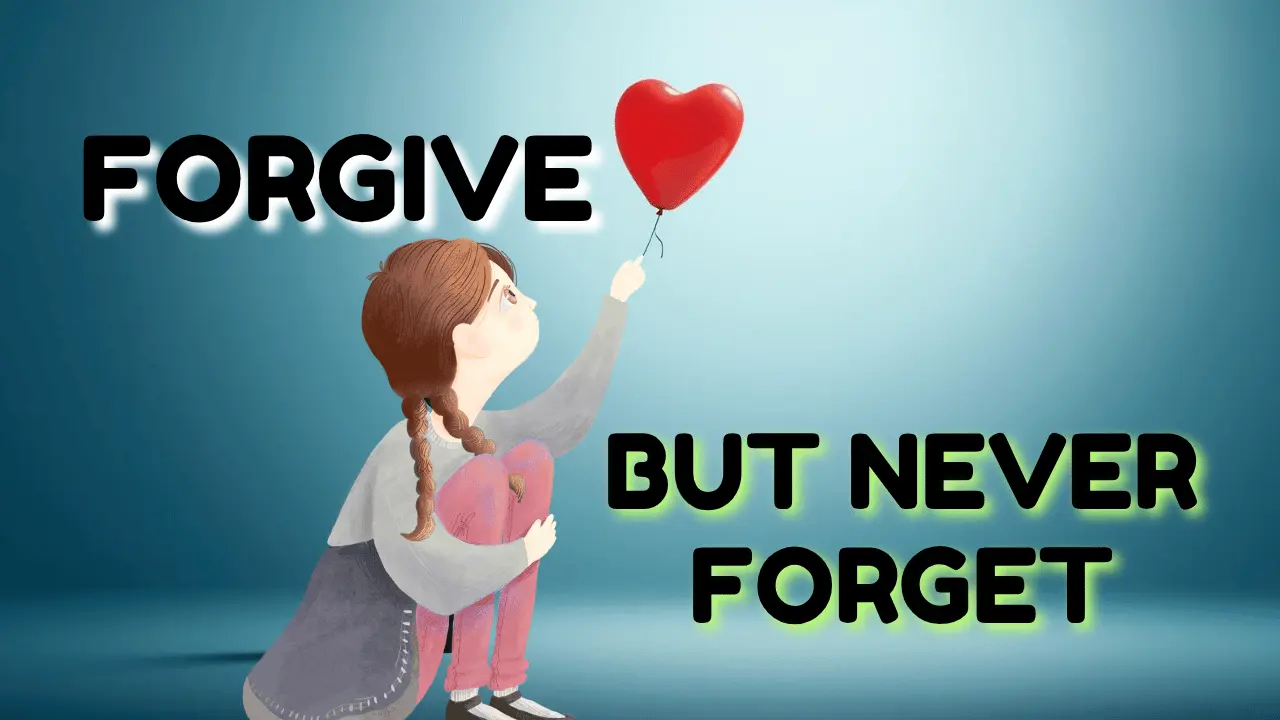

We have all heard the saying, “forgive and forget,” but for most of us, only half of that feels realistic. Forgiving can bring peace—a release from the weight of anger and resentment. Forgetting, however, often feels unsafe, as if letting go of the memory means letting go of the lesson.
There is quiet strength in those who forgive but never forget. They understand that peace does not come from erasing the past but from learning to live wisely because of it.
1. What Forgiveness Really Means in Psychology
Understand Forgiveness Beyond Words
In psychology, forgiveness is not the same as approval—or forgetting. It is the emotional process of letting go of resentment and the desire for revenge. True forgiveness allows the mind to rest in peace without erasing what happened.
Psychologists describe forgiveness as a gradual journey, not a single act. It involves acknowledging pain, showing empathy toward oneself and others, and choosing to move forward. Studies show that those who practice forgiveness tend to experience less stress, anxiety, and emotional fatigue. They regain mental clarity and create room for healing instead of rumination.
Why Forgetting Is Not Always Healthy
Forgetting a painful event does not always equal peace. Sometimes it signals avoidance or denial. Remembering, on the other hand, serves a valuable purpose—it allows people to learn from experiences, set healthy boundaries, and protect themselves from future harm.
In that sense, memory becomes an instrument of wisdom. By holding on to awareness rather than resentment, people cultivate both compassion and caution—two pillars of emotional maturity.
2. The Human Mind’s Relationship with Memory

How Emotional Memories Shape Behaviour
Our brains are wired to hold onto emotional memories more vividly than neutral ones. The amygdala and hippocampus work together to store experiences that carry emotional weight, ensuring that lessons tied to pain or joy remain accessible.
This mechanism has an evolutionary purpose—it keeps us safe. When the mind remembers what once caused pain, it prepares us to avoid similar harm in the future. So, the inability to forget is not necessarily stubbornness—it is often a reflection of emotional intelligence and survival instinct.
When Memory Becomes Emotional Armor
For many, remembering past pain becomes a kind of emotional armor. The mind quietly says, “I have been here before—tread carefully.” This memory does not come from bitterness but from self-preservation. It reminds people of what they have overcome and what to guard against moving forward.
When approached with awareness, this emotional armor can foster resilience. It turns memory into a quiet guardian—one that guides choices and relationships with wisdom.
Interestingly, this mindful restraint is similar to the psychology of people who choose not to share their photos online—they value privacy, emotional safety, and self-awareness over external validation. You can explore more about this in the article Psychology of People Who Do Not Post Their Photos on Social Media
3. Personality Traits of People Who Forgive but Never Forget
Empaths Who Value Boundaries
Highly empathetic people tend to forgive easily because they understand others’ pain deeply. Yet their compassion does not erase memory—it sharpens awareness. They learn to forgive without reopening themselves to harm.
They value kindness, but they also respect boundaries. For them, forgiveness is not an invitation to repeat the past; it is a declaration of peace with it.
Reflective and Emotionally Intelligent Individuals
Those who forgive but remember are often introspective and emotionally intelligent. They revisit the past not for revenge, but for understanding. By reflecting on experiences, they extract meaning and personal insight.
Their self-awareness helps them tell the difference between letting go and letting their guard down. This balance makes them cautious but not cold, protective but not defensive.
4. The Emotional Impact of Forgiving Without Forgetting
When It Heals
Forgiving while remembering can be deeply healing. When people reflect on what happened without being consumed by it, they gain perspective and resilience. They develop stronger boundaries, sharper intuition, and a deeper empathy for others.
Remembering also deepens compassion—it allows people to connect with others’ pain because they have felt it themselves. Through that connection, emotional maturity grows.
When It Hurts
But holding on to memories can be draining if the pain remains unresolved. When the emotional charge stays alive, it can lead to overthinking, distrust, or fatigue.
The difference lies in intention. Remembering to learn is healthy; remembering to fear is not. Awareness becomes healing only when grounded in self-compassion, not just self-protection.
5. Healing While Staying Aware

Letting Go Without Erasing
Forgiveness does not require forgetting—it requires emotional release. The healthiest form of remembering is when the memory no longer hurts but simply teaches.
Many find this balance through mindfulness, journaling, or therapy. These tools help people process emotion, observe thought patterns, and separate who they are from what happened to them. Over time, the memory loses its sting but keeps its wisdom.
Reframing the Memory
Reframing is another powerful way to heal. Instead of viewing a painful past as proof of suffering, it can be seen as proof of survival. Every scar, emotional or otherwise, tells a story of strength.
This mindset turns pain into purpose. It shifts the narrative from “something happened to me” to “I grew through it.” That shift is what makes remembering empowering rather than confining.
6. Forgiveness in Relationships and Personal Growth
Loving with Awareness
In close relationships, forgiveness must live alongside awareness. Trust does not mean blindness, and love does not mean erasing what hurt us. True emotional maturity involves setting boundaries while remaining open-hearted.
When forgiveness is genuine, it strengthens relationships. It creates space for empathy, accountability, and honest connection without expecting perfection. Couples who forgive without forgetting tend to love more consciously and communicate more clearly.
The Growth That Comes After the Pain
Forgiving but remembering allows people to carry the lessons of pain without its burden. Every experience, no matter how difficult, becomes a step toward growth.
Through this process, individuals build resilience and self-respect. They stop seeing themselves as victims of the past and start seeing themselves as creators of a wiser future. Remembering becomes a mark of evolution—a sign that healing and awareness can coexist.
As studies from the Greater Good Science Centre at UC Berkeley explain, forgiveness grounded in empathy and self-awareness can actually strengthen emotional bonds, helping couples rebuild trust while maintaining healthy boundaries.
The Wisdom in Remembering
Forgiving but never forgetting is not a contradiction—it is emotional depth. It means choosing peace without losing awareness, empathy without losing discernment.
Those who live this way understand that memory is not a prison but a compass. It guides them toward truth, safety, and growth. Through forgiveness, they release resentment; through remembering, they preserve wisdom. Together, these forces form a quiet, enduring strength—the essence of emotional intelligence at its highest level.
Frequently Asked Questions
Can you truly forgive if you still remember?
Yes. Forgiveness is about releasing emotional pain, not wiping out memory. Remembering means you’ve learned, not that you’re bitter.
Why do some people find it easier to forgive than forget?
Because forgiveness is a choice, while forgetting is neurological — our brain holds onto emotional experiences to protect us.
How do I stop reliving past hurts even after forgiving?
By acknowledging the memory without judgment. Techniques like mindfulness and therapy help detach emotion from memory.
Does forgiving but not forgetting make someone emotionally guarded?
It can — but healthy boundaries and self-awareness transform guarding into emotional intelligence.
What’s the healthiest way to forgive and move forward?
Understand, accept, and release. Don’t erase — evolve.

2 thoughts on “The Psychology of People Who Forgive but Never Forget”