
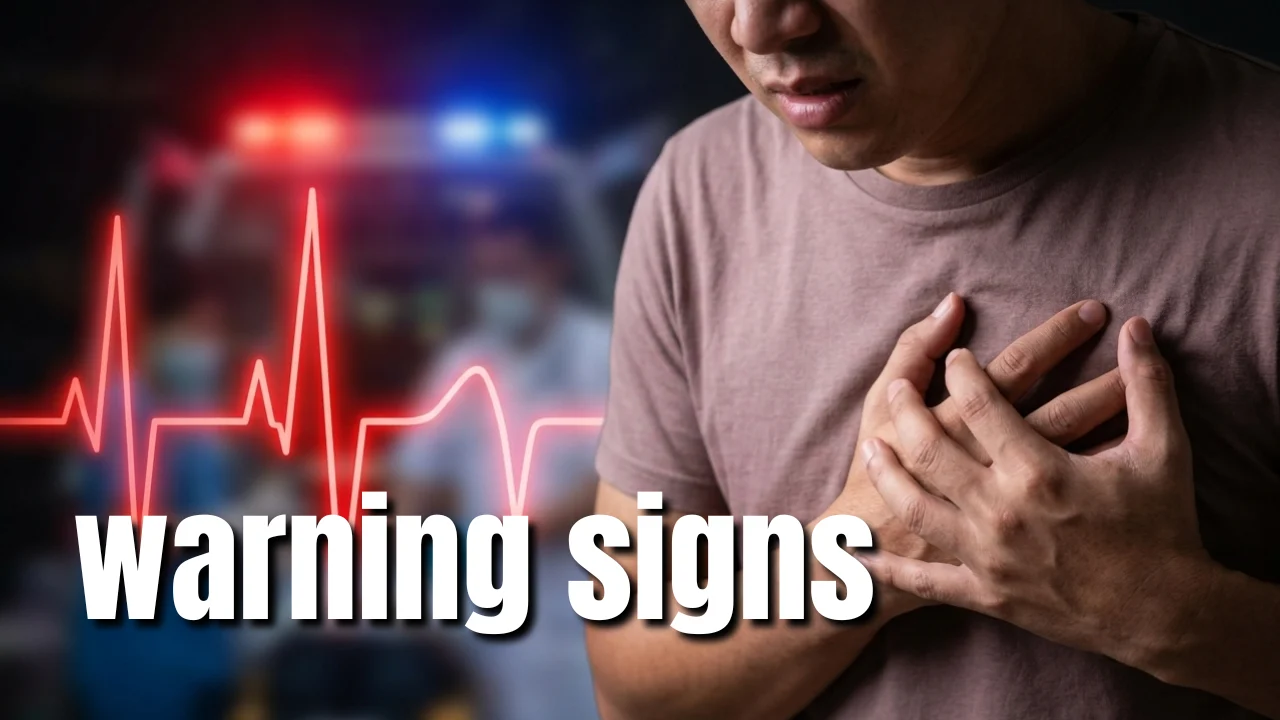

Early signs of cardiac arrest include chest discomfort, shortness of breath, dizziness, unusual fatigue, irregular heartbeat, nausea and sudden loss of consciousness. Recognizing these symptoms early and seeking immediate medical help can significantly improve survival chances.
1. Sudden Chest Discomfort
Chest discomfort is one of the most important warning signs linked to heart-related emergencies.
What this feels like
It may feel like tightness, pressure, squeezing or pain in the centre or left side of the chest. Some people describe it as heaviness rather than sharp pain.
Key points:
- Can last a few minutes or come and go
- May spread to arms, neck or back
- Often ignored as acidity or fatigue
2. Shortness of Breath
Difficulty in breathing can occur even without physical activity.
Why this happens
When the heart struggles to pump blood efficiently, oxygen supply reduces, leading to breathlessness.
Important points:
- Can occur at rest or during light activity
- May be accompanied by chest discomfort
- Often mistaken for respiratory issues
3. Sudden Dizziness
Feeling faint or dizzy can indicate reduced blood flow to the brain.
What to watch for
This symptom may appear suddenly and can be severe enough to cause loss of balance or collapse.
Key points:
- Sudden onset without clear reason
- May lead to fainting
- Can occur along with weakness
4. Unusual Fatigue
Extreme tiredness without exertion is often overlooked.
Why it matters
The heart working inefficiently can reduce energy supply to the body, leading to persistent fatigue.
Important points:
- More noticeable in daily activities
- Can appear days before a major event
- Commonly ignored as stress or lack of sleep
5. Rapid or Irregular Heartbeat
Changes in heart rhythm can signal underlying issues.
What it feels like
You may notice your heart racing, fluttering or skipping beats.
Key points:
- Sudden palpitations
- Irregular rhythm
- May occur with dizziness or discomfort
6. Nausea or Cold Sweats
Some symptoms are not directly linked to the chest but still indicate serious problems.
What to observe
Unexplained nausea, vomiting or sudden sweating without physical exertion can be warning signs.
Important points:
- Cold sweats without activity
- Feeling uneasy or sick
- Often misinterpreted as minor illness
7. Loss of Consciousness
Fainting or sudden collapse is a severe and immediate warning sign.
Why this is serious
It usually indicates that the heart has stopped or is unable to maintain blood flow.
Key points:
- Sudden collapse
- No response or awareness
- Requires immediate medical attention
What to Do If You Notice These Signs
Recognizing symptoms is only useful if followed by quick action.
Immediate steps:
- Seek emergency medical help immediately
- Do not ignore recurring symptoms
- Stay calm and avoid physical strain
Who Is at Higher Risk
Certain factors increase the likelihood of experiencing Cardiac Arrest.
Common risk factors:
- Heart disease history
- High blood pressure
- Smoking
- Diabetes
- Obesity
Why Early Awareness Matters
Many people ignore early warning signs, assuming they are minor issues. However, early detection and timely medical intervention can significantly improve survival chances. Being aware of these symptoms helps you respond quickly and potentially save a life.
Continue Exploring
⚠️ Medical Disclaimer:
This content is for informational purposes only and should not be considered medical advice. Cardiac arrest is a medical emergency. If you or someone else experiences symptoms, seek immediate help from a qualified healthcare professional or emergency services. Always consult a doctor for diagnosis, treatment and personalized medical guidance.
