
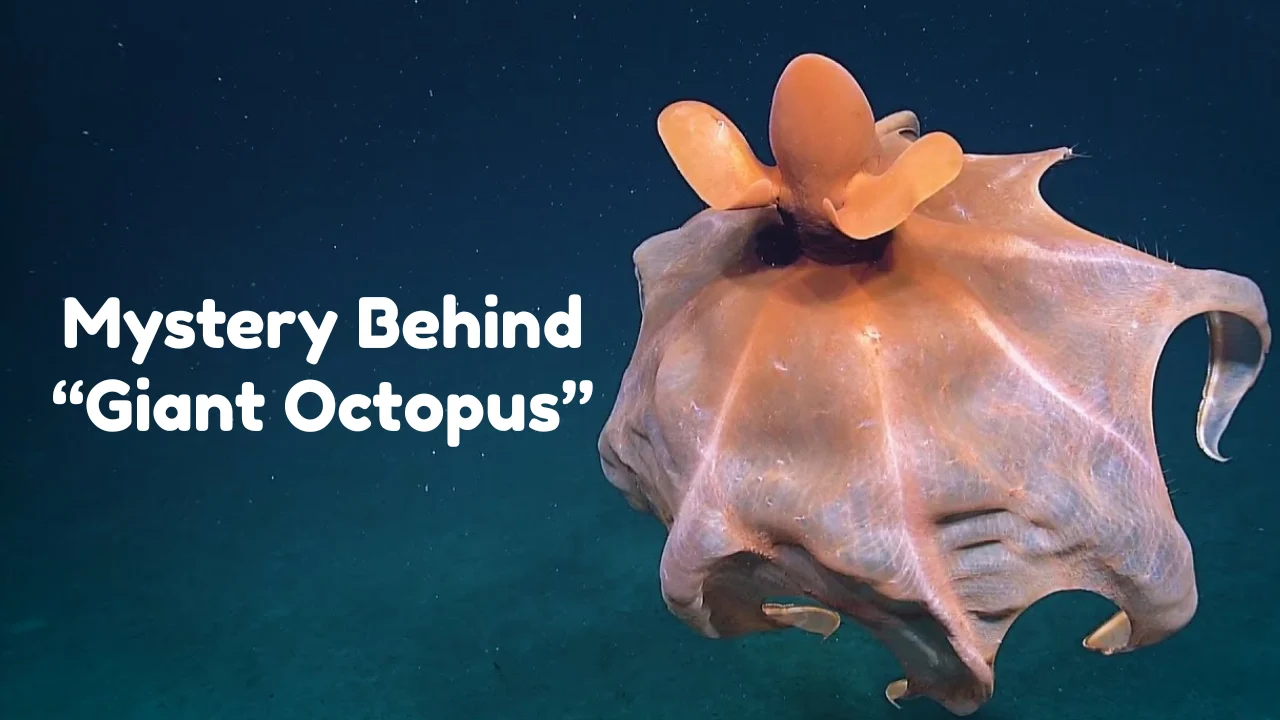

The idea of a giant octopus swimming in the oceans while dinosaurs ruled the land sounds dramatic and almost cinematic. It is no surprise that this claim has gained attention across articles and discussions online. Many people imagine a massive, intelligent sea creature lurking beneath prehistoric waters.
What to Know First: Paleontology often deals with correcting such fascinating but exaggerated ideas. When it comes to Nanaimoteuthis, the truth is far more grounded in science.
What Was Nanaimoteuthis Actually?
Nanaimoteuthis was an extinct marine cephalopod a group that includes modern squids, octopuses and cuttlefish. However, it was not a true octopus in the way many people imagine.
In Simple Terms:
- Not a true octopus
- Likely closer to early squid-like relatives
- Known mainly from limited fossil evidence
Scientists classify Nanaimoteuthis based on fossil structures and comparisons with living cephalopods. It existed during the Mesozoic era, the same broad time period often called the age of dinosaurs. This classification follows standard methods used in paleontology.
What Fossils Actually Tell Us
Understanding Nanaimoteuthis depends almost entirely on fossil evidence, which is both useful and limited. Most fossils of marine creatures are found in sedimentary rock formed from ancient seabeds.
What Fossils Usually Show:
- Hard parts: sometimes preserved
- Soft body: rarely preserved
- Shape and size: often reconstructed
Because cephalopods have soft bodies, very little of their full structure survives over millions of years. Scientists often rely on small preserved parts and compare them with modern species to build a clearer picture.
What This Means: Fossils give strong clues, but not the full story. That is why different interpretations can exist.
Did It Really Live with Dinosaurs?
Yes, Nanaimoteuthis did exist during the time of dinosaurs. Both belong to the Mesozoic era, which covered millions of years and many different environments.
A Simple Way to Understand It:
- Dinosaurs: lived on land
- Marine cephalopods: lived in oceans
While they shared the same timeline, they lived in completely different worlds. Dinosaurs dominated land, while creatures like Nanaimoteuthis stayed in marine environments.
Important Clarification: Living in the same era does not mean they interacted. Science only confirms overlap in time not direct contact.
Also Read: Easy Ways to Reduce Daily Distractions
Was It Truly a Giant Octopus?
The idea of a “giant octopus” is where most of the confusion begins. There is no strong scientific evidence that Nanaimoteuthis was massive in the way people often imagine.
Here Is the Reality:
- Fossil-based size estimates are uncertain
- Modern octopuses vary widely in size
- Squid relatives can grow larger than octopuses
Since fossils are incomplete, size is often estimated rather than measured. This leaves room for exaggeration especially in media and illustrations.
What to Keep in Mind: The word “giant” is usually added later and is not strongly supported by fossil evidence.
Why It Is Often Mistaken for an Octopus
The confusion comes from the fact that all cephalopods share some similar features. Without complete fossils, it becomes easy to misidentify them.
Key Differences:
- Octopus: round body, no internal shell
- Squid-like: longer body internal support structures
Because soft tissues rarely fossilize, scientists must make careful comparisons. When these are simplified for public content, the differences are often lost.
Simple Takeaway: What looks like an octopus in an image may not actually be one.
Myths and Misconceptions
Over time, Nanaimoteuthis has been turned into something much more dramatic than what science suggests. This is where myths begin to take over.
Common Misunderstandings:
- Oversized and dramatic illustrations
- Clickbait-style headlines
- Confusion with other large sea creatures
These ideas spread quickly because they are visually appealing and easy to believe. However, they are not always based on scientific findings.
The Truth: Science tends to be more careful and less exaggerated than popular stories.
Why Nanaimoteuthis Still Matters
Even without the myths, Nanaimoteuthis remains important. It helps scientists understand how marine life evolved over time.
Why It Is Important:
- Helps trace cephalopod evolution
- Shows the diversity of ancient ocean life
Each fossil discovery adds to a larger understanding of how species developed and adapted over millions of years.
Big Picture: Its importance comes from what it teaches, not how dramatic it sounds.
Real Truth Behind the Legend
Nanaimoteuthis did live during the age of dinosaurs, but it was not a giant octopus as often imagined. It was a real marine cephalopod understood through limited fossil evidence and careful study.
Final Takeaway: The truth becomes clearer when myth is separated from fact. Science does not remove the wonder. It replaces exaggeration with a deeper and more meaningful understanding.
The real fascination lies in discovering how life actually existed, not just how it is imagined.
