
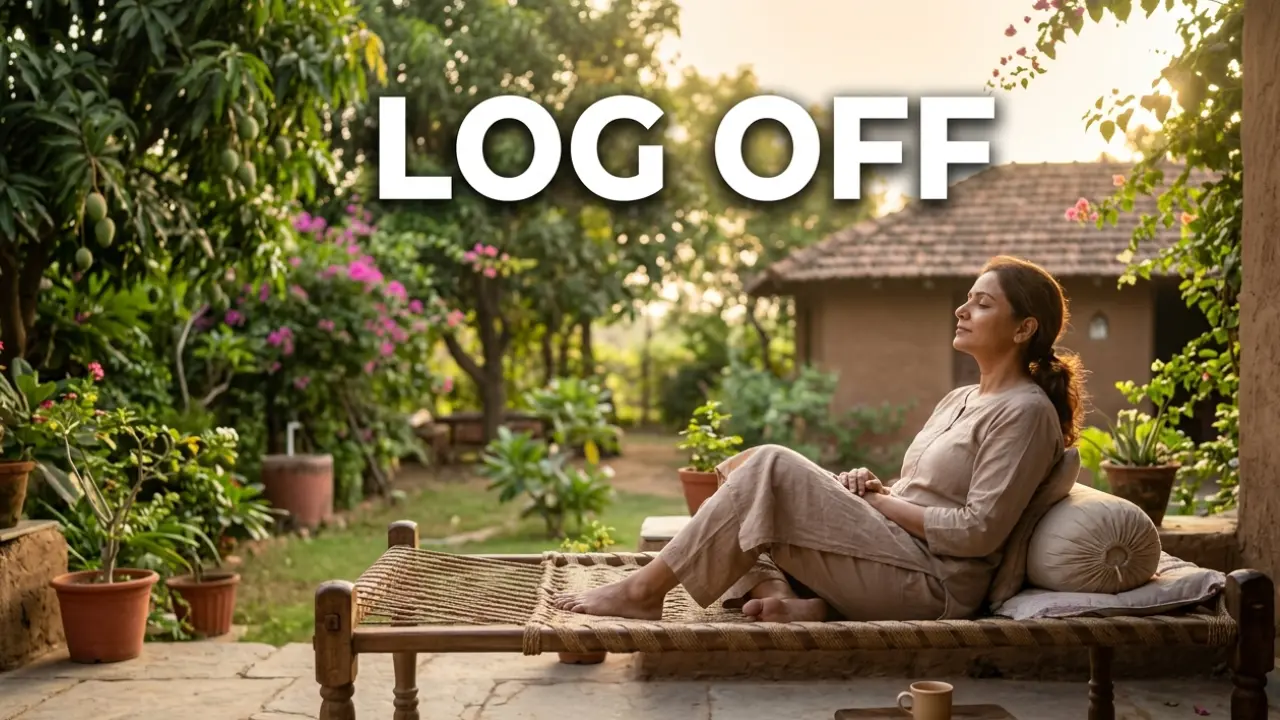

Weekends are supposed to feel different. They are meant to carry a sense of pause, a break from the pace that builds through the week. Yet for many people that difference has slowly faded. Saturday arrives, but the mind continues to move at the same speed pulled by constant notifications, updates and digital noise.
The workweek may technically end, but attention does not. Messages continue, short videos fill idle moments and information keeps arriving without pause. What once felt like light entertainment now often feels like an extension of pressure. Instead of rest, there is a quiet kind of mental activity that never fully stops.
In 2026, more people across India are beginning to notice this shift. They are not rejecting technology or trying to disconnect completely. Instead, they are choosing to create small boundaries, especially on weekends to allow their minds to slow down again.
Rest was not really rest
For years, weekends were seen as a time to catch up on everything missed during the week, including social media, entertainment, online shopping and group chats. However, this habit has started to feel counterproductive for many people. Instead of feeling refreshed, they often enter Monday with the same mental heaviness they carried on Friday night. A digital detox changes that experience in subtle but meaningful ways. Without constant digital input the mind finds space to settle, and rest begins to feel more complete.
Why this matters in 2026
The need for digital boundaries feels sharper now because everyday life has become more screen-led. Work updates, payments, entertainment, learning, shopping, banking and social connection often happen through the same device. This makes the phone useful, but it also makes it difficult to step away from. For many Indians, the problem is not technology itself but the way it fills every spare moment. A screen-light weekend gives people a chance to separate convenience from constant consumption.
Why India is noticing it
What makes this shift meaningful in India is how naturally it fits into everyday life. Family meals, evening walks, temple visits, home cleaning, long conversations and slower Sundays already hold emotional value in many homes. A digital detox does not feel like an imported wellness idea when it is built around these familiar moments. It simply brings attention back to what was already present but often ignored. That local connection makes the habit easier to accept and easier to continue.
This is why weekends still feel tiring
Many people assume they are resting because they are lying down with a phone in hand. The body may be still, but the mind continues to jump from one video, opinion, message or update to another. This constant switching quietly drains attention and makes even free time feel crowded. By Sunday night, the weekend may have passed without any real sense of emotional recovery. Digital detox weekends address this exact gap between being free and actually feeling free.
What changes first
The first noticeable change is usually mental lightness. Without constant checking, the mind stops jumping from one update to another. People often feel more present during small daily moments, whether it is eating breakfast, speaking with family or sitting quietly for a few minutes. Sleep may also feel calmer when screens are reduced before bedtime. These benefits are not dramatic but they are steady enough to make people return to the practice.
The real benefit is attention
The biggest value of a digital detox is not simply “less screen time.” It is the return of attention to places that actually matter. When the phone is not constantly interrupting, people listen better, eat slower, think more clearly, and notice their surroundings again. This matters because attention shapes the quality of daily life. A weekend with fewer distractions often feels more satisfying than a weekend filled with endless online consumption.
How people are doing it
Most people are not disappearing from the internet for two full days. They are making small, realistic changes that fit into Indian routines and responsibilities. The goal is not to reject technology but to stop letting it occupy every quiet space. A few simple habits can make the weekend feel more restful.
- Keeping the phone away during meals
- Turning off non-essential notifications
- Checking messages only at fixed times
- Avoiding reels and short videos before sleep
- Replacing scrolling with a walk, reading, prayer or family time
- Keeping the first hour of Sunday screen-light
- Using a basic alarm clock instead of the phone
- Keeping one shared “no-phone hour” at home
Also Read: Study Explains Why People Check Their Phones Repeatedly
Signs you may need one
A digital detox becomes useful when the phone starts shaping mood more than it should. If a person feels restless without checking notifications, loses time to scrolling or wakes up tired after late-night screen use, it may be a sign that the mind needs space. Another sign is feeling physically present with family but mentally pulled elsewhere. These signals are common and do not need to be treated with guilt. They simply show that attention needs gentler protection.
Homes feel calmer
One of the more unexpected changes people notice is the shift in the atmosphere at home. Without constant phone use, shared spaces feel quieter and more relaxed. There is less background noise from videos and more natural conversation. Even routine activities like cooking or cleaning feel less rushed. This calm environment often becomes one of the strongest reasons people continue the habit.
It helps families reconnect
In many Indian homes, weekends are the only real time when family members are together without the pressure of school, office or daily travel. However, phones can quietly divide even the same room into separate worlds. A digital detox brings people back into shared moments, whether it is helping in the kitchen, watching children play or having tea together in the evening. These moments may seem ordinary but they create emotional warmth. For families the value of a screen-light weekend is often felt in the quality of togetherness.
It protects sleep quality
Late-night scrolling is one of the most common reasons weekends do not feel truly restful. People may sleep longer, yet still wake up tired because the mind stayed overstimulated before bed. Reducing screen use at night gives the body and mind a softer landing into sleep. It also helps create a clearer ending to the day, rather than letting online content stretch endlessly into midnight. For many, this one change alone makes Monday feel less heavy.
What you may notice after one weekend
Even one screen-light weekend can reveal how much mental space was being used by unnecessary digital noise. People may notice calmer mornings, longer conversations, better sleep or a stronger desire to spend time offline. Some may feel bored at first, but that boredom often turns into clarity. Others may simply feel less rushed even without doing anything special. These small changes make the practice feel rewarding enough to repeat.
It is not always easy
A digital detox can feel uncomfortable at first because the habit of checking the phone is often automatic. Many people reach for the screen without a real reason, especially during silence or boredom. That moment can feel restless, but it also reveals how much attention the phone has been taking. The aim is not to be perfect or strict. Even reducing screen time for part of the weekend can create a meaningful reset.
Start with a simple plan
A digital detox works best when it feels doable, not punishing. People who succeed with it usually decide in advance which parts of the weekend will be screen-light. For example, Saturday night may be kept free from reels or Sunday morning may be reserved for family, prayer cleaning or a walk. Planning also helps avoid the feeling of suddenly having “nothing to do.” When the offline time has a gentle purpose, it becomes easier to enjoy.
What to do instead
The success of a digital detox depends on replacing screen time with something emotionally satisfying. In India, this can be beautifully simple and familiar. People may spend time cooking, visiting relatives, watering plants, going for a walk, reading, journaling, praying, arranging a room or simply resting without guilt. The replacement does not need to be impressive. It only needs to feel real, calming and personally nourishing.
A better relationship with technology
The larger value of a digital detox weekend is not just what happens on Saturday or Sunday. Over time, it helps people become more aware of how they use technology during the week as well. Notifications feel less urgent, scrolling becomes easier to limit and online noise stops feeling like a constant requirement. This creates a healthier balance without making life inconvenient. In 2026, that balance is becoming one of the most practical forms of self-care.
Self-care simplified
As this habit continues to grow, it is quietly reshaping how self-care is understood in India. It moves away from expensive routines and brings attention back to simple, accessible practices. In a world that constantly demands engagement, choosing to disconnect is becoming a powerful act of self-awareness. Digital detox weekends may not look dramatic but their impact is steady and deeply personal. For many Indians, the most restful weekend now begins by putting the phone down.
