
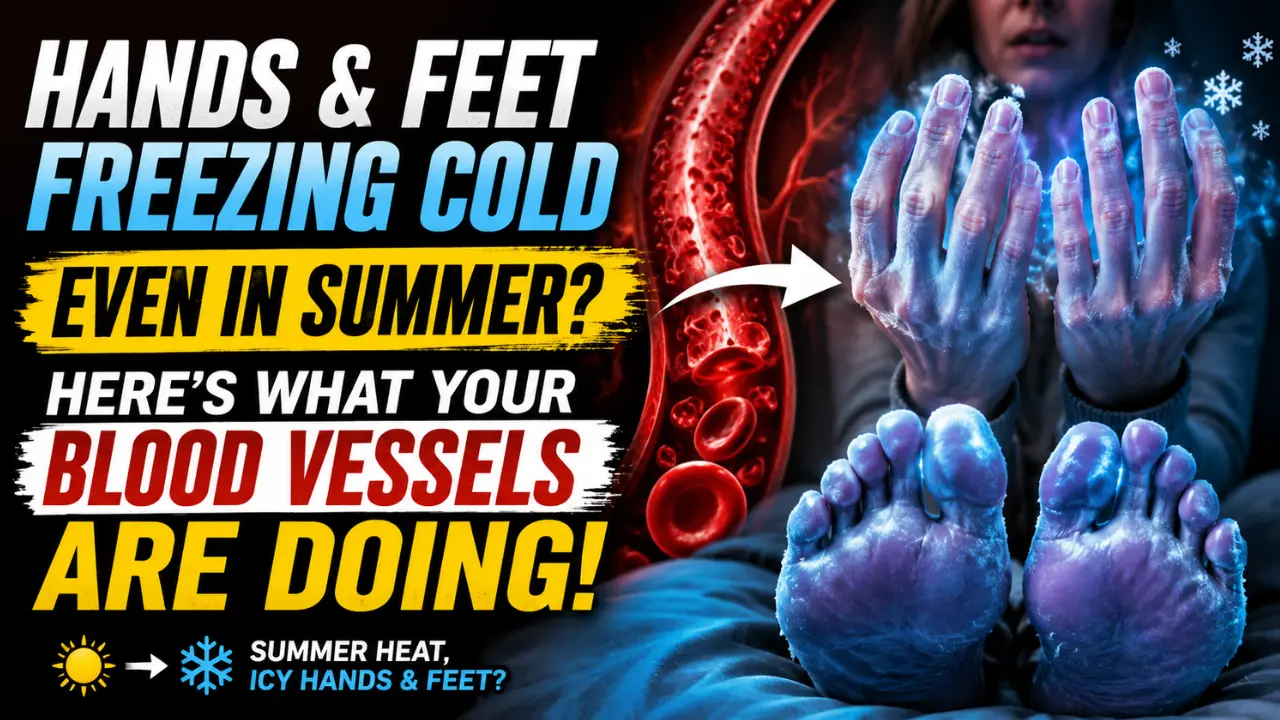

Cold hands and feet feel easy to understand in winter. The air is cold, the skin loses heat, and the body tries to stay warm. But when your hands and feet feel freezing even in summer heat, the reason is usually not the weather outside. It is often what your blood vessels are doing inside.
Your fingers and toes depend on small blood vessels to bring warm blood from the centre of the body to the skin. When those vessels stay open, your hands and feet feel warm. When they tighten, less warm blood reaches the surface and your fingers or toes can feel cold, numb, pale or uncomfortable.
This tightening can happen even when the weather is hot. Summer heat does not always control blood flow. Stress, air conditioning, sitting still, sudden temperature changes, dehydration, caffeine, nicotine and sensitive circulation can all make the small vessels in your hands and feet narrow.
Your Body Sends Warm Blood Where It Matters Most
The body always protects the core first. Your brain, heart, lungs and other vital organs need steady blood flow more than your fingertips and toes do.
When the body senses cold, stress, danger or pressure, it may reduce blood flow to the outer parts of the body. This is not a mistake. It is a protective response. The body keeps more warm blood deeper inside and allows less blood to reach the skin of the hands and feet.
That is why your palms, fingers, soles and toes may feel cold before the rest of your body does. They are far from the heart, exposed to heat loss and controlled by very small vessels that can tighten quickly.
Also Read: These Real-Life Summer Habits Helping Indians
The Main Action Is Vessel Tightening
The medical word for blood vessel tightening is vasoconstriction. It simply means the blood vessels become narrower.
When vessels narrow, blood still moves but less of it reaches the skin surface. Since blood carries heat, less blood means less warmth. The skin then feels cold even if the surrounding air is warm.
This is why someone can sit in a hot room and still have cold hands. The room may be warm but the small vessels in the fingers may not be allowing enough warm blood to reach the skin.
This also explains why rubbing the hands, walking, stretching or warming the body can help. These actions encourage circulation and may help the vessels relax again.
Why It Can Happen in Summer
Summer can actually create its own triggers. Many people move from hot outdoor air into cold indoor air conditioning. That sudden change can make small blood vessels tighten.
Holding a cold drink, washing hands in cold water, sitting under a strong fan, or staying still for a long time can do the same thing. The body may react as if it needs to protect warmth, even though the season is hot.
Stress is another major trigger. When you are anxious, tense, rushed or emotionally pressured, the nervous system can tell skin blood vessels to narrow. Blood is directed more toward deeper muscles and vital organs. The hands and feet may become cold because the body has entered a protective mode.
This is why cold hands can happen during exams, arguments, overthinking, work pressure or fear, even in warm weather.
Some People’s Vessels Are More Sensitive
Some people naturally have more reactive small blood vessels. Their fingers and toes may become cold faster than others. A small trigger that does not bother another person may be enough to narrow their vessels.
In stronger cases, the fingers or toes may turn pale, bluish or purple before warming again. When blood flow returns, they may look red or feel tingly, warm or slightly painful.
This kind of pattern suggests that the small vessels are not just mildly narrowing. They may be overreacting. It does not always mean something dangerous, but repeated colour changes, pain, sores or worsening attacks should be checked.
Also Read: The Pre-Monsoon Meltdown in India
Cold Feet Can Feel Worse Because They Are Farther Away
Feet often stay cold longer than hands because they are farther from the heart and spend more time still. If you sit for hours, blood flow in the legs and feet becomes less active. Crossed legs, tight clothing, pressure behind the knees or poor posture can make the feet colder.
If your feet warm up after walking, stretching or moving your ankles, the cause may be reduced movement and temporary vessel narrowing.
But if one foot is much colder than the other or cold feet come with leg pain while walking, numbness, wounds or colour changes, that should not be ignored. In that case, the issue may involve reduced blood flow rather than simple cold sensitivity.
Colour Changes Tell You More Than Temperature
Coldness alone is one clue. Colour change is a stronger clue.
If the fingers or toes turn pale or white, it can mean blood flow has narrowed sharply. If they become bluish or purple, blood may be moving slowly or carrying less oxygen to the area. If they turn red after warming, blood may be rushing back as the vessels open again.
Mild temporary changes can happen after cold exposure. But repeated strong colour changes, pain, numbness or one-sided discoloration deserve attention because they show that blood flow is visibly changing.
When Cold Hands and Feet Are Usually Less Serious
Cold hands and feet are usually less concerning when they happen occasionally, affect both sides, improve with warmth or movement and do not come with pain, numbness, sores or major colour changes.
For example, cold fingers after holding a chilled drink or cold toes after sitting in an air-conditioned room may simply show normal vessel tightening.
The important point is recovery. If your hands and feet warm up normally and the symptom does not keep returning in a severe way, it is often not serious.
When You Should Take It Seriously
Cold hands and feet should be taken more seriously if the symptom is new, worsening, painful or one-sided.
You should also pay attention if the fingers or toes often turn white, blue, purple or red; if there is numbness or tingling; if wounds heal slowly; if the skin looks shiny or damaged; or if walking causes leg pain.
These signs may mean the issue is more than normal vessel tightening. The blood vessels may be overreacting or blood flow may not be reaching the hands and feet properly.
What Helps the Vessels Relax
The safest first step is to warm the whole body, not only the hands and feet. When your chest and core are warm, the body is less likely to restrict blood flow to the extremities.
Movement also helps. Walking, stretching, ankle circles, opening and closing the hands, and changing posture can encourage blood flow.
Avoid sudden cold triggers when possible. Direct air conditioning, cold water, strong fans, chilled drinks and sitting still for long periods may make symptoms worse in sensitive people.
Also notice whether stress plays a role. If your hands and feet become cold during anxiety, pressure or overthinking, the nervous system may be telling the vessels to tighten.
The Main Message
Cold hands and feet in summer do not always mean your body is cold. They often mean your blood vessels are narrowing when they should be allowing more warm blood through.
Your body may be protecting the core, reacting to stress, responding to air conditioning or showing sensitivity in the small vessels of the fingers and toes.
Occasional coldness that improves with warmth or movement is usually less concerning. But persistent coldness with pain, numbness, colour changes, one-sided symptoms or wounds should be checked properly.
When your hands and feet feel freezing even in summer heat, the real question is not only why they feel cold. The better question is why your blood vessels are tightening and what your body is reacting to.

2 thoughts on “Cold Hands and Feet Even When It Is Hot Outside”