
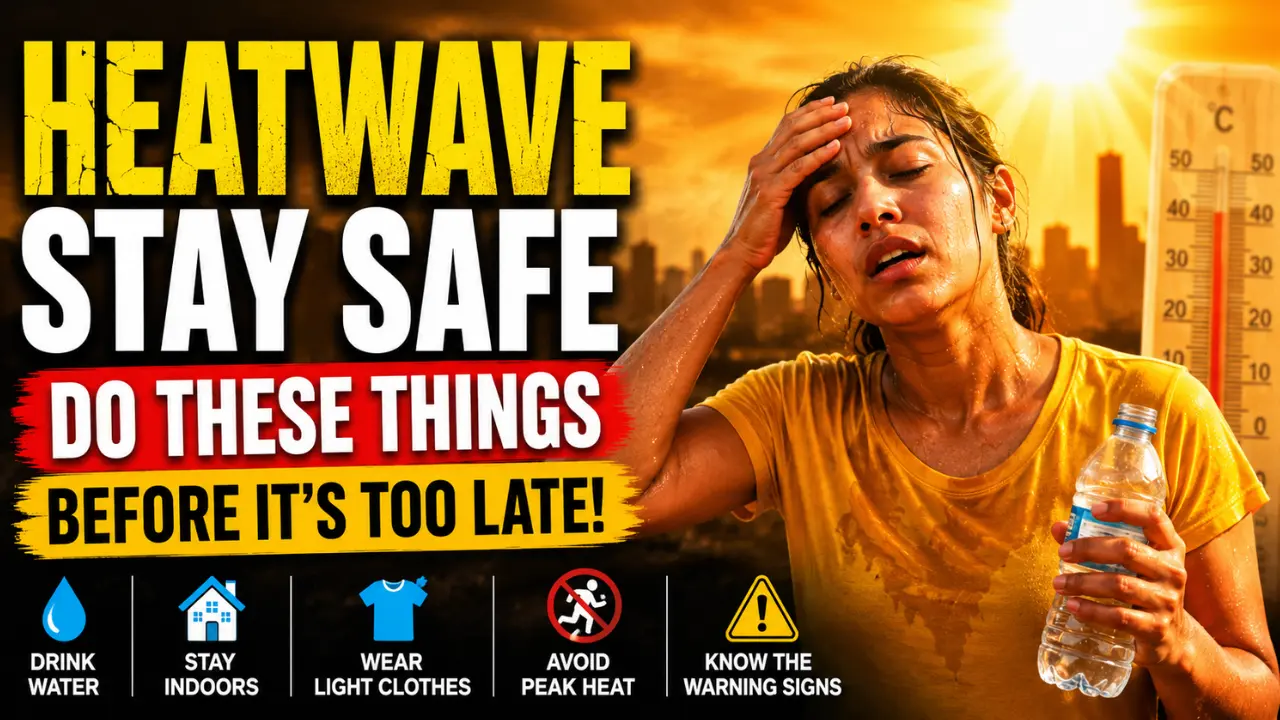

A heatwave becomes dangerous when the body struggles to cool itself. The risk is higher when the air is very hot, humidity is high, rooms have poor airflow or people spend too long outside without enough rest and fluids.
Knowing what to do during a heatwave helps prevent dehydration, heat exhaustion and heat stroke. The main goal is to stay cool, reduce physical strain, drink safely and act early when warning signs appear.
First Things to Do During a Heatwave
Move to the coolest place available. Stay away from direct sunlight, avoid unnecessary outdoor activity and keep your body as cool as possible before symptoms begin.
Drink water regularly in small amounts. Close curtains or window coverings where sunlight enters, wear loose clothing and reduce cooking or heavy work that adds more heat indoors.
Check children, older adults, sick family members, and anyone living alone. Heat can affect vulnerable people faster, and they may not always say they feel unwell.
Also Read: Sudden Headache After Drinking Ice-Cold Water?
Avoid the Hottest Hours
Try to stay indoors or in shade during the hottest part of the day. Outdoor work, long walks, exercise, market trips or standing in queues can become risky when the sun is strong.
If you must go outside, keep the trip short and planned. Carry water, cover your head, walk in shade where possible and rest before you feel weak or dizzy.
Do not push through heat symptoms. Dizziness, nausea, cramps, headache or unusual tiredness should be treated as warning signs, not normal summer discomfort.
Keep Your Room Cooler
Staying indoors helps only when the room is not trapping heat. A closed room with direct sunlight and poor airflow can become uncomfortable and unsafe.
Block direct sunlight with curtains, blinds or thick cloth during the hottest hours. Open windows when the outside air is cooler, especially early morning or evening, if it improves airflow.
Stay in the coolest part of the house. Rooms under direct roof heat often stay hot for hours, so a lower or shaded room may be safer during extreme heat.
Drink Water Regularly
Do not wait until you feel very thirsty. During a heatwave, the body can lose fluid through sweat even while sitting, resting or doing light work.
Drink small amounts of water throughout the day. Keeping a bottle nearby makes it easier to drink regularly without forcing too much water at once.
Watch simple signs of dehydration. Dark urine, dry mouth, headache, dizziness, weakness and reduced urination can mean your body needs more fluids.
Also Read: Cold Hands and Feet Even When It Is Hot Outside
Replace Salt If You Sweat Heavily
Plain water is enough for many people, especially if they are indoors and eating normally. But people who sweat heavily may also lose salts, which can add to weakness, cramps and exhaustion.
Oral rehydration solution, buttermilk, coconut water, salted lemon water or normal meals with enough salt may help after heavy sweating. This is especially useful for outdoor workers or people who feel drained after heat exposure.
People with kidney disease, heart disease, high blood pressure, swelling or fluid restriction should be careful with extra salt and fluids. They should follow medical advice instead of copying general heatwave tips.
Eat Light and Simple Meals
Heavy meals can make the body feel more uncomfortable in extreme heat. Oily, fried, spicy and very large meals may increase heaviness, thirst and digestive discomfort.
Choose lighter meals that are easier to digest. Simple homemade food, rice, dal, curd, vegetables, cucumber, watermelon and seasonal fruits can feel more comfortable during a heatwave.
Food also spoils faster in hot weather. Do not leave cooked food outside for long, especially in a warm kitchen or a room without proper cooling.
Wear Loose Clothing
Wear clothes that help the body release heat. Tight, dark, heavy or synthetic clothes can trap heat and sweat against the skin.
Loose, light-coloured, breathable clothing is usually more comfortable. Cotton and similar fabrics allow better airflow and help sweat evaporate more easily.
When going outside, cover your head with a cap, scarf or umbrella. Direct sun on the head and face can quickly increase heat stress.
Reduce Physical Effort
During a heatwave, the body is already working harder to stay cool. Heavy activity adds more internal heat and increases the risk of heat exhaustion.
Avoid intense workouts, outdoor sports, roof work, gardening, heavy lifting or long walking during peak heat. If work cannot be avoided, take short breaks often and rest in shade.
People who are used to hard work can still become ill in extreme heat. Heat illness does not happen only to weak or unhealthy people.
Also Read: These Real-Life Summer Habits Helping Indians
Cool Your Body Directly
Cooling your body can help faster than only cooling the room. Wash your face, arms and feet with cool water when you feel overheated.
A cool shower can help after outdoor exposure. A damp cloth on the neck, forehead, wrists or arms can also reduce discomfort and support cooling.
After coming indoors from strong heat, sit down first. Loosen tight clothing, sip water slowly and let your body settle before eating, working or lying in a hot room.
Watch for Heat Exhaustion
Heat exhaustion can happen when the body loses too much fluid and struggles to control temperature. It often appears after sweating, walking, working or sitting too long in a hot room.
Common signs include:
- dizziness
- headache
- heavy sweating
- weakness
- muscle cramps
- nausea
- fast heartbeat
- feeling faint
- unusual tiredness
If these symptoms appear, stop activity immediately. Move to shade or a cooler room, loosen clothing, drink water or oral rehydration solution if fully alert and cool the body with water or damp cloths.
Treat Heat Stroke as an Emergency
Heat stroke is the most serious heat-related condition. It can become life-threatening and needs urgent medical help.
Warning signs include confusion, fainting, collapse, seizure, repeated vomiting, very high body temperature, unusual behaviour or inability to respond normally.
Move the person away from heat immediately. Loosen clothing and begin cooling with wet cloths, cool water and airflow while arranging medical help.
Do not force water into the mouth if the person is unconscious, confused, vomiting or unable to swallow safely. In that situation, cooling and urgent medical care are more important.
Protect Children
Children can overheat faster than adults because they may keep playing even when their body is under stress. They may also not explain thirst, dizziness or weakness clearly.
Keep children indoors during peak heat and give fluids regularly. Dress them in loose, light clothing and avoid outdoor games under direct sun.
Watch for unusual sleepiness, irritability, dry mouth, fewer urinations, vomiting, weakness or crying without tears. These signs should be taken seriously during a heatwave.
Check Older Adults
Older adults may not feel thirsty early enough. They may also have health conditions or medicines that make heat more risky.
Check whether they have drinking water, airflow, a cooler place to rest and access to their medicines. Do not assume they are safe only because they are indoors.
Sudden confusion, dizziness, weakness, fainting or unusual tiredness in an older person during a heatwave needs quick attention. It is better to act early than wait.
Be Careful During Power Cuts
Power cuts can make heatwaves harder because fans, coolers, refrigerators and air conditioners may stop working. Prepare before the hottest hours if outages are common in your area.
Keep drinking water ready, charge phones and power banks and keep a few clean cloths nearby for cooling the body with water. Avoid long cooking during peak heat if the kitchen becomes too hot.
If one room becomes unbearable, move to a cooler part of the house or a shaded place with better airflow. Do not stay for long in a closed hot room without ventilation.
Also Read: The Pre-Monsoon Meltdown in India
Avoid Hot Vehicles
Never leave children, older adults, pets, medicines or food inside a parked vehicle during a heatwave. Vehicle interiors can become dangerously hot very quickly.
Even a short stop can be unsafe. If travel is necessary, carry water, avoid long waiting inside parked vehicles and choose shade or cooling whenever possible.
Protect Pets
Pets also need shade, airflow and clean water during extreme heat. Do not keep them on hot rooftops, balconies, closed rooms or inside vehicles.
Avoid walking pets on hot roads during peak heat. Hot ground can burn their paws and heavy panting can be a warning sign.
If a pet is drooling, vomiting, weak, restless or unable to stand properly, it may need urgent care. Heat can affect animals quickly when they cannot escape the hot environment.
Get Help for Serious Heat Symptoms
Seek medical help if symptoms are severe, worsening or not improving after rest and cooling. Do not delay when someone has fainting, confusion, repeated vomiting, chest pain, breathing difficulty, seizure, severe weakness or very high body temperature.
Heatwave safety depends on early action. Stay cool before you feel sick, drink regularly, reduce physical strain, protect vulnerable people and respond quickly when warning signs appear.

1 thought on “Heatwave Warning Signs and Safety Tips”