
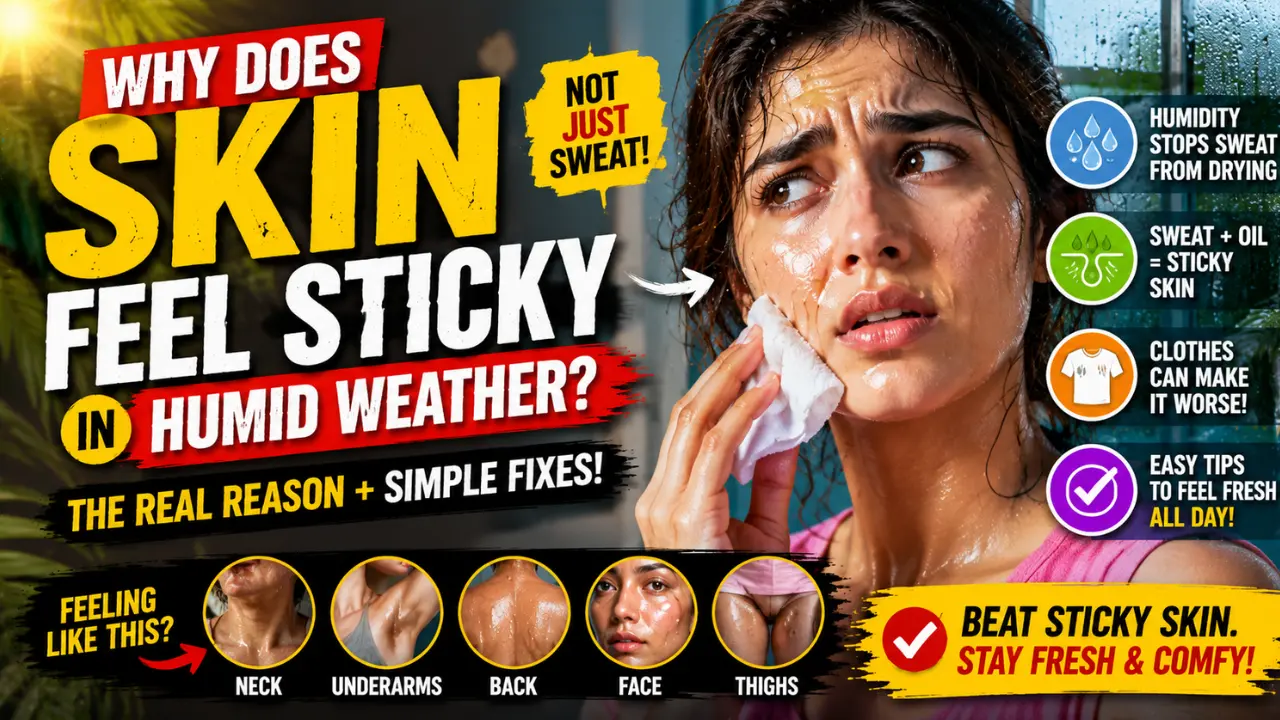

Skin feels sticky in humid weather because sweat cannot evaporate easily. The body is still trying to cool itself but the air already contains too much moisture, so sweat stays on the skin longer than usual. Since evaporation is the main way sweat removes heat from the body, humid conditions make cooling less efficient and often make people feel hotter than the actual temperature suggests.
That leftover sweat mixes with skin oil, dust, sunscreen, lotion and fabric friction. This creates the damp, coated, uncomfortable feeling many people notice on the face, neck, underarms, back, chest, waist and thighs during humid days.
Sweat Needs to Evaporate to Cool the Body
Sweating is not the problem. Sweat is one of the body’s natural cooling methods. The body produces sweat whenever it needs to release excess heat and maintain a safe internal temperature.
When the body becomes hot, sweat appears on the skin. When that sweat evaporates, it carries heat away from the body and helps the skin feel cooler. The cooling effect comes from the evaporation process itself, not simply from the presence of sweat on the skin.
This cooling process works better in dry air. Dry air has more capacity to absorb moisture, allowing sweat to evaporate quickly and efficiently. As a result, the body can cool itself more effectively, even on warm days.
Also Read: How to Stop Clothes From Smelling Bad in Summer
Humidity Keeps Sweat Sitting on the Skin
Humidity means there is already a lot of moisture in the air. When the air is full of moisture, it cannot take up sweat from the skin as easily.
That is why humid weather can feel heavier than dry heat. The body may keep sweating but the sweat does not dry fast enough to cool the skin properly.
This creates a thin wet layer on the skin. Clothes begin to cling, the face may feel oily and the body feels sticky even when you are not doing heavy work.
Humid Heat Feels Different From Dry Heat
Dry heat may feel strong but sweat can evaporate faster. That evaporation gives the body some cooling relief. Even when temperatures are high, the body’s natural cooling system can function more effectively because moisture is able to leave the skin and enter the surrounding air.
Humid heat feels more uncomfortable because the body loses part of that cooling benefit. Sweat stays visible, skin stays damp and body heat feels trapped. The body may continue producing large amounts of sweat but much of it remains on the skin rather than evaporating and carrying heat away.
This is why a humid day can feel exhausting even when the temperature does not look extremely high. The discomfort comes from poor evaporation, not just the number on the thermometer. Meteorologists often use measures such as the heat index because humidity can make the body experience conditions as significantly hotter than the actual air temperature.
Sweat Mixes With Oil, Dust and Products
The sticky feeling becomes worse when sweat mixes with other things on the skin. Natural skin oil, dust, pollution, sunscreen, lotion, body cream or makeup can all create a heavier surface layer.
This is common on the face, neck, chest and back. The skin may feel greasy, coated or dirty even if you bathed earlier.
A gentle rinse or mild cleansing can feel refreshing because it removes the mix of sweat, oil and dust. The goal is not to scrub harshly but to clear the layer that makes the skin feel sticky.
Some Areas Feel Stickier Than Others
Sticky skin is usually worse in areas where sweat collects and air does not move easily. These parts stay damp longer because they are covered, folded or rubbed by clothing. Limited airflow slows evaporation, allowing moisture to remain on the skin for extended periods.
Common sticky areas include:
- neck
- underarms
- back
- chest
- waist
- inner thighs
- behind the knees
- skin folds
These areas can also become itchy or irritated because sweat, heat and friction stay together for longer. When skin repeatedly rubs against skin or clothing while damp, discomfort often increases. This can lead to redness, chafing or a prickly sensation, especially during prolonged exposure to hot and humid conditions.
Clothing can make the problem better or worse. Tight garments tend to trap heat and moisture, while loose, breathable fabrics allow more air circulation and help sweat evaporate. Areas covered by backpacks, waistbands, straps or heavy clothing may feel especially sticky because airflow is reduced even further.
Also Read: How to Reduce Humidity in a Room in Summer Without a Dehumidifier
Clothes Can Trap the Sticky Feeling
Clothing can make sticky skin feel better or worse. Tight, thick and non-breathable clothes hold sweat close to the body.
When fabric presses against damp skin, sweat cannot dry easily. The cloth begins to cling and every movement can feel irritating.
Loose and breathable clothes help because they allow more air around the skin. Cotton and other airy fabrics are usually more comfortable for daily humid weather because they reduce the trapped, sweaty feeling.
Heavy Skin Products Can Make It Worse
Thick creams, oily lotions, heavy sunscreen, body oils and greasy products can feel uncomfortable in humid weather. They may sit on the skin and mix with sweat.
This does not mean skin care should be avoided. The problem is using products that feel too heavy for the weather.
In humid conditions, lighter products usually feel better. A light moisturizer, non-greasy sunscreen and simple skin routine can protect the skin without making it feel sealed under a thick layer.
Bathing Helps Only If the Skin Dries Properly
Bathing removes sweat, oil, dust and the sticky layer from the skin. But if you dress while the skin is still damp, the sticky feeling can return quickly.
Use normal or cool water instead of very hot water. Hot water can make the body feel warmer and may trigger more sweating afterward.
After bathing, dry the skin properly before wearing clothes. Pay attention to the underarms, neck, back, waist, thighs and skin folds. Damp skin under tight clothing becomes sticky faster in humid weather.
Sticky Skin Can Lead to Irritation
Sticky skin is uncomfortable but it can also irritate the skin when sweat, heat and friction stay together for too long.
This may cause itching, redness, prickly discomfort or small heat rash bumps. The risk is higher in sweaty areas covered by tight clothing.
If the skin becomes irritated, avoid harsh scrubbing and heavy products. Keep the area clean, dry and cool. If a rash is painful, spreading, infected-looking or not improving, it should be checked by a medical professional.
Also Read: Benefits of Light-Coloured Clothes in Summer
How to Feel Less Sticky in Humid Weather
The best way to reduce sticky skin is to help sweat dry faster and stop extra layers from building up on the skin.
Wear loose, breathable clothes instead of tight synthetic outfits. Wash sweaty areas when needed and dry the skin before dressing. Change damp clothes after heavy sweating.
Use lighter skin products in humid weather. Avoid applying thick creams or oily lotions over sweaty skin. If you use powder, apply only a small amount on clean, dry skin because too much powder can mix with sweat and become pasty.
Keep air moving around the body when possible. A fan, open airflow, shade and lighter clothing can help sweat evaporate better and make the skin feel less coated.
What Not to Do When Skin Feels Sticky
Do not scrub the skin harshly just because it feels sticky. Harsh scrubbing can damage the skin barrier and make irritation worse.
Do not keep wearing tight sweaty clothes for long hours. Do not apply heavy perfume, lotion or oil over sweaty skin to hide the feeling.
Do not wear clothes immediately after bathing if the body is still damp. Dry the skin first, then wear loose clothing that allows airflow.

1 thought on “How to Stop Sticky Skin in Humid Weather”