
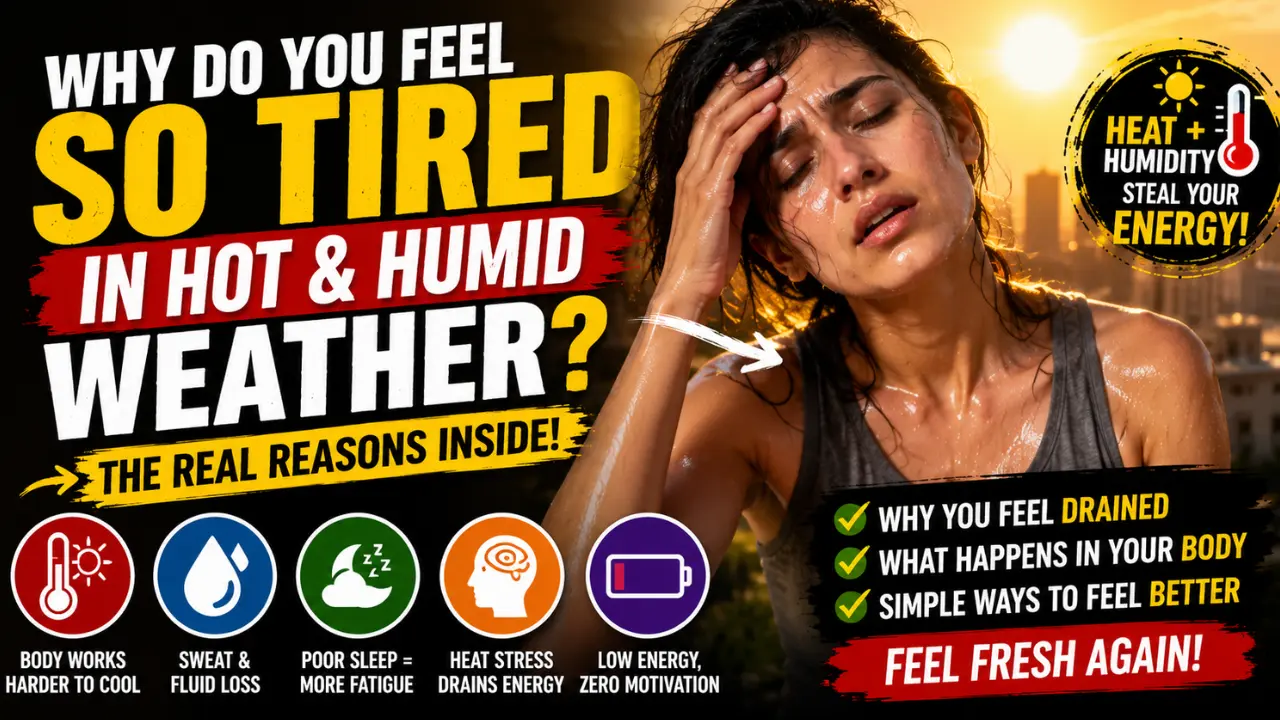

Hot and humid weather makes you tired because your body spends extra energy trying to cool itself. Heat pushes the body to sweat, move more blood toward the skin and work harder to keep its temperature stable. Even when you are sitting, standing or doing light activities, your body may be working harder behind the scenes than it would in cooler conditions.
Humidity makes the tiredness worse because sweat does not evaporate easily. The body keeps trying to cool down but the air slows that process. As a result, cooling becomes less efficient and the body must continue producing sweat and directing resources toward temperature regulation.
The Body Uses Extra Energy to Stay Cool
Your body is always trying to keep its temperature within a safe range. In comfortable weather, this happens quietly without much effort. The body’s cooling systems operate efficiently and most people are not even aware that temperature regulation is taking place.
In hot weather, the body has to work harder. It increases sweating, sends more blood toward the skin and tries to release heat before the body overheats. The heart may also work somewhat harder to circulate blood and support these cooling processes, especially during prolonged exposure to heat.
This extra internal work can make you feel tired. You may be sitting in a chair but your body is still spending energy to manage heat. Even without physical exercise, the body is actively trying to maintain a stable internal temperature.
Also Read: How to Stop Sticky Skin in Humid Weather
Heat Changes Blood Flow
When the body gets hot, blood vessels near the skin open wider. This helps bring heat closer to the surface so it can leave the body. By increasing blood flow to the skin, the body improves its ability to release excess heat into the surrounding environment.
That process is useful but it can also make the body feel slower and heavier. More effort is going toward cooling, so you may feel less active, less alert or less energetic. The body is prioritizing temperature regulation, which can leave fewer resources available for sustained physical or mental activity.
This change in blood flow can also contribute to feelings of fatigue, especially during prolonged exposure to heat. Some people notice reduced concentration, slower reaction times or a greater desire to rest when temperatures remain high for extended periods.
Sweating Can Drain Water and Salts
Sweating helps cool the body but it also removes water from the body. If you sweat for hours and do not drink enough, mild dehydration can begin.
Even mild dehydration can cause tiredness. You may feel headache, dry mouth, dizziness, low energy, darker urine or poor concentration.
People who sweat heavily may also lose salts through sweat. This can add to weakness, muscle cramps and a drained feeling, especially after outdoor work, exercise, cooking or travel.
Humidity Makes Sweat Less Effective
Sweat cools the body best when it evaporates from the skin. In dry air, sweat dries faster and carries heat away.
In humid weather, the air already contains a lot of moisture. Because of this, sweat stays on the skin longer and does not cool the body properly.
This creates a tiring cycle. The body sweats but the sweat does not dry well. The body still feels hot, so it keeps sweating and working harder. That is why humid heat often feels more exhausting than dry heat.
Hot Nights Reduce Recovery
Summer tiredness often starts during the night. If the room stays hot and humid, the body struggles to cool down before sleep.
The body usually needs a slight cooling effect to sleep well. When the room is warm, bedding feels heavy or sweat keeps collecting on the skin, sleep becomes lighter and more broken.
You may sleep for many hours but still wake up tired. The problem is not only sleep duration. The body did not recover properly because heat kept disturbing rest.
Heat Can Slow Focus and Mood
Hot and humid weather can affect the mind too. When the body is sweaty, thirsty, poorly rested or overheated, the brain may feel slower.
You may find it harder to focus, write, study, read, work or make decisions. Small tasks can feel irritating because the body is already uncomfortable.
This is why hot weather can make people feel lazy, sleepy, impatient or mentally dull. It is not always a lack of motivation. Sometimes the body is simply under heat stress.
Also Read: How to Stop Clothes From Smelling Bad in Summer
Heavy Meals Can Add to Sluggishness
Very heavy meals can make hot weather feel worse. Oily, fried, spicy or large meals may leave the body feeling heavy, thirsty and sleepy. These foods often take longer to digest and can increase feelings of fullness and discomfort, especially when temperatures are already high.
Digestion also needs energy. When the body is already trying to manage heat, a heavy meal can add to the sluggish feeling. After eating, blood flow increases to the digestive system to help process food and the body generates a small amount of additional heat during digestion. In hot weather, this can make a person feel even warmer and less energetic.
Skipping food completely is not the answer either. Light, simple meals are usually better in hot weather because they give energy without making the body feel overloaded. Smaller portions eaten throughout the day may also feel more comfortable than a single large meal.
Indoor Heat Can Keep You Drained
You do not need to stand outside to feel heat tiredness. A closed, hot, humid room can also drain the body. The body responds to indoor heat in much the same way it responds to outdoor heat, increasing its efforts to stay cool even when a person is resting.
Roof heat, direct sunlight through windows, poor airflow, cooking heat, electronics and indoor humidity can keep the body warm for hours. In many homes, heat accumulates throughout the day and remains trapped indoors, especially in rooms with limited ventilation or little air movement.
This is why some people feel exhausted at home during summer. The body is not getting enough relief from heat, even indoors.
Also Read: How to Reduce Humidity in a Room in Summer Without a Dehumidifier
Some People Feel It Faster
Not everyone handles hot and humid weather the same way. Children, older adults, outdoor workers, people who drink too little water, people with poor sleep and people with health issues may feel tired faster.
Someone who is already weak, stressed, underfed, feverish or dehydrated may also struggle more. Heat adds extra pressure to a body that is already working hard.
Feeling tired in hot weather does not always mean a person is weak. It often means the body is spending more effort to stay balanced.
When Heat Tiredness Becomes a Warning Sign
Mild tiredness in hot weather is common but some symptoms should not be ignored. They may point to dehydration, heat exhaustion or more serious heat stress. While ordinary fatigue often improves with rest and hydration, warning signs suggest that the body is struggling to regulate temperature or maintain normal fluid balance.
Watch for:
- dizziness
- faintness
- headache
- nausea
- muscle cramps
- heavy sweating
- fast heartbeat
- very dark urine
- repeated vomiting
- confusion
- extreme weakness
- feeling unusually hot and unwell
If these symptoms appear, stop activity and move to a cooler place. Drink water or oral rehydration solution if you are fully alert, loosen tight clothing and cool the body with water or a damp cloth. Resting in the shade, using a fan or moving into an air-conditioned environment may also help lower body temperature.
Confusion, fainting, collapse, seizure or inability to respond normally needs urgent medical help. These symptoms may indicate a medical emergency such as severe heat illness and should be treated immediately. Rapid cooling and prompt professional care can be critical in preventing serious complications.
Why Rest Alone May Not Be Enough
Rest helps, but resting in a hot room may not solve the problem. If the body is still overheated, dehydrated or unable to cool down, lying down may only reduce movement without reducing heat stress.
The body needs cooling and fluid replacement. Sitting in shade, washing the face and arms, drinking water slowly, improving airflow and loosening tight clothes can help more than simply lying in the same hot place.
If tiredness improves after cooling, water and rest, it was likely heat-related strain. If it becomes severe or comes with warning signs, it should be taken seriously.
Also Read: Benefits of Light-Coloured Clothes in Summer
How to Feel Less Tired in Hot and Humid Weather
The best way to reduce heat tiredness is to lower the body’s cooling burden. You do not need one big solution. You need several simple habits working together.
Drink water regularly before you feel very thirsty. Stay in shade during peak heat. Wear loose, breathable clothes. Avoid unnecessary outdoor work during the hottest hours.
Eat lighter meals that do not make you feel heavy. Keep your room ventilated when possible. Wash your face, arms, feet or neck with cool water when the body feels overheated.
If you have hard work to do, try to do it early morning or later in the evening. Take breaks before you feel completely drained.
At night, use light bedding, loose sleepwear and airflow to help the body recover better. Better sleep can reduce the tired, heavy feeling the next day.

2 thoughts on “Hot and Humid Weather Tiredness Explained”