
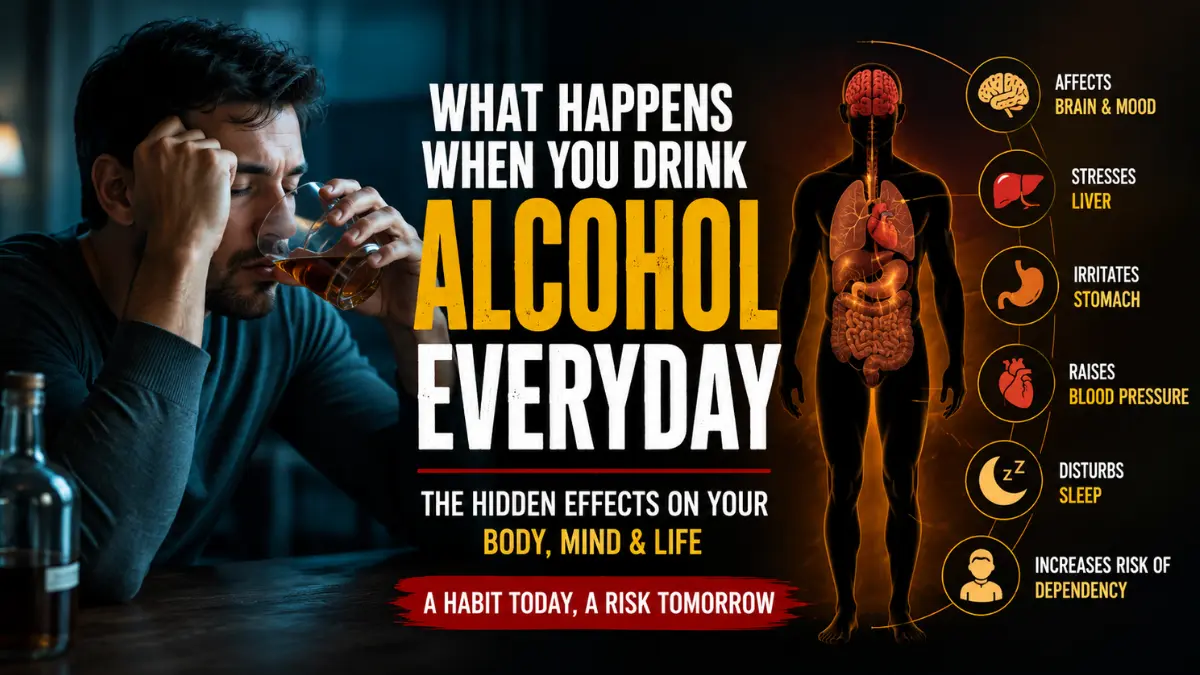

Drinking alcohol every day can look harmless in the beginning, especially when it becomes part of a normal routine. Some people drink after work to relax. Some drink with dinner. Some drink because they feel stressed, lonely, tired, or unable to sleep. The habit may not look serious at first because the person may still work, talk normally, manage family life, and feel in control.
The problem is that alcohol does not become safe simply because it feels familiar. When alcohol enters the body every day, the body has to process it every day. Over time, that repeated exposure can affect the liver, brain, sleep, digestion, heart, mood, weight, relationships, and self-control.
Daily drinking is not only about how drunk a person gets. It is also about what the body slowly learns to tolerate and what the mind slowly learns to depend on.
Your Liver Has to Work Harder Every Day
The liver is the main organ that breaks down alcohol. When you drink occasionally, the liver processes alcohol and then returns to its other important jobs. But when you drink every day, the liver gets repeated pressure.
This matters because the liver is not only a “filter.” It helps manage digestion, energy storage, fat metabolism, blood balance, and waste removal. When alcohol keeps entering the system, the liver has to prioritize breaking it down because alcohol is toxic to the body.
In the early stage, many people do not feel anything serious. They may not have pain. They may not look sick. They may think everything is fine because they can still function normally. But liver stress often develops quietly before obvious symptoms appear.
Daily drinking can contribute to fatty liver, liver inflammation, scarring, and serious liver disease over time. The risk becomes higher when daily drinking is combined with poor diet, obesity, smoking, lack of sleep, or already existing liver problems.
The important point is simple: the liver may tolerate alcohol for a long time, but tolerance does not mean safety.
Also Read: What Happens When You Drink Warm Water Daily Morning
Your Sleep Becomes Weaker, Even If Alcohol Makes You Sleepy
Many people believe alcohol helps them sleep because it makes them feel drowsy. This is one of the most common misunderstandings about drinking.
Alcohol can make you fall asleep faster, but it does not give the body clean, deep, natural rest. It can disturb the quality of sleep later in the night. A person may wake up more often, feel thirsty, sweat, feel restless, or wake up with a heavy head.
This is why some people sleep for enough hours but still wake up tired. The body was not fully resting. It was also processing alcohol.
Daily night drinking can become a sleep trap. The person starts drinking to sleep, but alcohol slowly weakens sleep quality. Then the person feels more tired the next day and may again drink at night to relax. Over time, the body forgets how to settle down naturally.
Healthy sleep should restore the body. Daily alcohol often interrupts that restoration.
Your Brain Starts Adjusting to Alcohol
Alcohol affects the brain quickly. It changes mood, reaction time, judgment, emotional control, and decision-making. This is why people may feel relaxed, confident, emotional, sleepy, angry, careless, or unusually talkative after drinking.
When alcohol is consumed every day, the brain begins adjusting to its presence. This can lead to tolerance. Tolerance means the same amount of alcohol does not feel as strong as before.
A person may start with one drink and later feel that one drink is not enough. Then two drinks become normal. Then stronger drinks or more frequent drinking may begin to feel necessary.
This change is not always dramatic. It often happens slowly. The person may still believe they are choosing freely, but the brain is becoming more familiar with alcohol as part of normal emotional regulation.
That is why daily drinking can become dangerous even before it looks like addiction from the outside.
Also Read: What Happens If You Drink Lemon Water Every Morning for 30 Days
Your Mood Can Become More Unstable
Alcohol can give temporary relief, but it can also make mood problems worse over time. Many people drink to reduce stress, sadness, anger, or overthinking. For a short time, alcohol may numb those feelings. But it does not solve them.
After the effect wears off, anxiety, irritation, low mood, guilt, or restlessness may return stronger. This can create a repeating cycle:
- You feel stressed.
- You drink to relax.
- You feel temporary relief.
- The next day you feel tired, anxious, or low.
- You drink again to escape that feeling.
This cycle can slowly make a person emotionally dependent on alcohol. The person may not drink for taste or enjoyment anymore. They may drink because they do not know how to feel normal without it.
Daily alcohol use can also reduce patience, increase arguments, and make small problems feel bigger. A person may become more reactive at home, less focused at work, or emotionally unavailable in relationships.
Your Digestion Can Become More Sensitive
Alcohol can irritate the stomach and digestive system. People who drink daily may notice acidity, burning, nausea, bloating, loose motion, poor appetite, stomach pain, or vomiting after heavy meals.
Alcohol can also make acid reflux worse. For someone who already has gas, acidity, constipation, gastritis, or weak digestion, daily alcohol can make symptoms more frequent.
Another problem is that alcohol affects food choices. Many people eat oily, spicy, salty, or late-night foods while drinking. This puts extra pressure on the stomach and liver together.
The digestive system works best with rhythm and balance. Daily alcohol disturbs that rhythm. Even when the stomach pain is not severe, the body may show signs through heaviness, poor appetite, morning nausea, or irregular bowel movements.
Also Read: Daily Jeera Water Benefits for Gut and Metabolism
Your Heart and Blood Pressure May Be Affected
Some people think a small amount of alcohol every day is good for the heart. This idea has caused a lot of confusion. The safer way to understand it is this: alcohol should not be treated as a heart-health habit.
Daily drinking can raise blood pressure in some people. It can also affect heart rhythm, increase strain on the heart, and contribute to long-term cardiovascular risk, especially when drinking becomes heavy or regular over many years.
The heart is also affected indirectly. Alcohol can disturb sleep, increase weight, raise stress hormones, reduce exercise quality, and encourage unhealthy eating. All these factors can put extra pressure on the heart.
If a person already has high blood pressure, diabetes, obesity, heart rhythm problems, or a family history of heart disease, daily alcohol becomes even more concerning.
Your Weight Can Increase Slowly
Alcohol adds calories, but those calories do not provide useful nutrition. This is one reason daily drinking can quietly increase weight, especially around the belly.
The problem is not only the drink itself. Alcohol often increases hunger, lowers self-control, and makes late-night eating more likely. Many people drink with fried snacks, salty foods, fast food, or heavy meals. This combination can quickly increase calorie intake.
Daily alcohol can also affect fitness progress. It may reduce workout recovery, disturb sleep, lower morning energy, and make it harder to stay consistent with exercise.
Some people do not gain weight immediately, but they may notice puffiness, dull skin, belly fat, tiredness, or slower metabolism-like symptoms. These changes usually come gradually, so the person may not connect them with alcohol at first.
Your Skin and Face May Start Showing Signs
Daily alcohol can dehydrate the body. This may show on the face as dullness, dryness, puffiness, redness, or tired-looking skin.
Alcohol can also affect sleep, and poor sleep quickly reflects on the face. Dark circles, swelling, and uneven skin tone can become more noticeable when drinking becomes regular.
Some people also experience facial bloating because alcohol can affect fluid balance and inflammation. The face may look heavier in the morning, especially after drinking at night with salty food.
Skin health is connected with hydration, sleep, digestion, hormones, and inflammation. Daily alcohol can disturb all of these areas.
Your Immune System May Become Weaker
A healthy immune system needs good sleep, nutrition, hydration, and internal balance. Daily alcohol can interfere with these basics.
People who drink every day may recover more slowly from illness, feel more tired, or become more vulnerable when combined with poor lifestyle habits. Alcohol can also increase inflammation in the body, which can make the body feel heavy and less energetic.
This does not mean every daily drinker will fall sick all the time. It means the body may not defend and repair itself as strongly as it should.
The immune system is not built only in the medicine cabinet. It is built through daily habits. If alcohol is part of every day, it can quietly weaken that foundation.
Your Self-Control Can Become Weaker
One of the hidden effects of daily drinking is reduced self-control. Alcohol lowers judgment and makes it easier to do things a person may not do with a clear mind.
This can affect food choices, spending, arguments, phone calls, social media behavior, risky decisions, and personal discipline.
Even if someone drinks at home and does not behave wildly, daily alcohol can still weaken routine. A person may delay work, sleep late, skip exercise, avoid responsibilities, or become careless with money.
The danger is not always one big mistake. Sometimes the bigger problem is the slow lowering of standards.
Your Relationships Can Be Affected
Daily drinking can change how a person behaves with family, friends, spouse, children, or coworkers. It can reduce patience, increase mood swings, and make communication less stable.
Family members may notice changes before the drinker does. They may say the person is becoming distant, irritated, forgetful, defensive, or unreliable.
Alcohol can also create emotional distance. If someone uses alcohol every evening to relax, their loved ones may feel they are present physically but not emotionally.
In some homes, daily drinking becomes a silent tension. Nobody talks about it directly, but everyone adjusts around it. That is a serious sign because a habit has started affecting the atmosphere of the house.
It Can Become Harder to Stop
Daily alcohol use can become a dependency pattern. This does not always mean a person is drinking from morning or losing control publicly. Dependency can look quieter.
A person may still work, earn, manage responsibilities, and appear normal. But they may feel uncomfortable when they skip drinking. They may become restless, irritated, anxious, or unable to sleep without it.
This is where daily drinking becomes more than a habit. It becomes something the body and mind expect.
Warning signs include:
- feeling uneasy when alcohol is not available
- planning the day around drinking time
- needing more alcohol than before
- drinking alone often
- hiding the amount from others
- promising to stop but returning again
- using alcohol for sleep, stress, or sadness
- feeling guilt but continuing
- getting irritated when someone questions the habit
These signs should not be ignored. They do not mean the person is hopeless. They mean the pattern needs attention before it becomes harder to break.
What Happens If You Drink Every Day for Years?
The longer daily drinking continues, the more risk builds. The body may become more tolerant, but the organs may become more stressed.
Long-term daily drinking can increase the risk of liver disease, high blood pressure, heart problems, digestive issues, mental health struggles, memory problems, weight gain, sleep disorders, relationship damage, and alcohol dependence.
Some people may not experience every problem. But daily drinking raises the chance that one or more areas of life will be affected.
The risk also depends on how much a person drinks, what type of alcohol they drink, their age, health condition, genetics, medications, diet, sleep, and lifestyle. But the general direction is clear: drinking alcohol every day is not a harmless routine.
What Happens When You Stop Drinking Every Day?
When a person reduces or stops daily drinking, the body often begins to improve. Sleep may become deeper. Mornings may feel clearer. Digestion may calm down. Skin may look fresher. Energy may improve. Mood may become more stable. Weight control may become easier.
The biggest change is often mental clarity. A person may realize how much alcohol was controlling their evening, sleep, emotions, and routine.
However, people who drink heavily every day should be careful. Stopping suddenly can cause withdrawal symptoms in some cases. If someone feels shaking, sweating, confusion, anxiety, fast heartbeat, vomiting, or severe restlessness without alcohol, they should speak with a medical professional instead of trying to stop alone suddenly.
Reducing alcohol is good, but it should be done safely when dependence is already present.
How to Know If Your Daily Drinking Is Becoming a Problem
Daily drinking becomes a concern when alcohol starts taking a fixed place in your life. The clearest question is not only “How much do I drink?” but also “What role is alcohol playing in my life?”
Ask yourself:
- Do I drink because I enjoy it, or because I need it?
- Can I skip it without feeling irritated or restless?
- Do I use it to sleep?
- Do I use it to escape stress?
- Has my quantity increased over time?
- Do I feel guilty about it?
- Has anyone close to me raised concern?
- Do I continue even after health or family problems?
If the honest answers are uncomfortable, the habit deserves attention.

2 thoughts on “13 Ways Daily Alcohol Can Affect Your Body and Mind”