
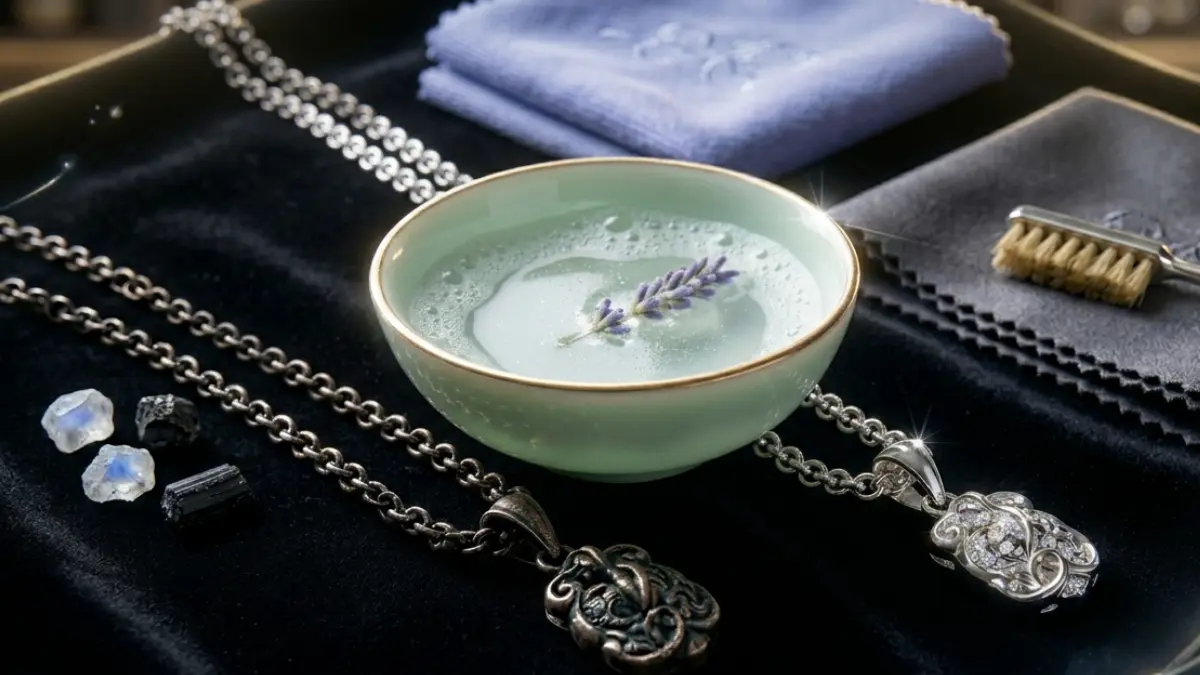

Silver jewelry can lose its shine for several reasons. Sometimes it is only covered with body oil, lotion, perfume, or soap film. Sometimes it has developed tarnish. Sometimes the surface is scratched, plated, worn or intentionally oxidized as part of the design.
The safest way to clean silver jewelry is to begin with the mildest method: warm water, gentle dish soap, a soft cloth, complete drying and light polishing. Vinegar, baking soda, aluminum foil and stronger tarnish-removal methods can work in certain cases but they are not suitable for every piece of jewelry.
This is where many people damage silver. They see a black necklace or dull ring and immediately try toothpaste, boiling water, vinegar, lemon juice or baking soda paste. Those methods may brighten plain silver in some situations but they can also scratch polished surfaces, weaken glued settings, dull delicate stones, remove intentional dark detail or wear down silver plating.
A better approach is to first identify what you are cleaning, then choose the safest method for that specific piece.
Also Read: 5 Steps to Clean an Oven Naturally Overnight
First, Check What Type of Silver Jewelry You Have
Before cleaning silver jewelry, look closely at the piece. The cleaning method depends on whether the jewelry is plain sterling silver, silver-plated, oxidized, antique or set with stones.
If the piece has a small stamp such as 925, sterling or sterling silver, it is usually sterling silver. Sterling silver is more durable than plated jewelry but it can still scratch if cleaned aggressively.
If the jewelry is silver-plated, it has a thin layer of silver over another metal. This type needs extra care because strong rubbing, abrasive pastes or repeated harsh cleaning can wear through the silver layer.
If the piece has blackened grooves, dark carved detail or an antique-style finish, it may be oxidized silver. In that case, the dark areas may be intentional. Overcleaning can remove the contrast and change the appearance of the design.
If the jewelry has pearls, opals, turquoise, porous stones, glued settings, enamel or unknown decorative parts, avoid strong soaking methods. The silver may tolerate a cleaner but the attached materials may not.
If you cannot tell what the jewelry is made of, start with the safest method only: mild soap, warm water, soft cloth and gentle drying.
Know Whether Your Silver Is Dirty, Tarnished or Damaged
Silver jewelry can look dull or black for different reasons. Cleaning becomes easier when you understand the problem.
Dirt and body oil usually make silver look cloudy, greasy or flat. This often happens with everyday rings, chains, bracelets and earrings because they touch skin, lotion, soap, sweat, perfume and makeup.
Tarnish usually appears as yellow, brown, gray or black discoloration. This happens when silver reacts with elements in air, moisture, skin or storage conditions. Tarnish is usually removable, especially if the silver itself is still in good condition.
Scratches make silver look dull even after it has been cleaned. Washing removes dirt but it cannot remove deeper surface marks.
Worn plating may show as copper, pink, green or patchy areas. This is not normal tarnish. It usually means the thin silver layer has worn away and the base metal is showing.
Intentional oxidation appears as dark detail in grooves, patterns, carved areas or antique-style designs. This should not be scrubbed away unless you intentionally want to change the look.
This step matters because the wrong method can make the problem worse. A tarnished plain sterling silver chain may handle a tarnish-removal method. A plated necklace with stones should be cleaned much more gently.
The Safe Rule for Choosing a Silver Cleaning Method
The safest rule is to start with the gentlest method and move stronger only when needed.
- If the jewelry is dirty, wash it gently.
- If it is dull, polish it lightly.
- If it is tarnished, use a careful tarnish-removal method.
- If it is plated, antique, oxidized, stone-set, glued or delicate, avoid harsh soaking and abrasive scrubbing.
This rule protects the surface. Silver is softer than many people realize. It can become scratched by rough cloths, hard brushes, abrasive powders and gritty toothpaste. Silver-plated jewelry is even more sensitive because the outer silver layer is thin.
The first cleaning method should not be vinegar, baking soda or foil. It should be a simple soap-and-water clean. That removes the most common build-up first. After that, you can judge whether the jewelry still needs polishing or tarnish treatment.
The Safest Way to Clean Silver Jewelry at Home
For most silver jewelry, mild soap and warm water are the safest starting point. This method is useful for everyday dirt, sweat, lotion, perfume residue and light dullness.
You will need:
- mild dish soap,
- warm water,
- a soft microfiber cloth,
- a small bowl,
- a very soft toothbrush if the piece has small gaps.
Do not use boiling water for normal jewelry cleaning. Warm water is enough.
Start by checking the piece for loose stones, weak clasps, cracks, glued decoration, pearls, plating or oxidized detail. If the piece looks delicate, do not soak it. Wipe it with a damp soft cloth instead.
For plain silver jewelry, mix a few drops of mild dish soap into warm water. Place the jewelry in the water briefly to loosen dirt and oil. A short soak is usually enough. Long soaking is not necessary for ordinary cleaning.
After soaking, rub the surface gently with your fingers or a soft microfiber cloth. If dirt is trapped around a clasp, engraving, pendant edge or chain link, use a very soft toothbrush with light pressure. Do not scrub hard.
Rinse the jewelry with clean water to remove soap residue. Soap left on silver can dry into a cloudy film and make the piece look dull again.
Dry the jewelry immediately with a microfiber cloth. Do not leave it wet on a towel. Moisture can sit in chain links, clasps, hollow areas, and engraved patterns.
After drying, polish the piece gently with a silver polishing cloth if it still looks dull. If the jewelry becomes bright again after this, the main problem was probably dirt or surface buildup.
If dark tarnish remains, then a tarnish-removal method may be needed.
Does White Vinegar Clean Silver?
Yes, white vinegar can clean tarnished plain silver but it is not the safest method for every silver jewelry piece.
Vinegar is acidic. That can help loosen tarnish in some situations, especially on plain sterling silver. But acid can also be risky for jewelry that has stones, plating, glue, antique detail or delicate finishes.
White vinegar is most suitable for plain sterling silver without gemstones, pearls, glued areas, enamel, plating or intentional oxidation.
Avoid vinegar on silver jewelry with:
- pearls,
- opals,
- turquoise,
- porous stones,
- soft stones,
- glued stones,
- silver plating,
- antique finishes,
- oxidized designs,
- unknown decorative materials.
If you use vinegar on plain sterling silver, keep the method controlled. Do not soak the piece for hours as a first attempt. Use a short soak, rinse thoroughly and dry completely.
For delicate jewelry, vinegar is not worth the risk. Mild soap and a polishing cloth are safer.
A common mistake is assuming that because vinegar can clean silver, it can clean all silver jewelry. The silver surface may survive but the attached materials may not. A silver ring with a porous stone is not the same as a plain silver band.
What Actually Makes Silver Shiny Again?
Silver looks shiny when the surface is clean, smooth, dry and able to reflect light. If something blocks or roughens that surface, the shine disappears.
There are three different processes involved: cleaning, tarnish removal and polishing.
Cleaning removes sweat, lotion, perfume, soap film, dust and skin oil.
Tarnish removal removes the dark surface layer that forms when silver reacts with its environment.
Polishing brightens the surface after cleaning. A polishing cloth can remove light dullness and improve shine, but aggressive polishing or abrasive products can wear the surface over time.
If silver looks dull but not black, it may only need washing and polishing.
If silver looks yellow, brown, gray or black, it likely has tarnish.
If silver still looks cloudy after cleaning and polishing, it may have scratches or worn plating.
This is why one method does not solve every problem. Soap removes dirt. Vinegar may help tarnish on plain silver. A polishing cloth restores surface brightness. A jeweler may be needed for deep scratches, worn plating or valuable pieces.
For regular home care, the safest shine-restoring order is:
- clean gently,
- dry completely,
- polish lightly,
- treat tarnish only if needed.
Do not skip drying. Even a clean silver necklace can look dull again if moisture stays trapped around the clasp or between links.
How to Brighten a Silver Necklace Without Damaging the Chain
Silver necklaces need careful handling because chains have small links, clasps and tight spaces where dirt and moisture collect. They also bend and pull more easily than rings or bangles.
First, lay the necklace flat on a soft cloth. If the chain is tangled, loosen it gently before cleaning. Do not pull hard, especially when the chain is wet.
Check whether the necklace has a pendant, stones, pearls, plating, glued decoration or dark oxidized detail. If it does, avoid vinegar, baking soda paste, boiling water and long soaking.
For a plain silver chain, prepare warm water with a few drops of mild dish soap. Place the chain in the water briefly to loosen body oil and dirt. If the chain is very thin, keep the soaking time short.
After soaking, slide the chain gently between your fingers. Use a soft microfiber cloth to wipe the surface. If dirt is trapped around the clasp or between thicker links, use a very soft toothbrush. Brush along the chain, not aggressively against it.
Rinse the necklace with clean water. Then press it dry between a microfiber cloth. Avoid rubbing hard because thin chains can stretch, kink or break.
Let the necklace dry fully before storing it. Moisture can remain inside small links and clasp areas. If needed, use cool air to help dry the chain but do not use high heat. Heat is risky for pieces with glue, stones, plating or delicate parts.
Once dry, use a silver polishing cloth. Hold the chain gently and polish small sections at a time. Do not pull the whole chain tightly through the cloth.
If the necklace still looks black after gentle washing and polishing, it may have heavier tarnish. If it looks pink, copper, green, or patchy, the issue may be worn plating rather than tarnish.
Baking Soda, Foil, Toothpaste and Other Methods
Many home cleaning methods can brighten silver, but not all of them are safe for jewelry. Silver jewelry is different from silver spoons, trays or decorative items because jewelry often has stones, clasps, coatings, glue, chains and delicate finishes.
Here is a simple comparison.
| Method | Best Use | Risk Level | Avoid On |
|---|---|---|---|
| Mild soap and warm water | Dirt, sweat, lotion, light dullness | Low | Loose or damaged settings |
| Silver polishing cloth | Dullness and light tarnish | Low | Heavy intentional oxidized detail |
| White vinegar | Tarnished plain sterling silver | Medium | Stones, pearls, plating, glue, antique pieces |
| Baking soda paste | Stubborn tarnish on plain silver | Medium to high | Plated jewelry, delicate chains, stone-set pieces |
| Aluminum foil method | Heavy tarnish on plain sterling silver | Medium | Stones, glue, pearls, plating, antique finishes |
| Toothpaste | Not recommended for jewelry | High | Most silver jewelry |
| Boiling water | Plain silver items only in limited cases | High for jewelry | Chains, stones, plating, glue, delicate pieces |
Toothpaste is risky because it can be abrasive. It may make silver look brighter at first but repeated use can create fine scratches. Those scratches can make the surface look cloudy over time.
Baking soda paste can also scratch if rubbed too firmly. It may be useful for plain tarnished silver but it should not be treated as a universal method. It is not ideal for plated jewelry, delicate chains or jewelry with stones.
The aluminum foil method can help lift tarnish from plain sterling silver but it should be avoided on jewelry with stones, pearls, glue, plating, antique detail or oxidized designs. It is more suitable for simple plain silver pieces than complex jewelry.
Boiling water is not a good general jewelry-cleaning method. Heat can affect glue, weaken some settings, damage delicate materials or stress fragile pieces.
Commercial silver dips should also be used carefully. They can work quickly, but overuse or improper use may affect finishes and delicate details. They are not necessary for routine cleaning.
For most silver jewelry, the safest home order remains simple: mild soap first, polishing cloth second, stronger tarnish methods only when the jewelry type allows it.
How to Clean Silver-Plated Jewelry Safely
Silver-plated jewelry needs a gentler approach than sterling silver. The silver layer is thin, so aggressive polishing, baking soda paste, toothpaste or hard scrubbing can wear it down.
Use mild soap and warm water only. Wipe the jewelry with a soft cloth instead of soaking it for a long time. Rinse quickly and dry immediately.
If the jewelry looks dull, use a soft cloth with very light pressure. Avoid heavy rubbing. Do not try to force the shine back with abrasive powders.
If silver-plated jewelry has turned copper, pink, green or patchy, the plating may already be worn. Cleaning will not replace the missing silver layer. Continued scrubbing can expose more base metal.
In that case, the proper solution is not stronger cleaning. The piece may need replating, repair or replacement.
This section matters because many people damage plated jewelry while trying to remove what they think is tarnish. Tarnish sits on the surface. Worn plating means the surface itself is gone.
When Cleaning Will Not Make Silver Jewelry Shiny Again
Home cleaning has limits. If the jewelry surface is damaged, cleaning will not fully restore it.
Cleaning may not fix:
- deep scratches,
- worn silver plating,
- loose stones,
- broken clasps,
- chemical damage,
- damaged chain links,
- lost oxidized detail,
- old antique patina.
If your jewelry looks pink, copper, green or patchy, do not keep scrubbing. That is often a sign of plating wear or base-metal exposure.
If the jewelry has deep scratches, a polishing cloth may improve the appearance slightly but it will not make the surface perfectly smooth again.
If a stone is loose, avoid soaking. Water and movement can make the problem worse.
If the piece is antique, inherited, expensive or sentimental, do not experiment with strong cleaning methods. A jeweler can check whether it needs cleaning, polishing, repair, replating or restoration.
Knowing when to stop is part of safe jewelry care. More pressure is not always better. Stronger cleaning is not always the answer.
How to Keep Silver Jewelry from Turning Black Again
Silver naturally tarnishes over time but good storage and wearing habits can slow it down.
Wipe silver jewelry after wearing it. This removes sweat, skin oil, perfume, lotion and dust before they sit on the surface.
Put jewelry on after perfume, lotion, sunscreen and makeup have dried. Do not spray perfume directly on silver necklaces or earrings.
Remove silver jewelry before swimming, bathing, cleaning, exercising or sleeping. Chlorine, sweat, soap and moisture can speed up dullness and tarnish.
Store silver in a dry place. Do not leave it in the bathroom because humidity can encourage tarnish.
Use a soft pouch, airtight bag or lined jewelry box. Keep pieces separate so they do not scratch each other.
Use silica gel packets or anti-tarnish strips in your jewelry storage area. These help control moisture. If you use chalk, wrap it and keep it away from direct contact with the jewelry so dust does not settle on the pieces.
Do not store silver while damp. This is especially important for chains because moisture can hide inside links and clasps.
A practical silver-care habit is simple: wipe after wearing, store dry, avoid chemicals and clean gently before tarnish becomes heavy.
A Safe Cleaning Routine for Most Silver Jewelry
For everyday silver jewelry, you do not need a complicated routine.
Start by checking the jewelry type. If it is plain sterling silver, you have more cleaning options. If it is plated, oxidized, antique, delicate or stone-set, stay gentle.
Wash with mild soap and warm water when the jewelry is dirty. Dry it completely. Use a silver polishing cloth when the surface looks dull. Use vinegar, baking soda or foil methods only for plain silver pieces when tarnish remains and the jewelry has no delicate materials.
If the jewelry is worn, scratched, loose, plated or valuable, stop before using stronger methods. In those cases, professional cleaning or repair is safer than repeated home experiments.
Silver jewelry stays beautiful longest when it is cleaned gently, dried carefully, polished lightly and stored away from moisture and chemicals.
