
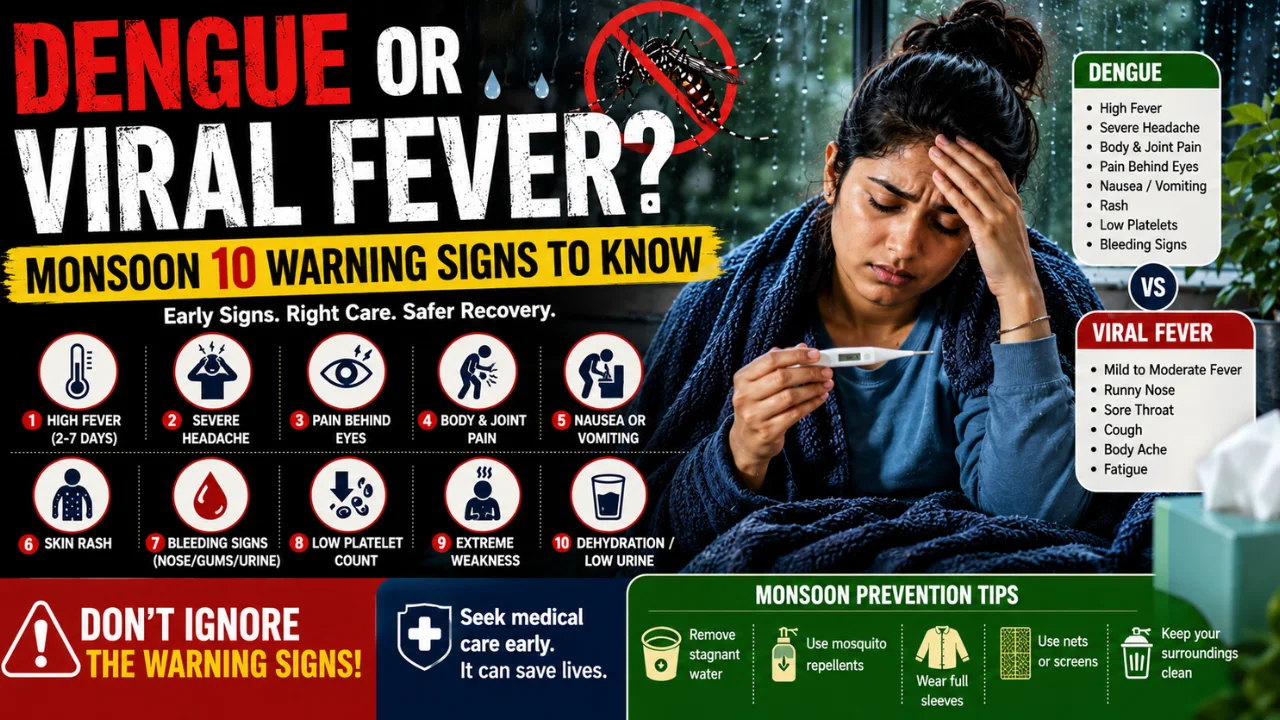

Dengue platelet count warning signs matter, but platelet count alone does not show the full risk of dengue. Families should watch the patient’s symptoms, hydration, bleeding signs, urine output, weakness and sudden worsening after fever starts going down.
Many people hear “dengue” and immediately ask one question: “What is the platelet count?” That question matters, but it should not become the only thing the family watches.
A person with dengue can look weak, vomit repeatedly, develop stomach pain, bleed, pass very little urine, or become restless even before the family fully understands the blood report. That is why doctors do not judge dengue only by platelets. They look at the full condition of the patient.
Why Do Platelets Matter in Dengue?
Platelets help the blood clot. When platelet count drops, the body may face a higher risk of bleeding, especially if the illness becomes severe.
In dengue, platelet count can fall during the illness. This creates fear because families often connect every drop with danger. However, the number does not always tell the full story by itself.
A falling platelet count needs medical attention and monitoring, but the patient’s overall condition matters more than panic over one report. A doctor checks symptoms, blood pressure, hydration, urine output, bleeding signs, weakness, and other blood test changes.
Platelets matter. They are not the whole picture.
Many symptoms overlap in the first few days, so knowing viral fever and dengue symptoms can help you respond more carefully.
Is Low Platelet Count Always Dangerous in Dengue?
Low platelet count can become serious, but it does not always mean the patient has severe dengue. Some patients develop low platelets and still recover with proper monitoring and fluids. Other patients may need urgent care because they show warning signs, dehydration, bleeding, or shock risk.
This is where families make a common mistake. They may look only at the platelet number and ignore how the patient looks.
A patient who has a falling platelet count but drinks fluids, passes urine, stays alert, breathes normally, and has no bleeding may need close monitoring.
A patient who has stomach pain, repeated vomiting, bleeding, extreme weakness, cold skin, dizziness, confusion, or low urine needs urgent medical attention even if the family does not yet know the latest platelet number.
What Platelet Count Makes Families Panic?
Many families start worrying when platelets fall below the normal range. Normal platelet count can vary slightly by lab, but many reports use a range around 150,000 to 450,000 platelets per microliter of blood.
In dengue, platelets may fall below this range. A doctor may repeat blood tests to see whether the count keeps falling or starts improving.
The trend matters. A platelet count that keeps dropping needs closer observation than one that has started rising. The patient’s symptoms also matter.
Families should not use online numbers to decide treatment at home. Only a doctor can decide whether the patient needs home care, observation, admission, IV fluids, or emergency care.
Why Doctors Also Watch Hematocrit and Hydration
Platelets get most of the attention, but doctors also watch hematocrit and hydration. Hematocrit shows the percentage of red blood cells in the blood. In dengue, rising hematocrit can suggest fluid leakage from blood vessels, especially when doctors assess it along with symptoms and other findings.
This is one reason dengue care needs proper medical monitoring. A family may see only “platelets low” on a report, but a doctor checks whether the patient shows signs of dehydration, plasma leakage, bleeding, or shock risk.
CDC’s dengue clinical care guidance advises close monitoring of vital signs, intake, urine output, and hematocrit in patients with warning signs. This shows why dengue care does not depend only on platelet count.
Which Dengue Warning Signs Matter More Than Platelets?
You should seek medical care quickly if a dengue patient develops warning signs. WHO lists severe dengue symptoms such as severe abdominal pain, persistent vomiting, rapid breathing, bleeding gums or nose, fatigue, restlessness, blood in vomit or stool, intense thirst, pale and cold skin, and weakness.
Important warning signs include:
- Severe abdominal pain
- Repeated vomiting
- Bleeding from the nose or gums
- Blood in vomit or stool
- Extreme weakness
- Restlessness or confusion
- Difficulty breathing
- Cold or pale skin
- Very little urine
- Dizziness or fainting
- Sudden worsening after fever starts reducing
These signs need attention because they can show that dengue has moved into a risky phase. Do not wait for the platelet count to fall further before contacting a doctor.
Why Fever Going Down Can Still Be a Risky Time
Many people feel relieved when fever starts going down. In many viral fevers, that can mean recovery. In dengue, doctors still watch the patient carefully because warning signs can appear around the time fever settles.
CDC advises watching for warning signs of severe dengue after the fever has gone away. Those warning signs include belly pain or tenderness, vomiting, bleeding from the nose or gums, blood in vomit or stool, and extreme tiredness or restlessness.
This does not mean every patient becomes serious after fever reduces. It means families should not stop monitoring too early.
If the fever reduces but the patient becomes weaker, vomits repeatedly, complains of stomach pain, bleeds, feels dizzy, or passes very little urine, seek medical care.
Should You Check Platelets Every Day?
A doctor decides how often the patient needs blood tests. Some patients need repeat testing because symptoms, fever day, platelet trend, or warning signs raise concern.
Do not repeat tests randomly without medical advice. Also, do not delay testing when a doctor recommends it.
A useful approach is to follow the doctor’s plan and keep a simple home record:
- Fever day
- Highest temperature
- Medicines taken
- Vomiting frequency
- Fluid intake
- Urine frequency
- Bleeding signs
- Abdominal pain
- Weakness level
- Latest platelet count, if tested
This record helps the doctor understand whether the illness is improving or worsening.
What Does a Rising Platelet Count Mean?
A rising platelet count often suggests improvement, especially when the patient also feels better, eats better, urinates normally, has stable vitals, and shows no breathing difficulty or bleeding.
However, families should still follow the doctor’s advice. One improved report does not always mean the patient can stop care suddenly.
A safe recovery pattern usually includes better appetite, improved strength, no warning signs, normal or improved urine output, stable condition, and improving blood test trends.
What Should Families Avoid When Platelets Fall?
Families often take quick decisions when platelets fall. Some decisions can create more risk.
Avoid these mistakes:
- Do not panic based only on one platelet report.
- Do not wait at home if warning signs appear.
- Do not take aspirin or ibuprofen unless a doctor advises it.
- Do not use antibiotics without prescription.
- Do not depend on home remedies to raise platelets.
- Do not force heavy food during nausea.
- Do not ignore dehydration.
- Do not compare one patient’s platelet count with another patient’s case.
- Do not delay hospital care when the patient looks worse.
Dengue needs calm monitoring and timely medical guidance. Panic does not help, but delay can harm.
Which Medicines Need Caution in Dengue?
When dengue remains possible, do not take aspirin or ibuprofen unless a doctor specifically advises it. These medicines can increase bleeding risk in dengue. CDC recommends acetaminophen for fever control and advises avoiding aspirin and NSAIDs such as ibuprofen.
This point matters because dengue can cause strong body pain and headache. Many people take painkillers quickly without checking whether the medicine is safe for dengue-like fever.
Always ask a doctor, especially for children, elderly people, pregnant women, and anyone with liver disease, kidney disease, stomach ulcers, bleeding problems, or other major health conditions.
Can Food Increase Platelets Quickly?
No food can work like a guaranteed platelet treatment. A healthy diet and fluids can support recovery, but food cannot replace medical care.
During dengue recovery, doctors often focus on hydration, rest, monitoring, and safe fever control. The patient can take light, easy-to-digest food if they can tolerate it.
Helpful options may include:
- Water
- Oral rehydration solution if advised
- Coconut water in moderate amounts if suitable
- Rice, dal, khichdi, soup, or soft food
- Fruits if tolerated
- Small frequent meals
Avoid claiming that papaya leaf juice, kiwi, pomegranate, or any food can cure dengue or rapidly fix platelets. These claims can delay proper care.
When Should a Dengue Patient Go to the Hospital?
A dengue patient should seek urgent care if warning signs appear or if the doctor advises admission.
Hospital care may become necessary when the patient has repeated vomiting, severe abdominal pain, bleeding, breathing difficulty, dehydration, fainting, confusion, cold skin, low urine, or severe weakness.
Some patients also need extra caution even before symptoms become severe. This includes infants, elderly people, pregnant women, and people with diabetes, kidney disease, liver disease, heart disease, low immunity, or bleeding disorders.
Do not decide hospital need only by platelet count. Let a qualified doctor assess the patient.
Why Children Need Extra Attention
Children may not explain their symptoms clearly. They may only look dull, sleepy, irritable, thirsty, weak, or unwilling to eat.
Seek medical advice quickly if a child with dengue-like fever has repeated vomiting, severe stomach pain, bleeding, cold hands and feet, breathing difficulty, very little urine, unusual sleepiness, or worsening weakness.
Do not give adult medicines to children. Do not guess the dose. Use medicines only as advised by a doctor.
Why Elderly Patients Need Extra Attention
Elderly patients can worsen faster during dehydration or infection. They may also take medicines for blood pressure, diabetes, heart disease, or blood thinning, which makes medical guidance more important.
If an elderly patient has dengue-like fever with weakness, dizziness, vomiting, poor intake, low urine, confusion, bleeding, or breathing difficulty, seek medical care quickly.
Do not wait for the platelet count to become very low before acting.
What Should You Watch at Home Besides Platelets?
Families should watch the whole patient, not only the report.
Track these signs:
- Is the patient alert?
- Can the patient drink fluids?
- Is vomiting increasing?
- Is urine output normal?
- Is there stomach pain?
- Is there bleeding?
- Is breathing normal?
- Are hands and feet cold?
- Is weakness getting worse?
- Did symptoms worsen after fever reduced?
These questions help families notice risk earlier. They also help the doctor understand the patient’s condition more clearly.
How to Reduce Dengue Risk During Monsoon
Platelet monitoring becomes important after dengue starts, but prevention matters before dengue happens.
During monsoon, check your home for stagnant water. Mosquitoes can breed in buckets, plant plates, coolers, tyres, rooftop corners, trays, and uncovered containers.
Useful prevention steps include:
- Empty stagnant water every few days.
- Cover stored water.
- Clean coolers and tanks.
- Use mosquito nets or screens.
- Use mosquito repellents safely.
- Keep surroundings clean.
- Check flowerpots and trays.
- Protect fever patients from mosquito bites.
If mosquitoes bite a dengue patient and then bite others, dengue can spread further in the area. Prevention protects the family and the neighbourhood.
Medical Disclaimer: This article is for general health awareness only and does not replace medical advice, diagnosis or treatment. Dengue can become serious and platelet count alone can not guide care. Consult a qualified doctor for testing, monitoring, medicine and treatment. Seek urgent medical help if symptoms worsen or warning signs appear.
FAQs About Dengue Platelet
What platelet count is dangerous in dengue?
There is no single platelet number that tells the full danger level for every patient. A doctor checks platelet trend, bleeding signs, hydration, hematocrit, urine output, blood pressure, and overall symptoms before deciding risk.
Is platelet count the most important thing in dengue?
Platelet count matters, but it is not the only important thing. Warning signs such as severe abdominal pain, repeated vomiting, bleeding, extreme weakness, restlessness, breathing difficulty, and low urine can need urgent care.
Can dengue become serious after fever goes down?
Yes, dengue warning signs can appear around the time fever starts reducing. Families should keep monitoring the patient after fever improves, especially for vomiting, stomach pain, bleeding, weakness, and low urine.
Can I take ibuprofen for dengue body pain?
Avoid ibuprofen and aspirin when dengue remains possible unless a doctor advises them. These medicines may increase bleeding risk. Ask a doctor about safer fever and pain management.

2 thoughts on “Dengue Platelet Count Warning Signs Families Should Know”