
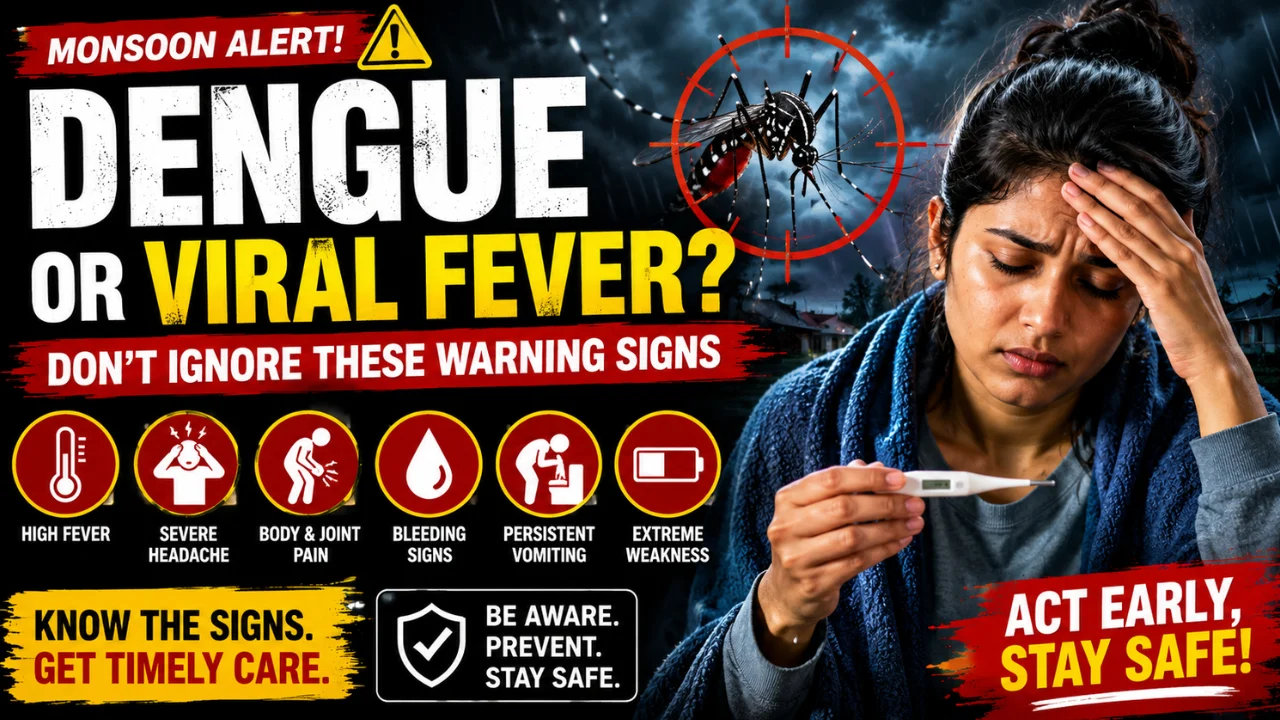

Dengue or viral fever can look very similar during monsoon, especially in the first few days. Fever, body pain, headache, tiredness, nausea, and weakness can happen in both, so the safer approach is to watch the pattern of symptoms and seek medical advice when warning signs appear.
Medical Disclaimer: This article is for general health awareness only and does not replace medical advice, diagnosis or treatment. Dengue and viral fever can look similar, so consult a qualified doctor for proper testing and care. Seek urgent medical help if symptoms become severe or worsen.
Is It Dengue or Just Viral Fever During Monsoon?
During monsoon, many people develop fever because infections spread more easily in humid weather, waterlogging increases mosquito breeding, and sudden weather changes affect daily hygiene and exposure.
A normal viral fever may improve with rest, fluids, and time. Dengue can also start like a common fever, but it can become serious when warning signs appear, especially after the fever begins to settle.
That is why the first question should not be, “Can I identify dengue perfectly at home?” A better question is, “Are there any signs that need a doctor, testing, or urgent care?”
You should take fever seriously during monsoon when it comes with severe body pain, pain behind the eyes, rash, vomiting, unusual weakness, bleeding, severe stomach pain, or sudden worsening after temporary improvement.
Also Read: 6 Facts That Explain Why the Brain Is So Powerful
Early Symptoms That Can Look the Same
Many monsoon illnesses can begin with similar symptoms. Dengue, viral fever, chikungunya, flu-like illness, and some stomach infections can all cause weakness and fever in the early stage.
Common overlapping symptoms may include:
- Fever
- Headache
- Body pain
- Joint or muscle pain
- Tiredness
- Loss of appetite
- Nausea
- Mild vomiting
- Chills
- General weakness
This overlap creates confusion. A person may assume it is “just viral fever” because the first day looks normal. Another person may panic and assume every fever is dengue. Both reactions can lead to poor decisions.
The practical approach is simple: track symptoms, avoid risky medicines, maintain fluids, and contact a doctor if fever stays high, symptoms worsen, or warning signs appear.
Dengue Symptoms People Commonly Notice
Dengue often causes high fever with strong body pain. Some people describe the pain as deep muscle or bone-like pain. Headache, pain behind the eyes, nausea, vomiting, rash, and severe tiredness can also appear.
However, not every dengue patient shows every symptom. Some people may have mild symptoms. Others may feel better for a short time and then develop warning signs.
This is why symptom pattern matters more than one single sign. A fever with body pain does not automatically confirm dengue, but a fever with warning signs should never be ignored.
Dengue Warning Signs That Need Medical Attention
You should seek medical care quickly if fever during monsoon comes with any dengue warning sign. Warning signs can show that the illness may move toward a more serious stage.
Important warning signs include:
- Severe abdominal pain
- Persistent vomiting
- Bleeding from the nose or gums
- Blood in vomit or stool
- Extreme tiredness or unusual sleepiness
- Restlessness or confusion
- Cold or pale skin
- Difficulty breathing
- Sudden worsening after the fever starts to reduce
- Inability to drink enough fluids
- Very little urination
These signs need medical attention because severe dengue can become dangerous without timely care. Do not wait for platelet count to drop before taking warning signs seriously. A person’s overall condition matters.
Why Fever Going Down Does Not Always Mean Full Recovery
Many people relax when the fever reduces. In ordinary viral fever, that may be a good sign. In dengue, doctors often watch patients carefully around the time fever starts going down because warning signs can appear during this phase.
This does not mean every dengue patient becomes serious after fever reduces. It means you should keep watching the patient instead of assuming the illness has fully passed.
Pay attention to new abdominal pain, repeated vomiting, bleeding, sudden weakness, dizziness, cold hands and feet, or restlessness. If these signs appear, seek medical care.
When Should You Test for Dengue?
You should ask a doctor about dengue testing when fever appears during monsoon with strong body pain, headache, pain behind the eyes, rash, vomiting, or known mosquito exposure in your area.
Testing depends on the day of illness and the doctor’s judgment. Early testing may involve different markers than later testing. A doctor may also suggest a complete blood count to monitor platelets, hematocrit, and overall condition.
Do not rely only on online symptom lists. Fever can happen for many reasons, and different illnesses can need different treatment. A doctor can decide whether you need dengue testing, malaria testing, typhoid evaluation, COVID or flu testing, or another checkup based on your symptoms and local disease pattern.
What You Should Avoid While Waiting for a Doctor
When dengue remains possible, avoid self-medicating with painkillers that may increase bleeding risk. Do not take aspirin or ibuprofen unless a doctor specifically tells you to do so.
Many people take strong painkillers quickly because dengue-like fever can cause severe body pain. This can create risk if the illness involves bleeding tendency. Use medicine only under medical guidance, especially for children, elderly people, pregnant women, and anyone with liver, kidney, stomach, or bleeding problems.
You should also avoid these mistakes:
- Do not delay care when warning signs appear.
- Do not judge seriousness only by platelet count.
- Do not force heavy food if the person feels nauseous.
- Do not ignore dehydration.
- Do not use antibiotics without a prescription.
- Do not depend on papaya leaf juice or home remedies as treatment.
- Do not assume every fever is harmless because it started during monsoon.
Home care can support recovery, but it cannot replace medical care when symptoms point toward dengue or another serious infection.
What Helps During Mild Fever While You Arrange Medical Advice?
If the person has mild fever and no warning signs, basic supportive care can help while you monitor the situation and speak to a doctor.
Useful steps include:
- Encourage small sips of water or oral rehydration solution.
- Let the person rest in a cool, clean room.
- Offer light food if they can eat.
- Track temperature.
- Watch urine output.
- Note vomiting frequency.
- Keep a simple symptom timeline.
- Protect the patient from mosquito bites.
Mosquito protection matters because a mosquito can bite an infected person and spread the virus to others. Use mosquito nets, repellents, window screens, and clean surroundings where possible.
Why Platelet Count Is Not the Only Thing to Watch
Many families focus only on platelet count during dengue season. Platelet count matters, but it does not tell the full story by itself.
Doctors also look at symptoms, hydration, bleeding signs, blood pressure, urine output, weakness, hematocrit, and overall clinical condition. A person with warning signs needs attention even before the platelet count becomes very low.
This is why you should not wait for a “danger number” at home. If the patient looks worse, vomits repeatedly, develops abdominal pain, bleeds, becomes restless, or cannot drink fluids, contact a doctor urgently.
How Dengue Spreads During Monsoon
Dengue spreads through infected mosquito bites. Rainy weather can increase mosquito breeding when clean stagnant water collects around homes, rooftops, drains, tyres, buckets, flowerpots, coolers, and uncovered containers.
The mosquito that spreads dengue often breeds in small water collections near human living spaces. Many people check drains but forget trays, plant pots, discarded plastic items, and water stored around the house.
Prevention works best when the whole area stays alert. One clean home helps, but nearby breeding spots can still increase mosquito risk.
How to Reduce Mosquito Breeding Around Your Home
You can reduce mosquito breeding by checking your home and surroundings every few days during monsoon.
Focus on these areas:
- Empty water from buckets, trays, pots, and containers.
- Cover stored water properly.
- Clean coolers and tanks regularly.
- Remove old tyres, coconut shells, bottles, and plastic waste.
- Clear water from flowerpot plates.
- Keep rooftop corners clean.
- Check AC trays and refrigerator trays.
- Keep drains flowing.
- Use window screens when possible.
- Use mosquito nets for sleeping, especially for children.
The goal is not only to kill mosquitoes after they appear. The goal is to stop them from breeding.
When Children Need Extra Care
Children may not explain symptoms clearly. A child with dengue-like fever may only show tiredness, poor feeding, crying, vomiting, sleepiness, or irritability.
Seek medical advice quickly if a child has fever with repeated vomiting, severe weakness, bleeding, rash, cold hands and feet, reduced urination, breathing difficulty, or unusual drowsiness.
Do not give adult medicines to children. Do not guess the dose. Always follow a doctor’s advice for fever medicine and hydration.
When Elderly People or Weak Patients Need Extra Care
Elderly people and patients with diabetes, kidney disease, liver disease, heart disease, low immunity, or bleeding disorders need extra caution during dengue-like fever.
They may worsen faster or show less obvious symptoms at first. Dehydration can also affect them more severely. If they develop persistent fever, vomiting, weakness, dizziness, low urine, confusion, or breathing discomfort, they should get medical advice without delay.
How to Track Symptoms at Home
A simple symptom record can help the doctor understand the illness better. You do not need a complicated chart.
Write down:
- When fever started
- Highest temperature recorded
- Medicines taken
- Vomiting episodes
- Fluid intake
- Urine frequency
- Rash or bleeding
- Abdominal pain
- Weakness level
- Any test results
This record helps because fever patterns can change. It also prevents confusion when multiple family members give different details to the doctor.
When You Should Not Wait at Home
Do not wait at home if the patient has severe abdominal pain, repeated vomiting, bleeding, extreme weakness, breathing difficulty, confusion, fainting, cold skin, very low urine, or sudden worsening after fever reduces.
These symptoms need medical attention. Even if dengue does not turn out to be the final diagnosis, the person still needs proper evaluation.

1 thought on “Dengue or Viral Fever? Monsoon 10 Warning Signs to Know”