
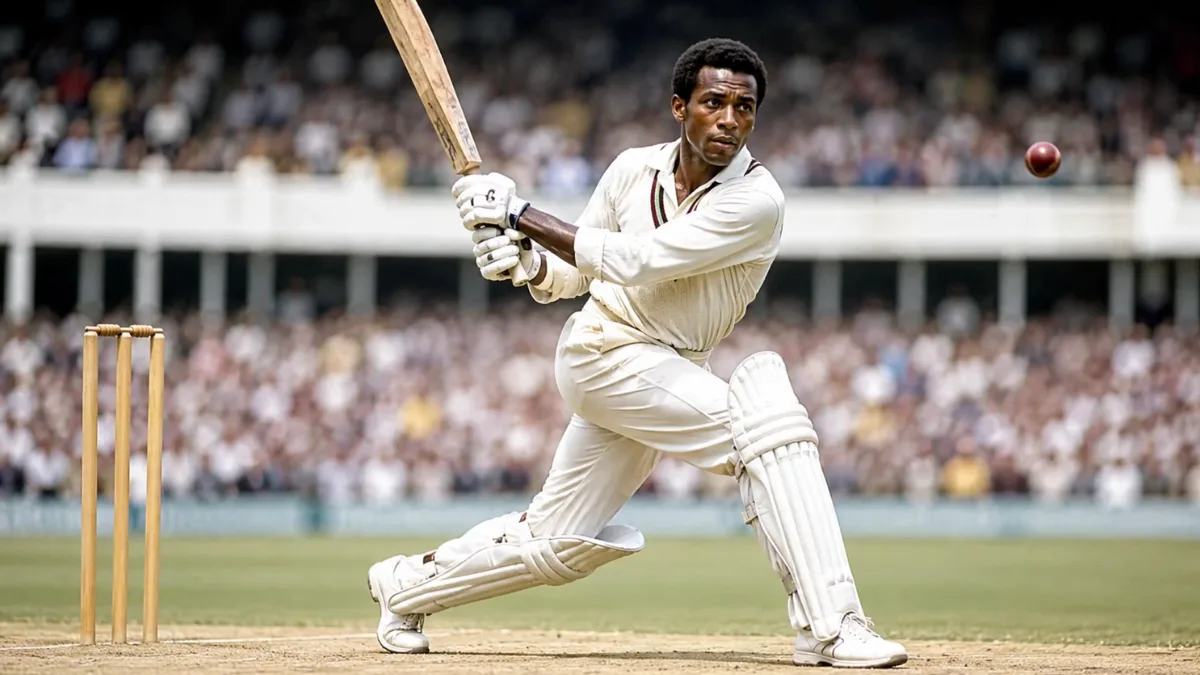

Sir Garfield Sobers remains cricket’s greatest all-rounder in the eyes of many players and historians because he could influence a match in almost every possible way. He scored runs like a specialist top-order batter, bowled pace and two different forms of spin, fielded brilliantly and changed matches through attacking cricket.
Many great all-rounders have dominated with both bat and ball. Sobers stood apart because his range extended beyond two skills. He could adapt his bowling style to the pitch, the opposition and the match situation while still performing as one of the finest batters of his generation.
The cricket world returned to his extraordinary career after Sobers died at the age of 89 on July 17, 2026. Tributes from former players, cricket boards and international stars repeatedly described him not only as a great all-rounder but as one of the most complete cricketers the sport has produced.
Also Read: How to Treat an Itchy Fungal Rash During Monsoon
His Batting Alone Made Him an All-Time Great
Sobers did not earn his reputation simply by combining average batting with useful bowling.
He played 93 Test matches for the West Indies between 1954 and 1974, scoring 8,032 runs at an average of 57.78. He made 26 Test centuries during a period when batters faced uncovered or less protected pitches, limited safety equipment and some of the world’s most demanding fast bowlers.
A batting average close to 58 would establish any player as a specialist batting great. Sobers maintained that level while also carrying a major bowling and fielding workload.
He batted left-handed and could adjust his approach according to what his team needed. He could defend patiently when the West Indies required stability, but he could also attack bowlers with remarkable freedom.
His attacking style did not rely only on power. Sobers used timing, balance and a wide range of strokes. He could score around the wicket and quickly change the direction of a match once he settled at the crease.
That combination of consistency and aggression made him difficult to contain. Opposing teams could not treat him as a lower-order all-rounder who occasionally produced runs. They had to plan for him as one of the central batters in the West Indies lineup.
His Unbeaten 365 Changed Test Cricket Records
Sobers produced his most famous Test innings against Pakistan in Kingston in 1958.
He entered the match without a Test century. He then converted his first international hundred into an unbeaten 365, setting a new record for the highest individual score in Test cricket.
The innings remained the world record for 36 years until another West Indian great, Brian Lara, scored 375 against England in 1994.
The score demonstrated more than endurance. Sobers had to maintain concentration while controlling the pace of a long innings and taking advantage of scoring opportunities.
A player who could score 365 not out would already hold a significant place in cricket history. Sobers combined that batting achievement with the workload of a genuine international bowler.
He Could Bowl Three Different Ways
Sobers’ bowling versatility provides one of the strongest arguments for calling him cricket’s most complete all-rounder.
He could bowl left-arm medium pace, conventional left-arm finger spin and left-arm wrist spin. These were not minor variations of the same delivery. They required different grips, actions, release points and tactical approaches.
His medium pace allowed him to swing the ball and challenge batters when conditions favoured seam bowling. On dry or worn pitches, he could switch to finger spin and search for turn, drift and changes of pace.
He could also bowl wrist spin, a more difficult style that moved the ball in the opposite direction from conventional left-arm spin.
Modern teams usually select different bowlers to perform these roles. Sobers could provide all three options himself.
That flexibility gave his captain greater control over the team balance. The West Indies could choose an extra specialist batter or bowler because Sobers could adjust his role during the match.
He finished his Test career with 235 wickets. His bowling average of 34.03 does not place him among cricket’s most dominant specialist bowlers, but the number alone does not capture his value. He supplied long spells, tactical flexibility and different forms of attack without weakening the batting lineup.
His Fielding Completed the Package
Sobers also contributed as an outstanding fielder.
He possessed quick reactions, athletic movement and reliable hands. His ability in close-catching positions created another way for him to influence a match when he was not batting or bowling.
Fielding often receives less attention when people compare all-rounders. However, catches can end important partnerships, and a brilliant fielder can place pressure on batters throughout an innings.
Sobers did not require his team to hide him in a quiet position after he had completed a long spell with the ball. He remained an active part of the match.
This matters when assessing his overall value. A complete cricketer must continue contributing between the obvious moments of scoring runs and taking wickets.
Sobers could do that consistently.
Six Sixes in One Over Showed His Attacking Ability
On August 31, 1968, Sobers became the first batter to hit six sixes in a six-ball over in first-class cricket.
He achieved the feat while playing for Nottinghamshire against Glamorgan. Malcolm Nash bowled the over, and Sobers attacked every delivery.
The fifth shot almost ended the sequence when a fielder caught the ball near the boundary. However, the fielder carried it over the line, which turned the shot into another six. Sobers then cleared the boundary again from the final delivery.
The achievement produced 36 runs from the over and created one of cricket’s most famous batting moments.
The six sixes did not define Sobers’ entire career, but they showed the confidence behind his batting. He did not merely survive difficult situations. He looked for opportunities to take control.
That attacking instinct made him dangerous even when a match appeared balanced.
He Excelled Across Different Teams and Conditions
Sobers built his international reputation with the West Indies, but his performances did not depend on one team or one set of conditions.
He also played county cricket for Nottinghamshire and domestic cricket for South Australia. For Nottinghamshire, he scored more than 7,000 runs and took 281 wickets. During the 1963–64 Sheffield Shield season, he led South Australia in both runs and wickets.
These performances strengthened the argument that his abilities travelled well.
English conditions often rewarded swing and seam bowling, while Australian cricket presented different pitches, weather and tactical challenges. Sobers adjusted his game and continued contributing with both bat and ball.
A great all-rounder must perform when conditions favour only one part of their game. Sobers could switch roles rather than waiting for ideal circumstances.
When the pitch offered little assistance to spin, he could bowl medium pace. When the ball stopped swinging, he could change to spin. When the team needed runs, he could perform as a frontline batter.
Why Statistics Do Not Tell the Whole Story
Cricket comparisons often begin with total runs, wickets and averages.
Those numbers remain important, but they cannot measure every part of Sobers’ value.
Some later all-rounders scored more career runs. Others took more wickets or produced stronger bowling averages. Longer schedules, different formats, improved equipment and changing playing conditions also make direct comparisons between generations difficult.
Sobers’ claim to greatness rests on the combination of his abilities rather than one isolated record.
He could have earned selection as a specialist batter. He could bowl enough overs to function as a major part of the attack. He could change between pace and two types of spin. He added exceptional fielding and aggressive leadership.
Few players have offered that complete range at the highest level.
The International Cricket Council describes Sobers as a player whom many consider the greatest all-rounder of all time. That reputation reflects both his career numbers and the unusual breadth of his game.
How Sobers Compares With Other Great All-Rounders
Cricket has produced several players with powerful claims to the all-rounder title.
Jacques Kallis combined enormous batting output with effective fast-medium bowling. Imran Khan reached an exceptional level as a fast bowler while developing into a strong Test batter. Kapil Dev gave India aggressive lower-order runs, new-ball bowling and outstanding athleticism. Ian Botham could transform matches through explosive performances with either skill.
Each player brought a different balance.
Sobers’ advantage lies in the number of roles he could perform at an elite level. He did not offer only batting and one type of bowling. He offered world-class batting, medium pace, finger spin, wrist spin and close fielding.
This does not create a mathematical answer to the greatest-all-rounder debate. Cricket changed considerably between their careers, and every comparison depends on which qualities receive the most weight.
However, Sobers provides perhaps the strongest answer when the question asks for the most complete cricketer rather than simply the player with the largest statistical totals.
His Legacy Still Shapes Cricket
Sobers’ name remains connected to cricket’s highest individual honours.
The ICC presents the Sir Garfield Sobers Trophy to its men’s cricketer of the year. Naming the award after him reflects the standard he established across multiple parts of the game.
His legacy also survives through the expectations placed on modern all-rounders.
Teams now search for players who can create tactical flexibility, strengthen the batting order and provide genuine bowling options. Sobers demonstrated the enormous value of such a player decades before modern limited-overs cricket made all-round skills even more desirable.
He remains difficult to compare because cricket has rarely produced another player with the same range.
His 8,032 Test runs and 235 wickets form the statistical foundation of his reputation. His unbeaten 365, six sixes in one over and success across different conditions add historic moments.
Yet the strongest reason people still call Garry Sobers cricket’s greatest all-rounder remains simple: whatever the match required, he usually possessed a skill that could change it.

1 thought on “How Garry Sobers Mastered Every Part of Cricket”