
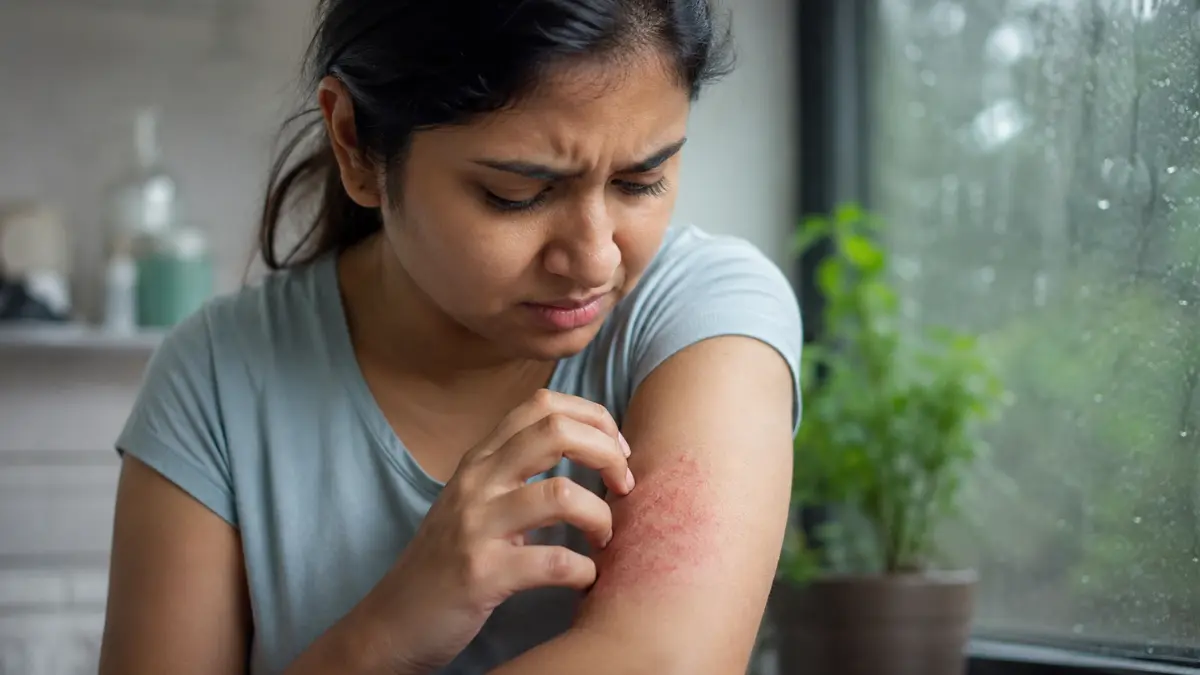

Itchy skin during the monsoon often develops because humidity, sweat and damp clothing keep the skin moist for long periods. These conditions can encourage fungal growth, particularly around the groin, feet, armpits, waist and other skin folds.
However, every itchy rash does not come from a fungal infection. Heat rash, eczema, contact irritation and allergic reactions can produce similar symptoms. The bigger problem begins when someone applies a random anti-itch or combination cream without knowing what caused the rash. A steroid-containing cream may quickly reduce redness and itching, but it can also hide or worsen an underlying fungal infection.
Understanding this difference can help you avoid delaying the correct treatment.
Also Read: 12 Natural Ways to Improve Sleep Quality Every Night
Why Fungal Rashes Become More Common During the Monsoon
Fungi grow well in warm, moist surroundings. Monsoon weather creates those conditions both inside homes and on the body.
High humidity slows the evaporation of sweat. Skin may remain damp even when a person does not feel excessively hot. Wet shoes, sweaty socks, tight clothing and clothes that do not dry properly can trap additional moisture against the skin.
Friction makes the situation worse. When two damp skin surfaces rub together, the outer protective layer can become irritated. This often happens between the thighs, beneath the breasts, around the waist, under the arms and between the toes.
Common monsoon habits may also increase exposure. People may wear the same wet shoes for several hours, sit in damp clothes after travelling, share towels or walk barefoot in shared bathrooms. These conditions do not guarantee an infection, but they make it easier for certain fungi to grow or spread.
People who sweat heavily may face repeated problems even when they maintain good hygiene. Diabetes, reduced immunity, obesity and previous fungal infections can also increase vulnerability.
Why a Random Anti-Itch Cream Can Make the Rash Worse
Many people buy a cream from a pharmacy as soon as a rash starts itching. The tube may contain a steroid alone or a combination of steroid, antifungal and antibiotic ingredients.
Steroids reduce inflammation. As a result, the redness and itching may improve within a few applications. This quick relief can make the cream appear effective.
However, reducing inflammation does not necessarily remove the fungus. A steroid may weaken the skin’s local immune response and allow an existing fungal infection to spread. The rash may become less clearly defined, cover a wider area or return soon after the person stops using the cream.
Doctors sometimes describe this altered appearance as steroid-modified tinea or tinea incognito. The infection no longer shows its usual pattern, which can make diagnosis and treatment more difficult.
Repeated use may also thin the skin, cause stretch marks, change skin colour or produce acne-like bumps, particularly in sensitive areas such as the face, groin and underarms.
Do not assume that a cream is safe merely because it provides fast relief or contains an antifungal ingredient. The steroid component may still create problems when the product does not suit the condition.
Also Read: 13 Ways Daily Alcohol Can Affect Your Body and Mind
What a Fungal Skin Infection May Look Like
The appearance depends on the type of fungus and the affected body area. A common fungal rash may cause:
- Persistent itching that becomes worse with sweating
- A red, brown or darker patch with a defined border
- Circular or ring-shaped patches
- Scaling, peeling or cracking
- A raised or more active-looking outer edge
- Gradual expansion of the affected area
- Itching and peeling between the toes
- Soreness or redness in skin folds
- Recurrence in the same area
On darker skin tones, a fungal infection may not look bright red. It can appear brown, grey, purple or darker than the surrounding skin. This difference sometimes causes people to overlook it or mistake it for pigmentation.
Not every fungal rash forms a perfect ring. Previous cream use, scratching and moisture can change its appearance. A rash around the groin may also look different from athlete’s foot or an infection on the arms.
Fungal Infection, Heat Rash or Allergy?
Several monsoon skin conditions can look alike, so appearance alone cannot always confirm the cause.
Fungal infection
A fungal rash often expands gradually and may have a scaly or clearly defined border. It commonly affects moist areas and may persist unless the person receives appropriate antifungal treatment.
Heat rash
Heat rash usually causes clusters of tiny, prickly bumps. It develops when trapped sweat blocks sweat ducts. The neck, chest, back and areas covered by tight clothing commonly become affected.
Cooling the skin, reducing sweating and wearing loose clothing may improve mild heat rash. It does not usually form an expanding ring with a scaly edge.
Contact irritation
Detergents, fragranced products, wet footwear, synthetic fabrics and contaminated rainwater can irritate the skin. The rash may appear where the irritant touched the body and may cause burning as well as itching.
Hives or an allergic reaction
Hives usually create raised, swollen patches that can appear and disappear quickly or move from one area to another. A fungal rash generally remains in the same place and expands more slowly.
Eczema
Eczema may cause dry, rough, inflamed or weeping skin. Humidity, sweat, soaps and friction can trigger a flare. Some eczema treatments contain steroids, but using the same treatment on an undiagnosed fungal rash can worsen the infection.
Because these conditions require different care, consult a qualified healthcare professional when the cause remains uncertain.
What to Do When an Itchy Monsoon Rash Appears
Start by keeping the affected area clean and dry. Wash it gently and pat it dry instead of rubbing. Pay particular attention to skin folds and spaces between the toes.
Change out of damp or sweaty clothes as soon as possible. Wear loose, breathable clothing that allows air to circulate. Avoid tight jeans, leggings, synthetic underwear or closed shoes for long periods when they keep the area wet.
Do not share towels, clothes, footwear, razors or personal grooming items. Some fungal infections can spread through direct contact and contaminated objects.
Avoid scratching. Scratching can damage the skin, increase irritation and spread infection to nearby areas through the fingers or nails. Keep the nails short and wash the hands after touching the rash.
Most importantly, avoid applying an unidentified steroid cream or someone else’s prescription. A product that helped another person may not suit your rash.
A pharmacist or doctor can recommend an appropriate antifungal product when the symptoms fit a common superficial fungal infection. Use it for the advised duration. Stopping treatment as soon as the itching decreases may allow the infection to return.
Do not use oral antifungal medicines without medical supervision. These medicines may interact with other drugs and may not suit people with certain liver or health conditions.
Also Read: 15 Foods That May Help Reduce Alcohol Cravings
Everyday Habits That Reduce Moisture and Reinfection
Controlling moisture matters as much as applying the correct treatment. A fungal rash may keep returning when dampness, contaminated clothing or shared items continue exposing the skin.
Dry the body carefully
After bathing, dry the groin, armpits, skin folds and spaces between the toes. Use a clean towel and allow the skin to air-dry when possible.
Change clothes after sweating
Do not remain in damp gym clothes, uniforms or rain-soaked clothing. Carry an extra shirt, socks or undergarments when daily travel regularly leaves clothes wet.
Rotate footwear
Closed shoes may take longer to dry during the rainy season. Alternate between pairs so that each pair dries completely before reuse. Wash or replace persistently damp insoles when appropriate.
Use a separate towel
Use separate towels for the body, face and affected area when possible. Wash towels regularly and dry them fully before using them again.
Wash clothes properly
Do not place sweaty clothes in a closed pile for several days. Wash them and dry them thoroughly. Clothing that remains partly damp can continue irritating the skin and may contribute to reinfection.
Keep shared spaces dry
Ventilate bathrooms and rooms where moisture collects. Clean wet floors, bath mats and frequently used surfaces. Wear suitable footwear in shared showers, changing rooms and public wash areas.
Manage sweating
Choose loose clothing and take breaks from tight or occlusive footwear. People with excessive sweating can discuss suitable sweat-control strategies with a dermatologist.
When You Should Consult a Doctor
Seek professional medical advice when:
- The rash spreads quickly or affects several body areas
- It appears on the scalp, face or nails
- The skin becomes painful, swollen, warm or filled with pus
- You develop fever or feel unwell
- The rash returns repeatedly
- Previous creams have changed its appearance
- Treatment does not produce improvement
- You have diabetes, poor circulation or reduced immunity
- The affected person is a young child
- You feel unsure whether the rash comes from fungus, eczema, allergy or another condition
A doctor may examine the skin and, when necessary, take a small scraping or sample to identify the cause. Correct identification matters because fungal infections, bacterial infections and inflammatory skin conditions require different treatments.
Monsoon itching may begin as a minor irritation, but repeated self-treatment can make the underlying problem harder to recognise. Keeping the skin dry, avoiding shared personal items and using only appropriate treatment can reduce complications and help the rash clear properly.
Frequently Asked Questions
Can a fungal skin infection disappear without treatment?
Some mild symptoms may temporarily improve when the skin becomes cooler or drier, but an established fungal infection usually requires appropriate antifungal treatment. Delaying care may allow it to spread to other body areas or other people. Antifungal medicines should be used exactly as directed and for the recommended duration.
Is antifungal powder enough to treat a fungal rash?
An antifungal powder may help reduce moisture and may support treatment in certain cases, but it may not adequately treat every established infection. The appropriate product depends on the rash’s location, severity and cause. Ask a pharmacist or doctor before relying on powder alone, especially when the rash spreads or keeps returning.
Should I stop using a cream if the rash gets worse?
Stop using an unidentified or non-prescribed cream and speak with a qualified healthcare professional if the rash spreads, changes appearance, becomes painful or returns after temporary improvement. Do not abruptly stop a prescribed medicine without consulting the doctor who recommended it.

1 thought on “How to Treat an Itchy Fungal Rash During Monsoon”