
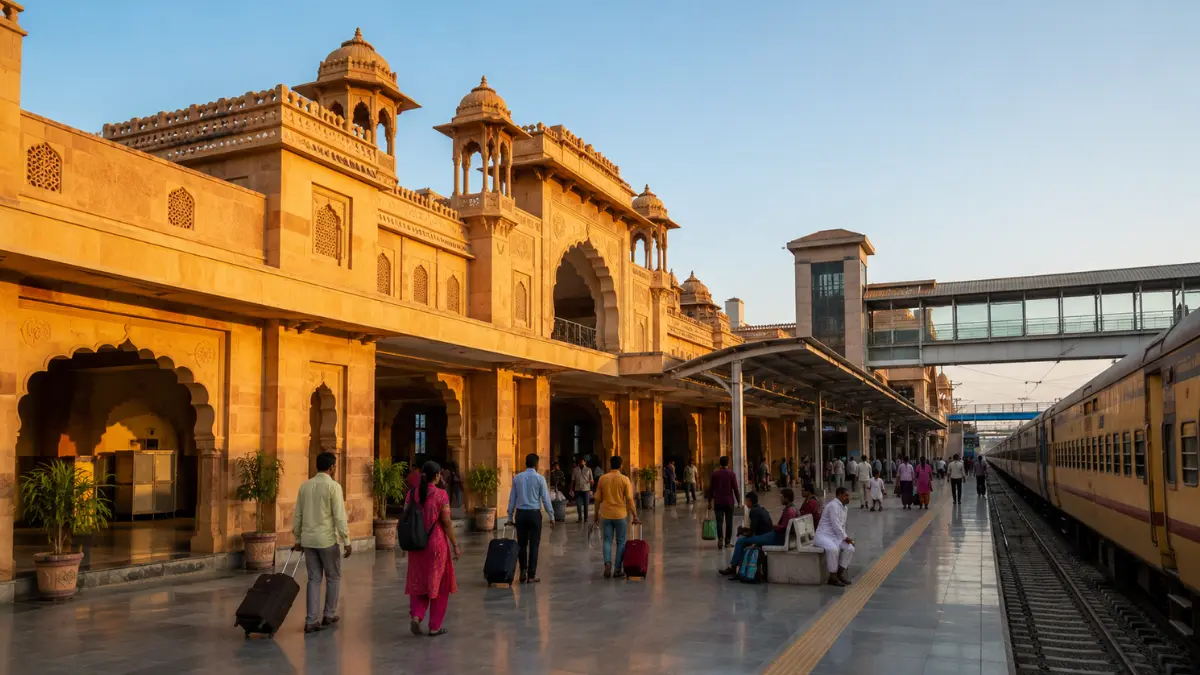

Eight railway stations across Rajasthan have received major upgrades under the Amrit Bharat Station Scheme. The redevelopment projects aim to improve passenger comfort, accessibility, safety and movement while giving several stations a design influenced by Rajasthan’s local culture and architecture.
The upgraded stations are Jaisalmer, Barmer, Dausa, Deeg, Gangapur City, Gotan, Khairthal and Somesar.
Jaisalmer received the most extensive transformation among these stations, including a larger terminal building, lifts, escalators, foot overbridges, expanded platform shelters and a heritage-inspired exterior. The other stations received improvements based on their size, passenger traffic and local requirements.
Full List of the Eight Upgraded Rajasthan Railway Stations
The eight Rajasthan railway stations redeveloped under the latest phase of the Amrit Bharat Station Scheme are:
- Jaisalmer Railway Station
- Barmer Railway Station
- Dausa Railway Station
- Deeg Railway Station
- Gangapur City Railway Station
- Gotan Railway Station
- Khairthal Railway Station
- Somesar Railway Station
Indian Railways did not give every station an identical set of facilities. Each redevelopment project considered local passenger numbers, available land, existing infrastructure and the role of the station within the wider railway network.
This means a major tourism station such as Jaisalmer received a much larger redevelopment than a smaller regional station.
What Changed at Jaisalmer Railway Station?
Jaisalmer Railway Station received the largest and most visually distinctive redevelopment among the eight Rajasthan stations.
The new station reflects the architectural identity of the Golden City. Its exterior uses the yellow-golden appearance commonly associated with Jaisalmer’s sandstone buildings and historic fort.
The design allows the station to function as more than a transport facility. It now gives visitors an immediate sense of the city’s cultural character when they arrive by train.
New facilities at Jaisalmer Railway Station
The redeveloped station reportedly includes:
- Ten lifts
- Ten escalators
- Two wide foot overbridges
- A spacious air concourse
- Larger waiting areas
- Improved entry and exit points
- Better parking and vehicle circulation
- Retiring rooms and dormitories
- A multipurpose hall
- Commercial spaces
- Modern catering stalls
- A rail coach restaurant
- Accessible facilities for passengers with disabilities
- Wider platform shelters
- Expanded CCTV surveillance
The larger platform shelters can offer passengers greater protection from Jaisalmer’s intense sunlight, high temperatures and seasonal weather.
Improved lifts, escalators and foot overbridges should also make movement easier for older passengers, families carrying luggage and travellers with mobility difficulties.
Why the Jaisalmer upgrade matters
Jaisalmer attracts domestic and international tourists throughout the year, with the busiest period usually arriving during the cooler months.
The old station needed to handle growing passenger traffic while offering better waiting facilities, platform access and transport connections outside the station.
The redevelopment could make arrivals and departures more organised, particularly during holiday periods and major cultural events.
However, the long-term value of the project will depend on regular maintenance, cleanliness, functioning equipment and proper crowd management.
What Changed at Dausa Railway Station?
Dausa Railway Station received upgrades focused on everyday passenger convenience and accessibility.
The redevelopment includes improvements such as:
- A new or upgraded waiting hall
- Better station lighting
- Improved parking arrangements
- Digital coach guidance displays
- Accessible ramps
- Dedicated pathways for passengers with disabilities
- Refreshed public areas
- Artwork inspired by Rajasthan’s culture
Digital coach guidance systems can help passengers identify where their coach may stop before the train reaches the platform. This can reduce confusion and unnecessary movement, particularly when travellers carry heavy luggage or accompany children and older family members.
Accessible ramps and clearer pathways can also make the station easier to use for wheelchair users, senior citizens and passengers with limited mobility.
What Changed at Barmer Railway Station?
Barmer Railway Station serves an important region in western Rajasthan and connects residents with larger cities across the state and the rest of India.
Its redevelopment focuses on improving the overall passenger environment through better station infrastructure, upgraded public areas and more organised movement around the premises.
Passengers may notice improvements to:
- Waiting spaces
- Lighting
- Station entrances
- Platform areas
- Signs and passenger information
- Parking and vehicle movement
- Accessibility
- Cleanliness and public facilities
The publicly available information does not provide the same detailed facility list released for Jaisalmer. Passengers should therefore not assume that Barmer received every feature installed at the larger tourism-focused station.
What Changed at Gotan Railway Station?
Gotan Railway Station serves passengers in Nagaur district and supports travel connected with regional industry, agriculture and trade.
The redevelopment aims to make the station cleaner, safer and more comfortable for regular passengers.
Modernisation at a regional station can have a meaningful effect even when it does not involve a large terminal building. Improvements to seating, shelter, lighting, entrances, toilets, platform surfaces and passenger information can significantly change the everyday travel experience.
The Gotan upgrade may also help workers, students, traders and families who rely on the railway for regular regional travel.
What Changed at Somesar Railway Station?
Somesar Railway Station serves a smaller passenger population than Rajasthan’s major railway hubs, but infrastructure improvements can still provide substantial local benefits.
Smaller stations often operate with limited waiting areas, basic passenger information systems and ageing public facilities.
The redevelopment aims to create a more organised and passenger-friendly environment through improvements to station spaces, access routes, lighting and essential amenities.
For local travellers, reliable basic facilities may matter more than elaborate architectural features. Clean waiting areas, readable signs, safer platforms and proper lighting can directly improve everyday journeys.
What Changed at Khairthal Railway Station?
Khairthal Railway Station supports travel in northeastern Rajasthan and connects the surrounding region with important urban and economic centres.
The redevelopment is intended to improve comfort, accessibility and passenger movement through the station.
Daily commuters, students, workers and families may benefit from:
- Better waiting areas
- Improved entry and exit routes
- Clearer signs
- Safer platform access
- Better lighting
- More organised parking
- Refreshed station surroundings
The exact facilities may differ from those installed at larger stations because Indian Railways plans redevelopment work according to local requirements.
What Changed at Deeg Railway Station?
Deeg is known for its historic palaces, gardens and connections with the wider Bharatpur tourism region.
An improved railway station could help travellers reach the area more comfortably while supporting local tourism and economic activity.
The redevelopment aims to provide a cleaner, better-organised station environment with improved passenger facilities and easier movement.
Deeg may not receive the same volume of tourists as Jaisalmer, but better railway infrastructure could make regional destinations more accessible to travellers who prefer trains.
Station improvements alone will not automatically increase tourism. Train schedules, local transport, accommodation and destination promotion will still influence visitor numbers.
What Changed at Gangapur City Railway Station?
Gangapur City is an important railway junction used by passengers travelling within Rajasthan and towards destinations in other states.
Unlike a small local station, a busy junction must manage passengers changing trains, waiting for connecting services and moving between platforms.
Redevelopment can improve this experience through:
- Better waiting spaces
- Clearer passenger information
- Improved platform access
- Safer movement between station areas
- Better lighting and signs
- More organised entry and exit points
The available announcements confirm that Gangapur City forms part of the upgraded station group, although they do not provide the same detailed breakdown available for Jaisalmer.
What Is the Amrit Bharat Station Scheme?
The Amrit Bharat Station Scheme is an Indian Railways programme designed to redevelop railway stations through long-term, location-specific planning.
It does not require every station to follow one standard design. Instead, railway authorities select improvements based on passenger traffic, station importance, available space and local needs.
Common redevelopment work can include:
- Improved station buildings
- Larger waiting halls
- Better seating
- New platform shelters
- Foot overbridges
- Lifts and escalators
- Accessible ramps
- Clear passenger information systems
- Improved parking areas
- Better station entrances
- CCTV surveillance
- Local architectural and cultural elements
- Commercial areas
- Spaces for local products
Indian Railways has also been modernising train technology alongside station infrastructure. DesiVibe readers can explore how India’s first hydrogen train works without diesel to understand another important development taking place across the country’s railway network.
The Amrit Bharat programme focuses on the station experience, while projects such as hydrogen-powered trains focus on how railway services may operate more efficiently and sustainably in the future.
Are the Upgraded Stations Already Open?
The eight Rajasthan stations continue to serve passengers following their redevelopment and inauguration.
However, the completion of station work does not automatically mean that Indian Railways has introduced new trains, added stops or changed existing routes.
Passengers should check current schedules, train availability and platform details through official railway enquiry services before travelling.
Some commercial facilities inside redeveloped stations may also begin operating in stages. A station may complete its main construction work while shops, food outlets or other services continue preparing for full operation.
Will the Upgrades Introduce New Trains?
The station redevelopment announcement does not by itself confirm new train services.
Indian Railways makes separate decisions about:
- New trains
- Additional station stops
- Route extensions
- Timetable changes
- Increased service frequency
- Seasonal special trains
Passengers should avoid assuming that an upgraded station will immediately receive more trains.
The primary purpose of the current redevelopment is to improve station infrastructure and the passenger experience.
How the Upgrades Could Help Rajasthan Tourism
Jaisalmer has the clearest tourism connection among the eight upgraded stations.
Its heritage-inspired design allows the railway station to match the visual identity of the city. Visitors arriving by train can experience the local architectural character before leaving the station premises.
The upgrade may support tourism through:
- More comfortable waiting areas
- Better platform access
- Wider shelters
- Improved luggage movement
- More organised parking
- Better food and commercial facilities
- Increased security coverage
- Easier movement for elderly and disabled passengers
Deeg could also benefit because it forms part of a culturally important region close to Bharatpur.
Improved stations may encourage more travellers to explore regional destinations, although tourism growth will also depend on local transport, accommodation, marketing and convenient train connections.
How the Redevelopment Could Help Local Communities
Railway stations do more than serve long-distance travellers. They also support local workers, students, traders, small businesses and families.
Better station infrastructure can help communities by:
- Making daily travel safer
- Reducing confusion during boarding
- Improving access for older passengers
- Supporting local shops and vendors
- Creating better connections with nearby towns
- Encouraging tourism
- Improving the appearance of public spaces
- Making travel more comfortable during extreme weather
Commercial areas inside or around upgraded stations may also create opportunities for local products and small businesses.
However, railway authorities must manage these spaces carefully so that commercial activity does not obstruct passenger movement.
What Passengers Will Notice Most
Passengers will notice different changes at each station.
At Jaisalmer, the most visible improvements include the heritage-inspired station building, larger passenger areas, lifts, escalators, foot overbridges and expanded platform shelters.
At Dausa, travellers may notice the practical improvements more clearly, including digital coach guidance, better lighting, accessible pathways and improved waiting facilities.
At smaller stations, passengers may value basic changes such as cleaner spaces, safer platforms, clearer signs and improved seating.
The true success of the projects will depend on whether the new facilities continue to function properly after the inauguration.
Maintenance Will Determine the Long-Term Value
New buildings and equipment can improve a railway station, but poor maintenance can quickly reduce their usefulness.
Indian Railways and local station authorities will need to ensure:
- Lifts and escalators remain operational
- Waiting halls stay clean
- Toilets receive regular maintenance
- Digital displays provide accurate information
- CCTV systems continue functioning
- Platform shelters remain in good condition
- Accessible routes remain unobstructed
- Parking areas stay organised
- Food and commercial areas follow hygiene standards
Passengers will judge the redevelopment through their daily experience rather than the appearance of the station on inauguration day.
What Travellers Should Check Before Visiting
Passengers planning to use any of the eight redeveloped stations should still verify their journey details in advance.
Check:
- Current train timings
- Platform information
- Coach position
- Train cancellation or delay notices
- Available waiting-room access
- Parking arrangements
- Local transport from the station
- Accessibility assistance when required
Station facilities can improve comfort, but travellers should continue relying on official railway information for schedules and operational updates.
