
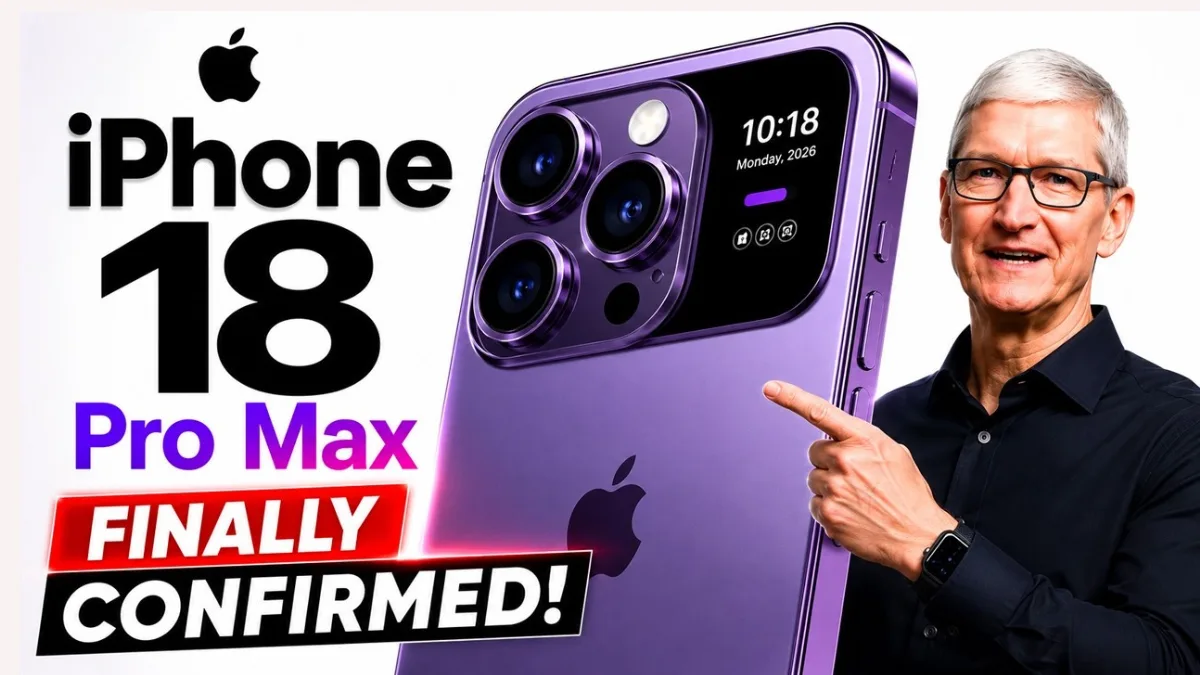

A reported camera diagnostic log has renewed speculation that Apple could give the iPhone 18 Pro Max a variable-aperture main camera. The alleged log also identifies a Sony IMX905 image sensor, according to a report that examined files connected to the Tata Electronics data breach.
The information looks more substantial than an ordinary social-media rumour because it reportedly comes from internal manufacturing and diagnostic material. However, neither Apple nor Sony has confirmed the camera sensor or variable-aperture mechanism.
Reuters also reported that it could not independently verify the authenticity of the wider leaked dataset. Readers should therefore treat the camera details as credible-looking leaked information, not as official iPhone specifications.
What Does the iPhone 18 Pro Max Camera Leak Claim?
Notebookcheck reports that an alleged diagnostic log lists a Sony IMX905 sensor as the iPhone 18 Pro Max’s main camera sensor.
The publication also says the log contains a calibration block that reads actuator data connected to an aperture mechanism. An actuator is a small mechanical component that controls movement inside a device. In a camera, it can help adjust the physical opening that allows light to reach the sensor.
This information has led to reports that the iPhone 18 Pro Max could become the first iPhone with a variable-aperture main camera.
The alleged log reportedly lists Sony sensors for the telephoto, ultrawide and front cameras as well. However, Apple has not announced the iPhone 18 Pro Max or confirmed any part of the reported camera system.
The safest conclusion is that the leaked material may show a camera configuration Apple has tested or developed. It does not prove that Apple will include the same configuration in every retail model.
How Is the Tata Electronics Data Breach Connected?
Tata Electronics supplies parts to Apple and assembles iPhones as a contract manufacturer in India.
A ransomware group called World Leaks reportedly posted more than 200,000 files connected to Tata Electronics on the dark web. Reuters reviewed documents that appeared to contain component lists, supplier information and photographs associated with unreleased iPhone 18 Pro models.
The exposed material reportedly mapped hundreds of parts to specific suppliers, including components used in batteries, cameras and circuit boards.
Apple normally protects such supply-chain information because it can reveal product plans, manufacturing relationships and hardware decisions before a device reaches the market.
However, Reuters clearly stated that it had not verified the authenticity of the leaked data. It also could not independently confirm the exact model shown in the leaked device photographs.
That warning also applies to the newer camera claims. The documents may appear detailed and internally consistent, but Apple has not authenticated them publicly.
What Is a Variable-Aperture Smartphone Camera?
A camera aperture is the opening that controls how much light passes through the lens and reaches the image sensor.
A wider aperture allows more light to enter. This can help a camera capture brighter images in dark environments. A narrower aperture allows less light to enter and can give the camera more control in bright conditions.
Most smartphone cameras use a fixed physical aperture. The opening remains the same while software adjusts exposure, noise, sharpness, colour and simulated background blur.
A variable-aperture camera can physically change the size of the opening according to the scene.
For example, the camera could select a wider aperture for a dim indoor photograph and a narrower aperture for a bright outdoor landscape.
The technology would not make every photograph automatically better. Its value would depend on the quality of the lens, sensor, mechanical system and image-processing software.
How Could Variable Aperture Improve iPhone Photography?
A variable aperture could give the iPhone camera greater exposure flexibility in changing light.
Better control in bright conditions
A narrower aperture could reduce the amount of light reaching the sensor during bright daylight.
The camera normally controls brightness through shutter speed, sensor sensitivity and computational processing. A variable aperture would add another physical method of managing exposure.
This could help the camera handle strongly lit scenes without relying entirely on electronic adjustments.
More light in darker scenes
A wider aperture could allow more light to reach the sensor in dim environments.
That may help the camera use a faster shutter speed, reduce motion blur or avoid applying excessive digital noise reduction. The actual result would depend on how Apple balances the aperture with its existing Night mode and image-processing system.
A wider aperture can also create challenges. It may reduce edge sharpness or make a smaller part of the scene appear in focus. Apple would need to choose the aperture setting carefully for each photograph.
More natural depth of field
Modern iPhones use computational photography to create the blurred background seen in Portrait mode.
The software detects the subject, estimates the scene’s depth and applies artificial blur around the background. This method works well in many situations, but it can struggle with hair, glasses, leaves and complicated edges.
A physical aperture can influence depth of field when the camera captures the image. It may create a more natural transition between sharp and blurred areas.
Apple would probably continue combining optical depth with software processing rather than replacing Portrait mode.
More control during video recording
A variable aperture could also help video creators maintain a preferred shutter speed while light conditions change.
Smartphones often alter shutter speed or sensor sensitivity when a scene becomes brighter or darker. An adjustable aperture could give the camera another way to control exposure.
Apple would need to make the mechanism smooth and quiet. Abrupt aperture movement could create visible brightness changes during recording if the hardware and software did not work together properly.
Is Variable Aperture New to Smartphones?
No. Other smartphone manufacturers have used adjustable aperture systems before.
Samsung introduced a dual-aperture camera on the Galaxy S9 and Galaxy S9 Plus. The system switched between f/1.5 and f/2.4 settings, using the wider opening in darker environments and the narrower opening in brighter conditions.
More recent Android phones have also experimented with variable-aperture hardware.
The feature would therefore represent a first for the iPhone rather than a completely new smartphone-camera invention.
Apple often introduces technologies after other manufacturers and focuses on integrating them tightly with its hardware, software and image-processing system. The practical value would depend on how Apple implements the mechanism rather than on the feature’s existence alone.
Is the Sony IMX905 Sensor Confirmed?
Apple has not confirmed that the iPhone 18 Pro Max will use a Sony IMX905 sensor.
Notebookcheck says the alleged diagnostic log identifies the IMX905 as the new main camera sensor and lists a 1.22-micrometre pixel size.
The publication interprets the reported information as evidence that the main upgrade may focus on the adjustable aperture rather than a larger sensor.
However, DesiVibe has not independently reviewed or authenticated the leaked diagnostic file. The sensor name must therefore remain described as reported or alleged.
Apple may also test more than one sensor or camera configuration while developing a phone. A component that appears in engineering or diagnostic material may not reach the final commercial version.
What Has Apple Officially Confirmed?
Apple has not officially announced:
- The iPhone 18 Pro Max
- A variable-aperture iPhone camera
- A Sony IMX905 main sensor
- The device’s processor
- Its battery capacity
- Its Indian price
- Its release date
- Its colours or storage options
Apple’s official Indian website currently presents the iPhone 17 Pro, iPhone Air, iPhone 17, iPhone 17e and iPhone 16 as its available lineup.
The absence of an iPhone 18 announcement means that every reported specification remains subject to change.
Apple could modify the camera mechanism, use it only on selected models, delay it to another generation or remove it before mass production.
Should Buyers Wait for the iPhone 18 Pro Max?
People who care deeply about mobile photography may want to follow the variable-aperture reports. The technology could give the camera greater control over light, exposure and depth of field.
However, buyers should not delay an urgent purchase solely because of the leak.
The final performance would depend on much more than the aperture mechanism. Sensor quality, lens design, autofocus, stabilisation and image processing will determine whether the camera produces a meaningful improvement.
A mechanical aperture could also increase manufacturing complexity or require additional internal space. Apple may decide that the feature does not provide enough practical value to justify those trade-offs.
Independent camera tests will provide the clearest answer after Apple officially launches the device, assuming the reported feature reaches the final model.
What Should Readers Believe Right Now?
The Tata Electronics cybersecurity incident and the reported exposure of confidential Apple-related files are genuine subjects of an official investigation.
Reuters reviewed documents that appeared to connect component and supplier information with unreleased iPhone 18 Pro models. However, Reuters did not verify the authenticity of the full dataset.
Notebookcheck later reported that an alleged diagnostic log points to a Sony IMX905 main camera sensor with variable-aperture support on the iPhone 18 Pro Max.
That information makes the camera report worth watching, but it does not make the feature official.
The most accurate conclusion is that leaked technical material may reveal a variable-aperture camera Apple has tested for the iPhone 18 Pro Max. Apple has not confirmed that the feature will appear in the final device.
