
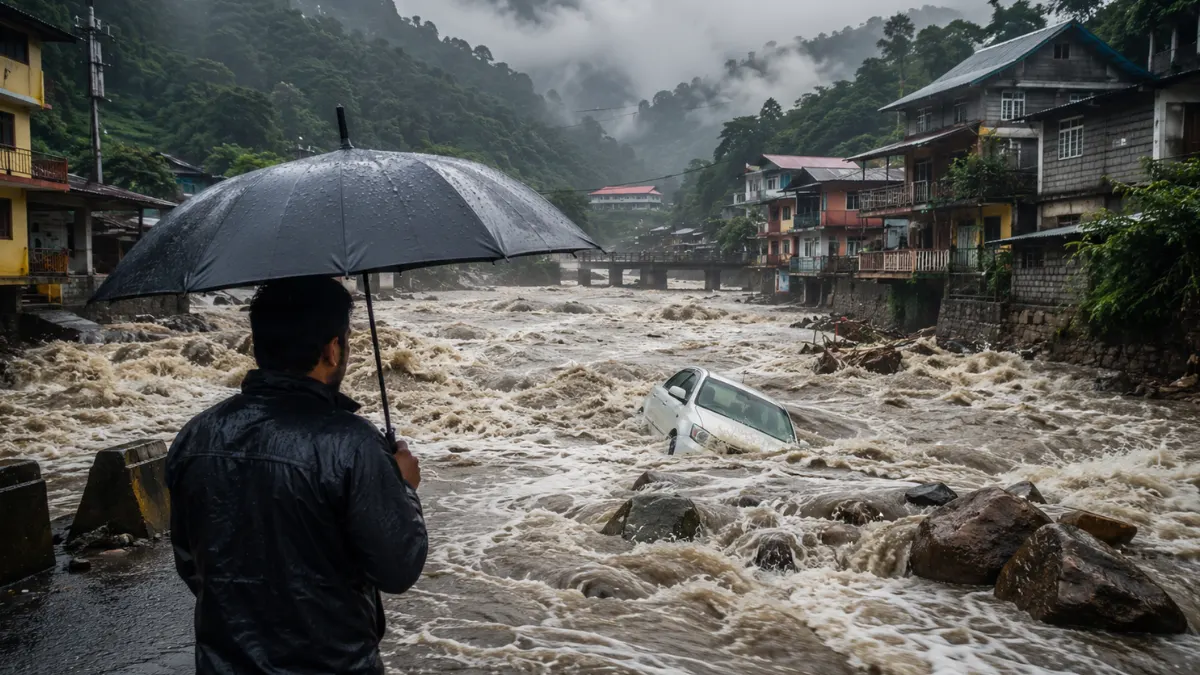

A flash flood is a sudden flood that develops within minutes or a few hours. Water can rapidly cover roads, enter homes, overflow drains and turn small streams into dangerous currents before people have enough time to react.
Intense rain causes many flash floods but rain does not need to fall directly over your location. Water can rush down from hills or arrive from an upstream area where heavier rainfall occurred earlier.
Flash floods become especially dangerous because people often underestimate how quickly the water can rise and how powerful a shallow-looking current can become.
What Causes a Flash Flood?
A flash flood develops when water reaches an area faster than the ground, drains, streams or rivers can carry it away.
Several weather and local conditions can combine to create the danger.
Intense rain over a short period
A strong storm can release a large amount of rain within a limited area. The soil may not absorb the water quickly enough, causing it to flow across roads, fields and slopes.
The runoff then collects in drains, streams, valleys and other low-lying places. Water levels can rise suddenly when several smaller flows meet in one narrow channel.
Several days of continuous rain
A flash flood does not always begin with one extreme downpour. Repeated rainfall can saturate the ground until the soil cannot absorb much more water.
A new spell of rain then flows almost entirely across the surface. This can cause streams, drains and roads to flood much faster than they would during the first day of rainfall.
Water flowing from higher ground
Heavy rain in hills or upstream areas can send water toward communities located below. A village may face rapidly rising water even when the rain directly overhead appears light or has already stopped.
This risk commonly affects settlements near rivers, streams, valleys and steep slopes. People should monitor water levels and official warnings rather than judging safety only by the sky above them.
Blocked or inadequate urban drainage
Cities contain roads, roofs, pavements and concrete surfaces that prevent water from entering the soil. Rainwater moves quickly toward drains and low-lying streets.
Blocked drains, narrow channels and poor drainage can cause water to collect rapidly. Underpasses, basements, markets and roads near overflowing drains may become dangerous within a short time.
Dam or embankment failure
A sudden release of stored water can also produce flash-flood conditions. A damaged dam, embankment or natural blockage may release a powerful flow downstream.
People should immediately follow evacuation orders or local safety instructions when authorities report structural damage or an emergency water release.
Why Does Flash-Flood Water Rise So Quickly?
Flash-flood water rises quickly because a large amount of runoff enters a small area within a short period.
Steep slopes push water downhill, while narrow valleys and small channels concentrate the flow. Saturated soil and concrete surfaces make the problem worse because they allow very little water to soak into the ground.
Debris can also block a drain or stream temporarily. Water may collect behind the blockage and then rush forward when it breaks.
The speed of a flash flood depends on:
- Rainfall intensity and duration
- Soil saturation
- Slope and terrain
- Drainage capacity
- River and stream levels
- Buildings and paved surfaces
- Upstream rainfall
- Debris blocking the water’s path
The same rainfall amount can create severe flooding in one place and only minor waterlogging somewhere else.
Flash Flood vs Ordinary Flood
A flash flood develops quickly, while an ordinary river flood may take several hours or days to reach dangerous levels.
A slower flood often follows widespread rainfall across a large river basin. Authorities may have more time to forecast rising water and organise evacuations.
A flash flood usually affects a smaller area, but it can become dangerous much faster. It may strike a road, stream, valley, urban neighbourhood or normally dry channel with very limited warning.
The main difference is the speed of development, not simply the total amount of water.
Flash Flood vs Cloudburst
A cloudburst is an exceptionally intense and highly localised rainfall event. A flash flood is the rapid rise and movement of water on the ground.
A cloudburst can trigger a flash flood, particularly in steep terrain, narrow valleys and poorly drained settlements. However, sustained rain, saturated ground, blocked drains and sudden upstream water releases can also cause flash flooding.
Understanding how cloudbursts form and why they are difficult to predict helps explain why extreme local rain can create danger before forecasters identify the exact location.
Not every flash flood begins with a cloudburst, and not every cloudburst causes severe flooding.
Early Warning Signs of a Flash Flood
Official weather alerts provide the most reliable warning, but local conditions may change rapidly. People living near streams, drains, rivers, slopes and low-lying roads should watch for signs of rising danger.
Warning signs include:
- A stream or river rising quickly
- Water becoming muddy or filled with branches and debris
- A loud roaring sound coming from upstream
- Water flowing across a road
- Drains overflowing into homes or streets
- Fast-moving water entering a normally dry channel
- Repeated heavy rain after several wet days
- Police closing roads or bridges
- Local authorities issuing evacuation instructions
- Sudden water movement after rain in nearby hills
Do not wait for every sign to appear. Move away when one serious warning indicates that water levels are worsening quickly.
Can a Flash Flood Happen Without Rain Nearby?
Yes. A flash flood can reach an area even when little or no rain is falling there.
Heavy rain may fall upstream and send water downstream through rivers, streams and valleys. The flood may arrive later, after the local weather appears to have improved.
This makes rivers and mountain streams especially deceptive. A clear sky does not prove that the waterway is safe.
People should avoid riverbanks, waterfalls and narrow valleys during periods of intense regional rainfall, even when local conditions seem calm.
Why Are Flooded Roads So Dangerous?
Floodwater hides the condition of the road underneath. Drivers may not see open drains, deep holes, damaged surfaces, washed-away bridge edges or strong currents.
Moving water can stall, turn or carry away a vehicle. Motorcycles face even greater risk because the rider has less stability and protection.
People walking through floodwater can also fall into drains or lose their balance. Muddy water may contain sharp objects, sewage, electrical hazards and hidden debris.
When water covers a road:
- Stop before entering it
- Turn around and use a safer route
- Follow police barricades and road closures
- Do not copy another driver who attempts to cross
- Do not walk into the water to test its depth
- Avoid underpasses and low bridges
- Move away if the water continues to rise
A road that you use every day may become unsafe after part of its surface washes away.
What Should You Do During a Flash Flood?
Move away from the water as early as possible. Do not wait until the current becomes too strong or the exit route becomes blocked.
Move to higher ground
Leave low-lying roads, riverbanks, basements, underpasses and ground-floor rooms when water starts rising.
Choose a safe location clearly above the flooded area. Follow marked evacuation routes and instructions from local authorities.
Avoid rivers and bridges
Do not stand on bridges, riverbanks or waterfalls to watch or record the flood. Fast water can damage the ground, weaken bridge approaches and carry large debris.
Keep children and animals away from drains, streams and flooded roads.
Follow official instructions
District administrations may have information about upstream water releases, road damage, landslides or blocked evacuation routes.
Follow evacuation orders, traffic restrictions and local announcements immediately. Do not rely only on forwarded social-media messages.
Keep essential items ready
Keep medicines, identification documents, drinking water, a charged phone and a small emergency bag in an accessible place during severe weather.
Collect them only when doing so does not delay your movement to safety.
Help without entering the water
Call trained emergency responders when someone becomes trapped. Entering a fast current without proper equipment can place another life in danger.
You may throw a floating object or rope from a secure place, but do not stand on an unstable bank or enter the water.
What Should You Never Do During a Flash Flood?
Avoid actions that could trap you or increase the danger.
Do not:
- Drive through moving floodwater
- Walk or swim across a flooded road
- Stand near a swollen river
- Gather near an unstable slope
- Touch electrical equipment while standing in water
- Return home before authorities declare the area safe
- Spread unverified dam-failure or evacuation rumours
- Allow children to play near drains or floodwater
- Assume the danger has ended because the rain stopped
Water may continue rising after rainfall ends because runoff is still moving from higher ground.
When Should You Move to Higher Ground?
Move immediately when authorities order an evacuation or when water starts rising quickly around your location.
Do not wait for a formal announcement when floodwater is already entering your home, cutting off the road or threatening the building.
Early movement is particularly important when you are:
- Beside a river or stream
- Inside a basement or low-lying room
- Near an unstable hill slope
- Travelling through a narrow valley
- Inside a flooded underpass
- Close to an overflowing drain
- On a road with moving water
Move away from the water’s path rather than following the same stream or valley.
How Do Authorities Forecast Flash-Flood Risk?
Weather agencies study rainfall, soil moisture, river conditions, terrain and drainage capacity to identify areas where flash flooding may develop.
Radar and satellite information help forecasters track intense rain. Rain gauges show how much water has already fallen, while soil data indicates whether the ground can absorb additional rainfall.
Forecasting remains difficult because flash floods often affect small areas and develop quickly. A blocked drain, saturated slope or intense local storm can change the situation within a short time.
This is why people should check both advance forecasts and short-term district warnings.
Where Can You Check Official Flash-Flood Warnings?
Use recent information from official government sources instead of relying on old screenshots or unverified messages.
Check:
- IMD district weather warnings
- IMD nowcasts
- State disaster-management authorities
- District administration notices
- Police traffic updates
- The NDMA SACHET portal or application
Before travelling, also understand what IMD red, orange and yellow rain warnings mean. Warning colours describe the expected level of weather risk, while local alerts provide more specific instructions for the affected area.
Always check the issue time and validity period because warnings can change as new weather information becomes available.

2 thoughts on “What Is a Flash Flood? Causes, Warning Signs and Safety”