
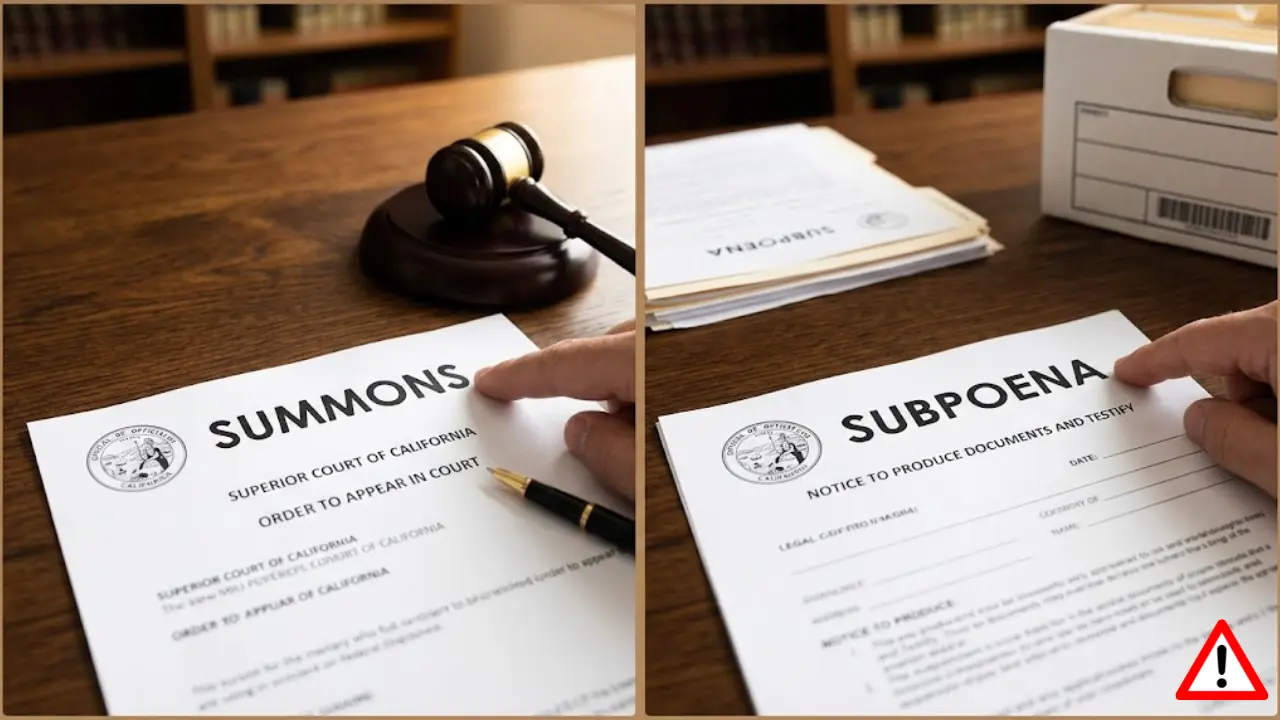

Legal documents can be confusing, especially when they carry serious implications. Two of the most commonly misunderstood documents in the U.S. legal system are court summons and subpoenas. While both require action, they serve entirely different purposes and carry different legal obligations. Misunderstanding them can lead to missed deadlines, penalties or legal complications.
What a Court Summons Means
A court summons is a formal notice that a legal case has been filed and requires a response or court appearance. It is typically the starting point of a legal proceeding.
Purpose of a Court Summon
A summons informs an individual that they are being sued or involved in a legal matter. It outlines:
- The nature of the case
- The court handling the issue
- The deadline to respond
The primary goal is to ensure the individual has an opportunity to present their side.
Legal Obligation
A summons requires a formal response within a specific timeframe. Ignoring it can result in a default judgment meaning the court may rule without hearing the defence.
The responsibility is active—failure to respond has direct legal consequences.
What a Subpoena Means
A subpoena is a legal order requiring a person to provide testimony or produce evidence. Unlike a summons, it does not necessarily mean involvement as a defendant.
Purpose of a Subpoena
Subpoenas are used to gather information relevant to a case. They may require:
- Appearing in court as a witness
- Providing documents or records
- Giving testimony under oath
The focus is on evidence, not initiating a lawsuit.
Legal Obligation Attached to a Subpoena
A subpoena must be followed as ordered. Ignoring it can lead to contempt of court, which may involve fines or other penalties.
Unlike a summons, the role is typically supportive rather than defensive.
Court Summon vs Subpoena
Understanding the differences is essential for responding correctly and avoiding legal mistakes.
Role in Legal Proceedings
A summons starts a legal case and involves the recipient directly as a party. A subpoena supports an existing case by requiring evidence or testimony.
This distinction defines the level of involvement and responsibility.
Type of Action Required
A summons requires a response or defense. A subpoena requires compliance with a request for information or appearance.
The actions are different and confusing them can lead to improper responses.
Consequences of Ignoring Each
Both documents carry legal weight, but the consequences of ignoring them differ.
Ignoring a Court Summon
Failure to respond to a summons can result in default judgment, where the court rules in favour of the opposing party without hearing the defence.
This can lead to financial penalties, legal obligations or enforcement actions.
Ignoring a Subpoena
Ignoring a subpoena can lead to contempt of court. Courts may impose fines, issue warrants or take enforcement action to ensure compliance.
The consequences are immediate and can escalate quickly.
Can Legal Help Be Needed for Both?
Legal assistance depends on the situation, but both documents can require careful handling.
When a Lawyer Is Recommended
If the case involves complex issues, financial risk or legal uncertainty, consulting a lawyer is strongly advised. Legal representation helps build a defence and navigate procedures.
When a Lawyer May Help With a Subpoena
While not always required, legal advice can help understand obligations, protect rights and ensure proper compliance—especially if sensitive information is involved.
How to Respond Correctly
Knowing how to respond ensures compliance and protects legal standing.
Steps After Receiving a Summons
- Read the document carefully
- Note response deadlines
- Prepare and file a proper response
Timely action is critical to avoid default judgment.
Steps After Receiving a Subpoena
- Identify what is being requested
- Prepare documents or plan attendance
- Follow instructions precisely
Compliance must match the exact requirements stated.
Clarity That Prevents Legal Mistakes
Court summons and subpoenas may appear similar, but they serve fundamentally different roles. One initiates legal action, while the other supports it through evidence or testimony.
Understanding these differences ensures the right response, reduces risk and prevents unnecessary legal complications. Acting with clarity rather than confusion is essential when dealing with any legal document.
Explore These Next Legal Insights
- What Happens If You Fill a Court Summons Wrong?
- Step-by-Step Court Summons Guide Most People Need in The USA
- 6 Signs of a Fake Court Summons in the USA
Frequently Asked Questions
Does a subpoena mean being sued in court?
A subpoena does not mean being sued; it usually requires participation as a witness or providing documents related to a legal matter.
What are the consequences of ignoring a subpoena in the U.S.?
Failure to comply with a subpoena can result in contempt of court, leading to fines, legal penalties or enforcement actions.
Can both a summons and subpoena be received in the same case?
It is possible to receive both documents in one case, especially if someone is both involved in the case and required to provide additional evidence.
Is legal representation required for responding to a subpoena?
Legal representation is not always required, but it can help ensure compliance and protect rights when sensitive or complex information is involved.
What type of cases typically involve subpoenas?
Subpoenas are commonly used in criminal cases, civil disputes and investigations where testimony or documentation is necessary.
