
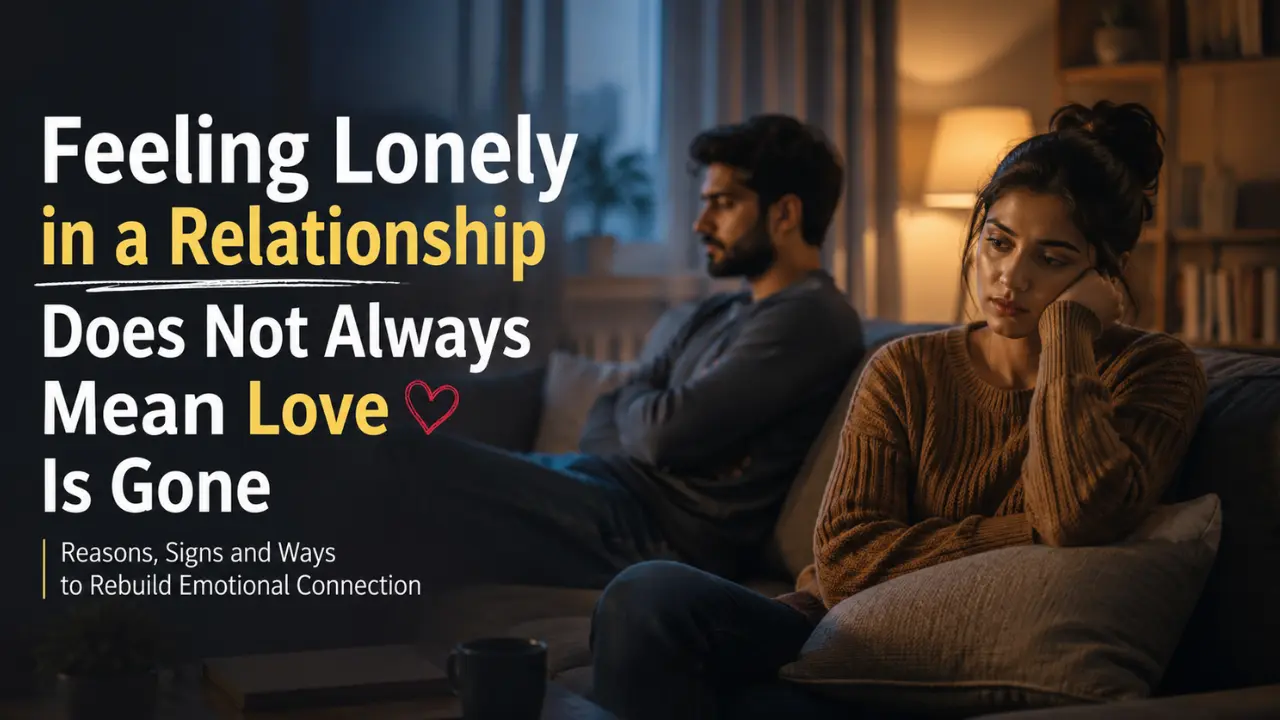

Feeling lonely in a relationship can confuse a person deeply. On the outside, everything may look normal. Two people may still talk, share meals, message each other, attend family events, and even post happy photos together. Yet inside, one person may quietly feel unseen, unheard, or emotionally far away.
That feeling can create guilt. A person may think, “Why do I feel alone when I already have someone?” Another person may think, “Maybe I am asking for too much.” Some people even convince themselves that loneliness means the relationship has already ended in the heart.
But that is not always true.
Loneliness in a relationship does not always mean love has disappeared. Sometimes it means emotional connection has weakened. Sometimes it means both people live close physically but far apart emotionally. Sometimes it means the relationship has routine, loyalty, and history, but not enough presence.
This matters because many couples panic when loneliness appears. They treat it like proof that everything has failed. In reality, loneliness can act like a warning light. It shows that something needs attention before the distance becomes permanent.
Why Someone Can Feel Lonely Even While Being Loved
A person can receive love and still feel lonely if the love does not reach the place where they feel emotionally hungry.
Some people show love through duty. They work hard, provide, stay loyal, remember important dates, or solve practical problems. These things matter. They create safety. But emotional loneliness often grows when one partner needs understanding, softness, curiosity, or deeper conversation and does not receive it.
Love can exist, but the expression of love may not match the emotional need.
For example, one person may say, “I do everything for you,” while the other quietly thinks, “But you do not really listen to me.” Both may tell the truth from their side. One measures love through effort. The other measures love through emotional presence.
This mismatch creates silent distance. The relationship continues, but the heart starts feeling alone inside it.
Hard Truth Many Couples Avoid
Many people do not feel lonely because their partner hates them. They feel lonely because the relationship has stopped making room for their inner world.
A relationship can survive daily tasks and still lose emotional warmth. Couples can discuss bills, food, children, relatives, work pressure, and weekend plans without ever touching the deeper questions that create closeness.
Questions like:
- What has been heavy on your mind lately?
- Where do you feel unsupported?
- What do you miss about us?
- What kind of love do you need from me right now?
- What have you stopped saying because you feel I will not understand?
These questions feel simple, but many couples avoid them because they may open uncomfortable truths. So they stay busy. They keep the peace. They act normal. Then loneliness grows under the surface.
The danger does not always begin with a big fight. Sometimes the real danger begins when both people stop being emotionally honest.
When Routine Replaces Real Connection
Routine can make a relationship stable, but it can also make two people emotionally lazy if they stop choosing each other with attention.
At the beginning, people usually notice everything. They ask questions. They remember small details. They study each other’s moods. They try to understand what the other person feels without needing a long explanation.
Over time, comfort enters the relationship. Comfort can help love mature, but it can also turn into assumption. One partner may think, “I already know this person.” That thought can slowly kill curiosity.
No one stays exactly the same forever. A person changes through stress, disappointment, responsibilities, family pressure, money problems, health issues, and private fears. When a partner stops asking who the other person is becoming, emotional distance starts building.
Loneliness often begins when someone feels their partner still loves an older version of them but does not notice the person they have become.
Difference Between Being Together and Feeling Connected
Being together means sharing space, time, or a relationship label. Feeling connected means both people feel emotionally present with each other.
These two things do not always happen together.
A couple can sit in the same room and scroll their phones for hours. They are together, but they may not feel connected. A couple can speak all day about practical things and still avoid emotional truth. They are communicating, but they may not feel close.
Connection requires attention. It requires listening without rushing to defend. It requires interest in the other person’s emotional life. It requires moments where both people feel safe enough to speak honestly.
A lonely partner usually does not just want more time. They want better presence during the time they already share.
That difference matters. Spending more hours together will not fix loneliness if those hours still feel emotionally empty.
Signs the Loneliness Comes From Emotional Neglect
Emotional neglect does not always look cruel. Sometimes it looks quiet, normal, and easy to excuse.
A person may feel emotionally neglected when their partner does not insult them, betray them, or leave them, but still fails to notice their emotional needs. This creates confusion because the relationship may not look “bad enough” from the outside.
Here are some signs that loneliness may come from emotional neglect:
- You share problems, but your partner quickly changes the topic or gives shallow advice.
- You feel nervous before expressing hurt because you expect defensiveness.
- You stop telling your partner small details about your day.
- You feel more emotionally relieved after talking to a friend than after talking to your partner.
- You feel like your partner knows your schedule but not your heart.
- You keep peace by staying quiet, not by feeling understood.
These signs do not automatically mean the relationship must end. But they do show that emotional repair needs to happen. Without repair, the lonely person may slowly detach to protect themselves.
Why People Stay Silent About Relationship Loneliness
Many people hide loneliness because they fear what the conversation may cost them.
They may worry their partner will say they are too sensitive. They may fear starting an argument. They may think the relationship already has enough stress. Some people stay silent because they grew up believing emotional needs make them weak or demanding.
Silence often feels safer in the short term. It protects the relationship from conflict for a day. But over time, silence makes the distance deeper.
A lonely partner may begin to act “fine” while emotionally withdrawing. They may laugh less, share less, ask for less, and expect less. The relationship may look peaceful, but the peace comes from emotional surrender, not true closeness.
That is why loneliness needs honest language. A person does not need to attack their partner. But they do need to name the feeling before it turns into resentment.
A healthier way to begin may sound like this:
“I do not want to fight. I want to feel closer to you again. Lately, I have felt lonely even when we are together, and I want us to understand why.”
This kind of sentence opens a door without turning the partner into an enemy.
When One Partner Thinks Everything Is Fine
One painful part of relationship loneliness happens when only one person feels the distance.
One partner may feel deeply unhappy while the other believes the relationship is normal. This usually happens when the lonely partner has spent months or years adjusting quietly. They have lowered expectations so often that the other person does not see the problem.
The partner who feels fine may say, “Why are you bringing this up now?” But the truth is often simple: the issue did not appear suddenly. The other person simply stopped hiding it.
This moment needs maturity from both sides.
The lonely partner must speak clearly instead of expecting the other person to guess everything. The unaware partner must listen without dismissing the pain just because they did not notice it earlier.
A relationship cannot heal if one person says, “I feel alone,” and the other replies, “No, you do not.”
No one gets to vote on another person’s inner loneliness. A loving partner may not fully understand the feeling at first, but they can still respect it enough to listen.
The Role of Phones, Work and Constant Distraction
Modern relationships face a strange problem. People stay more reachable than ever, but many feel less emotionally available than before.
Phones keep couples connected through messages, calls, reels, memes, and updates. But phones also steal attention from the person sitting nearby. Work pressure follows people home. Entertainment fills every quiet space. Notifications interrupt conversations before they become meaningful.
Distraction does not destroy closeness in one dramatic moment. It weakens closeness through repeated small absences.
A partner may sit beside someone but keep giving their best attention to a screen. Another partner may talk, but the listener only half-hears. Over time, the lonely person stops trying because they feel they must compete for basic attention.
The issue is not only phone use. The deeper issue is emotional priority.
People usually notice when they do not matter in someone’s attention. They may not complain every time, but they feel the message clearly: “Something else always gets more presence than me.”
When Loneliness Comes From Unspoken Expectations
Sometimes loneliness grows because both partners carry different expectations but never explain them.
One person may expect frequent reassurance. Another may believe love should feel secure without repeated words. One person may want deep conversations at night. Another may need quiet after a stressful day. One person may see physical affection as emotional closeness. Another may see practical help as love.
None of these needs automatically make someone wrong. The problem begins when each person assumes their version of love should feel obvious.
Unspoken expectations often turn into private disappointment. A person thinks, “If they loved me, they would know.” But many partners do not know. They may care deeply and still miss the signal.
Healthy relationships require emotional translation. Partners need to explain what love feels like to them in real life.
Not vague statements like, “Care about me more.”
Clear statements help more:
- “When I tell you something serious, I need you to listen before giving advice.”
- “I feel close to you when we spend time without phones.”
- “I need reassurance when we argue, so I do not feel emotionally abandoned.”
- “When you check on me during a hard day, it helps me feel remembered.”
Clarity does not make love less romantic. It makes love easier to practice.
Does Feeling Lonely Mean the Relationship Is Wrong?
Feeling lonely does not automatically mean the relationship is wrong. It means the relationship needs honest attention.
Some relationships recover when both partners take the loneliness seriously. They rebuild trust, improve communication, create new habits, and learn to show love in ways the other person can actually feel.
But loneliness can also reveal a deeper issue. If one partner repeatedly mocks, ignores, dismisses, manipulates, or punishes emotional honesty, the problem moves beyond ordinary distance. In that case, loneliness may signal an unhealthy pattern.
The key question is not only, “Do I feel lonely?”
A better question is, “What happens when I honestly express that loneliness?”
If the partner listens, cares, and tries to understand, the relationship still has room for repair. If the partner constantly dismisses the feeling, attacks the person for having needs, or refuses every attempt at closeness, the loneliness may continue no matter how much one person tries.
Love needs effort from both sides. One person can start the conversation, but one person cannot carry the whole emotional life of the relationship alone.
How Couples Can Start Repairing the Distance
Repair does not always need a dramatic emotional speech. It often starts with small honest habits that rebuild safety.
1. Create one distraction-free conversation
Couples need time where no phone, television, or outside noise controls the moment. Even twenty minutes can matter when both people actually show up.
The goal is not to solve everything in one talk. The goal is to hear each other without rushing.
A simple question can open the conversation: “Where have you felt far from me lately?”
2. Listen without preparing a defense
Many relationship conversations fail because one person speaks while the other prepares a counterargument.
Listening does not mean agreeing with every word. It means trying to understand why the other person feels that way. Defensiveness may protect pride, but it rarely protects love.
A better response sounds like: “I did not realize it felt that way for you. Tell me more.”
3. Name needs without blaming character
A person can say, “I need more emotional presence from you,” without saying, “You are a terrible partner.”
Blame makes the other person shut down. Clear needs give the relationship something to work with.
4. Bring back small daily attention
Loneliness often grows through small repeated disconnections. Repair can also grow through small repeated moments of attention.
A check-in message, a real question, a short walk, a gentle touch, or a few minutes of honest conversation can rebuild warmth when both people practice it consistently.
5. Notice effort, not only failure
When a couple starts repairing emotional distance, both partners may act awkwardly at first. They may not know how to speak gently. They may make mistakes. They may need time to build new habits.
Noticing sincere effort helps the relationship feel safe enough to continue changing.
When You Should Not Ignore the Loneliness
Some loneliness deserves urgent attention because it points to emotional harm.
Do not ignore loneliness if your partner repeatedly humiliates you, controls who you talk to, uses silence as punishment, makes you feel guilty for normal needs, or turns every honest conversation into your fault.
A relationship should not make a person feel emotionally invisible all the time. Love may go through tired seasons, but it should not require someone to erase themselves to keep peace.
If loneliness comes with fear, constant self-doubt, emotional manipulation, or isolation from support, the person needs outside help from trusted people, a counselor, or safe support systems. Private endurance does not fix every relationship. Some patterns need strong boundaries.
What Healthy Love Looks Like After Loneliness Appears
Healthy love does not mean two people never feel lonely. It means they care when loneliness appears.
A healthy partner does not treat emotional pain as drama. They do not make every concern feel like an attack. They may feel confused or uncomfortable, but they still choose to listen.
Healthy love makes room for repair. It allows both people to say, “We have drifted, but we can learn how to come close again.” It does not demand perfection. It asks for honesty, humility, and consistent effort.
The strongest relationships do not survive because both people avoid every hard conversation. They survive because both people learn how to have hard conversations without destroying each other.
Quiet Lesson Behind Relationship Loneliness
Feeling lonely in a relationship does not always mean love is gone. Sometimes it means love needs a new language. Sometimes it means both people need to stop assuming and start listening again. Sometimes it means one person has carried silent hurt for too long and finally needs to speak with courage.
The most important thing is not to shame the feeling.
Loneliness tells the heart that connection matters. It shows that presence matters. It reminds a couple that love needs more than a label, routine, or history. Love needs attention that reaches the inner life of the person standing beside you.
A relationship can look fine from the outside and still need healing inside. That does not make the love fake. It means the love needs care before distance becomes normal.
Related Reads

1 thought on “7 Reasons You Feel Lonely in a Relationship”