
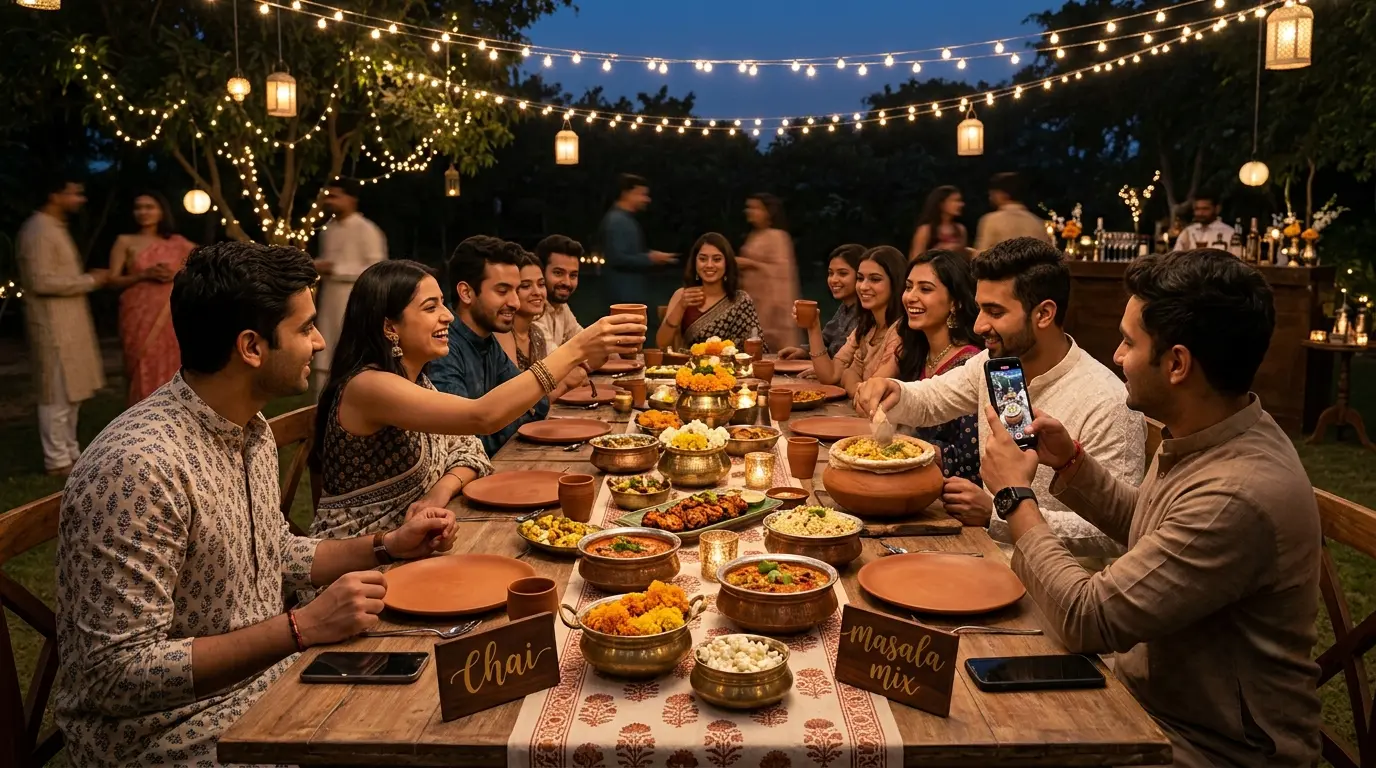

Hosting an aesthetic Desi dinner party isn’t about matching every brass bowl in your kitchen or serving a fifteen-course meal that keeps you trapped in the kitchen until 11 PM. It’s about merging deep-rooted South Asian warmth—the rich aromas, the loud laughter, the endless top-ups of chai—with a modern, visually intentional vibe that makes your guests reach for their phones before they even take a bite.
1. Set the Vibe
The secret to an aesthetic Desi setup is moving away from stiff, overly formal traditional decor and embracing a curated, texture-rich environment.
The Color Palette
Skip the neon clash. Choose a grounded, warm base and elevate it with jewel-toned accents:
- Base: Warm creams, terracotta, raw linen, or deep mustard.
- Accents: Marigold yellow, emerald green, royal indigo or muted brass.
The easiest way to make the palette feel intentional is to repeat the same two or three colors throughout the room. If your table has mustard napkins, for example, echo that shade in flowers, cushions, or a small serving dish rather than introducing five unrelated colors.
Table Scape Secrets
- Textured Linens: Use a beige or off-white raw cotton table runner. It softens the table and provides high-contrast backdrop lighting for food photos.
- Low Lighting & Brass: Ditch bright overhead lights. Line the center of the table with brass diya-style tea light holders, mismatched taper candles in amber glass holders, and small clay pots (kulhads).
- Floral Accents: Skip large, blocky flower arrangements that block conversation. Instead, run loose marigold garlands along the runner, or place single stems of tuberoses (rajnigandha) in bud vases. The fragrance immediately sets an authentic mood.
Make the Table Look Layered
A beautiful table doesn’t need expensive dinnerware. Layer what you already have.
Start with the runner, then add plates, folded napkins, small bowls, drinking glasses, and finally the decorative elements. Varying heights—flat plates, medium serving bowls, and taller candleholders—make the table feel more dimensional.
Keep the center of the table low enough that guests can see one another. The dinner table should feel inviting rather than looking like a decorative display that nobody is allowed to touch.
Add One Personal Desi Detail
Choose one element that feels connected to your own home or culture rather than trying to recreate an entire traditional setting.
It could be embroidered napkins, a vintage brass lota, hand-painted pottery, an old family serving bowl, block-print fabric, or handwritten place cards. These small imperfections often make the setting feel more authentic than buying an entire matching decor set.
2. A Curated, Low-Stress Menu
Nothing ruins host energy faster than standing over a sputtering kadhai while your guests are enjoying drinks. Build a menu designed for advance prep, bold flavors, and striking visual presentation.
A useful rule is one showstopper, two dependable mains, two easy sides, and one memorable dessert. You don’t need ten dishes to make dinner feel abundant.
       ┌────────────────────────────────────────────────────────┐
       │                  THE COCKTAIL HOUR                     │
       │   Kala Khatta Gin & Tonic  •  Spiced Guava Mocktail    │
       └───────────────────────────┬────────────────────────────┘
                                   │
                                   ▼
       ┌────────────────────────────────────────────────────────┐
       │                   THE APPETIZERS                       │
       │    Mini Dahi Puri Shots   •   Paneer / Chicken Tikka   │
       └───────────────────────────┬────────────────────────────┘
                                   │
                                   ▼
       ┌────────────────────────────────────────────────────────┐
       │                   THE MAIN COURSE                      │
       │  Slow-Cooked Dum Biryani  •  Dal Makhani  •  Burani   │
       └───────────────────────────┬────────────────────────────┘
                                   │
                                   ▼
       ┌────────────────────────────────────────────────────────┐
       │                  THE SWEET FINISH                      │
       │  Gulab Jamun Cheesecake   •  Cardamom Karak Chai       │
       └────────────────────────────────────────────────────────┘
Signature Drinks
- Kala Khatta Gin & Tonic: A nostalgic childhood flavor elevated with a crisp gin, garnished with a charred lime wheel and fresh mint.
- Spiced Guava Mocktail: Guava juice shaken with ice, fresh lime, and served in a glass rimmed with black salt (kala namak) and red chili powder.
For a mixed group, make the non-alcoholic drink feel just as special as the cocktail. Use the same beautiful glassware, garnish, ice, and presentation rather than treating the mocktail as an afterthought.
You can also prepare a large pitcher of one signature drink before guests arrive. That means you’re not playing bartender all evening.
Starters (Interactive & Photogenic)
- Dahi Puri Shots: Serve individual puris pre-filled with spiced potatoes, rested on top of shot glasses filled with chilled sweet yogurt and mint-tamarind water.
- Charcoal-Grilled Skewers: Malai chicken or Achari paneer tikka served on wooden boards with pickled red onions (lachha pyaz) and a drizzle of vibrant cilantro chutney.
Add one simple crunchy element to the starter spread—such as papad, masala peanuts, or spiced makhana. These require almost no last-minute work and give guests something to snack on while you’re finishing dinner.
The Main Event (Prep-Ahead Kings)
- Dum Biryani: Bake it in a clay handi with a dough seal. Breaking the seal at the dinner table creates a steam-and-aroma moment everyone will want to film.
- Slow-Cooked Dal Makhani: Make it the night before (it always tastes better the next day anyway) and finish with a swirl of fresh cream and a smoked charcoal dhungar step just before serving.
Round out the mains with something fresh and acidic. A cucumber-onion salad, kachumber, mint raita, or lightly dressed greens can cut through richer dishes and keep the meal from feeling too heavy.
Don’t forget the rice-and-bread balance either. If the biryani is already the centerpiece, you don’t necessarily need several additional rice dishes. A basket of naan, roomali roti, or tandoori roti may be enough.
Plan for Different Guests
Before finalizing the menu, quietly check for allergies, vegetarian preferences, spice tolerance, and dietary restrictions.
If you’re serving both chicken and paneer, for example, you already have a simple way to make the menu more inclusive without creating a completely separate meal.
For spice-sensitive guests, keep an additional bowl of fresh green chutney, chilies, and spicy pickles on the side instead of making every dish aggressively hot.
3. Plating & Serving Hacks for the Grid
Plating Desi food can be tricky because many dishes are brown curries or stews. Here is how you turn hearty comfort food into visually stunning dishes:
- Contrast Your Serveware: Pair dark curries with off-white, speckled ceramic bowls. Use dark stoneware or matte black platters for bright rice dishes and grilled starters.
- Garnish Like a Pro: Never serve a curry bare. Use a micro-drizzle of heavy cream, micro-greens, julienned ginger, pomegranate seeds, or fried onions (birista).
- Family-Style Elevation: Serve food in low-profile shallow serving dishes rather than deep pots so guests can easily see the textures and colors.
Use Garnishes That Actually Belong to the Dish
The most attractive garnish is one that also makes culinary sense. Fresh coriander, mint, fried onions, ginger, pomegranate, toasted nuts, saffron, or a squeeze of lime can add both color and flavor.
Avoid adding random microgreens or decorative ingredients simply because they photograph well. A Desi dinner looks more sophisticated when the garnish feels connected to the food.
Create a Serving Order
Don’t put every dish on the table simultaneously.
Bring out the appetizers first, then clear a little space before presenting the main course. Keep accompaniments such as raita, chutneys, pickles, and salads together in a small section of the table.
This keeps the table visually organized and prevents guests from having to navigate around fifteen different bowls.
Keep Refills Ready
Keep extra rice, dal, naan, raita, and accompaniments nearby so you can refill without disappearing into the kitchen for ten minutes.
The best hosting trick is to make your kitchen work invisible.
4. The Soundtrack & Atmosphere
Music dictates how long people stay around the table. Build a playlist that transitions smoothly through three distinct phases:
- Arrival & Drinks: Atmospheric Lo-Fi Desi beats, acoustic sitar covers, or chill Coke Studio tracks.
- Dinner: Soft classic Ghazals, vintage 70s Bollywood vinyl rips, or upbeat indie-fusion (e.g., Peter Cat Recording Co., Prateek Kuhad).
- Post-Dinner Chai: Upbeat, sing-along nostalgia tracks that bring energy back to the room.
Keep the volume low enough that people never have to compete with the music. Dinner-party music should support conversation rather than become the main event.
Think Beyond Music
A great atmosphere is a combination of:
- warm lighting
- comfortable seating
- pleasant room temperature
- subtle fragrance
- clean surfaces
- accessible drinks
- enough space around the dining table
If you’re using scented candles, keep the fragrance subtle. Strong artificial scents can interfere with the aroma of the food.
Open windows briefly before guests arrive if weather permits, and make sure the room smells fresh rather than overwhelmingly perfumed.
5. Host Pre-Party Timeline
| Time | Task |
|---|---|
| 1 Day Before | Marinate all meats/paneer, cook the Dal Makhani base, make chutneys and prep simple syrups for drinks. |
| Morning Of | Set the table entirely—linens, candles, plates and glassware. Chop garnishes and store in airtight containers. |
| 2 Hours Before | Layer and seal the Biryani handi. Prep the drink station with ice, garnishes and glassware. |
| 30 Mins Before | Light the candles, turn on the arrival playlist, bake/steam the Biryani and do a quick lighting check. |
Add a 10-Minute Emergency Buffer
Your final thirty minutes will almost always take longer than expected.
Keep the last 10–15 minutes free for unexpected problems: a missing serving spoon, a drink spill, an extra guest, a dish that needs reheating, or someone arriving earlier than expected.
Don’t schedule a task right up to the moment the doorbell rings.
The Host’s Golden Rule
Never make the final dish of the evening a dish that requires constant attention.
Your guests should remember your conversation, not the back of your head disappearing into the kitchen.
6. Photo-Worthy Moments Guests Can’t Resist
If you want your party posted on social feeds naturally, create subtle “micro-moments” throughout the night:
- The Biryani Seal Break: Invite everyone around the table right when you slice open the dough seal on the clay handi.
- The Chai Pour: Serve hot Karak Chai from an vintage brass teapot into glass cutting chai glasses set on a wooden tray.
- Personalized Menu Cards: Print minimal, elegant menu cards on deckled-edge paper with a small twig of dried lavender or a dried marigold petal attached.
Add a Welcome Moment
Instead of immediately directing guests to the dining table, create a small arrival station.
A tray with the evening’s signature drink, a few small snacks, and a simple floral arrangement gives guests something to do while everyone arrives.
It also prevents the awkward situation where early guests are standing around an empty table waiting for dinner to begin.
Create a Chai Corner
The post-dinner chai can become its own little experience.
Set out:
- a beautiful teapot
- small glasses or cups
- cardamom
- cinnamon
- sugar
- biscuits or small sweets
- a plate of leftover dessert
Let guests customize their chai instead of serving it immediately after dinner.
This naturally slows the evening down and gives everyone a reason to linger.
7. Seating That Encourages Conversation
Aesthetic dinners often focus heavily on the table but overlook seating.
If possible, avoid placing two very quiet guests at one end and all the talkative guests at the other. Mix people naturally so conversations can move around the table.
For a larger group, don’t obsess over formal seating charts. A simple arrangement based on who already knows one another—and who might enjoy meeting—is usually enough.
Make sure guests can comfortably pull out their chairs and that serving dishes aren’t occupying every inch of table space.
8. The Five-Senses Check
Before guests arrive, do one quick check of the room through all five senses.
- Sight: Is the lighting warm? Is the table uncluttered?
- Smell: Does the room smell fresh and does the food smell inviting?
- Sound: Is the music audible but not overwhelming?
- Touch: Are the chairs comfortable and are napkins easily accessible?
- Taste: Have you actually tasted every major dish before serving it?
This takes less than five minutes and can make the whole evening feel much more intentional.
9. Don’t Forget the Practical Details
The prettiest dinner party can become uncomfortable if the basics aren’t covered.
Keep extra:
- drinking water
- napkins
- serving spoons
- plates and glasses
- ice
- chutneys
- tissues
- trash bags
- takeaway containers
If you have limited seating, don’t overcrowd the table simply because you want everyone sitting together. A slightly relaxed arrangement is better than guests constantly bumping elbows.
And if alcohol is being served, always provide appealing non-alcoholic drinks and make sure guests have a safe way home.
10. The Dessert Strategy
Dessert doesn’t need to be another complicated cooking project.
Choose something that can be prepared well in advance and plated quickly.
Good options include:
- Gulab jamun cheesecake
- Cardamom panna cotta
- Saffron rice pudding
- Mini rasmalai cups
- Kesar kulfi
- Chocolate-and-pistachio barfi
- Warm gulab jamun with vanilla ice cream
For an especially polished presentation, serve individual portions rather than bringing one enormous dessert dish to the table.
A tiny sprinkle of pistachio, a few saffron strands, rose petals, or crushed cardamom can make a simple dessert look restaurant-worthy.
11. The Morning-After Trick
One of the best hosting decisions happens before the party even starts: make cleanup easier.
Use serving dishes that can go directly into the refrigerator when possible. Keep a designated area for used glasses and plates, and don’t put every decorative object on the table simply because there is space.
Before going to bed, do only the essential cleanup:
- Refrigerate perishable food.
- Soak difficult-to-clean cookware.
- Put away candles and fragile decor.
- Gather glasses and dishes in one place.
- Take out food waste if necessary.
Everything else can wait until morning.
A dinner party should not end with the host exhausted at 2 AM.
12. Ultimate Desi Dinner Party Formula
If you want the entire concept reduced to one simple formula, think:
Warm lighting + textured table + one spectacular centerpiece + two easy mains + interactive starters + one signature drink + great music + chai at the end.
You don’t need an enormous menu, expensive crockery or perfectly coordinated decorations.
The most memorable Desi dinners usually feel abundant without feeling forced. There is food on the table, people talking over one another, someone asking for the recipe, someone pouring another glass of chai and just enough visual detail to make the whole evening feel special.
By focusing on advance preparation, warm low lighting, and small intentional touches, you get to actually sit down, enjoy your own food, and play the relaxed, gracious host while everyone else captures the magic.
