
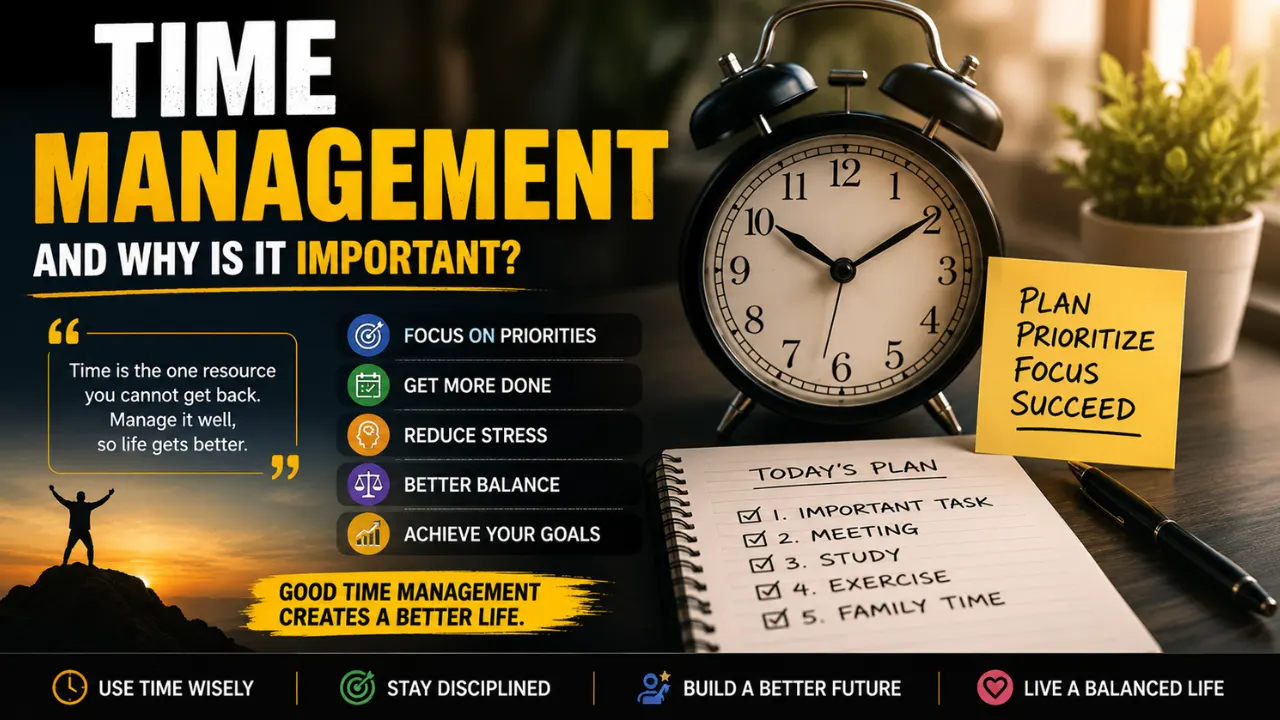

Time management means planning and using your time wisely so you can complete important tasks without wasting energy, rushing, or feeling constantly overwhelmed. It is important because time affects productivity, stress, discipline, goals, studies, work, health, and personal life. When you manage time well, you do not only “do more”; you do the right things at the right time with better focus.
What Is Time Management?
Time management is the habit of organizing your day, choosing priorities, and giving proper time to the tasks that matter most. It involves planning how you use your time so that important responsibilities are completed efficiently without unnecessary stress.
It includes:
- knowing what you need to do,
- deciding which tasks are most important,
- avoiding unnecessary delays,
- using your best hours for important work,
- finishing tasks before they become urgent,
- keeping balance between work, rest, and personal life.
Good time management is not about being busy all the time. It is about making intentional choices about how your time is spent. By focusing on high-priority tasks first and reducing distractions, you can accomplish more with less pressure.
Time management also helps create a healthier routine. It allows time for work, study, family, exercise, hobbies, and rest instead of letting one area take over everything else.
Time management does not mean filling every minute with work. It means using time with purpose. A person who manages time well knows when to work, when to rest, when to study, and when to stop wasting time on things that do not help.
Also Read: Why Do Camels Have Humps on Their Backs?
Why Is Time Management Important?
Time management is important because time is limited. Everyone gets the same 24 hours in a day, but people use those hours differently. Good time management helps a person stay organized, reduce pressure, and make steady progress.
Without time management, even simple tasks can become stressful. Work piles up, deadlines come closer, and the person starts reacting to problems instead of controlling the day.
With time management, life becomes more structured. You know what needs attention first, what can wait, and what should be avoided.
It Helps You Focus on Priorities
Not every task has the same value. Some tasks move you closer to your goal, while others only keep you busy.
Time management helps you separate important tasks from less important tasks. It teaches you to give your best time and energy to work that actually matters instead of spending the whole day on small, low-value activities.
For example, a student may spend hours decorating notes but avoid actual revision. A business owner may stay busy checking messages but delay the work that brings customers. In both cases, time passes, but real progress remains weak.
Good time management helps you ask:
- What matters most today?
- Which task will create the biggest result?
- What should I finish first?
- What am I doing only because it feels easy?
These questions help you work with direction instead of reacting to whatever feels urgent or comfortable. When priorities are clear, your day becomes more focused, and your effort produces better results.
This makes your work more useful and less scattered.
It Reduces Stress and Last-Minute Pressure
Poor time management often creates unnecessary stress. When people delay work, they usually face pressure near the deadline. Then they rush, make mistakes, sleep less, and feel mentally tired.
Time management reduces this pressure because it helps you start earlier and work in smaller steps.
For example, completing a project over five days feels easier than trying to finish everything the night before. The task may be the same, but the pressure becomes very different.
A planned schedule gives the mind more peace because the person knows what to do next.
It Improves Productivity
Productivity means getting meaningful work done, not just staying busy.
Time management improves productivity because it helps you use your energy where it matters most. When you plan your time, you waste fewer hours deciding what to do, switching between tasks, or correcting rushed mistakes.
A person with good time management can often finish more useful work in less time because they work with direction.
For example, instead of spending the whole day randomly doing tasks, they may give two focused hours to the most important work and complete it properly.
Also Read: Importance of Biodiversity Explained in Simple Words
It Builds Discipline
Time management also builds discipline. Discipline means doing what needs to be done, even when you do not feel like doing it.
When you follow a routine, complete tasks on time, and avoid constant delay, you train your mind to become more responsible. You also become less dependent on mood, motivation, or pressure to get things done.
This does not happen in one day. It grows through repeated choices:
- starting work on time,
- avoiding unnecessary scrolling,
- keeping deadlines,
- finishing small tasks before they pile up,
- protecting important hours from distractions.
Over time, these habits make a person more reliable and confident. Discipline becomes easier because the mind gets used to acting with purpose instead of waiting for the perfect feeling or perfect time.
It Helps You Achieve Goals
Every goal needs time. Whether someone wants better marks, a better job, a healthy body, a successful business, or stronger skills, time management plays a major role.
A goal usually fails when a person does not give it regular time.
For example, reading for 30 minutes daily can finish many books in a year. Studying two focused hours daily can improve exam preparation. Exercising regularly can improve health. Small planned actions become powerful when they continue over time.
Time management turns goals from wishes into daily action.
It Creates Better Balance
Many people think time management only helps with work or study, but it also helps personal life. Poor planning can make a person feel busy all the time, even when they are not making real progress.
Good time management creates space for:
- rest,
- family,
- prayer or reflection,
- health,
- learning,
- hobbies,
- sleep,
- personal responsibilities.
A balanced life needs planned time. If work takes all the time, health and relationships suffer. If entertainment takes too much time, goals suffer. Time management helps keep life in order.
It allows you to give proper attention to different areas of life instead of letting one area control everything. When time is planned wisely, you can work with focus, rest without guilt, and spend time on things that support your overall well-being.
What Happens Without Time Management?
Without time management, people often feel busy but unproductive. They may work for long hours but still miss important tasks because their effort is not properly organized.
Common problems include:
- missed deadlines,
- unfinished work,
- poor focus,
- stress,
- weak discipline,
- wasted time,
- poor sleep,
- lower quality work,
- confusion about priorities.
When there is no clear plan, small tasks can take over the whole day while important work keeps getting delayed. This creates pressure, especially when deadlines come close and everything starts to feel urgent.
Poor time management can also affect confidence. A person may feel guilty, frustrated, or tired because they are always trying to catch up. Over time, this can reduce motivation and make even simple responsibilities feel heavy.
The main problem is not always lack of time. Many times, the real problem is lack of planning and priority. Good time management helps solve this by bringing order, focus, and direction to the day.
How to Improve Time Management
A person can improve time management by starting with simple habits. Small, consistent changes are often more effective than trying to completely change your routine overnight.
First, write down the tasks you need to complete. Then choose the most important ones. Give those tasks time before less important activities. Having a written plan makes it easier to stay focused and reduces the chance of forgetting important responsibilities.
A useful method is to plan the day around three main tasks. These should be the tasks that truly matter. After finishing them, smaller tasks become easier to handle, and you are more likely to end the day feeling productive.
You can also improve time management by:
- setting clear goals,
- making a daily plan,
- avoiding multitasking,
- limiting distractions,
- starting difficult tasks early,
- keeping deadlines visible,
- taking short breaks,
- reviewing how you used your time.
It also helps to identify activities that regularly waste your time, such as unnecessary scrolling, checking messages too often, or putting off difficult work. Reducing these distractions creates more time for meaningful tasks.
The goal is not perfection. The goal is steady improvement. As good habits become part of your daily routine, managing your time becomes more natural, helping you accomplish more while maintaining a balanced and less stressful life.
Time Management Is Really Self-Management
Time itself cannot be controlled. A person cannot stop time, slow it down, or create extra hours. What a person can control is attention, choices, habits, and priorities.
That is why time management is really self-management.
A person who manages time well learns to manage focus, energy, distractions, and decisions. This makes time management one of the most important life skills for students, workers, business owners, and anyone who wants to live with more order and purpose.
Good time management helps you use your day with intention. It reduces wasted effort, improves focus, lowers stress, and gives important goals the time they deserve.

1 thought on “What Is Time Management and Why Is It Important?”