
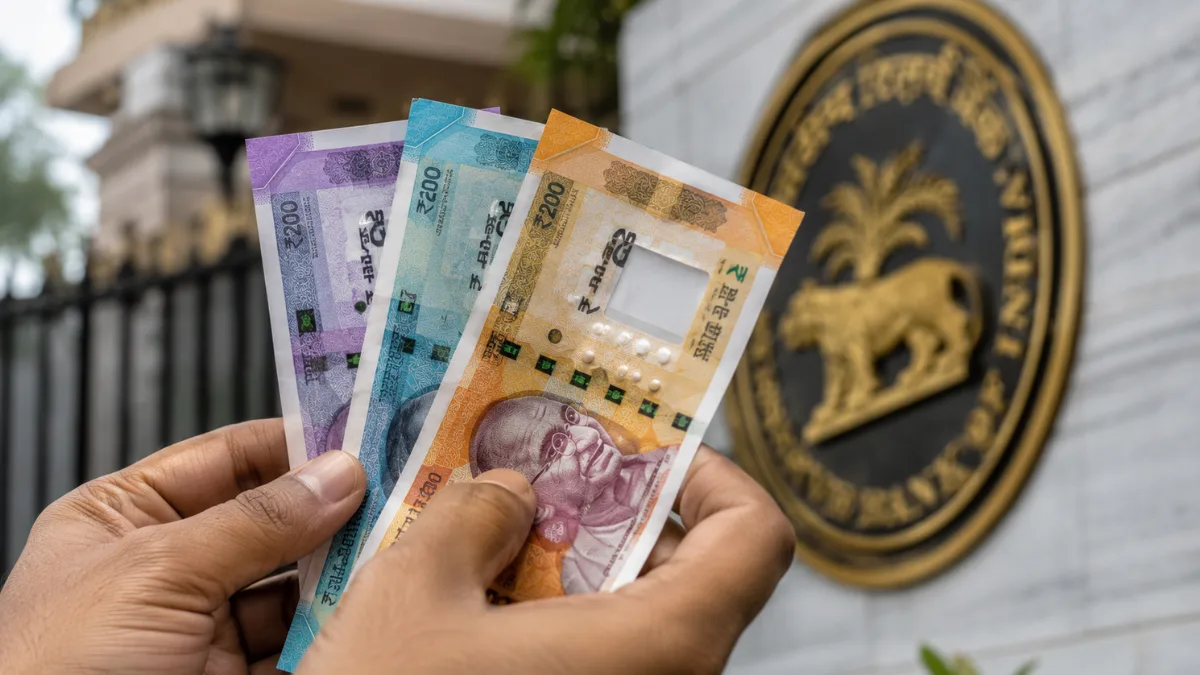

The Government of India has approved RBI’s proposal to introduce one billion ₹10 polymer notes and one billion ₹20 polymer notes for field trials. No withdrawal or invalidation of existing paper notes has been announced. The Government says polymer and paper-substrate banknotes are intended to circulate together.
This is not a nationwide launch or a demonetisation exercise. RBI must first test the polymer notes under real circulation conditions. Regular issuance could follow only after the successful completion of those trials.
The Government has not yet announced the trial date, locations, final designs or public circulation schedule.
What Has the Government Approved?
The Government approved a Reserve Bank of India proposal involving two lower-value denominations:
- One billion ₹10 polymer banknotes
- One billion ₹20 polymer banknotes
- Field trials before wider circulation
- Possible regular issuance after successful trials
The proposal therefore covers a total of two billion polymer notes.
Approval does not mean all two billion notes will immediately enter normal circulation throughout India. The first stage involves field trials designed to show whether polymer notes are suitable for India’s cash system and everyday conditions.
The official information does not identify where the trials will take place, when they will begin or how long they will continue.
India has explored polymer banknotes for many years and previously considered testing ₹10 notes on plastic substrates. However, polymer notes have not entered normal nationwide circulation in the country.
The latest approval represents a more concrete step, but it remains conditional on the trial results.
Will Existing ₹10 and ₹20 Paper Notes Remain Usable?
Yes. No announcement has withdrawn or invalidated existing ₹10 and ₹20 paper notes.
The Government has stated that polymer banknotes are proposed to circulate alongside paper-substrate banknotes. It has also said there is no proposal to replace paper currency with polymer currency.
People do not need to:
- Exchange their current paper notes
- Deposit them before a deadline
- Stop accepting ₹10 or ₹20 paper notes
- Treat them as invalid currency
- Expect an immediate switch to polymer notes
If RBI later introduces polymer ₹10 and ₹20 notes, the paper and polymer versions could remain in circulation at the same time.
A paper ₹20 note and a polymer ₹20 note would carry the same monetary value. The material would differ, but the denomination would remain unchanged.
People should be cautious about social-media messages claiming that paper notes will suddenly become invalid. Such a decision would require a separate official announcement from RBI or the Government.
No such announcement has been made.
Is This Another Demonetisation Exercise?
No. The polymer-note trial is not demonetisation.
Demonetisation involves withdrawing specified currency notes or removing their legal-tender status. The polymer proposal does not withdraw the existing ₹10 and ₹20 paper notes.
It only introduces another possible material for producing the same denominations.
The distinction is simple:
- Demonetisation removes or invalidates specified notes.
- A polymer trial tests a new banknote material.
- Existing paper notes continue circulating.
- The monetary value of ₹10 and ₹20 does not change.
The Government has directly stated that it has no proposal to replace paper currency with polymer currency.
The trial should therefore not create an exchange rush, cash shortage or deadline for depositing existing notes.
What Are Polymer Banknotes?
Polymer banknotes use a thin and flexible synthetic substrate rather than the traditional material used for paper currency.
People commonly call them plastic notes, but they are not made from ordinary household plastic. Central banks use specially manufactured polymer film designed for secure printing, frequent handling and long-term circulation.
A polymer banknote still functions like any other currency note. It carries:
- A denomination
- An official design
- Serial numbers
- Security features
- The authority of the issuing central bank
The main difference lies in the substrate used to make the note.
Several countries already use polymer currency. Their notes often resist moisture, dirt and repeated handling better than traditional paper notes.
However, India’s proposed notes should not be assumed to look or behave exactly like polymer notes issued elsewhere. RBI has not yet revealed their appearance, dimensions, security features or exact material specifications.
Images circulating online may be unofficial illustrations, edited photographs or concept designs unless RBI confirms them.
Why Is RBI Testing Polymer Notes?
The main stated reason is durability.
International studies and the experience of other central banks suggest that polymer banknotes can last longer than traditional paper notes. A longer lifespan could reduce how frequently damaged notes need to be removed and replaced.
Lower-value notes often experience heavy everyday use. People regularly handle ₹10 and ₹20 notes in:
- Local markets
- Small shops
- Public transport
- Roadside businesses
- Food stalls
- Rural transactions
- Cash-based household purchases
Frequent handling can leave paper notes dirty, torn, folded or damaged by moisture.
Once a note becomes unfit for circulation, banks and RBI must remove and replace it. If polymer notes remain usable for longer, they may reduce the frequency of replacement.
The field trial will help RBI determine whether those international advantages also apply under Indian conditions.
Polymer notes still have limitations. They can suffer cuts, heat damage and other physical harm. They should not be described as indestructible.
Why Were ₹10 and ₹20 Notes Selected?
The Government has not published a detailed explanation for choosing these two denominations.
However, both circulate widely and support small daily transactions.
RBI’s figures for the end of March 2026 showed that ₹10 notes represented 16.1% of all Indian banknotes in circulation by volume. ₹20 notes accounted for another 8.2%.
Together, the two denominations represented 24.3% of circulating banknotes by number.
Their widespread use makes them practical candidates for a durability trial. Notes that move frequently between people may reveal wear and handling problems more quickly than denominations used less often.
This is a reasonable interpretation of RBI’s circulation data, not a confirmed explanation from the Government. RBI may also have technical, manufacturing or economic reasons that it has not publicly disclosed.
What Does a Field Trial Mean?
A field trial allows RBI to study how polymer notes perform under actual circulation conditions rather than relying only on laboratory testing.
However, the Government has not disclosed:
- The trial locations
- The testing method
- The duration
- The number of people involved
- The distribution process
- The criteria for success
RBI could use the results to decide whether the material performs well enough for regular issuance.
The trial may also reveal problems that require changes before wider circulation. RBI could modify the design, substrate or implementation plan based on what it learns.
Approval for a field trial does not guarantee that polymer notes will receive an immediate nationwide launch.
When Will Polymer ₹10 and ₹20 Notes Enter Circulation?
No public launch date has been announced.
The official confirmation only says that field trials will come before regular issuance. It does not reveal when those trials will begin or how long they will continue.
Regular issuance could follow if the trials succeed and the authorities decide to proceed.
Until RBI publishes a formal timetable, people should not trust posts claiming a fixed launch date.
The next major official update may reveal:
- Trial locations
- Note designs
- Security features
- Circulation dates
- Public identification guidance
- Rules for distribution through banks
RBI normally provides detailed public information before introducing a new banknote design into broad circulation.
Will Polymer Notes Have New Security Features?
Polymer substrates can support security features that are difficult to reproduce accurately. Some foreign polymer notes use transparent windows, raised printing and visual elements that change when the note moves.
However, RBI has not confirmed which features India’s proposed notes will contain.
It would be inaccurate to claim that the Indian notes will definitely include:
- Transparent windows
- Holographic elements
- Colour-changing panels
- A completely new portrait
- A different size
- A particular colour scheme
RBI will need to release official images and identification details before the public can know how genuine notes should look.
Polymer also does not make a banknote impossible to counterfeit. Security depends on the complete design, printing process, inks, serial numbers and verification features.
Will Polymer Notes Replace All Indian Paper Currency?
There is no approved plan to replace every Indian paper denomination with polymer.
The present proposal covers only ₹10 and ₹20 notes.
No polymer versions have been officially announced for:
- ₹50
- ₹100
- ₹200
- ₹500
The Government has specifically said that polymer notes are proposed to circulate alongside paper notes.
Future decisions could depend on the outcome of the trial. A successful result might lead RBI to consider wider use, but no such expansion has been confirmed.
A complete shift from paper to polymer currency remains speculation.
Will Polymer Notes Affect UPI or Digital Payments?
Polymer notes and digital payments serve different purposes.
A polymer note remains physical cash. It can be exchanged without a smartphone, internet connection, payment application or QR code.
UPI transfers money electronically, while polymer notes would work like ordinary cash.
The Government has described cash and digital payments as complementary options. The polymer trial does not indicate that RBI plans to replace UPI, cards or other digital systems.
It is also unrelated to the digital rupee.
The digital rupee exists electronically. A polymer banknote remains a physical note that people can hold and exchange.
What Details Have Not Been Announced?
Several important details remain unknown:
- When the field trial will begin
- Where the notes will first circulate
- What the final designs will look like
- Which security features they will contain
- How the public will receive them
- How long the trial will last
- How RBI will measure success
- When regular issuance could begin
- Whether more denominations will follow
These unanswered questions show why the approval should not be treated as a full public launch.
The trial is real, but many operational decisions are still pending.
Frequently Asked Questions
Are existing Indian banknotes still valid?
Yes. Existing banknotes remain valid unless the RBI or the Government of India issues an official notification changing their legal status.
Do people need to exchange their paper notes for plastic notes?
No. There is no official exchange requirement. People should ignore messages claiming that paper notes must be deposited or exchanged by an unverified deadline.
What is a polymer banknote?
A polymer banknote uses a thin and durable plastic-based material instead of the cotton substrate commonly used for Indian currency. It can include transparent windows and advanced security features.
Are polymer notes completely waterproof?
Polymer notes resist water better than cotton-based currency, but they are not indestructible. Heat, deep cuts, heavy creasing and prolonged damage can still make them unusable.

1 thought on “India’s ₹10 and ₹20 Polymer Note Trial: What We Know”