
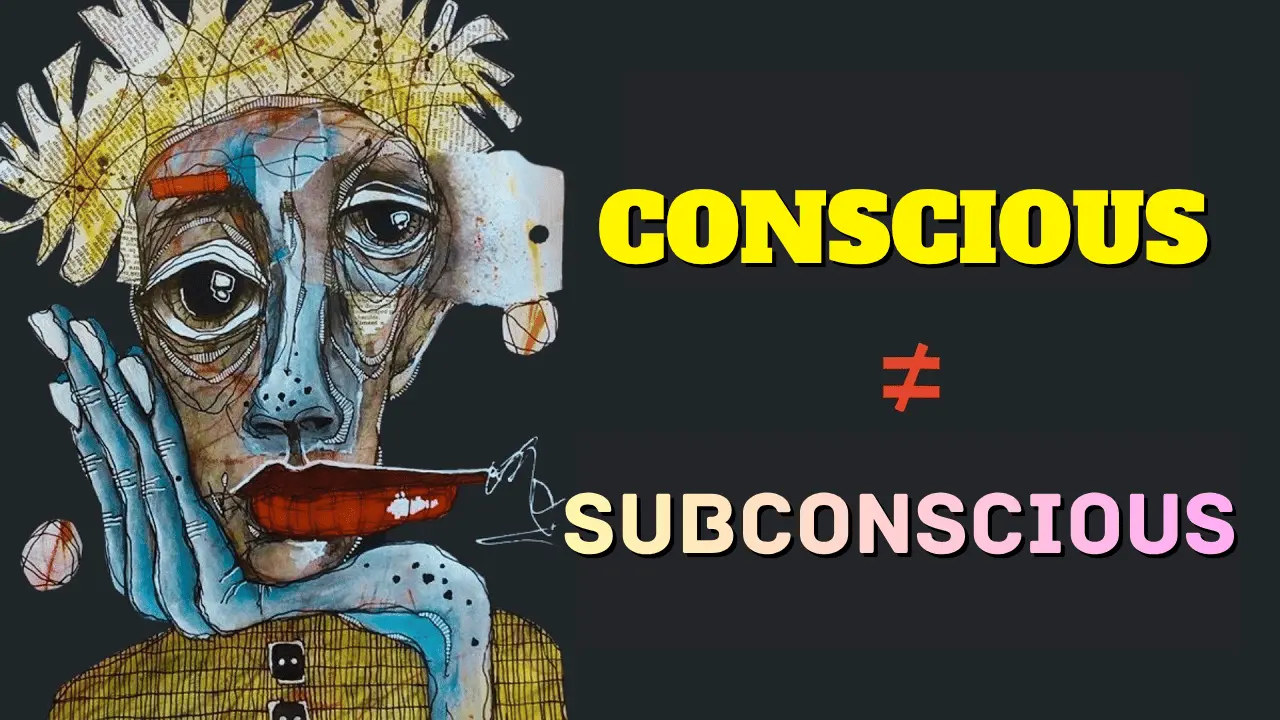

Most people believe they guide their lives through conscious thinking — through deliberate choices, logic, and discipline.
However, findings in psychology and neuroscience suggest something much deeper is at work.
Research indicates that approximately 90 to 95 percent of human behaviour is influenced by the subconscious mind.
This quiet and powerful system operates beneath conscious awareness, storing emotional memories, learned habits, and automatic responses that shape perception and behaviour.
The subconscious mind is not mystical or supernatural.
It is a biological and psychological process molded by repetition, experience, and emotion.
Because it functions silently in the background, many individuals underestimate the extent of its influence on everyday life.
What the Subconscious Mind Really Is
The subconscious mind represents the layer of mental activity that operates outside direct conscious control.
It is responsible for automatic functions and ingrained behavioural patterns that often determine emotional and physical responses.
It manages:
- Learned habits and routines
- Emotional reactions and defence mechanisms
- Core beliefs about self and the world
- Automatic thoughts and associations
- Intuition and instinct
- Memory storage and retrieval
- Regulation of body functions and stress responses
The conscious mind is analytical and deliberate.
The subconscious mind is associative and automatic.
If the conscious mind acts as the steering wheel, the subconscious mind serves as the engine that powers the direction of life.
How Subconscious Programming Begins
From birth until roughly the age of seven, the human brain functions primarily in a state of theta wave activity — a deeply absorbent and suggestible state.
During this early stage, children are not analysing life; they are internalizing it.
Every emotional tone, belief system, and behavioural pattern within the environment becomes part of the child’s mental framework.
From this foundation, the subconscious forms beliefs about:
- Safety and fear
- Love and rejection
- Self-worth and identity
- Money, success, and work
- Trust, attachment, and relationships
- What is possible or impossible in life
Some of these beliefs encourage growth, while others quietly restrict it for years or even decades.
The Subconscious vs. the Conscious Mind
| Conscious Mind | Subconscious Mind |
|---|---|
| Logical, deliberate decisions | Automatic patterns and reactions |
| Short-term memory | Emotional and long-term memory |
| Thinks in language | Thinks in images, emotions, and repetition |
| Slow and analytical | Fast and instinctive |
| Controls 5–10 percent | Controls 90–95 percent |
This distinction explains why a person can genuinely want to change, heal, or succeed, yet still feel held back by unseen internal forces.
The subconscious mind does not question.
It simply enacts what it already believes to be true.
Signs the Subconscious Is Directing Behaviour

- Repeating emotional patterns in relationships
- Difficulty changing habits despite strong willpower
- Feeling drawn toward familiar yet unhelpful behaviours
- Experiencing fear or hesitation without logical cause
- Internal self-criticism, low self-worth, or feelings of envy can be signs of deeper subconscious patterns.
- Chronic procrastination or avoidance
- Feeling consciously capable but internally restrained
These are not personal flaws.
They are protective mechanisms formed by the subconscious to maintain a sense of safety and stability.
Why the Subconscious Holds So Much Power
The subconscious mind prioritizes one core objective: safety.
It consistently favours what feels familiar over what feels new, even when the new situation is healthier or more rewarding.
To the subconscious, change represents potential risk.
As a result, it often clings to:
- Familiar emotions, even negative ones
- Familiar environments and dynamics
- Familiar beliefs and perceptions
- Familiar identity and self-concept
This is why discipline or motivation alone often fails to produce long-term transformation.
The mind must first perceive that change is safe before it will fully allow it.
How to Re-shape the Subconscious Mind
The encouraging truth is that the subconscious mind can be reprogrammed.
Through consistent awareness, emotional processing, and repetition, it is possible to form new mental patterns and healthier responses.
1. Repetition with awareness
Regularly practicing new thoughts and behaviours strengthens neural pathways.
Change requires consistency, not force. Awareness ensures that repetition is meaningful rather than mechanical.
2. Visualization and mental rehearsal
The brain responds to vivid imagination in much the same way it responds to actual experience.
Visualization has been shown to enhance performance, emotional regulation, and confidence.
3. Emotional regulation and healing
Acknowledging and processing past emotions allows new emotional patterns to form.
Healing unresolved experiences enables the subconscious to release outdated protective mechanisms.
4. Meditation and silence
Stillness calms the conscious mind and allows deeper patterns to surface.
Meditation enhances self-awareness, creating space for intentional reprogramming.
5. Environment and influence
The subconscious mind absorbs information from the surrounding environment continuously.
People, conversations, and media exposure all influence subconscious identity over time.
Environment often exerts a stronger effect than willpower.
6. Identity shift
Sustainable transformation begins with the question:
“Who am I becoming?”
When identity evolves, behaviour naturally follows. The mind aligns actions with the self-image it accepts as true.
The Spiritual Dimension
Throughout human history, practices such as prayer, chanting, meditation, and reflective study have served both spiritual and psychological purposes.
They do not only connect people to faith but also reshape subconscious programming through:
- Repetition and rhythm
- Emotional engagement
- Focused attention
- Faith and surrender
- Meaning and purpose
- Reinforced identity
Spiritual practice harmonizes belief with peace, trust, and hope — cultivating emotional patterns that strengthen psychological resilience.
A Quiet but Powerful Truth
The subconscious mind is not an adversary.
It once protected you with the information it had.
Now that you hold greater awareness, you have the ability to guide it with compassion and intention.
Growth begins when the inner story changes.
When beliefs evolve, actions shift naturally.
When identity expands, life expands in response.
Transformation does not arise through pressure or force.
It begins through understanding — and through kindness toward the mind that has always been trying to keep you safe.

2 thoughts on “The Psychology of the Subconscious Mind: How Quiet Thoughts Shape Real Life”