
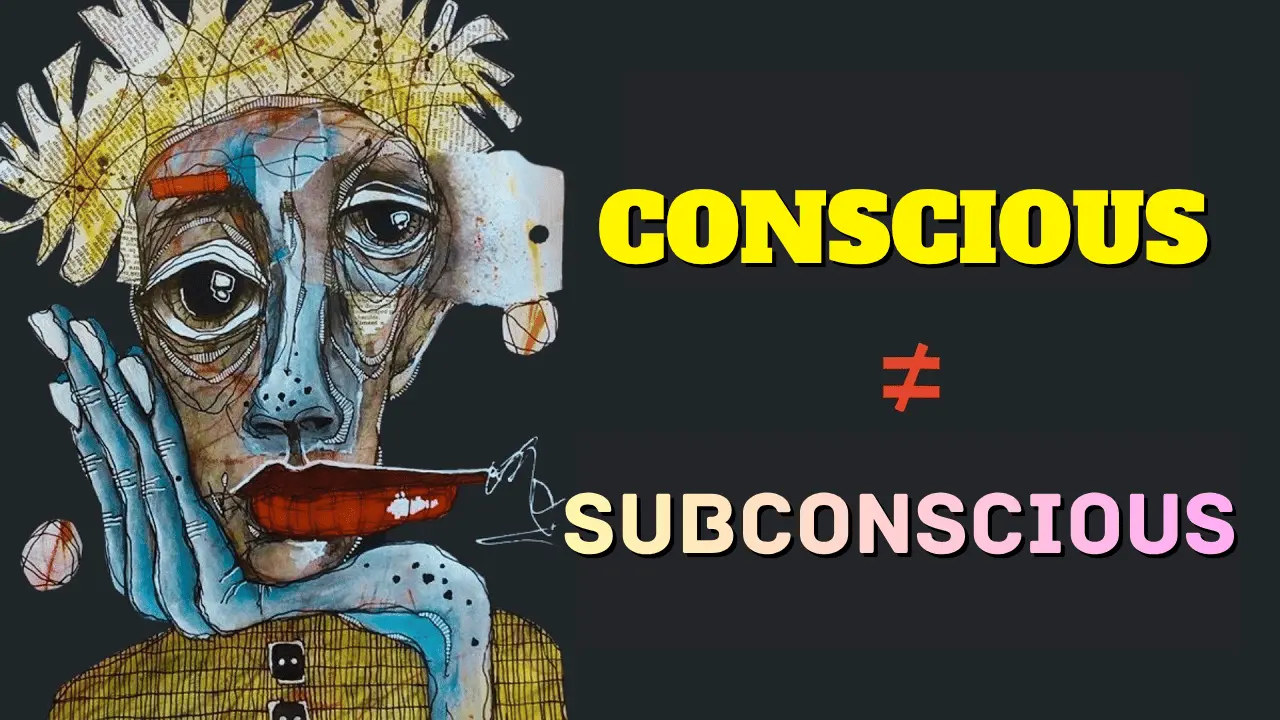

The subconscious mind is not a single, clearly defined system in modern psychology. It is an informal term people use for memories, learned associations and mental processes that can influence behaviour outside immediate conscious awareness.
The brain performs many familiar tasks without requiring constant deliberate thought. These automatic processes can influence habits, emotional reactions and quick decisions but they do not secretly control every part of a person’s life.
Understanding the subconscious mind does not require mystical ideas about hidden powers. It requires understanding how the brain learns patterns, connects situations with responses and turns repeated actions into automatic behaviour.
What Is the Subconscious Mind in Psychology?
People commonly use the word “subconscious” to describe mental activity that happens outside focused awareness.
A person may automatically reach for a phone after hearing a notification. A familiar smell may trigger an emotion before the person remembers the experience connected to it. Someone may type a password correctly without consciously recalling each character.
Modern psychology usually describes these experiences through more precise concepts, such as:
- automatic processing;
- nonconscious processing;
- implicit memory;
- learned associations;
- habitual behaviour;
- implicit learning.
These concepts do not describe one hidden mind operating separately from conscious thought. They describe different ways the brain processes information, stores experience and guides behaviour without requiring attention at every step.
Automatic processing also makes everyday life more efficient. A person would struggle to function if every familiar movement, word and decision required complete conscious analysis.
Is the Subconscious Mind the Same as the Unconscious Mind?
Subconscious and unconscious are often used interchangeably in ordinary conversation, but they are not precise synonyms in psychology.
“Subconscious” is mainly an informal term. “Unconscious” can refer to mental processes outside awareness or to ideas connected with psychoanalytic theories.
Sigmund Freud used the concept of the unconscious to describe hidden wishes, conflicts and memories that could influence behaviour. Modern cognitive psychology usually takes a different approach.
Rather than assuming that every unexplained reaction comes from a hidden desire, researchers examine measurable processes such as attention, perception, memory, habit and automatic learning.
The term “nonconscious” often provides a clearer description when discussing mental processes that happen without immediate awareness.
None of these terms suggests that a second personality lives inside the mind. Conscious and nonconscious processes interact continuously. A person may experience an automatic reaction and then consciously decide how to respond.
How Do Nonconscious Processes Affect Behaviour?
Nonconscious processes affect behaviour mainly through habits, learned associations, practised skills and selective attention.
These processes allow the brain to respond quickly to familiar situations. They can support useful routines, but they can also maintain behaviours that a person wants to change.
Habits connect situations with actions
A habit forms when a person repeatedly performs a behaviour in a similar context.
The context may include a location, time, emotion, object or action. Over time, that cue can begin to trigger the behaviour with less conscious thought.
For example, a person may check social media after sitting down to work. The action may begin as a deliberate choice, but repetition can connect the desk, laptop or feeling of boredom with phone checking.
The brain does not need to issue a spoken command. The familiar cue makes the response feel natural and immediate.
Automatic habits do not remove choice, but they can make an unwanted action easier to repeat. Interrupting the pattern requires attention at the moment when the cue appears.
Learned associations connect experiences with reactions
The brain constantly learns connections between events.
A particular sound may become associated with danger. A smell may become connected to a childhood memory. A certain room may create tension because difficult conversations repeatedly happened there.
The emotional reaction may appear before the person consciously identifies the connection.
This does not mean that every emotion contains a hidden message. It means that previous experience can affect how the brain interprets a present situation.
Learned associations can also produce positive responses. A familiar song may create comfort, while the smell of a favourite meal may increase anticipation.
Practised skills require less conscious effort
New skills usually demand concentration. A learner must think carefully about each movement or decision.
Practice gradually reduces that mental effort. An experienced typist does not consciously search for every key. A skilled cook can complete familiar steps while paying attention to something else.
Automaticity helps a person perform practised actions efficiently. Conscious attention remains available for unexpected events, difficult choices or new information.
However, automatic skill does not mean perfect performance. Distraction, fatigue and changes in the environment can still cause mistakes.
Attention filters information
The brain receives more sensory information than conscious attention can examine at once. It must select which sounds, sights and sensations deserve immediate focus.
A person may stop noticing a fan until it suddenly turns off. Someone may hear their name across a crowded room even after ignoring many other conversations.
This filtering helps explain how the brain filters information before it reaches focused awareness.
The brain does not record every surrounding detail like a camera. Attention remains selective, and memory can omit or alter information.
What Are Everyday Examples of the Subconscious Mind?
The following experiences show how automatic processing can influence ordinary behaviour.
Checking a phone without deciding to do it
A notification, moment of boredom or difficult task can trigger phone checking. The person may notice the action only after opening an application.
The behaviour becomes more likely when the phone remains visible and easily accessible. Turning off unnecessary notifications or placing the device farther away can support healthier digital boundaries.
Taking a familiar route automatically
A person may begin travelling toward a usual destination even when intending to go somewhere else.
Repeated travel strengthens a familiar sequence of actions. Attention may drift, allowing the practised route to guide behaviour until the person notices the mistake.
Typing a password from memory
Someone may enter a password quickly but struggle to say each character aloud.
The sequence has become connected to a practised movement. The fingers retrieve the pattern more easily than conscious verbal memory.
Reacting to a familiar smell
A scent may create comfort, sadness or tension before a clear memory appears.
Smell has become associated with a previous person, place or event. The emotional response can begin before conscious recognition.
Performing a practised skill
A musician, athlete or experienced driver can complete familiar actions without analysing every movement.
The person still uses attention, but practice reduces the amount of deliberate control required for each step.
These examples involve different mental processes. They do not prove that one hidden subconscious system controls every reaction.
Does the Subconscious Mind Control Most of Your Life?
No reliable rule says that the subconscious mind controls 90 or 95 percent of human behaviour.
Such percentages appear frequently in motivational content, but human behaviour cannot be divided into one universal conscious and subconscious ratio.
The amount of deliberate thought involved in an action changes according to the task.
A new driver may consciously monitor steering, mirrors and speed. An experienced driver performs many of those actions more automatically. A familiar meal requires less planning than a complicated recipe.
Behaviour usually results from an interaction among:
- conscious goals;
- automatic habits;
- emotions;
- past experience;
- present surroundings;
- social expectations;
- physical condition;
- available attention.
An automatic urge can influence a choice without determining it.
A person may feel the urge to check a phone and still continue working. Someone may experience nervousness before speaking and still complete the presentation.
Automatic processes can be powerful, but they do not make people helpless.
Does Childhood Program the Subconscious Mind?
Childhood experiences can influence later expectations, habits and emotional responses. Children learn from caregivers, repeated experiences, social environments and the consequences of their actions.
However, childhood does not create a permanent subconscious program that controls the rest of a person’s life.
Development continues through adolescence and adulthood. Education, relationships, culture, work, health and new experiences can all change behaviour.
Claims that children remain in a special programmable brain state until a specific age oversimplify brain development. Children learn rapidly, but they do not absorb every statement as an unchangeable command.
Not every adult difficulty comes from childhood trauma. Habits, fears and emotional patterns can develop at many stages of life.
Early experiences matter, but they do not remove a person’s ability to learn new responses.
Can You Reprogram the Subconscious Mind?
The phrase “reprogram the subconscious mind” makes behavioural change sound like installing new software.
The human mind does not change through a single affirmation, audio recording or visualization session. People can change automatic patterns, but meaningful change usually requires awareness, repetition and changes to the surrounding environment.
Identify the exact cue
A person must first identify what happens immediately before the unwanted behaviour.
The cue may involve stress, boredom, a notification, a location, a certain time or the beginning of a difficult task.
A goal such as “stop wasting time” remains too vague. “Stop opening social media whenever work becomes difficult” identifies a clearer pattern.
Describe the automatic response
The behaviour should be described without insulting or labelling the person.
“Scrolling for twenty minutes after opening a work document” provides more useful information than “being lazy.”
A clear description shows where the behavioural sequence begins and what needs to change.
Choose a realistic replacement
Removing a habit without choosing another action leaves the cue connected to the old response.
A person who reaches for a phone during every break could stand up, drink water or walk briefly instead.
The replacement should remain simple enough to repeat consistently. An unrealistic alternative often fails when motivation drops.
Change the environment
The environment can make a behaviour easier or harder.
Turning off notifications removes a common phone-checking cue. Keeping distracting applications away from the home screen adds an extra pause. Preparing study materials in advance reduces the effort required to begin.
These changes do not guarantee success, but they reduce dependence on willpower.
Repeat the new response in a stable context
Habits strengthen when a person repeats an action around a consistent cue.
Someone may walk after lunch, read after breakfast or prepare the next day’s tasks before closing a laptop.
No single number of days guarantees automatic habit formation. The complexity of the action, consistency of the context, motivation and individual circumstances all affect the process.
A simple action may become easier quickly, while a complicated routine may require much longer.
Which Claims About the Subconscious Mind Are Myths?
Popular content often gives the subconscious mind abilities that evidence does not support.
Myth: The subconscious controls exactly 95 percent of behaviour
No universal percentage applies to every action, person and situation.
Some behaviours involve extensive conscious thought, while familiar actions require less deliberate attention.
Myth: Children remain fully programmable until age seven
Children learn rapidly from their environment, but brain development does not follow a simple rule in which every early message becomes permanent subconscious programming.
Later experiences can also reshape expectations and behaviour.
Myth: Subliminal recordings can transform behaviour without effort
Audio products sometimes promise confidence, wealth, weight loss or success through hidden messages.
Such sweeping claims ignore the role of action, environment, learning and individual circumstances. Listening to a recording cannot replace practical behavioural change.
Myth: Visualization produces the same results as real practice
Visualization may help someone plan or mentally rehearse a specific task. It cannot replace physical practice, skill development, feedback and real experience.
Imagining an outcome without preparing for it does not guarantee success.
Myth: Thoughts directly attract external events
Thoughts can influence attention, effort and decisions. A confident person may notice opportunities or act more consistently toward a goal.
Thoughts do not directly control outside events. Positive thinking cannot guarantee health, money, relationships or success.
What Does the Subconscious Mind Really Mean?
The subconscious mind is a convenient everyday label for mental activity that occurs outside immediate conscious awareness.
Automatic processes help people perform familiar skills, respond to repeated cues, retrieve learned associations and complete routine actions efficiently.
The same processes can also support unwanted habits or emotional reactions that initially feel difficult to explain.
They influence behaviour without controlling every decision.
A realistic understanding of the subconscious mind does not promise instant transformation. It shows that automatic patterns can change when a person identifies the cue, adjusts the environment and repeatedly practises a different response.
The mind is neither fully controlled by hidden forces nor changed by thoughts alone. Behaviour develops through the continuing interaction between automatic processes, conscious goals, experience and action.

9 thoughts on “What Is the Subconscious Mind? How It Shapes Habits and Decisions”