
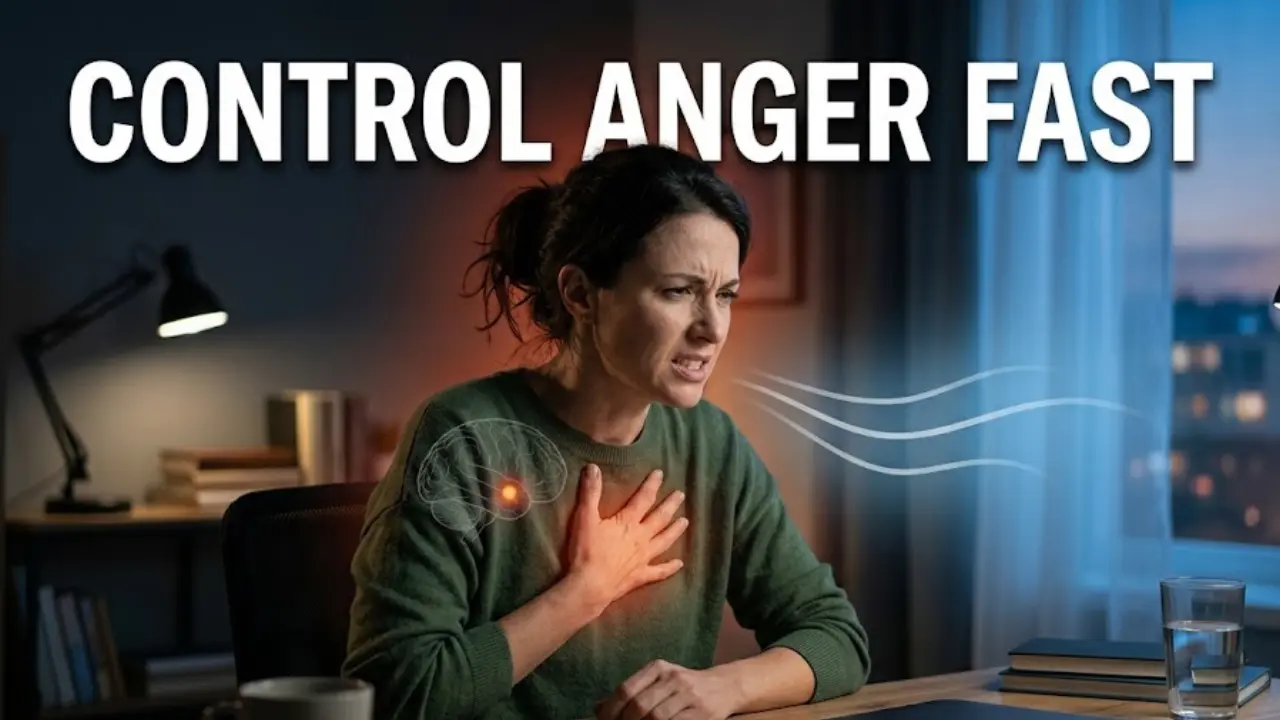

Anger does not always arrive as a loud emotion first. Sometimes it begins as heat rising in the chest, a pulse that suddenly feels too strong, a jaw that locks without permission and a sharp sentence that leaves your mouth before your better judgment can catch it. If you have searched for how to control anger issues, you probably already know that anger is not only a thought. It is a full-body reaction that can take over your breathing, voice, posture and choices within seconds.
The hardest part is often what comes after. A quick outburst may last only a minute but the damage can sit in the room for days. At work, chronic irritation can make people careful around you instead of honest with you. At home, it can make family members feel like every small mistake may become an argument. Then comes the heavy wave of guilt: replaying what you said, wishing you had paused and wondering why such a small trigger created such a large reaction.
The real goal is not to delete anger from your life. Anger can reveal boundaries, injustice, exhaustion, fear or unmet needs. The goal is to expand the gap between the trigger and your reaction. When that gap grows, you stop being controlled by the first emotional surge. You gain enough space to choose your tone, protect your relationships and respond in a way your calmer self will not regret.
How do you control anger issues quickly?
To control anger quickly in the moment, practice deep 4-7-8 diaphragmatic breathing to lower your heart rate, physically remove yourself from the frustrating environment for a 20-minute reset and use a rational anchor phrase to disrupt escalating thoughts. Long-term emotional regulation requires identifying your daily behavioural triggers and practicing cognitive reframing techniques.
Also Read: 5 Steps to Clean an Oven Naturally Overnight
The Neuroscience of the “Amygdala Hijack”
Anger often feels like a moral failure, but at its first stage, it is also a biological event. Deep inside the brain sits the amygdala, a small almond-shaped structure involved in detecting danger, threat and emotional urgency. Its job is not to be polite, balanced or fair. Its job is to help the body notice possible danger and prepare for action.
When your brain interprets something as a threat, disrespect, rejection, injustice, embarrassment or loss of control, the amygdala can react before your slower reasoning system has fully examined the situation. This is why anger can rise so quickly. Your body may flood with stress chemicals such as adrenaline and cortisol. Your pulse increases, your muscles tighten, your breathing changes and your brain prepares you to fight, defend, argue or dominate the situation.
What Triggers Explosive Anger in the Brain?
Explosive anger is often triggered when the brain reads a situation as unsafe, even when there is no physical danger. A rude comment, a delayed response, a messy room, a disrespectful tone, a traffic mistake or criticism at work can all be interpreted as a threat to control, identity, dignity or fairness.
This is where the “amygdala hijack” becomes important. During a strong emotional spike, the survival system becomes louder than the thinking system. The prefrontal cortex, the part of the brain involved in judgment, impulse control, planning, empathy and long-term consequences, becomes harder to access. It is not that your logical brain disappears. It is that your emotional alarm system starts taking priority.
That is why people often say things in anger that they would never say in a calm state. In the moment, the brain is not carefully choosing the wisest response. It is trying to remove discomfort, win control or protect the ego as quickly as possible.
This also explains why telling yourself, “Calm down,” rarely works when your body is already activated. You cannot always reason your way out of a physiological state while your heart is racing, your jaw is tight and your nervous system is preparing for conflict. The body has to be calmed before the mind can think clearly again.
Real anger control begins by reversing the physical alarm response first. Slow breathing, stepping away, relaxing tense muscles and lowering stimulation give the nervous system evidence that the threat has passed. Once the body returns to a safer baseline, the prefrontal cortex can support better judgment again. Then you can think, listen, explain, apologize, set boundaries or solve the actual problem without letting the emotional spike make the decision for you.
Also Read: 7 Small Room Changes That Reduce Visual Stress
The 5-Step Emergency Protocol for Instant Calm
Anger needs a practical protocol because willpower alone is unreliable during emotional flooding. When your body is activated, you need simple steps that are easy to remember and physically grounding. The following five-step method is designed for the first few minutes of rising anger, before the situation becomes harder to repair.
Step 1: The 4-7-8 Diaphragmatic Breath Reset
The fastest place to begin is your breathing. Anger pulls the body into short, shallow, defensive breaths. That pattern tells the nervous system, “We are still under threat.” A slower breathing rhythm sends the opposite message: “We are safe enough to slow down.”
Use the 4-7-8 method this way:
- Inhale through your nose for 4 seconds. Let your belly expand instead of lifting only your chest.
- Hold the breath for 7 seconds. Keep your shoulders loose while you hold.
- Exhale audibly through your mouth for 8 seconds. Let the exhale be slow, controlled and longer than the inhale.
- Repeat the cycle 3 to 5 times. Do not rush the counts.
The long exhale matters because it helps shift the body away from fight-or-flight activation. Slow diaphragmatic breathing can support the parasympathetic nervous system, which is involved in rest, recovery and calming the body after stress. This is also why breathing exercises often feel more powerful when you practice them before you desperately need them.
You are not using breathing to pretend the problem is gone. You are using breathing to bring your body down from emergency mode so your mind can handle the problem more intelligently.
Step 2: Implementing the 20-Minute Physical Exit Rule
When anger keeps rising, staying in the same room can make the situation worse. Your voice gets louder, the other person gets defensive and the conversation turns into a contest instead of a solution. A physical exit is not avoidance when it is done with a clear return plan. It is emotional damage control.
The key is to step away without making the other person feel abandoned, punished or mocked. Use a short script before you leave:
- “I am too worked up to speak clearly right now. I am going to take 20 minutes, then I will come back.”
- “I do not want to say something disrespectful. I need a short reset and then we can continue.”
- “I care about solving this but I am not calm enough yet. Let me step away and come back in 20 minutes.”
The 20-minute rule matters because anger is not only mental. The body needs time to come down from physiological arousal. If you leave for two minutes and return still activated, the same argument often restarts with the same intensity.
During the 20 minutes, do not rehearse your comeback speech. Do not write angry messages. Do not scroll through things that feed the irritation. Walk, breathe, drink water, stretch your hands, relax your jaw or sit somewhere quiet. The goal is not to prove you were right. The goal is to become capable of speaking without causing more damage.
Step 3: Somatic De-escalation Through Progressive Muscle Relaxation
Anger hides in the body. Many people think they are “thinking angry,” but they are also clenching angry, standing angry, breathing angry and speaking angry. If you change the body state, the emotion often becomes less intense.
Start with a quick head-to-toe scan. Notice your forehead, eyes, jaw, tongue, neck, shoulders, fists, stomach, hips, legs and feet. Most angry people discover tension in the same places: clenched jaw, raised shoulders, tight hands, stiff neck and a hard stomach.
Now use the tense-and-release method:
- Tense your fists for five seconds, then release them fully.
- Raise your shoulders toward your ears for five seconds, then let them drop.
- Press your tongue against the roof of your mouth for five seconds, then let it relax.
- Tighten your stomach for five seconds, then soften it.
- Press your feet into the floor for five seconds, then release.
This method works because it gives your nervous system a physical contrast. You feel the difference between tension and release. That difference teaches your body that it does not have to stay locked in defensive mode.
Progressive muscle relaxation is especially useful for people who snap before they can explain what they feel. It gives the emotion somewhere to go without turning it into a harsh sentence, slammed door or damaging message.
Step 4: Applying the 5-Year Cognitive Scaling Lens
Once the body has settled slightly, the next step is thought control. Anger often exaggerates the size of the moment. A delayed reply becomes “They do not respect me.” A small mistake becomes “Nobody listens.” A careless tone becomes “They always treat me like this.”
The 5-year cognitive scaling lens interrupts that exaggeration. Ask yourself three simple questions:
- Will this matter in 5 days?
- Will this matter in 5 months?
- Will this matter in 5 years?
This does not mean the issue is meaningless. It means the size of your reaction should match the size of the problem. Some problems really do matter. Betrayal, repeated disrespect, unsafe behaviour and serious boundary violations deserve direct attention. But many daily irritants are temporary, fixable or smaller than they feel in the first emotional surge.
The 5-year lens helps you separate an actual crisis from a temporary annoyance. If the issue will not matter next week, it probably does not deserve a reaction that damages trust today.
A useful anchor phrase is:
“This is frustrating but it is not worth losing control over.”
That one sentence creates distance between the irritation and your identity. You are not denying anger. You are refusing to let a small moment borrow a large reaction.
Step 5: Shifting from Blame to Logistical Scripting
Anger loves accusation. It naturally asks, “Why did they do this?” “How could they be so careless?” “Why does this always happen to me?” These questions feel satisfying for a moment but they usually increase emotional heat. They keep the mind focused on blame instead of repair.
Logistical scripting changes the inner conversation. Instead of asking accusation-based questions, move toward action-based questions:
- “What is the next useful step?”
- “What needs to be fixed first?”
- “What do I need to say clearly?”
- “What boundary needs to be stated without insult?”
- “What outcome do I actually want after this conversation?”
This shift is powerful because anger often gives you energy without direction. Logistical scripting gives the energy a job. It moves you from emotional reaction to practical leadership.
For example, instead of saying, “You never help around the house,” you can say, “I need the dishes handled before 8 p.m. tonight because I am overloaded.”
Instead of saying, “You are so irresponsible,” you can say, “When the deadline is missed, it creates pressure on me. I need an update earlier next time.”
Instead of saying, “Nobody cares what I think,” you can say, “I want to finish my point before we decide.”
This is not weakness. It is controlled communication. Blame attacks the person. Logistical scripting addresses the problem. That difference can save relationships, protect your reputation and help you become someone people can trust even during conflict.
Dangerous Anger Management Myths to Stop Believing
Anger becomes harder to control when people follow bad advice. Some common anger myths sound emotionally satisfying but they train the wrong habits over time.
Why Venting Your Anger Issues Makes Them Worse
One of the most common myths is that you need to “get the anger out” through yelling, punching pillows, smashing objects or rage-room style release. It may feel relieving for a few seconds, but aggressive venting can rehearse the same physical pattern you are trying to weaken.
The problem is that the brain learns through repetition. If anger repeatedly turns into physical aggression, your body becomes more practiced at expressing anger that way. You may feel temporarily discharged but you have not learned emotional regulation. You have practiced escalation.
A better release is intense but non-aggressive movement: brisk walking, running, lifting weights, cycling or push-ups done without violent imagery. The goal is to burn stress energy without teaching the brain that anger equals attack.
The Suppressing Trap
The opposite myth is that anger should always be swallowed. Suppression may look calm from the outside but internally it can create pressure. Bottled-up irritation often leaks through sarcasm, cold silence, passive-aggressive comments, resentment or sudden explosions over small issues.
Healthy anger control is not pretending nothing bothers you. It is learning to name the issue without letting the emotion take over the delivery. A calm boundary is different from suppressed anger. One protects the relationship. The other quietly poisons it.
The Dominance Misconception
Some people mistake a quick temper for strength. They think anger proves confidence, authority or seriousness. In reality, a person who can be easily controlled by irritation is not fully in control.
True strength is emotional autonomy. It is the ability to feel anger without being owned by it. It is the ability to set a boundary without humiliation, correct a problem without cruelty and speak firmly without becoming reckless. A controlled person is not weak. A controlled person is harder to manipulate.
Also Read: How to Stop Sticky Skin in Humid Weather
Proactive Daily Habits for Long-Term Emotional Regulation
A longer emotional fuse is built before the argument begins. If your body is already stressed, hungry, tired, lonely or overstimulated, even a small trigger can feel unbearable. Daily regulation habits lower the baseline pressure so anger has less fuel to ignite.
| Daily Practice | Execution Method | Core Psychological Benefit |
|---|---|---|
| Trigger Tracking | Log the time, person, situation and anger level in a simple journal. | Isolates hidden emotional, environmental and relational patterns. |
| Somatic Exercise | Do 20 minutes of brisk walking, running, lifting, cycling or bodyweight movement. | Burns off baseline stress activation before it accumulates. |
| The H.A.L.T.S. Check | Scan for: Hungry, Angry, Lonely, Tired or Stressed. | Catches physical and emotional vulnerabilities before they turn into outbursts. |
The deeper pattern is this: anger is easier to control when you stop treating it as a random personality flaw and start treating it as a signal system. Your triggers show you where your body, thoughts, boundaries and habits need attention.
You may not control the first flash of irritation every time. But with practice, you can control what happens next. That is where emotional maturity begins: not in never feeling anger but in building enough space to choose a response you can respect afterward.
