
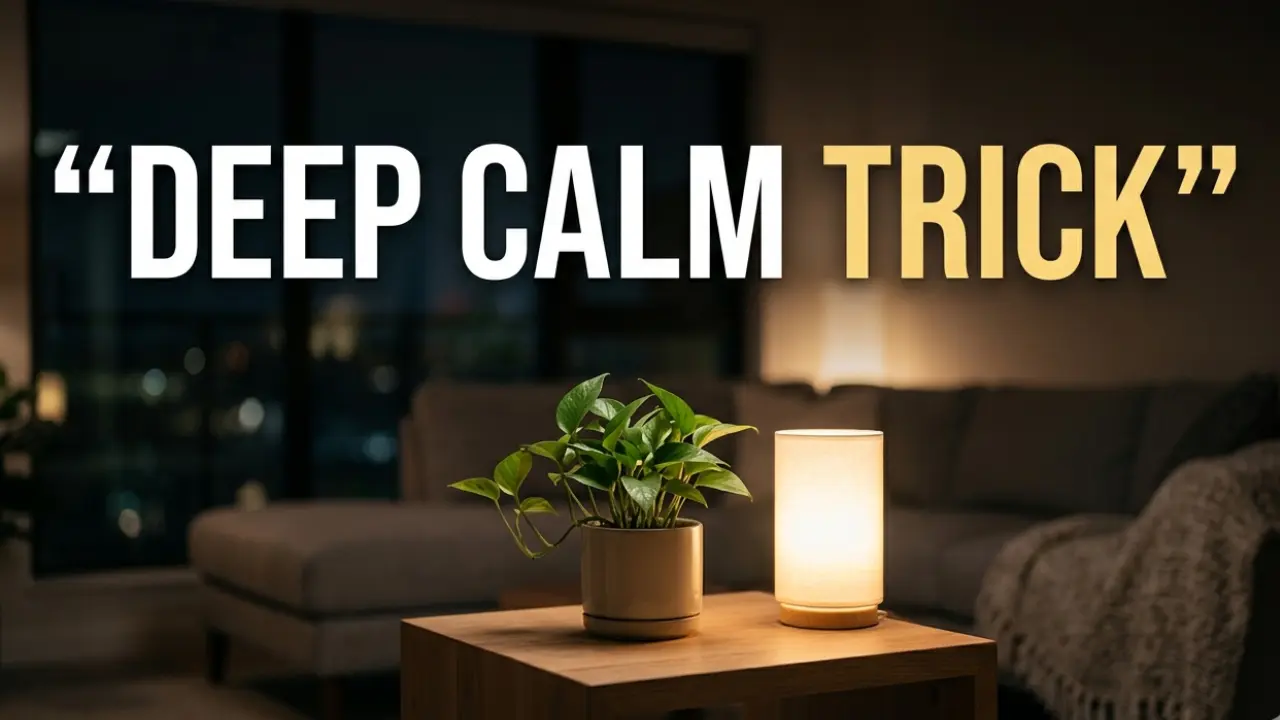

A restless room keeps the brain scanning for unfinished tasks. A simple visual anchor gives the eyes one safe place to rest. When the gaze settles, the nervous system receives a quieter signal: this space does not need constant monitoring.
This is not about expensive decor. It is a small attention reset using one object, one viewing point, and one repeated visual cue.
The calm starts with the eyes.
The 60-Second Visual Anchor That Makes a Room Feel Less Loud
A visual anchor is one fixed object your eyes can return to when the mind feels scattered at home.
It can be a lamp, plant, candle, framed photo, ceramic bowl, curtain fold, empty wall space, or any object that feels simple and steady. The object does not need to look aesthetic. It only needs to feel easy for the brain to process.
One calm object can interrupt visual noise.
Why One Stable Object Works Better Than Looking Around the Room
Visual clutter makes the brain sort shapes, colors, edges, shadows, screens, wires, and unfinished tasks at the same time.
That sorting creates cognitive load. The more visual signals your eyes receive, the harder the brain works to decide what matters and what can be ignored.
A visual anchor reduces that load because attention gets one clear landing point.
Choose an Anchor the Brain Reads as Safe
The best visual anchor is not the most beautiful object in the room. It is the object that feels neutral, soft, steady, and emotionally quiet.
Avoid anything tied to deadlines, bills, work, body checking, arguments, pressure, or unfinished tasks. A laptop is not a calming anchor if it reminds you of pending work. A mirror is not ideal if it pulls you into checking your face or body.
Use something the brain can understand quickly.
- Choose softness: Pick rounded shapes over sharp, busy edges.
- Lower contrast: Use muted tones instead of loud color clashes.
- Remove pressure: Avoid objects linked to guilt, money, or work.
- Keep stillness: Select something that does not blink, buzz, or move.
- Limit detail: Choose one simple object, not a packed shelf.
The object should say nothing urgent.
Place the Anchor Where Your Eyes Already Go
A visual anchor works faster when it sits inside your natural gaze line.
Do not hide it in a corner you rarely notice. Place it where your eyes land during common stress moments: beside the bed, near the work desk, across from the sofa, next to the kitchen sink, or on the wall you face after entering the room.
Same place. Same cue. Same reset.
Use the 3-Look Reset When Thoughts Start Racing
The 3-look reset is the simplest way to use a visual anchor at home.
Look at the object once to name it. Look again to notice one detail. Look a third time while slowing your exhale.
That tiny sequence pulls attention away from mental noise and back into the room.
- Name object: Say the object name silently.
- Notice texture: Find one edge, shadow, curve, or color.
- Slow exhale: Breathe out longer than you breathe in.
- Relax jaw: Let the face soften while looking.
- Return gently: Bring the eyes back when attention wanders.
No force is needed.
Build a Calm Corner Without Redecorating the Room
You do not need a perfect minimalist home to create visual calm.
You need one small area where visual noise drops sharply. That can be a bedside table, desk corner, windowsill, shelf, dresser top, or one wall space.
The goal is spatial clarity.
- Clear surface: Remove everything except one anchor object.
- Soften lighting: Use warm light instead of harsh overhead glare.
- Hide cables: Move chargers and cords behind the visual line.
- Reduce labels: Turn bottles, books, and packaging away.
- Create space: Leave empty room around the anchor.
Empty space is part of the anchor.
Use Ambient Lighting to Make the Anchor Feel Calmer
Lighting changes how the anchor feels.
A plant under harsh white light can feel sharp. The same plant beside warm evening light can feel soft, grounded, and safe.
Light is not decoration here. It is a signal.
Match the Anchor to the Mood You Want
Different anchors create different emotional cues.
A plant can suggest recovery. A candle can suggest slowing down. A stone bowl can suggest grounded weight. A blank wall can suggest mental space. A warm lamp can suggest safety.
Pick the object according to the state you want to practice.
- Use plants: Choose softness, breath, and recovery.
- Use lamps: Choose warmth, safety, and evening calm.
- Use ceramics: Choose weight, steadiness, and quiet.
- Use blank space: Choose clarity and reduced cognitive load.
- Use fabric: Choose comfort, texture, and sensory ease.
The object should train the feeling.
Remove Hidden Visual Triggers Around the Anchor
A visual anchor loses power when stressful objects sit beside it.
A calm candle next to unpaid bills creates conflict. A peaceful plant beside a laptop still pulls the brain toward work. A soft lamp beside tangled chargers keeps attention split.
Your anchor needs a low-noise boundary around it.
Clear a small visual radius around the object. Remove receipts, cables, medicine strips, dirty cups, sticky notes, wrappers, and anything that asks for action.
The anchor cannot calm the brain while surrounded by demands.
Try the Window Anchor for Fast Evening Calm
A window can become a strong visual anchor because it gives the eyes depth.
Looking at distant trees, sky, rooftops, rain, or evening light can move attention out of tight indoor scanning. The eyes stop jumping between close objects and rest on a wider field.
Use the window anchor when the room feels heavy.
Stand or sit near the window. Pick one distant point. Let the eyes rest there for ten slow breaths.
Just distance.
Use Visual Anchors During Overthinking Spirals
Overthinking pulls attention inward.
The body sits in the room, but the mind keeps replaying old words, predicting problems, or rehearsing tomorrow. A visual anchor brings attention back to what is physically present.
Do not analyze the object. Do not turn it into a performance. Do not judge whether you feel calm enough.
Look. Notice. Exhale. Return.
Make One Anchor for Each Stress Zone
One anchor cannot change every corner of a busy home.
Start where stress begins most often. Then add another anchor only if needed. The best places are usually the bed, desk, sofa, kitchen sink, bathroom counter, or entryway.
Each zone needs a different signal.
- Reset desk: Place one simple object beside the screen.
- Calm bedside: Keep one soft lamp or quiet object near sleep.
- Quiet sink: Add one plant or clean visual point near dishes.
- Ease entryway: Clear the first surface you see after entering.
- Soften mirror: Reduce harsh light and remove counter clutter.
Small zones can change the whole mood of a home.
Do Not Turn the Anchor Into Another Task
A visual anchor should make the room easier, not add another rule to your life.
You do not need the perfect object. You do not need a matching color palette. You do not need a full room makeover.
One calm object is enough.
Tonight’s 10-Minute Visual Anchor Reset
Use this tonight before sleep, after work, or when your room feels mentally loud.
- Pick one spot: Choose the place where your eyes land most often.
- Clear one surface: Remove every object except one calm anchor.
- Reduce glare: Turn off harsh overhead lighting.
- Set warm light: Use a lamp, curtain glow, or softer corner light.
- Look slowly: Rest your eyes on the anchor for ten breaths.
- Name one detail: Notice shape, shadow, texture, or color.
- Exhale longer: Let each out-breath soften the jaw and shoulders.
- Repeat tomorrow: Use the same anchor at the same time.
Deep calm does not always begin with a huge life change.
Sometimes it begins when the eyes finally have one quiet place to land.

1 thought on “7 Small Room Changes That Reduce Visual Stress”