

The FIFA World Cup 2026 has reached the stage where reputation no longer protects anyone. Big names, famous shirts, emotional storylines, and home advantage all matter, but knockout football has started asking one cold question: can you survive the moment?
That question has already produced brutal answers. Brazil are out. Portugal are out. Co-hosts United States are out. Six teams have already reached the quarter-finals, and the final two Round of 16 matches will decide the last places in the final eight. As of July 7, 2026, Morocco, France, Norway, England, Spain, and Belgium have already qualified for the quarter-finals, while Argentina vs Egypt and Switzerland vs Colombia remain the two key fixtures deciding the remaining spots.
This is exactly why the World Cup knockout stage feels different from the group stage. A team can build momentum for weeks, a player can carry huge hype, and fans can believe destiny is on their side. Then one mistake, one late goal, or one fearless opponent can change everything.
Quarter-Final Picture Is Finally Taking Shape
The confirmed quarter-final ties already show how dramatic this tournament has become. Morocco will face France, Norway will meet England, and Spain will play Belgium. The final quarter-final matchup will depend on the winners of Argentina vs Egypt and Switzerland vs Colombia.
That lineup says a lot about the mood of this World Cup. It has not only rewarded traditional power. It has rewarded sharpness, discipline, and teams that know how to suffer without losing control.
Morocco’s 3-0 win over Canada gave them a strong statement victory. France edged Paraguay 1-0 through a Kylian Mbappé penalty. Norway stunned Brazil 2-1 with Erling Haaland scoring twice. England survived Mexico 3-2 in a tense knockout battle. Spain beat Portugal 1-0 with a late Mikel Merino goal. Belgium then crushed the United States 4-1 to join the last eight.
Those results created one clear message: the teams still alive are not here by accident.
Belgium’s win already gave fans enough to discuss but FIFA’s Balogun Decision After USA vs Belgium added another layer to the debate around the match.
Brazil’s Exit Shows That History Cannot Play the Match for You
Brazil’s defeat to Norway will hurt because it breaks more than one expectation. Fans always expect Brazil to grow stronger as a tournament moves deeper. They carry the weight of history, style, and global attention. But Norway did not play the badge. Norway played the match.
Erling Haaland’s brace turned the game into one of the biggest shocks of the knockout stage. SB Nation reported that Norway’s 2-1 win gave the country its first ever World Cup quarter-final place, while Brazil suffered their earliest World Cup exit since 1990.
That result matters because it reminds every team that football has changed. A smaller football nation with a clear structure, fearless mentality, and one elite finisher can hurt any giant. Brazil still have talent, but Norway had the moment, and in knockout football, the moment often wins.
Ronaldo’s Last World Cup Exit Feels Like the End of an Era
Portugal’s 1-0 defeat to Spain carried a different kind of emotion. It was not only about a lost match. It likely marked the final World Cup appearance of Cristiano Ronaldo, who had already confirmed this would be his last dance on football’s biggest stage. Spain won through Mikel Merino’s stoppage-time goal, leaving Portugal no time to rewrite the ending.
For neutral fans, this result feels heavy because Ronaldo’s World Cup journey has stretched across generations. Many fans first watched him as a young winger full of tricks, then as a ruthless scorer, then as a veteran leader chasing one final international dream.
But football does not always give legends a perfect goodbye. Sometimes it gives them a painful exit that still reminds people how long they stayed at the top. Ronaldo’s World Cup story may not end with the trophy he wanted, but it ends with a career that shaped modern football.
Spain Look Like a Team Built for the Cold Moments
Spain’s win over Portugal did not need a wild scoreline to feel important. In fact, the narrow 1-0 result may say more about their maturity. They stayed patient, waited for the opening, and found the winning moment late.
That kind of victory can matter more than a comfortable win. It tells the dressing room that they can survive pressure. It tells opponents that Spain do not need a perfect game to beat strong teams. It also sets up a fascinating quarter-final against Belgium, a team that just produced one of the loudest results of the Round of 16.
Spain vs Belgium now carries a simple but powerful question: can Spain’s control handle Belgium’s direct punishment?
Belgium Turned the USA Story Into a Football Lesson
The United States entered the Belgium match with attention, controversy, and home-nation pressure around them. The Folarin Balogun suspension issue had already created debate after FIFA suspended his one-match ban, a decision that drew criticism and questions about sporting integrity. The Guardian reported that Donald Trump had personally lobbied FIFA president Gianni Infantino on the matter, while FIFA insisted its disciplinary committee made the decision independently.
But once the game started, Belgium made the loudest argument on the pitch. They beat the United States 4-1, with Charles De Ketelaere scoring twice, Hans Vanaken adding another, and Romelu Lukaku finishing the night with a late goal. Malik Tillman scored the only goal for the United States.
This is where the story becomes bigger than controversy. The USA did not lose because of one headline. They lost because Belgium punished mistakes, controlled key moments, and showed greater knockout composure.
Belgium’s win also makes their quarter-final against Spain much more interesting. Spain bring rhythm and control. Belgium bring power, experience, and a reminder that they can destroy a team quickly if the opponent loses focus.
England Survived and That May Matter More Than Style
England’s 3-2 win over Mexico had everything that usually tests them: pressure, chaos, a loud opponent, a red card situation, and the need to protect a lead. Jude Bellingham scored twice, Harry Kane added a penalty, and England held on despite Mexico pushing hard through Julián Quiñones and Raúl Jiménez.
Some fans may look at the score and worry about England’s defensive control. That concern makes sense. But knockout football often rewards teams that survive ugly moments. England did that.
Their next test against Norway will not only be about quality. It will be about emotional control. Norway just eliminated Brazil and will enter the quarter-final with nothing to fear. England must handle Haaland, but they must also handle the feeling that one mistake could turn the whole tournament against them.
Messi and Salah Now Bring Star Power Back Into the Spotlight
Argentina vs Egypt gives the Round of 16 another headline match because it brings Lionel Messi and Mohamed Salah into the same knockout conversation. Reports ahead of the game say Messi has no major injury concern and is expected to start for Argentina against Egypt in Atlanta.
That matters because Argentina are not just defending champions. They are still chasing one of the hardest achievements in football: winning back-to-back World Cups. Brazil last did that in 1962, which shows how difficult this mission remains.
Messi’s reported tournament form also adds another layer. Times of India reported that he had scored seven goals in four matches before the Egypt clash and remained level with Kylian Mbappé and Erling Haaland in the Golden Boot race.
Egypt, however, will not treat the match like a farewell party for anyone. Salah gives them belief, and knockout football gives underdogs a clear path: stay alive long enough, frustrate the favorite, and wait for one decisive chance.
Why This World Cup Suddenly Feels So Open
The biggest change in the tournament is psychological. Earlier, fans could still imagine the usual powers controlling the final stages. Now the bracket looks more dangerous.
Brazil’s exit removed one giant. Portugal’s exit closed one legendary chapter. The USA’s exit removed a co-host with huge momentum and attention. Norway and Morocco have proved that fearless teams can break predictions. Belgium have shown they still carry knockout power. Spain, France, England, and Argentina still carry elite expectations, but none of them can afford comfort.
This is why the next few days feel so important. The World Cup has moved from “who looks good?” to “who can handle damage?” That is the real test now.
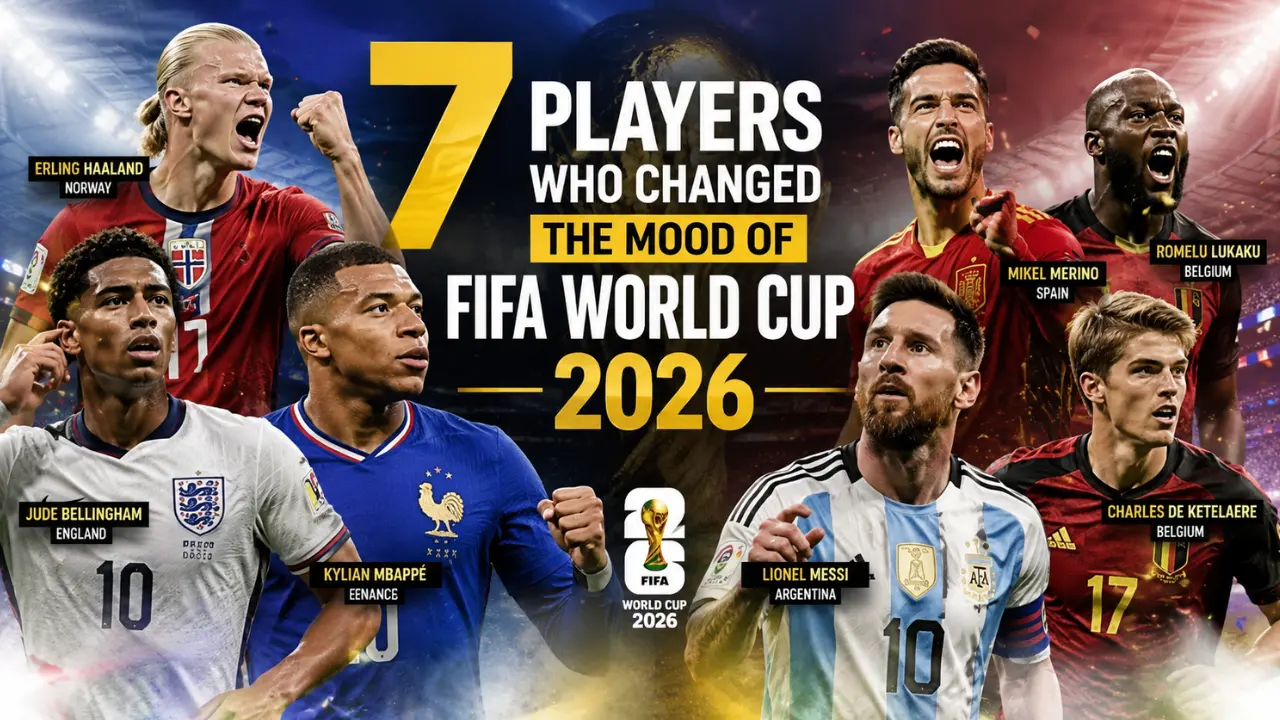
Players Who Changed the Knockout Mood
A few players have already shaped the emotional direction of this round.
Erling Haaland
Haaland’s goals against Brazil did more than win a match. They turned Norway into a serious tournament story. Every opponent now knows that one defensive lapse can become a goal.
Jude Bellingham
Bellingham’s brace against Mexico helped England survive a dangerous night. His influence continues to grow because he affects matches in different ways, not only through goals.
Kylian Mbappé
Mbappé’s penalty against Paraguay sent France into the quarter-finals. France may not have produced their most explosive performance yet, but they remain alive, and Mbappé keeps giving them decisive moments.
Mikel Merino
Merino’s late winner against Portugal may become one of Spain’s defining images of this World Cup. One calm finish ended Portugal’s run and pushed Spain into a heavyweight quarter-final.
Charles De Ketelaere
De Ketelaere’s double against the United States gave Belgium control of the match and changed the tone around their campaign. Belgium now look more dangerous than they did earlier in the tournament.
