
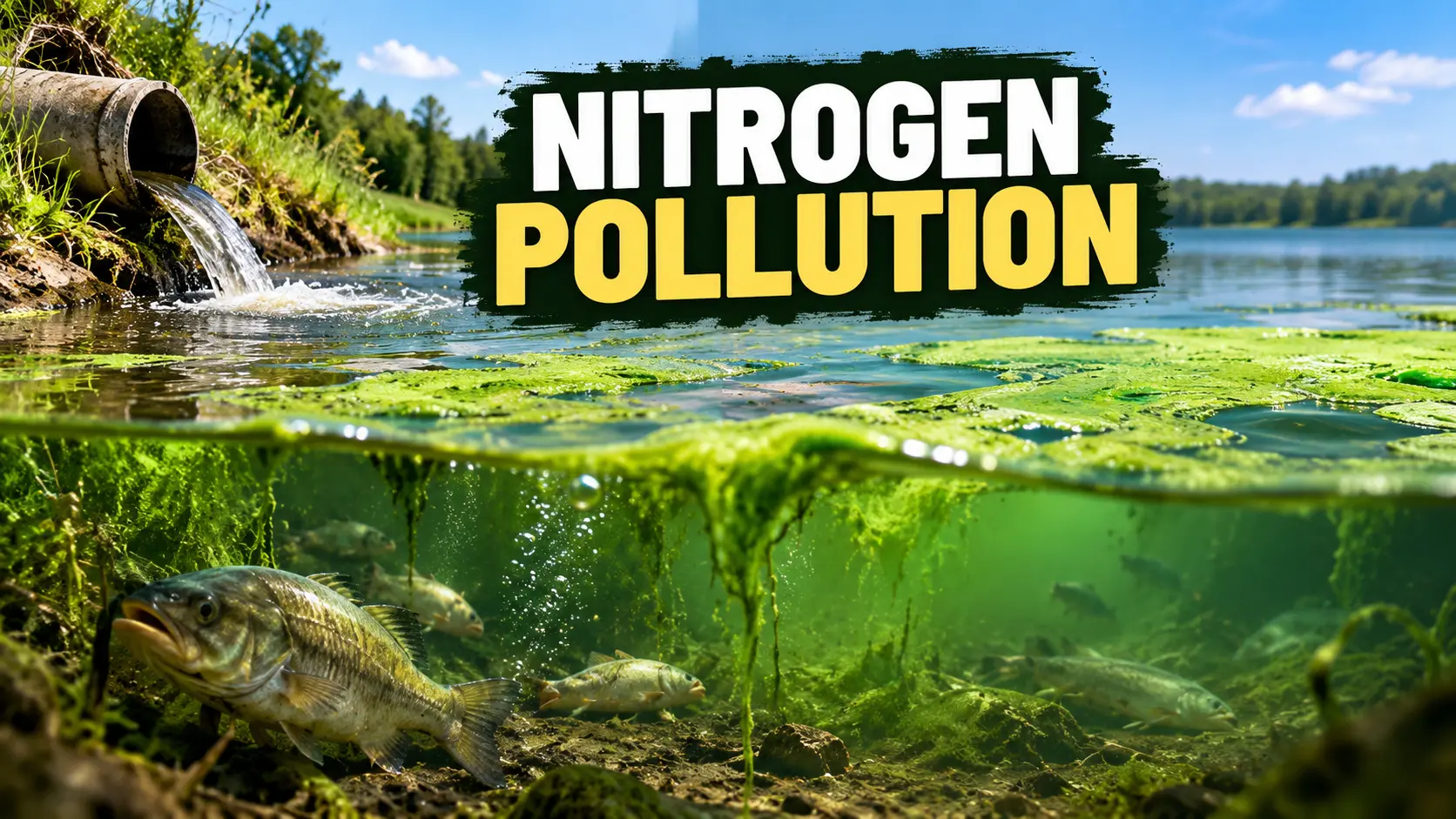

Nitrogen is essential for life but too much reactive nitrogen in water can disrupt the natural balance of an aquatic ecosystem. When excessive amounts enter rivers, lakes, reservoirs, or coastal waters, they can fuel rapid algae growth, reduce oxygen levels, damage habitats and create conditions that harm fish and other aquatic organisms.
Excess nitrogen is bad for water because it can cause nutrient pollution, leading to excessive algae and cyanobacteria growth. When this growth dies and decomposes, oxygen levels may fall, aquatic habitats can deteriorate, harmful algal blooms may develop and fish and other organisms can be stressed or killed.
This process is closely linked to eutrophication, a condition in which a water body becomes overly enriched with nutrients. Nitrogen is not automatically harmful simply because it is present in water. Problems usually develop when biologically available forms such as nitrate and ammonium accumulate faster than the ecosystem can naturally absorb or remove them.
Excess nitrogen can enter water from fertilizers, wastewater, manure, septic systems, urban runoff, groundwater, and atmospheric deposition. Understanding how nitrogen gets into water helps explain why controlling pollution at the source is often more effective than trying to repair an ecosystem after nutrient levels have already become excessive.
How Nitrogen Triggers Eutrophication
Aquatic plants and algae naturally need nitrogen to grow. In a healthy ecosystem, nitrogen availability is limited enough that biological growth remains relatively balanced with other environmental conditions.
When large amounts of reactive nitrogen enter the water, that balance can change. Algae and cyanobacteria may begin growing much faster, especially when warm temperatures, sunlight, phosphorus and slow-moving water create favourable conditions.
This is why nitrogen can cause pollution even though nitrogen itself is a natural nutrient. The problem is not the existence of nitrogen but an excessive concentration of usable nitrogen that alters normal ecological processes.
Chain Reaction in Aquatic Systems
The effects of nitrogen pollution usually occur as a chain reaction rather than as one immediate toxic event.
Step 1: Nutrient surge. Runoff, wastewater, manure, fertilizer losses or other sources introduce unusually high amounts of available nitrogen into the water.
Step 2: Rapid algae and cyanobacteria growth. The additional nutrients can support faster growth of microscopic algae and cyanobacteria. Dense growth may discolor the water and reduce the amount of sunlight reaching plants below the surface.
Step 3: Algal die-off and decomposition. Algae eventually die, and bacteria begin breaking down the organic material. This decomposition process consumes dissolved oxygen.
Step 4: Hypoxia and dead zones. When oxygen is used faster than it can be replaced, dissolved oxygen levels can fall sharply. Severe oxygen depletion, known as hypoxia, may create areas where fish and many bottom-dwelling organisms cannot survive.
Visual Anchor Slot: Excess nitrogen enters water → algae and cyanobacteria grow rapidly → algae die and decompose → dissolved oxygen falls → aquatic organisms become stressed or die.
This chain explains why the question “Why is nitrogen bad for water?” has a broader answer than simple chemical toxicity. Much of the damage happens because excessive nutrients change how the entire aquatic ecosystem functions.
From Algal Blooms to Dead Zones
Excess nitrogen can affect much more than the appearance of the water. Nutrient pollution can change plant communities, reduce water clarity, alter food webs, lower dissolved oxygen and make important habitats unsuitable for sensitive species.
In lakes and reservoirs, heavy algal growth can reduce sunlight reaching submerged plants. In estuaries and coastal waters, nutrient enrichment can contribute to oxygen depletion in deeper water, especially where water circulation is limited.
Toxic Harmful Algal Blooms (HABs)
Not every algal bloom is toxic, and nitrogen is not the only nutrient involved in bloom formation. However, excessive nitrogen and phosphorus can create conditions in which algae or cyanobacteria grow far more rapidly than normal.
Some cyanobacteria are capable of producing toxins known as cyanotoxins, including microcystins. When toxin-producing blooms develop, they can threaten fish, birds, wildlife, livestock, pets and people who come into contact with contaminated water.
Even a bloom that does not produce toxins can still cause serious ecological damage. Dense algae can block sunlight, interfere with aquatic plant growth, clog fish gills in some cases and contribute to oxygen depletion after the bloom begins to die.
Nitrogen therefore does not directly turn into an algal toxin. Instead, nutrient enrichment can help create favourable conditions for harmful organisms to multiply and some of those organisms may produce toxins.
Collapse of Aquatic Biodiversity
Healthy aquatic ecosystems depend on a balance between nutrients, oxygen, light, plants, microorganisms, fish and other organisms. Excess nitrogen can disturb several parts of this system at the same time.
Submerged aquatic plants may decline when heavy algal growth blocks sunlight. These plants provide shelter, feeding areas and spawning habitat, so their disappearance can affect many species that depend on them.
Low oxygen creates another pressure. Fish and mobile organisms may leave oxygen-poor areas if they can, while organisms living on or within the bottom sediment may have nowhere to escape.
Visible fish kills are among the most dramatic outcomes but ecological damage can begin long before large numbers of fish die. Sensitive species may decline, tolerant species may become more dominant and the overall biodiversity of the water body can gradually decrease.
Is Excess Nitrogen Harmful to Humans?
Excess nitrogen in water can be harmful to humans but the risk depends on the chemical form of nitrogen and how people are exposed to it. Molecular nitrogen gas, nitrate, nitrite, ammonia and organic nitrogen are not interchangeable from a health perspective.
Most drinking-water concerns center on nitrate and nitrite, while recreational risks can also arise indirectly when nutrient pollution contributes to harmful algal blooms.
Drinking Water Risks & Chemical Transformations
Nitrogen naturally moves through different forms in the environment. Organic nitrogen and ammonium can eventually be transformed by microorganisms into nitrite and nitrate, while nitrate can move relatively easily through soil and groundwater.
This is why a groundwater well can look completely clear while still containing elevated nitrate. Visual appearance alone can not determine whether nitrate levels are safe.
High nitrate exposure is especially concerning for infants because nitrate can be converted to nitrite in the body. Nitrite can interfere with the ability of blood to carry oxygen effectively, which is one reason drinking-water standards place strict limits on nitrate and nitrite.
The meaning of a laboratory result also depends on the units and the exact form being measured. A reading reported as nitrate is not interpreted the same way as one reported as nitrate-nitrogen. Readers who want to understand testing limits and health thresholds can see this detailed guide on how to read nitrate and nitrite levels in drinking water.
In the United States, the EPA maximum contaminant level for nitrate is 10 mg/L measured as nitrogen, while the limit for nitrite is 1 mg/L measured as nitrogen. Other countries may use different reporting systems or regulatory standards, so local guidance should always be checked.
Human health can also be affected indirectly by nutrient-driven harmful algal blooms. Depending on the toxin involved, contaminated water may create risks through drinking, accidental swallowing during recreation, skin exposure or contact with affected animals and seafood.
Economic and Recreational Consequences
Nitrogen pollution can create financial costs as well as ecological damage. When water quality declines, fisheries, tourism, recreation, drinking-water treatment and nearby communities can all be affected.
Commercial and recreational fishing may suffer when low oxygen, habitat degradation, algal toxins or fish mortality reduce the abundance of desirable species. Areas that depend heavily on fishing can therefore experience economic losses beyond the water itself.
Lakes and beaches may also be temporarily closed when harmful algal blooms make swimming or other recreation unsafe. Thick surface scum, unpleasant odors, poor water clarity and health warnings can reduce boating, tourism, fishing, and shoreline use.
Municipal water treatment can become more expensive when source water contains elevated nitrate or is affected by algal blooms. Utilities may need additional monitoring and treatment to keep drinking water safe and acceptable for consumers.
These consequences show why nitrogen pollution is treated as more than an environmental issue. Poor water quality can affect public health, local economies, recreation and the cost of maintaining safe drinking-water supplies.
How Can Excess Nitrogen Be Managed?
The most effective approach is usually to prevent excessive nitrogen from reaching the water in the first place. Once nutrient pollution spreads through an entire watershed or lake system, reversing the damage can become much more difficult and expensive.
Agricultural controls can include applying fertilizer at the correct rate and time, improving manure storage, maintaining vegetated buffer strips, reducing runoff and preventing unnecessary nutrient losses from fields.
Wastewater and septic management are also important. Upgrading treatment systems, repairing failing septic tanks, preventing sewage leaks and reducing nutrient-rich discharges can lower the amount of reactive nitrogen entering groundwater and surface water.
Wetlands, vegetated areas, biological treatment systems and engineered filters can also help remove nitrogen. Some systems encourage denitrification, a natural microbial process that converts nitrate into gaseous forms of nitrogen that return to the atmosphere.
The correct treatment method depends on the specific problem. Removing nitrate from drinking water is very different from reducing ammonia in wastewater or restoring a lake damaged by years of nutrient runoff.
Readers looking for treatment options can explore how to remove nitrates from water for a detailed comparison of practical treatment methods.

2 thoughts on “Why Is Nitrogen Bad for Water? Effects on Water Quality”