


Walking rarely feels like a serious workout. You do not need complicated equipment, a gym membership, special training or an intense recovery routine. You simply put on comfortable shoes, step outside and move.
That simplicity can make people underestimate it. However, walking regularly can support heart health, blood sugar control, physical stamina, mood, sleep, mobility and long-term health. A 30-minute brisk walk on five days of the week also helps an adult reach the widely recommended target of 150 minutes of moderate physical activity per week.
Walking cannot replace every form of exercise. It does not build muscle as effectively as resistance training, and it will not create dramatic fitness changes overnight. Yet it remains one of the most practical ways to move more consistently, especially for people who spend much of the day sitting.
Why a Daily Walk Can Affect More Than Your Legs
Walking makes several large muscle groups work repeatedly. Your heart pumps faster, your breathing increases and your muscles use more energy than they do while you sit. Over time, that regular movement can improve the way your body handles everyday physical demands.
The benefits do not depend on reaching an exact step count every day. Walking for 10, 20 or 30 minutes still counts as physical activity, particularly when you move at a pace that raises your heart rate slightly. Health authorities emphasise that some movement offers more benefit than none and that people can divide activity into shorter sessions throughout the day.
The most useful walking routine therefore does not need to look impressive. It needs to feel realistic enough for you to repeat.
Also Read: How to Fix Slow Netflix Streaming on Any Device
1. Walking Supports Your Heart and Circulation
A brisk walk requires your heart to deliver more oxygen-rich blood to working muscles. When you walk regularly, your cardiovascular system becomes better prepared for that demand.
Regular moderate physical activity can help lower the risk of heart disease and stroke. It can also support healthier blood pressure and cholesterol levels. Walking will not replace prescribed treatment for high blood pressure or heart disease, but it can form an important part of a heart-healthy lifestyle.
You do not need to turn every walk into a breathless workout. A useful brisk pace usually makes you breathe more deeply while still allowing you to speak in complete sentences. When the walk feels very easy, you can gradually increase your pace, duration or route difficulty.
2. It Can Help Your Body Manage Blood Sugar
Your muscles need energy when you walk. As they work, they use glucose from the bloodstream along with stored energy. Regular physical activity can therefore help your body manage blood sugar more effectively.
This matters for people who want to reduce their risk of type 2 diabetes, as well as those who already manage blood sugar problems under medical supervision. The CDC notes that people can begin gaining metabolic benefits even before they reach the full recommendation of 150 minutes of moderate activity each week.
Walking does not cancel the effects of an unbalanced diet, and people taking diabetes medication should follow their doctor’s advice about exercise, meals and blood sugar monitoring. However, adding regular movement to the day can support the broader habits used to manage metabolic health.
3. Walking Can Support Weight Management
Walking uses energy, which makes it useful for maintaining or gradually reducing body weight. The actual number of calories someone burns depends on body size, walking speed, route, duration and fitness level.
A daily walk may also make weight management easier by replacing sedentary time with movement. However, walking alone does not guarantee weight loss. Food choices, total calorie intake, sleep, stress and other daily habits also influence body weight.
People often abandon walking because they expect rapid changes on the weighing scale. A more realistic goal involves improving consistency, stamina and overall activity first. The physical changes may follow gradually when walking forms part of a sustainable routine that includes suitable eating habits.
Also Read: How El Niño Could Affect Grocery Prices in India
4. Your Mood May Improve After a Walk
The mental benefits of walking can appear sooner than visible changes in fitness or body weight. Physical activity can reduce short-term feelings of anxiety, support emotional well-being and lower the long-term risk of depression.
Walking can also provide a break from screens, work pressure and repetitive thoughts. An outdoor walk may feel particularly refreshing because it changes your surroundings and gives your attention somewhere else to go.
You do not have to walk through a scenic park to benefit. A quiet road, neighbourhood lane, terrace, corridor or indoor walking space can work when safety, weather or time limits your options. Walking with a friend or family member may also provide social connection, while walking alone can create a useful period of mental space.
5. Regular Walking Can Support Better Sleep
Physical activity helps the body use energy during the day and can support healthier sleep patterns. People who move regularly may find it easier to sleep well than people who remain inactive for most of the day.
The effect varies from person to person. Some people feel relaxed after an evening walk, while others prefer walking in the morning because late activity makes them feel more alert. Testing different times can help you find a schedule that suits your body and routine.
Walking cannot solve every cause of poor sleep. Persistent insomnia, loud snoring, breathing interruptions or severe daytime sleepiness may require medical assessment. Still, regular movement remains one of the lifestyle habits that can contribute to better sleep quality.
6. Everyday Tasks May Start Feeling Easier
Regular walking develops endurance in the muscles used for standing, balancing and moving forward. As your stamina improves, climbing stairs, carrying groceries, completing household tasks or walking through a market may require less effort.
This improvement can matter more than speed or step-count records. Practical fitness helps you manage ordinary responsibilities without becoming exhausted quickly.
Walking also provides a manageable starting point for someone returning to activity after a long inactive period. Instead of immediately attempting an exhausting workout, the person can begin with a short route and extend it gradually as the body adapts.
Older adults can particularly benefit from staying active because physical activity supports daily function and independence. However, balance and muscle-strengthening exercises should accompany walking when possible, since walking alone does not train every aspect of fitness.
7. It Supports Muscles, Joints and Bones
Walking engages the calves, thighs, hips and muscles that stabilise the body. It may not create large increases in muscle size, but it can help maintain movement capacity and lower-body endurance.
Because walking involves bearing your own body weight, it can also contribute to bone and joint health. Regular physical activity helps protect physical function as people age and may improve pain, function and quality of life for some adults with arthritis.
People with joint discomfort should avoid assuming that more pain always means more progress. Begin slowly, use supportive footwear and choose a flat surface. Mild stiffness may occur when you start moving after a long inactive period, but persistent or worsening pain deserves professional attention.
8. Walking Can Support Brain Health
Physical activity does not only affect the heart and muscles. It also supports brain health, including thinking, learning and judgment as people age.
A walk can improve alertness by interrupting long periods of sitting and giving the mind a change of pace. Many people also find that walking helps them organise thoughts, consider a problem calmly or return to work with better concentration.
Regular physical activity cannot guarantee protection against cognitive decline, but it forms part of a lifestyle that supports long-term brain function.
9. More Daily Movement May Support a Longer, Healthier Life
Researchers consistently associate higher levels of physical activity with a lower risk of premature death and several chronic conditions. Walking offers an accessible way to increase that activity without requiring advanced fitness.
The familiar target of 10,000 steps does not represent a compulsory threshold. Benefits can begin below that level, especially for someone who currently moves very little. The CDC reports that the relationship between steps and premature-death risk appears to level off at roughly 8,000–10,000 daily steps for adults younger than 60 and around 6,000–8,000 for adults aged 60 and over.
A 2025 systematic review also examined the relationship between daily steps and several health outcomes, reinforcing the broader evidence that higher step counts generally associate with better health. This does not mean everyone needs to chase the highest number possible. Moving from very little activity to a moderate amount may offer a more realistic and meaningful first improvement.
How Fast Should You Walk?
A relaxed stroll still adds movement to your day, but a brisker pace usually provides a stronger cardiovascular benefit.
During a brisk walk:
- Your breathing becomes faster than usual.
- Your heart rate rises.
- Your body begins to feel warmer.
- You can talk, but singing would feel difficult.
- The pace feels purposeful rather than exhausting.
People who have remained inactive should not force this pace immediately. Start at a comfortable speed and gradually add short brisk periods. For example, walk easily for three minutes, increase the pace for one minute and repeat the pattern.
Do You Need to Walk for 30 Minutes at Once?
You can complete the full 30 minutes in one session, but you do not have to. Three 10-minute walks or two 15-minute walks can make the routine easier to fit around work, meals and family responsibilities.
A shorter walk also counts on busy days. Maintaining the habit with 10 minutes may prove more useful than skipping the walk because you cannot complete a perfect 30-minute session.
Adults generally receive substantial health benefits from 150–300 minutes of moderate-intensity aerobic activity per week. Muscle-strengthening activity on at least two days per week provides additional benefits that walking alone may not deliver.
A Simple Four-Week Walking Plan for Beginners
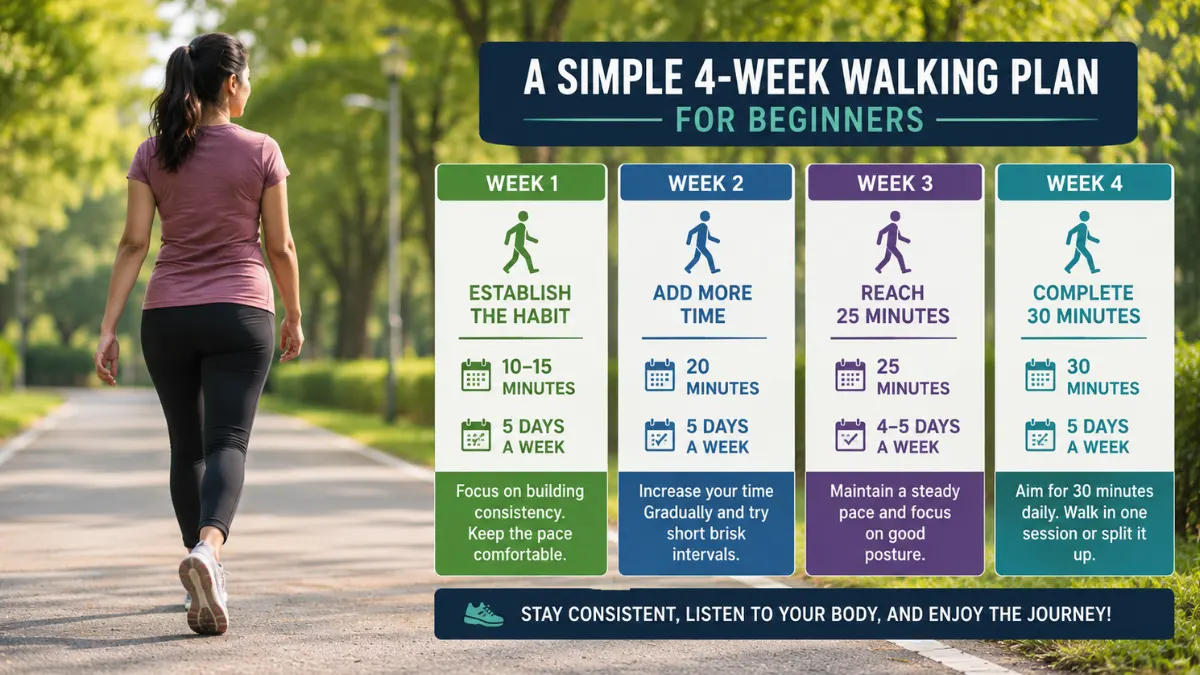
Week 1: Establish the Habit
Walk for 10–15 minutes on five days. Keep the pace comfortable and focus on completing the sessions without pain or excessive fatigue.
Week 2: Add More Time
Increase the walk to 20 minutes. Include one or two short brisk sections if the comfortable pace starts feeling easy.
Week 3: Reach 25 Minutes
Walk for 25 minutes on four or five days. Pay attention to posture, relax your shoulders and allow your arms to swing naturally.
Week 4: Complete 30 Minutes
Aim for a 30-minute walk on five days. You can complete it continuously or divide it into shorter sessions. Continue increasing slowly rather than turning every walk into a difficult workout.
Common Mistakes That Make Walking Harder to Maintain
Starting too aggressively causes many people to quit. A long, fast walk on the first day may leave the feet and legs sore enough to discourage another session.
Other common mistakes include:
- Wearing shoes that cause rubbing or poor support
- Choosing an unsafe or uncomfortable route
- Ignoring heat, humidity or poor air quality
- Focusing only on step-count targets
- Expecting fast weight loss
- Refusing to take easier days
- Continuing through sharp or worsening pain
During hot weather, consider walking earlier in the morning, later in the evening or indoors. Carry water when the route or weather makes dehydration more likely, and wear visible clothing near traffic.
Who Should Speak to a Doctor Before Increasing Activity?
Moderate walking remains generally safe for most people. However, someone with a chronic health condition, significant mobility limitation, recent surgery or concerns about exercise should discuss an appropriate routine with a healthcare professional.
Stop walking and seek medical advice if activity causes chest pain, faintness, unusual breathlessness, severe weakness or persistent pain. People who take medication that affects heart rate, blood pressure or blood sugar may also need personalised guidance.
Walking works best when you treat it as a repeatable part of ordinary life rather than a temporary challenge. A manageable 20- or 30-minute walk performed regularly can contribute more to your health than an exhausting routine that you abandon after several days. Start with a distance that feels comfortable, build gradually and allow consistency to produce the benefits.
Medical disclaimer: This article provides general health and fitness information only and does not replace professional medical advice, diagnosis or treatment. Speak with a qualified healthcare professional before starting a new exercise routine, especially if you have a medical condition, take medication, are recovering from surgery or experience pain, dizziness, chest discomfort or unusual shortness of breath.
Frequently Asked Questions
What happens if I walk for 30 minutes every day?
Regular walking can support heart health, circulation, blood sugar control, sleep, mood, stamina, mobility and weight management. Results vary depending on pace, diet, health and overall activity.
How fast should I walk for health benefits?
Aim for a pace that increases your breathing and heart rate but still allows you to speak in complete sentences. Beginners can start slowly and gradually add brisk intervals.
Should I walk before or after eating?
Either can work. A gentle walk after a meal may support movement and blood sugar management, while walking before eating may suit someone’s schedule better. Comfort and consistency matter most.

1 thought on “30-Minute Daily Walk Benefits for Your Body and Mind”