
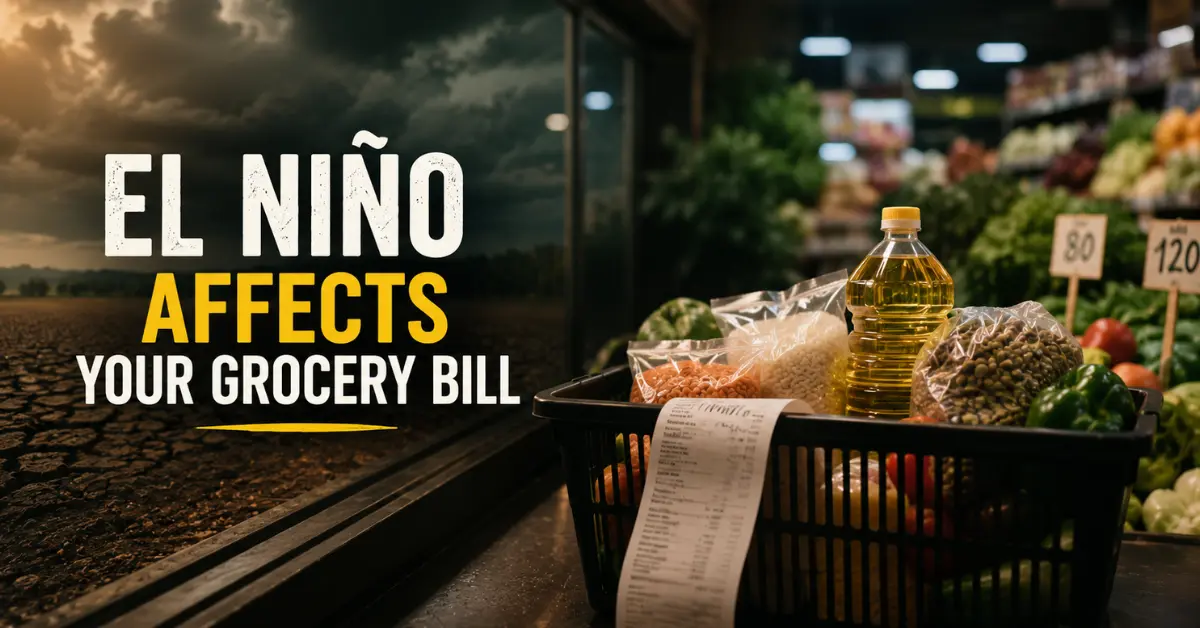

El Niño can affect a household grocery bill before families notice an obvious change in the weather around them. The effect usually begins far from the retail shop, when unusual heat, delayed rain, long dry periods or intense rainfall affects sowing, crop growth, harvesting, storage and transport.
However, El Niño does not make every food item expensive and it does not raise prices immediately across the country. The final effect depends on which agricultural regions face poor weather, how much stock remains available, whether other states produce enough supply and how quickly traders and governments respond.
FAO identifies agriculture and rural livelihoods among the areas most exposed to El Niño because the climate pattern can disrupt rainfall and temperature. The World Bank has also warned that a strong or persistent El Niño can affect several major crop-producing regions at the same time, increasing pressure on food markets.
Why Grocery Prices Can Change Before Local Weather Looks Unusual
Consumers usually judge El Niño through the weather they experience personally. If their town receives rain and the temperature feels normal, they may assume that the climate pattern has caused little damage.
Food supply does not work at such a local level. A city may receive vegetables, pulses, rice, onions, fruit, milk, cooking oil, and spices from several states or other countries. Weather problems in any important producing region can affect the amount that reaches local markets.
A family living in an area with regular rainfall may therefore pay more for a crop grown in a district that faced a long dry spell. The retail price can change even when the buyer never experiences that weather directly.
Markets also react to expectations. Wholesalers, processors, importers, and large buyers follow crop forecasts, sowing data, reservoir levels, and reports from producing regions. When they expect lower supply, purchasing and storage decisions can change before the full harvest arrives.
This does not mean that every early price increase reflects a genuine shortage. Fuel costs, transport disruption, export demand, import rules, seasonal demand and local market practices can also influence prices. El Niño becomes one part of the price story rather than the only explanation.
Also Read: How to Reduce Indoor Heat During El Niño Conditions
How El Niño Can Affect the Food Supply Chain
El Niño begins in the tropical Pacific Ocean, but it can alter weather patterns across distant regions. In India, it can increase concern about monsoon rainfall and warmer conditions, although the Indian Ocean Dipole and regional weather systems can strengthen or weaken its eventual effect.
IMD identifies the El Niño–Southern Oscillation and the Indian Ocean Dipole as important influences on year-to-year variations in the southwest monsoon. The monsoon matters greatly to agriculture because large farming areas still depend on seasonal rainfall.
The link between El Niño and a grocery bill can develop through several stages.
Farmers may delay sowing
Farmers need sufficient soil moisture before planting many monsoon crops. When the rain arrives late or remains irregular, they may postpone sowing rather than risk losing seed.
A delay can shorten the growing period and move the harvest later into the year. Markets may then receive less fresh supply during the usual arrival period.
Some farmers may replant after an early crop fails. That adds seed and labour costs, which can reduce farm income even when the second planting survives.
Crops may receive rain at the wrong time
Total seasonal rainfall does not tell the entire agricultural story. Crops need water at particular stages, including germination, flowering, grain formation, and fruit development.
A district can record rainfall close to its seasonal average but still face crop stress when long dry periods separate a few heavy downpours. Excess rain during flowering or harvesting can also damage quality.
Agriculture benefits more from well-distributed rain than from the same amount falling in a few intense events.
Heat can reduce crop quality and yield
Higher temperatures can increase evaporation from fields and raise irrigation demand. Heat during sensitive growth stages can affect flowering, fruit development, grain filling and vegetable quality.
Even when farmers harvest enough produce, heat can reduce the share that meets normal market standards. Traders may reject damaged, undersized, or quickly perishable produce, leaving less saleable supply.
Water shortages can increase production costs
When rainfall does not provide enough moisture, farmers may rely more heavily on pumps, wells, canals or purchased water.
This can increase electricity, diesel, labour, and irrigation expenses. Farmers cannot always recover these costs through higher selling prices, but rising production expenses can add pressure throughout the supply chain.
Heavy rain can damage transport and storage
El Niño does not prevent extreme rainfall. Some regions can face seasonal rainfall deficits while still receiving short bursts of intense rain.
Flooded roads, damaged bridges, waterlogged wholesale markets, and interrupted rail movement can delay food deliveries. Fresh vegetables and fruit can spoil quickly when transport takes longer than expected.
Poor drying conditions can also affect grains, pulses, spices and animal feed. Moist produce faces a greater risk of mould and storage loss.
Also Read: El Niño 2026 and India’s Monsoon Outlook
Vegetables May Show Price Pressure Quickly
Vegetable prices often react faster than prices of many grains because fresh produce has a short shelf life and markets depend on frequent arrivals.
Tomatoes, onions, potatoes, leafy vegetables, and other commonly purchased items can experience sharp price changes when weather affects an important production belt. A delay of a few days in market arrivals can create a visible shortage in a city.
Vegetable prices can also fall quickly when supply recovers. This volatility explains why a short-lived spike should not automatically become evidence of a long national shortage.
Different vegetables respond to different conditions. Excess rain may damage tomatoes and leafy crops, while dry weather and irrigation problems may reduce planting or slow growth. Heat can increase spoilage before produce reaches the shop.
Retail prices may vary greatly between cities because transport distance, local demand, market competition, and the number of intermediaries also matter.
Pulses and Oilseeds May Take Longer to Affect the Bill
Families may not see the effect on pulses or cooking oil as quickly as they see it on fresh vegetables. These products can remain in storage, and existing stocks may protect the market for a period.
The pressure can appear later when estimates show lower production or when old stocks begin to decline.
Pulses depend heavily on weather during sowing and crop development. Irregular rainfall can reduce acreage, damage flowering, or lower yields. Since pulses form an important part of Indian diets, even a modest supply concern can attract market attention.
Oilseed problems can affect edible oil through both domestic production and imports. India buys significant quantities of edible oil from international markets, so weather conditions in producing countries can matter alongside the Indian monsoon.
A wider El Niño event can affect crops across several countries. When multiple exporters face weather problems at the same time, international prices and import costs may rise even when domestic production remains stable.
Also Read: Dengue Platelet Count Warning Signs Families Should Know
Rice Prices Depend on More Than the Monsoon
Rice receives close attention during El Niño because much of Asia produces it under monsoon-linked conditions. However, a poor rainfall signal does not translate directly into an equal increase in Indian retail prices.
Irrigated production, regional harvests, government procurement, public stocks, export policy, and market releases can all reduce or delay the impact.
Rice varieties also face different conditions. Some regions rely heavily on rainfall, while others use canals, reservoirs, or groundwater. A national production estimate can therefore hide serious stress in one area and stable output in another.
The World Bank has identified South Asia among the regions exposed to crop risks during a developing El Niño, particularly where rice production depends on favourable weather.
Consumers should avoid treating large global estimates as a direct forecast for the price in their local shop. Domestic stocks and policy decisions can significantly alter the result.
Milk, Eggs and Meat Can Feel the Effect Through Animal Feed
El Niño-related food pressure does not stop with crops that people eat directly. Weather can also affect fodder, maize, soymeal, water availability, and other inputs used for livestock and poultry.
When animal feed becomes more expensive, dairy and poultry producers face higher operating costs. Heat can also reduce animal comfort and productivity, especially when farms lack adequate shade, ventilation, or water.
Milk prices may not change immediately because dairies, cooperatives, and processors use different pricing systems. Continued pressure on feed and transport costs can still affect the sector over time.
Egg and poultry prices can respond more quickly to changing feed costs, demand, disease conditions and local supply. Families should therefore avoid attributing every increase to El Niño alone.
Also Read: 9 Harmful Effects of Soil Erosion on Land and Water
Fruit Prices Can Change Through Both Heat and Rain
Fruit production depends on weather across a longer growing cycle. Heat during flowering can affect fruit formation, while irregular rain can influence size, sweetness, disease pressure, and appearance.
Strong rain or wind near harvest can damage fruit that had developed normally for months. Water shortages may reduce yield or increase irrigation expenses.
Not every weather effect raises prices. A damaged crop can sometimes create a temporary rush of lower-quality produce into local markets because growers need to sell it quickly. Prices may later rise when that supply ends.
Imported fruit adds another layer. International weather, freight charges, currency movements, and import conditions may influence retail prices more than the local monsoon.
Spices, Tea, Coffee and Sugar Can Face Wider Market Pressure
El Niño can affect plantation and commercial crops through heat, rainfall changes, and water availability. These effects may reach households through products such as tea, coffee, sugar, spices, chocolate, and packaged foods.
The price movement may take time because processors often buy raw materials in advance and maintain inventory. Manufacturers may first absorb higher costs, reduce discounts, change pack sizes, or adjust the mixture of ingredients.
Consumers may therefore notice fewer offers or smaller packs before they notice a large change in the printed price.
Sugar prices can depend on rainfall in cane-growing regions, reservoir conditions, crop yields, ethanol demand, government policy, and existing stocks. Tea and coffee also respond to conditions in specific growing areas rather than national weather alone.
Why One Poor Crop Does Not Always Raise Retail Prices
The food system contains several buffers that can prevent a crop problem from becoming a household price shock.
Traders can move supply from unaffected states. Processors can use stored stocks. India can import some commodities when international supply remains available. Governments can release stocks, change import duties, restrict exports, or take action against harmful hoarding.
Consumers can also switch between similar products. When one vegetable becomes expensive, demand may move toward another, reducing some pressure.
These buffers work best when the weather problem remains limited to one crop or region. They become less effective when poor conditions affect several producing areas at the same time.
The Reserve Bank of India has previously noted that a sub-normal monsoon can allow food inflation to become more persistent. The actual outcome still depends on supply conditions and the policy response.
El Niño Does Not Explain Every Grocery Price Increase
Food prices change for many reasons, and families should remain cautious when sellers, social-media posts, or headlines blame El Niño for every increase.
Fuel costs affect farm machinery, cold storage, and transport. Fertilizer and feed prices influence production. Road closures can interrupt local supply. Festivals can increase demand for particular products.
Currency movements affect imported edible oils, pulses, fruit, and agricultural inputs. Export demand can reduce supply available in the domestic market. Taxes, duties, and trade restrictions can also change prices.
Retail competition matters as well. The same product may cost differently at a supermarket, neighbourhood shop, street market, and wholesale outlet.
El Niño can strengthen some of these pressures by reducing agricultural supply, but it rarely acts alone.
Why Low-Income Families Feel Food Inflation First
Food takes a larger share of the monthly budget in lower-income households. A small increase in the price of several everyday items can therefore cause a meaningful loss of purchasing power.
Families cannot easily stop buying basic foods. Instead, they may reduce quantity, choose cheaper items, delay other purchases, or remove more nutritious products from the diet.
This effect matters even when overall inflation appears moderate. A household does not buy the entire consumer price index. It buys a particular combination of rice, flour, pulses, oil, vegetables, milk, eggs, spices, and other necessities.
A price increase in the products that a family uses daily can feel much larger than the national average.
Which Price Signals Should Families Watch?
A single headline about El Niño does not provide enough information to predict grocery costs. More useful signals come from the condition of actual crops and markets.
Sowing progress
Lower sowing across major producing regions can signal a smaller harvest, although farmers may recover acreage if rain improves soon enough.
Rainfall distribution
District-level rainfall shows more than the national average. Agricultural areas need regular rain during important crop stages, not only a strong seasonal total.
Reservoir and groundwater conditions
Reservoir storage affects irrigation, especially when the monsoon becomes irregular. Groundwater pressure can increase production costs in heavily irrigated regions.
Market arrivals
Wholesale market arrivals show how much produce actually reaches buyers. A fall in arrivals can create price pressure even before final production estimates become available.
Crop damage reports
Heat, flood, pest, disease, and storm damage can reduce both quantity and quality. Reliable government and agricultural reports provide more value than unverified social-media claims.
International crop conditions
Imported edible oils, pulses, fruit, and other foods can respond to drought or flooding in exporting countries. A widespread El Niño can affect more than one agricultural region globally.
Government measures
Changes in stock releases, imports, exports, duties, procurement, or market rules can alter prices quickly. These actions sometimes matter more to retail prices than the original weather shock.
How Families Can Manage a Changing Grocery Bill
Households do not need to begin storing large quantities of food because an El Niño forecast appears. Panic buying can increase waste and create unnecessary demand.
Families can manage uncertainty more effectively by observing prices over several shopping trips and comparing the cost per kilogram, litre, or unit rather than looking only at pack price.
Seasonal and locally available vegetables often provide better value than produce transported from distant regions. When one vegetable becomes unusually expensive, another can provide similar use or nutrition at a lower cost.
Buying suitable non-perishable staples during normal discounts can reduce spending, but households should store only what they can keep safely and use before quality declines.
Families can also reduce waste by planning meals around existing food, storing vegetables correctly, and using perishable items before buying more. Preventing spoilage often protects the budget more reliably than trying to predict the lowest market price.
Replacing nutritious foods with cheaper but less balanced alternatives may lower the immediate bill while creating other problems. Families should prioritise affordable variety rather than removing pulses, vegetables, milk, eggs, or other important foods without suitable replacements.
What the Grocery Bill Can and Can not Tell You About El Niño
Rising food prices do not prove that El Niño has damaged India’s food supply. Prices may increase for unrelated reasons, and some El Niño effects may remain limited to particular crops or regions.
The grocery bill can still provide an early sign that supply conditions have changed when several related products rise together and wholesale arrivals remain weak.
Fresh produce may react first, while grains, pulses, edible oils, dairy products, and packaged foods may show pressure later. The timing depends on storage, imports, harvest cycles, and government action.
El Niño becomes a serious grocery concern when poor weather affects important crop belts, reduces market supply, and leaves too few alternatives to fill the gap. Until those conditions appear, families should follow crop and market evidence rather than assuming that every unusual price comes from the Pacific Ocean.
Frequently Asked Questions
Why can food prices change before the weather feels different?
Cities often receive food from distant agricultural regions. A family may experience normal local weather while drought, heat or heavy rain damages crops elsewhere. Traders may also respond to lower production forecasts before the final harvest reaches the market.
Which grocery items may react first during El Niño?
Fresh vegetables and fruit may react quickly because they spoil easily and depend on regular market arrivals. Pulses, grains, edible oils and packaged foods may take longer because stored supplies can delay the effect.
Does El Niño make every food item more expensive?
No. El Niño affects crops and regions differently. Some foods may become costlier, some may remain stable and others may temporarily become cheaper if growers send damaged or excess produce to markets quickly.
How can El Niño affect cooking oil prices?
El Niño can affect domestic oilseed crops and agricultural production in countries that export edible oil to India. International crop losses, import costs, currency movements and government duties can all influence the final retail price.

1 thought on “How El Niño Could Affect Grocery Prices in India”