
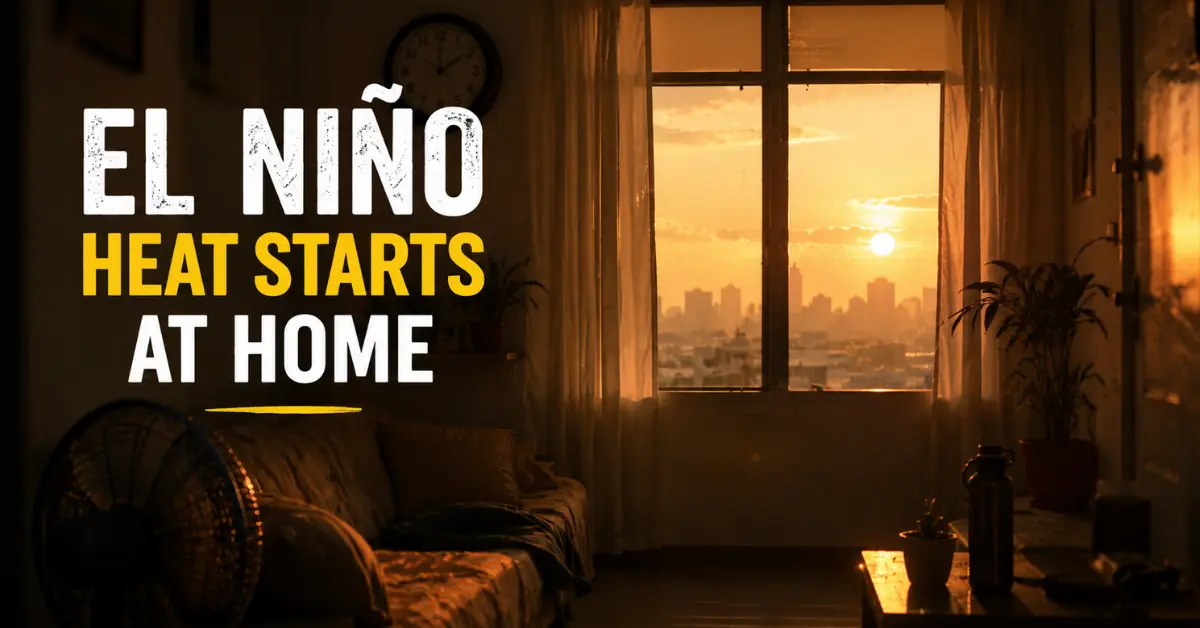

El Niño can increase the chance of hotter conditions across many regions but families may not first notice the change through an official temperature record. They may notice it when bedrooms remain warm after midnight, walls continue releasing heat after sunset and fans no longer provide the same level of comfort.
The first household problem often begins when the home absorbs more heat during the day than it can release at night. Concrete roofs, west-facing walls, closed rooms, weak airflow, high humidity and nearby buildings can keep indoor temperatures uncomfortable long after the outdoor air starts cooling.
This pattern matters because the body needs cooler night-time conditions to recover from daytime heat. When a room stays hot through the night, people may sleep poorly, sweat more, drink less water than they need and begin the next day without fully recovering.
How El Niño Can Add Pressure to an Already Hot Season
El Niño begins when parts of the tropical Pacific Ocean become warmer than usual. That warming can alter large weather patterns and increase the chance of higher temperatures in different parts of the world.
It does not make every city equally hot and it does not control each day’s weather. Local rainfall, cloud cover, wind, humidity, soil moisture and urban development still decide how severe the heat feels in a particular place.
However, El Niño can create a warmer seasonal background. When that wider warming combines with dry spells, weak winds, limited cloud cover, and dense construction, homes can collect more heat over several days.
The risk becomes more noticeable when hot afternoons continue without cooler nights. A single hot day may cause discomfort, but several hot days and warm nights can turn indoor heat into a continuing health concern.
Also Read: El Niño 2026 and India’s Monsoon Outlook
Why Some Homes Stay Hot Long After Sunset
A home does not cool immediately when the sun goes down. The roof, walls, floor, furniture, and surrounding concrete absorb heat during the day and release it gradually.
A bare concrete roof can remain hot for hours after direct sunlight ends. In top-floor rooms, that stored heat passes through the ceiling and raises the indoor temperature during the evening.
West-facing walls often create a similar problem. They receive strong sunlight during the late afternoon, which means bedrooms on that side of the house may feel hottest around dinner time or even later.
Metal roofs can heat quickly and transfer strong radiant heat into the room below. Without a ceiling layer, insulation, shade, or a ventilated gap, the room may remain difficult to cool even when windows stay open.
The surrounding neighbourhood also affects indoor heat. Roads, boundary walls, neighbouring buildings, terraces, and paved areas collect solar heat and release it slowly during the night. Areas with fewer trees and tightly packed buildings usually lose heat more slowly.
Warm Nights Can Be Harder on the Body Than One Hot Afternoon
People often judge heat by the highest afternoon temperature, but the nighttime temperature also affects health and comfort.
During the day, the body works to release excess heat through sweating and increased blood flow near the skin. At night, cooler conditions normally allow the body to recover.
When bedrooms remain hot, the body must continue working to control its temperature. Sleep becomes lighter and more disturbed, and people may wake repeatedly because of sweating, thirst, or discomfort.
After several warm nights, even healthy adults may feel tired, irritable, or unable to concentrate. Older adults, infants, pregnant women, and people with heart, kidney, respiratory, or metabolic conditions may face greater difficulty.
The indoor temperature may remain high even when the weather app shows that outdoor conditions have improved. Walls and roofs can continue releasing stored heat, especially in rooms with weak ventilation.
Also Read: Dengue Fever Food and Drink Guide for Recovery
Humidity Can Make Moderate Heat Feel Much Worse
Temperature alone does not show how hard the body must work to stay cool. Humidity and airflow also matter.
Sweat cools the body when it evaporates from the skin. In humid air, sweat evaporates more slowly, so the body loses heat less efficiently.
This explains why a humid room can feel exhausting even when the measured temperature does not appear extreme. People may sweat heavily without feeling much cooler.
Poor ventilation makes the problem worse. Warm, moist air remains trapped inside the room, and the body continues producing sweat without receiving enough relief.
A fan can improve air movement and support evaporation, but it does not remove heat from the room. During very hot and humid conditions, a fan may reduce discomfort without solving the main problem.
Which Homes Face the Highest Indoor Heat Risk?
Indoor heat depends on building design, materials, position, and daily use. Two homes on the same street can feel very different during the same hot spell.
Top-floor homes
Top-floor rooms receive heat directly from the roof. If the roof has no reflective coating, shade, or insulation, the ceiling can continue warming the room through the evening.
Homes with metal roofing
Metal sheets respond quickly to direct sunlight. They may make rooms extremely hot during the day, especially when builders leave no insulated ceiling or air gap below the roof.
West-facing bedrooms
West-facing windows and walls receive strong afternoon sun. These rooms often become uncomfortable just when families return home, prepare dinner, or try to rest.
Small rooms with one opening
A single window may allow some air inside, but it may not create enough movement to carry hot air out. Cross-ventilation works better when air can enter from one side and leave from another.
Homes surrounded by concrete
Concrete lanes, terraces, neighbouring walls, and paved courtyards store heat. Closely built homes may also block natural wind.
Rooms near kitchens and appliances
Cooking, refrigerators, televisions, computers, lights, and charging devices release heat. In a small closed home, these sources can noticeably increase evening discomfort.
Also Read: Dengue Platelet Count Warning Signs Families Should Know
Keeping Every Window Open Can Sometimes Make the Room Hotter
Many families keep windows fully open throughout the day because they expect constant airflow to cool the house. This helps when the outdoor air feels cooler than the indoor air and moves through the home effectively.
During the hottest afternoon hours, however, open windows may allow hotter outdoor air to enter. Direct sunlight through uncovered glass can add even more heat.
Homes often cool more effectively when families block direct sunlight during peak hours and open windows wider after the outdoor air becomes cooler. The timing will vary by location, season, humidity, and wind.
Cross-ventilation matters more than simply opening one window. Air needs a path through the home, not only an entry point.
Families can observe which windows receive the strongest sun and which side of the home receives cooler evening air. Small changes in timing can reduce the amount of heat that enters and help stored heat escape faster.
Curtains Work Best Before the Room Becomes Hot
Curtains can reduce direct sunlight, but families often close them only after the room already feels uncomfortable.
By that time, sunlight may have heated the glass, window frame, floor, wall, and furniture. These surfaces then continue releasing heat indoors.
Closing curtains or blinds before direct sunlight reaches the room works better. Light-coloured, thick curtains usually reduce heat gain more effectively than thin decorative fabric.
External shade can provide greater protection because it stops sunlight before it reaches the glass. A balcony shade, bamboo screen, awning, or safely installed shade cloth can protect windows and walls during the strongest afternoon sun.
Any external covering should allow airflow and should not create a safety risk during strong winds or heavy rain.
Roof Heat Needs a Roof-Level Solution
Fans and coolers treat the discomfort after heat has entered the room. Roof treatment reduces the amount of heat entering in the first place.
A reflective roof coating can lower solar heat absorption. A clean, light-coloured roof surface generally absorbs less heat than a dark surface.
Insulation can slow heat transfer from the roof into the ceiling below. A ventilated secondary roof or properly designed shade structure can also reduce direct solar exposure.
Families should check waterproofing before applying any coating or roof layer. A damaged roof needs repair before heat treatment, especially in areas that receive heavy monsoon rain.
Pouring water on a hot roof may provide short-term cooling, but it uses large amounts of water and does not create a lasting solution. Repeated wetting can also reveal or worsen cracks when the roof already has maintenance problems.
Air Coolers Do Not Work the Same Way in Every Climate
Evaporative air coolers perform best in hot, dry weather. They cool air by passing it over water, which works well when the air can absorb more moisture.
In humid weather, evaporation slows. A cooler may add moisture to the room without reducing the temperature enough to provide real comfort.
Ventilation also affects cooler performance. The room needs an outlet so warm, humid air can leave while cooler air enters.
Families in dry inland areas may benefit more from evaporative coolers than families in humid coastal or monsoon regions. In humid conditions, shade, airflow, roof treatment, and moisture control often provide more reliable relief.
Air conditioners remove heat and some moisture, but very low thermostat settings can increase electricity use sharply. A moderate setting combined with a fan often creates better airflow without forcing the appliance to work continuously.
Cooking Can Keep the Home Hot Through the Evening
Kitchens add both heat and moisture to the home. Gas flames, pressure cookers, hot utensils, steam, and ovens can quickly raise the temperature in a small space.
Cooking during the hottest part of the afternoon can add to the heat already entering through the roof and walls. The warmth may then spread into nearby bedrooms and living areas.
Preparing heat-intensive meals earlier in the morning or after the strongest heat has passed can reduce the indoor load. Using an exhaust fan or creating a safe airflow path can help remove hot air and steam.
Families can also reduce unnecessary heat by switching off unused lights, televisions, computers, and other appliances. Each device may release a limited amount of heat, but several devices in a closed room can make the space noticeably warmer.
Rooftop Water Tanks Can Hold More Heat Than Expected
Exposed water tanks absorb solar heat throughout the day. Dark tanks often heat faster because their surfaces absorb more sunlight.
Warm stored water may remain uncomfortable well into the evening. Pipes that run across an exposed roof can also heat water before it reaches the tap.
A properly designed shade above the tank can reduce direct sunlight. Insulation or a suitable reflective outer layer can also limit heat gain.
Families should keep the tank hygienic, secure, and accessible for cleaning. Any shade structure must remain stable during storms and should not damage the roof.
The Coolest Room May Change During the Day
The room that feels comfortable in the morning may become the hottest room by late afternoon.
East-facing rooms usually receive stronger morning sun, while west-facing rooms often become hotter later. Ground-floor rooms may stay cooler than top-floor bedrooms, especially after sunset.
Families can compare rooms at different times instead of using the same bedroom automatically. A simple indoor thermometer can help identify which room heats fastest and which one cools first.
During severe heat, temporarily sleeping in a cooler room may provide more relief than adding another fan to a room that stores large amounts of heat.
Children, older adults, and people with health conditions should use the coolest available room whenever possible.
Indoor Heat Can Affect Hydration Without People Realising It
People do not always connect indoor heat with dehydration. They may believe they need extra fluids only after outdoor work or direct sun exposure.
A person can lose considerable fluid while sitting, cooking, sleeping, or working in a hot room. Continuous sweating may occur without becoming immediately obvious.
Families should keep drinking water easily available and encourage regular intake, particularly for children and older adults. People who follow fluid restrictions because of heart or kidney conditions should follow medical advice rather than increasing fluids without guidance.
Dark urine, dry mouth, headache, weakness, dizziness, unusual tiredness, and reduced urination can indicate dehydration. These signs deserve attention before they become severe.
Early Signs That Heat Is Affecting Someone at Home
Headache, intense thirst, heavy sweating, weakness, muscle cramps, dizziness, nausea, and unusual tiredness can appear when the body struggles with heat.
The person should stop physical activity, move to a cooler place, loosen unnecessary clothing, and drink water if they remain alert and can swallow safely.
A damp cloth, cool shower, or gentle cooling of the skin can help reduce discomfort. Families should not use extremely cold water suddenly on someone who feels faint or confused.
Confusion, fainting, seizures, severe breathing difficulty, very high body temperature, or an inability to drink requires urgent medical care. Families should not wait for every symptom to appear when a child, older adult, pregnant woman, or person with a chronic illness begins deteriorating.
Home Cooling Routine During Hot Weather
Families can reduce indoor heat more effectively by managing the home throughout the day instead of reacting only at night.
In the morning, they can allow cooler air to pass through the rooms before outdoor temperatures rise. They can close or shade sun-facing windows before direct sunlight reaches them.
During the hottest hours, they can limit unnecessary cooking, reduce appliance use, and keep the strongest sunlight away from windows and walls.
After sunset, they can open suitable windows and doors when the outdoor air becomes cooler and safe airflow becomes available. Fans can then help move stored heat out rather than only circulating warm air inside.
Before sleeping, families can check which room has cooled most, keep water nearby, and pay closer attention to children, older adults, and anyone already feeling unwell.
El Niño may raise the chance of a hotter seasonal pattern, but the condition of the home determines how much of that heat stays around the family. Roof exposure, wall direction, airflow, humidity, cooking habits, and nighttime cooling can turn the same outdoor temperature into very different indoor experiences.
Frequently Asked Questions
Which rooms become hottest during summer?
Top-floor rooms, west-facing bedrooms, rooms below exposed concrete or metal roofs, and spaces with poor cross-ventilation often collect the most heat. Rooms beside kitchens or heat-producing appliances may also stay warmer.
Can El Niño affect sleep inside the home?
El Niño-linked warmth can increase the chance of hotter nights. Bedrooms that remain warm can disturb sleep, increase sweating, and prevent the body from recovering properly from daytime heat.
Why does humidity make indoor heat feel worse?
High humidity slows the evaporation of sweat. Since sweat cools the body when it evaporates, humid air makes it harder for the body to release heat efficiently.
Does a white or reflective roof help reduce indoor heat?
A reflective roof surface can absorb less solar energy than a dark surface. Proper roof coatings, insulation, or safe overhead shading can reduce the amount of heat transferred into top-floor rooms.

1 thought on “How to Reduce Indoor Heat During El Niño Conditions”