
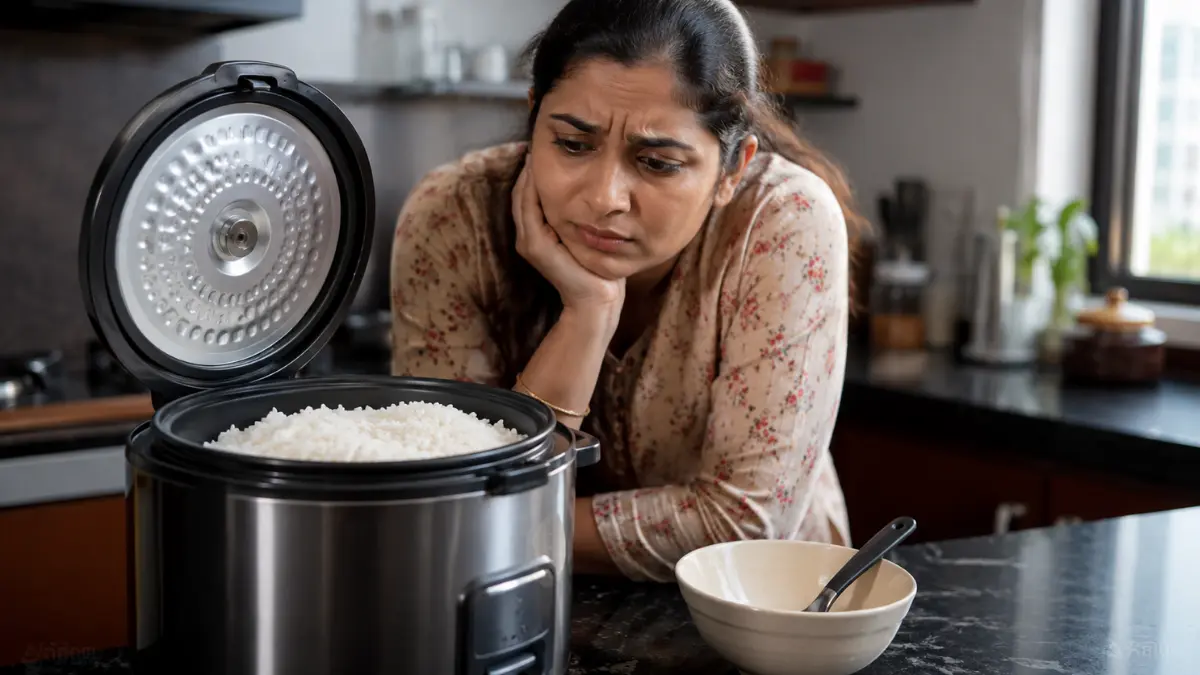

No, you should not eat cooked rice that remained overnight in a switched-off rice cooker or pressure cooker at room temperature. Throw it away even when it looks normal, smells fresh and does not show visible spoilage.
Cooked rice can contain spores of Bacillus cereus, a bacterium that may survive the cooking process. When rice remains warm or at room temperature for several hours, the spores can grow and produce toxins. Reheating the rice may kill some bacteria, but it may not remove toxins that have already formed.
The answer changes slightly when an electric rice cooker continuously runs on a reliable keep-warm setting. A properly working appliance may hold rice above the temperature at which bacteria multiply quickly. However, you should not assume every cooker maintains a safe temperature throughout the night. The appliance’s condition, power interruptions, settings and manufacturer’s instructions all matter.
During the monsoon, warm kitchens, frequent power cuts and delayed refrigeration can make poor rice-storage habits more risky.
What Should You Do With Rice Left in the Cooker Overnight?
Your safest action depends on how you stored the rice.
| How the rice remained overnight | Safest action |
|---|---|
| In a switched-off rice cooker | Throw it away |
| In a pressure cooker at room temperature | Throw it away |
| In a covered pot on the kitchen counter | Throw it away |
| In an unplugged cooker after a power cut | Throw it away when you cannot confirm the time |
| On an active keep-warm setting all night | Check the appliance instructions and temperature before considering it |
| Cooled promptly and kept in the refrigerator | Reheat thoroughly and eat within the recommended storage period |
Do not taste a spoonful to test questionable rice. A small amount can still contain enough bacteria or toxin to cause illness.
Why Cooked Rice Can Become Unsafe
People often judge leftover food by its smell, colour or texture. That method does not reliably identify unsafe rice.
Uncooked rice may naturally carry Bacillus cereus spores. Cooking kills many microorganisms, but these spores can survive ordinary cooking temperatures. They do not always cause a problem when you eat rice immediately.
The risk increases when cooked rice spends several hours at temperatures that allow the surviving spores to grow. The bacteria may then produce toxins linked to food poisoning.
This means that the main problem does not come from reheating rice itself. The problem starts when someone stores the rice incorrectly before reheating it.
Rice can therefore look soft, white and normal while still carrying a food-safety risk. Smelling the rice cannot prove that it remains safe.
Does Monsoon Humidity Make Leftover Rice Spoil Faster?
Humidity alone does not make bacteria suddenly appear inside cooked rice. Time and temperature play the larger roles.
However, monsoon conditions can indirectly increase the risk. Many Indian kitchens remain warm and poorly ventilated during rainy weather. People may also leave rice in the cooker because they expect cooler weather to protect it. In reality, a closed cooker can retain warmth for several hours and create conditions in which bacteria grow.
Other monsoon-related problems may also affect food safety:
- Electricity cuts can interrupt a rice cooker’s keep-warm function.
- A heavily loaded refrigerator may not cool food quickly.
- Condensation can increase moisture around food-storage areas.
- Families may cook larger quantities when rain limits shopping or travel.
- People may keep cooked food outside longer because the weather does not feel extremely hot.
You should therefore use the same strict food-safety rules during rainy weather that you would follow during summer.
Is Rice Safe When the Cooker Stays on “Keep Warm”?
An electric rice cooker’s keep-warm mode does not work like leaving rice in a switched-off pot. A reliable appliance should keep the rice hot enough to limit bacterial growth.
Food-safety guidance commonly treats temperatures above 60°C as suitable for hot holding. The Singapore Food Agency identifies approximately 5°C to 60°C as the range in which bacteria can grow more readily.
However, several practical uncertainties remain in a home kitchen.
The cooker may not maintain an even temperature
Older, damaged or inexpensive cookers may cycle at lower temperatures. Rice near the sides or top may cool more than rice near the heating plate.
A power cut may interrupt hot holding
A cooker may switch off during the night without anyone noticing. The rice can then remain warm for several hours before the power returns. Restarting the appliance does not reverse bacterial growth or remove toxins that may have formed.
The appliance manual may limit keep-warm time
Manufacturers design different cookers for different holding periods. Some models support extended hot holding, while others mainly keep rice warm for a meal. Follow the limit stated in the manual rather than assuming that every cooker can hold rice safely overnight.
Food quality also declines
Even when the cooker maintains a suitable temperature, rice can dry out, become yellow, develop an unpleasant smell or form a hard layer. Safe temperature control does not guarantee good taste and texture.
For ordinary household use, cooking a fresh batch or refrigerating leftover rice promptly offers a more dependable option than leaving it on keep-warm all night.
What If the Cooker Was Switched Off but Remained Closed?
A closed lid does not make room-temperature rice safe.
The lid may protect the rice from dust, insects and direct handling, but it does not control bacterial growth already occurring inside the food. A sealed cooker can retain warmth for a long time, allowing the rice to pass slowly through temperatures favourable to bacterial multiplication.
Do not rely on any of these common assumptions:
- “The lid stayed closed, so germs could not enter.”
- “The weather was cool because it rained.”
- “The rice still smells normal.”
- “I will fry it at a high temperature.”
- “I have eaten overnight rice before without becoming ill.”
Past experience cannot confirm that the next batch will remain safe. Bacterial contamination and toxin production can vary from one batch to another.
Can Frying or Reheating Overnight Rice Make It Safe?
Reheating cannot reliably rescue rice that spent the entire night at room temperature.
High heat can kill many living bacteria, but certain toxins produced during improper storage can resist normal reheating. Turning questionable rice into fried rice, pulao, lemon rice or another hot dish does not remove that concern.
Reheating works as a safety step only when you cooled and refrigerated the rice correctly in the first place.
When reheating properly stored rice:
- Remove only the portion you plan to eat.
- Add a small amount of water when needed to prevent drying.
- Heat the rice until it becomes steaming hot throughout.
- Stir it during microwave heating to remove cold spots.
- Eat it immediately.
- Avoid cooling and reheating the same portion repeatedly.
How Quickly Should You Refrigerate Cooked Rice?
Serve rice soon after cooking. When you plan to save the leftovers, start cooling them promptly rather than leaving the whole cooker on the counter.
A practical household target involves refrigerating rice within one hour. Do not leave it outside for more than two hours, especially in a warm kitchen.
Use this method:
Remove rice from the hot cooker
A large cooker holds heat for a long time. Transfer the leftover rice into clean, shallow containers so it cools more evenly.
Divide a large quantity
Do not place a deep container filled with several kilograms of rice into the refrigerator. Divide it into smaller portions. Smaller portions lose heat faster and make later reheating easier.
Release excess steam briefly
Allow the strongest steam to escape for a short period, but do not wait for the rice to become completely cold on the counter.
Cover and refrigerate promptly
Use clean containers with fitted lids. Store the rice away from raw meat, fish or unwashed produce that could contaminate it.
For a simple and cautious household rule, use refrigerated rice within 24 hours. Food authorities apply different storage limits in different countries, but shorter storage reduces uncertainty, particularly for children, older adults, pregnant people and anyone with reduced immunity. UK guidance recommends cooling rice within one hour, eating refrigerated rice within 24 hours and reheating it no more than once.
Can You Put Warm Rice Directly Into the Refrigerator?
You do not need to leave rice outside until it becomes completely cold.
Placing one enormous, steaming vessel in the refrigerator can warm nearby food and slow cooling at the centre of the rice. Instead, divide the rice into shallow containers and refrigerate it promptly after the heaviest steam reduces.
Do not pack hot rice tightly into a deep container. A shallow layer allows heat to escape more quickly.
Keep your refrigerator at or below 5°C and avoid overloading it. Cold air needs space to circulate around containers.
When Should You Throw Leftover Rice Away?
Discard the rice when:
- it remained at room temperature overnight;
- you cannot remember when someone cooked or refrigerated it;
- a power cut interrupted the keep-warm setting for an unknown period;
- someone repeatedly warmed and cooled it;
- the refrigerator did not remain properly cold;
- the rice has a sour smell, slimy texture, unusual colour or visible mould;
- raw food or dirty utensils may have contaminated it;
- it belongs to a takeaway meal whose earlier storage history remains unknown.
Visible spoilage always gives you a reason to throw rice away. The absence of visible spoilage does not prove safety.
What Symptoms Can Unsafe Rice Cause?
Food poisoning linked to improperly stored rice may cause:
- nausea;
- vomiting;
- watery diarrhoea;
- stomach cramps;
- abdominal discomfort.
Symptoms may begin within several hours, although the timing can vary. Many otherwise healthy adults recover with rest and adequate fluids. Children, older adults, pregnant people and those with weakened immune systems may face a greater risk of dehydration or complications.
Seek medical help when someone develops persistent vomiting, severe weakness, confusion, bloody diarrhoea, intense abdominal pain, very little urination or other signs of dehydration. Parents should seek timely advice when an infant or young child develops repeated vomiting or diarrhoea.
Do not use antibiotics or anti-diarrhoeal medicine without appropriate medical guidance.
A Safer Routine for Everyday Rice Storage
A consistent routine makes rice storage easier and reduces food waste.
Cook only the amount your household can reasonably finish when possible. Serve the meal soon after cooking. Transfer any remaining rice into shallow containers within one hour and place them in the refrigerator.
Label the container when several leftovers share the refrigerator. Use the rice within 24 hours, reheat only the required amount and make sure it becomes steaming hot throughout.
Most importantly, discard rice that spent the night in a switched-off cooker. The cost of preparing another batch remains small compared with the discomfort and possible health consequences of food poisoning.
Frequently Asked Questions
Is rice safe when the cooker remains on keep-warm overnight?
It may remain safe when a properly functioning cooker continuously holds the rice above a safe hot-holding temperature. However, power cuts, faulty heating and low temperatures can create uncertainty. Follow the cooker manufacturer’s instructions and avoid eating the rice when you cannot confirm continuous hot holding.
Can reheating rice kill all the bacteria?
Thorough reheating can kill many living bacteria, but it may not destroy every toxin produced during improper storage. Reheating cannot reliably make rice safe after it remained at room temperature overnight.
Can children eat refrigerated leftover rice?
Children can eat rice that adults cooled promptly, refrigerated correctly and reheated until steaming hot. Do not serve them rice that remained at room temperature overnight or has an uncertain storage history.

1 thought on “Is It Safe to Eat Rice Left in a Cooker Overnight?”