
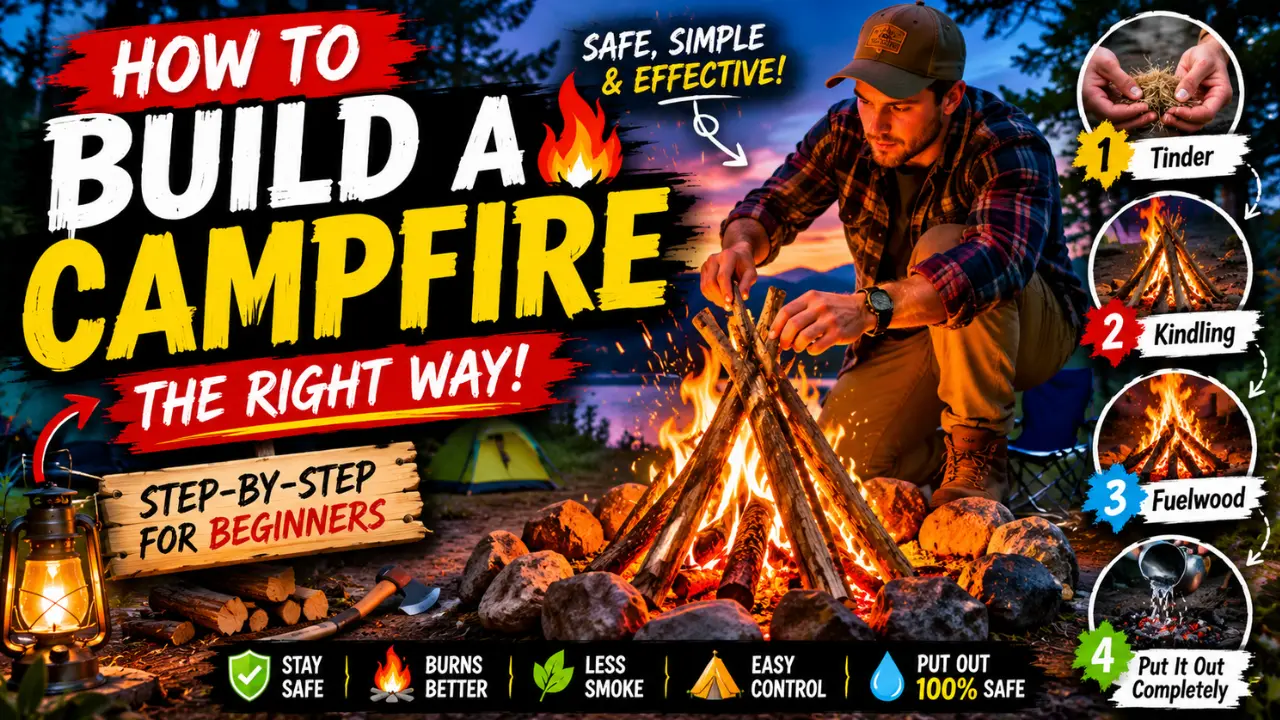

Building a campfire is not just about lighting wood. A good campfire is built in the right place, with dry materials, enough airflow, steady control and a clear plan for putting it out completely.
The safest campfire is small, legal, watched, and easy to extinguish. Before you light anything, make sure campfires are allowed where you are, the weather is safe and you have water, sand or soil ready nearby.
Quick Steps to Build a Campfire
To build a campfire, follow this order:
- Choose a Safe Spot: Use an existing fire ring or clear open ground where fires are allowed.
- Clear the Area: Remove dry leaves, grass, twigs, paper and anything that can catch fire.
- Keep Water Nearby: Have water, sand or soil ready before lighting the fire.
- Gather Three Materials: Use tinder, kindling and fuelwood.
- Build the Fire Lay: Place tinder in the centre and arrange kindling loosely around it.
- Light the Tinder: Let the small flame catch before adding larger sticks.
- Feed Slowly: Add wood gradually so the fire grows without being smothered.
- Watch the Fire: Never leave it unattended.
- Put It Out Fully: Drown, stir and cool the ashes before leaving.
These steps matter because a campfire must grow in stages. If you rush with big logs, wet wood or poor airflow, the fire will smoke, weaken or go out.
Also Read: Hot and Humid Weather Tiredness Explained
Check Fire Rules and Weather First
Before building a campfire, check whether fires are allowed in that area. Some campsites, forests, parks and dry regions ban campfires during certain seasons or windy conditions.
Do not build a fire during strong wind, extreme dryness or fire restrictions. Even a small flame can become dangerous when sparks travel into dry grass, leaves or brush.
If a campsite has a fire ring or fire pit, use it. Do not create a new fire spot unless it is allowed and safe.
Choose a Safe Fire Spot
A safe campfire spot should be open, flat and clear. The fire should not be close to tents, vehicles, dry bushes, low branches, wooden tables, roots or anything that can burn.
Clear the ground around the fire area before lighting. Remove dry leaves, grass, loose twigs, paper, plastic and other debris.
Look above the fire too. Branches, tarps, ropes or hanging fabric can catch heat and sparks. A campfire needs open space above it as well as around it.
Keep Water or Sand Ready
Do not light a campfire until you have something ready to put it out. Keep a bucket of water, sand or soil nearby before the fire starts.
This is not only for the end of the night. If wind changes, sparks jump or a piece of burning wood rolls out, you need to act immediately.
A campfire is safe only when you can control it at every stage.
Also Read: How to Stop Sticky Skin in Humid Weather
Gather Tinder, Kindling and Fuelwood
A campfire needs three types of material. Each one has a different purpose.
- Tinder: Catches the first flame quickly.
- Kindling: Helps the small flame grow stronger.
- Fuelwood: Keeps the fire burning once it is established.
Good tinder includes dry grass, dry leaves, bark shavings, wood curls, dry pine needles, cotton balls, paper or a safe fire starter.
Kindling should be small, dry sticks or thin split wood. Fuelwood should be larger dry wood but not so large that it smothers the fire.
Dry material is important. Wet wood burns poorly, creates smoke and makes the fire harder to start.
Remember the Fire Triangle
A campfire needs three things: heat, fuel and oxygen. If one is missing, the fire struggles.
Tinder gives the first heat. Wood gives fuel. Open space between the sticks gives oxygen.
Most beginner campfires fail because the wood is wet, the sticks are too large or the materials are packed too tightly. Fire needs room to breathe.
Also Read: How to Stop Clothes From Smelling Bad in Summer
Build a Teepee Fire for Beginners
The teepee fire lay is one of the easiest methods for beginners because it helps heat rise and gives the flame good airflow.
Place your tinder in the centre of the fire ring. Lean small kindling sticks around it like a cone, leaving a small opening so you can light the tinder.
Do not pack the sticks too tightly. Leave small gaps between them so air can move through the fire.
Once the kindling catches, add slightly larger sticks around the outside. Let the fire grow slowly before adding fuelwood.
Use a Log Cabin Fire for a Steadier Burn
A log cabin fire lay is useful when you want a steadier, longer-lasting fire.
Place tinder in the centre. Put two small sticks parallel to each other on either side of the tinder. Add two more sticks across them to form a square. Continue stacking small wood in alternating layers.
Leave space between the sticks. The fire should have structure but it should not be sealed like a box.
Light the tinder in the middle and let the fire grow outward.
Light the Tinder Carefully
Light the tinder from a spot where air can reach it. If there is a light breeze, light from the side where the breeze can help push the flame into the kindling.
Do not use gasoline, kerosene, alcohol or other dangerous liquids to start a campfire. They can flare up suddenly and cause serious burns.
A safe fire should grow gradually. If the tinder and kindling are dry, you do not need risky fuel.
Add Wood Slowly
Once the tinder catches and the kindling begins to burn, add small sticks first. Let each layer catch before adding more wood.
Do not throw large logs onto a weak flame. Big wood can block oxygen and crush the small fire before it becomes strong.
The fire should grow from small to medium, not from tiny flame to large logs in one step. A campfire that grows slowly is easier to control and produces less smoke.
Keep Airflow Open
If the campfire is smoking heavily, something is wrong. The wood may be damp, the fire may be packed too tightly or the flame may not have enough oxygen.
Use a stick to gently create space between pieces of wood. Do not scatter burning pieces outside the fire ring.
A clean campfire usually has dry wood, steady airflow and a manageable flame. It should not be a huge smoky pile.
Also Read: How to Reduce Humidity in a Room in Summer Without a Dehumidifier
If the Fire Will Not Start
If the fire will not catch, do not add bigger logs. That usually makes the problem worse.
Check the basics first. Is the tinder dry? Is the kindling small enough? Is there enough airflow? Are the sticks packed too tightly?
Add more dry tinder and smaller kindling. Create space for air. Light the tinder again and wait until the flame is strong before adding larger wood.
If the fire keeps smoking, the wood may be wet. Use drier material or split the wood into smaller pieces if possible.
Keep the Fire Small and Watched
A campfire does not need to be large to be useful. A smaller fire gives warmth, light and cooking heat while staying easier to control.
Never leave a campfire unattended. Wind can change, sparks can travel or burning wood can shift.
Keep children and pets away from the fire area. Do not let anyone run near the fire, throw things into it or stand too close with loose clothing.
Cook Over Coals, Not Tall Flames
If you plan to cook, wait until the fire settles. Tall flames can burn food on the outside while leaving the inside undercooked.
A bed of hot coals gives steadier heat. Let the fire burn down until the flames are lower and the coals are glowing.
Use proper camp cookware and heat-resistant tools. Do not place plastic, thin containers or unsafe materials near the fire.
Do Not Burn Trash
A campfire is not a garbage bin. Do not burn plastic, foil, cans, food packaging, treated wood, painted wood or anything that can release harmful smoke or leave dangerous waste.
Burn only safe, dry wood and approved fire-starting material.
Pack out trash or place it in proper campsite bins. A clean campsite is part of responsible fire use.
Also Read: Benefits of Light-Coloured Clothes in Summer
Put the Campfire Out Completely
Putting out a campfire properly is just as important as building it. A fire that looks finished can still have hot embers under the ash.
Let the wood burn down if possible. Then pour water slowly over the fire. Stir the ashes and coals with a stick or shovel so hidden heat is exposed.
Pour more water and stir again. Keep doing this until there is no steam, no smoke and no heat coming from the ashes.
Do not touch the ashes directly. Hold your hand above the fire area from a safe distance. If you still feel heat, the fire is not out.
A campfire is only safe to leave when the ashes and coals are completely cold.
Common Campfire Mistakes
Most campfire problems come from rushing. Beginners often use wood that is too big, skip tinder, use damp sticks or block airflow by stacking wood too tightly.
Another mistake is building the fire too large. A large fire may look impressive but it is harder to control, harder to cook over and harder to put out.
The most dangerous mistake is leaving before the fire is fully out. If the ashes are still warm, the fire is not finished.
