
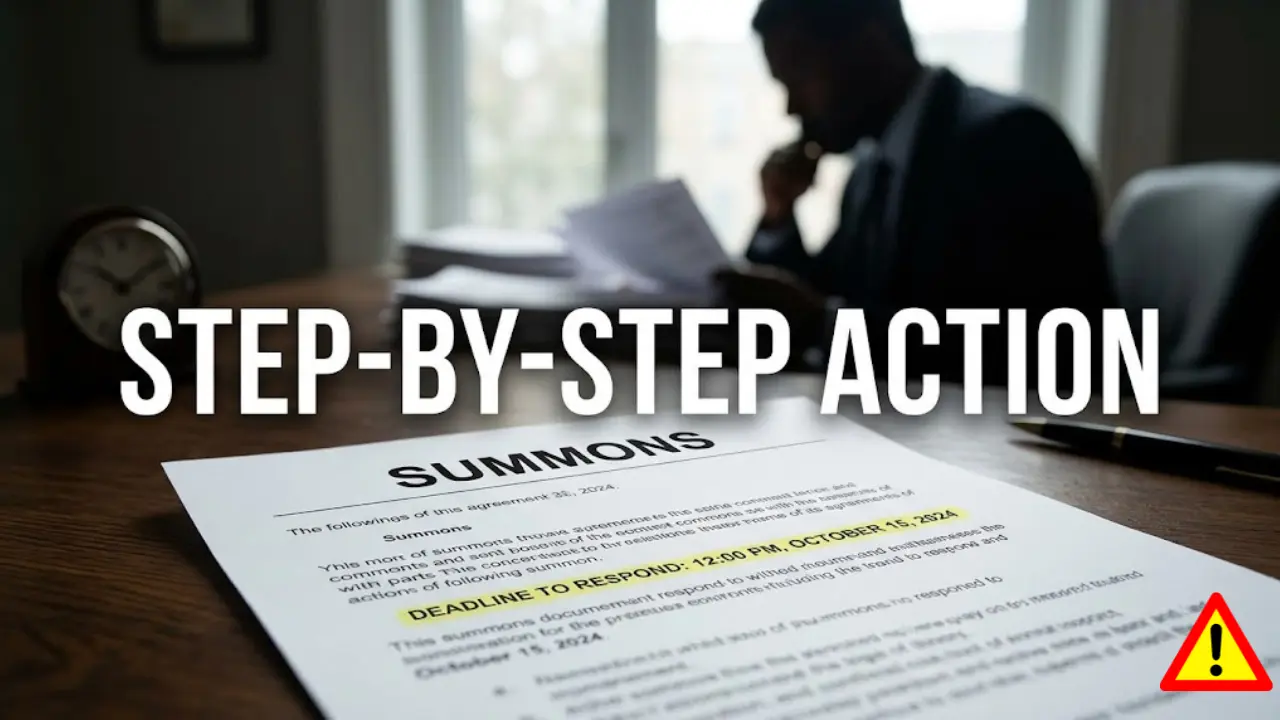

A court summons has a way of immediately shifting attention. It introduces legal urgency, unfamiliar terminology, and the possibility of consequences that are not always clearly understood. For many individuals, the confusion begins not with the case itself, but with the document. Is it a lawsuit? A warning? A final decision? Or simply a notification?
The truth is far more structured. A court summons is the beginning—not the end—of a legal process. It exists to ensure fairness by giving notice and an opportunity to respond. However, what makes it critical is not just its purpose, but the strict timeline and procedural expectations that follow.
Summons Meaning in the U.S. Legal System
A court summons is a formal legal notice issued by a court that informs an individual or entity that they are required to respond to a legal action. It is not a judgment, penalty or accusation of guilt—it is a procedural requirement that ensures all parties are notified before legal proceedings continue.
The Role of a Summons in Due Process
The U.S. legal system is built on the principle of due process, meaning no person can be judged without being informed and given an opportunity to respond. A summons serves this exact function.
It ensures that:
- The defendant is aware of the lawsuit
- There is a fair opportunity to respond
- The court process remains transparent
Without proper service of a summons, a case may not proceed legally, as the requirement of notice has not been fulfilled.
Summons Should Never Be Misinterpreted
One of the most common misunderstandings is treating a summons as optional or assuming it can be handled later. This is incorrect. While the summons itself is not a punishment, failing to respond to it can lead to serious consequences.
It is not the document that creates risk—it is the inaction that follows.
Elements Included in a Court Summons
Every court summons follows a structured format designed to communicate essential legal information clearly. Understanding these elements helps in interpreting the document correctly and preparing an appropriate response.
Case Identification and Court Details
A summons will always include the name of the court, jurisdiction and case number. These details are critical for verifying authenticity and tracking the case.
They allow individuals to:
- Confirm the case exists
- Identify the correct court
- Access official records if needed
Missing or incorrect court information is often a red flag.
Parties Involved and Nature of the Claim
The document will clearly state who is filing the case and who is being summoned. It will also outline the nature of the claim, whether it is related to debt, contract disputes, property issues or other legal matters.
This section provides the context needed to understand:
- What the case is about
- Why the summons was issued
- What response may be required
Types of Cases
Court summons are not limited to one type of legal issue. They are used across multiple areas of law, each with different implications and response strategies.
Civil Cases and Financial Disputes
The majority of summons are issued in civil cases. These include disputes involving money, contracts, property or personal injury claims.
Civil summons typically require a written response and may lead to court hearings if the matter is not resolved early.
These cases often involve:
- Debt collection
- Contract disagreements
- Property disputes
The financial implications make timely and accurate responses essential.
Family Law and Specialized Legal Matters
Summons are also common in family law cases such as divorce, child custody or support issues. These cases involve both legal and emotional complexity, requiring careful handling.
Additionally, summons may appear in administrative or limited legal proceedings, depending on jurisdiction.
Understanding the type of case helps determine:
- The level of urgency
- Whether legal help is needed
- The appropriate response strategy
Service of Process
A summons is not valid simply because it exists—it must be delivered properly according to legal rules. This process is known as “service of process,” and it ensures that the recipient has officially received notice.
Methods of Serving a Summons
Courts allow specific methods for delivering a summons, including:
- Personal delivery by a process server
- Delivery by a sheriff or authorized official
- Certified or registered mail (in certain cases)
Each method is designed to create a record that the document was delivered correctly.
Why Proper Service Is Legally Important
Proper service is not just a formality—it is a legal requirement. If a summons is not served correctly, it may affect the validity of the case.
Courts require proof of service to confirm:
- The correct person received the document
- Delivery followed legal procedures
- The case can proceed fairly
This is also why verifying how the summons was received is important, especially in identifying potential scams.
Timeline That Begins
Once a summons is served, a legal clock begins. This timeline is one of the most critical aspects of the process, as it determines how much time is available to respond.
Understand Response Deadlines
Each summons includes a deadline by which a response must be filed. This deadline varies depending on jurisdiction and case type but is strictly enforced.
Missing the deadline can result in:
- Loss of the right to respond
- Default judgment
- Legal consequences
Tracking this date should be the first actionable step after receiving a summons.
Early Action Creates Advantage
Responding early provides time to:
- Understand the case fully
- Gather necessary documents
- Seek legal advice if needed
Waiting until the last moment increases the risk of errors and weakens the ability to respond effectively.
Step-by-Step Process
Once a court summons is served, the legal process shifts from notification to action. This stage is where most mistakes happen—not because the process is complex, but because it is misunderstood or rushed. A structured, step-by-step approach ensures clarity and prevents errors that could impact the case outcome.
Step 1: Read the Summons
The first and most critical step is to read the summons carefully from beginning to end. Many individuals skim the document or focus only on the headline, missing key details that define the case.
A complete reading helps identify:
- The exact nature of the claim
- The court handling the case
- Instructions for response
Every word in a legal document has purpose. Misreading or skipping sections can lead to incorrect assumptions and improper responses.
Step 2: Identify the Case Type
Understanding the type of case determines the urgency, complexity and strategy required. A civil debt case differs significantly from a family law matter or a legal dispute involving contracts.
This step helps clarify:
- What is at stake (financial, legal, or personal)
- The level of preparation required
- Whether legal assistance may be needed
Without this clarity, responses may lack direction or fail to address the actual issue.
Immediate Actions
After understanding the document, the next phase involves immediate, practical steps. These actions are time-sensitive and directly influence how smoothly the process unfolds.
Step 3: Note and Track the Response Deadline
Every summons includes a deadline for responding. This is not flexible and must be treated as a fixed legal requirement.
Mark the deadline clearly and consider:
- Setting reminders
- Allowing time for preparation
- Avoiding last-minute submissions
Missing this deadline is one of the most serious mistakes, often leading to automatic legal consequences.
Step 4: Verify the Authenticity
Before taking further action, confirm that the summons is legitimate. Legal scams have become increasingly sophisticated and responding to a fake notice can lead to financial or identity risks.
Verification should include:
- Checking official court records
- Confirming the case number
- Contacting the court using verified sources
This step ensures that all actions are based on a real legal requirement.
Organize Informations
Preparation is the difference between a strong response and a weak one. Organizing information early reduces confusion and ensures accuracy.
Step 5: Gather Relevant Documents
Collect all documents related to the case. This may include contracts, emails, receipts, agreements or any communication relevant to the dispute.
Well-organized evidence helps:
- Support claims or defenses
- Clarify facts
- Strengthen credibility
The quality of preparation directly affects the effectiveness of the response.
Step 6: Create a Clear Record of Events
In addition to documents, it is important to outline a clear timeline of events related to the case. This helps in understanding the situation and presenting it logically.
A structured record ensures:
- Consistency in responses
- Accurate representation of facts
- Better communication if legal help is sought
Decide If Legal Help Is Necessary
Not every summons requires a lawyer, but the decision should be made carefully based on the specifics of the case.
Step 7: Evaluate Complexity
Consider factors such as:
- Financial value involved
- Legal complexity
- Potential long-term consequences
Higher-risk cases often benefit from professional legal guidance, while simpler cases may be handled independently with proper care.
Step 8: Available Legal Support Options
Legal assistance does not always mean high cost. Options may include:
- Legal aid organizations
- Free consultations
- Limited-scope legal advice
Even brief guidance can help avoid major mistakes and clarify the best course of action.
Prepare Proper Response
The response is the core of the legal process. It must be accurate, complete and aligned with court requirements.
Step 9: Draft a Clear
The response should address every claim mentioned in the summons. Ignoring any part can weaken the defence or create gaps in the case.
A proper answer includes:
- Admission or denial of claims
- Relevant explanations
- Any defenses or counterpoints
Clarity and completeness are essential to ensure the court understands the position fully.
Step 10: Follow Court-Specific Formatting
Each court has its own procedures for submitting responses. These rules must be followed precisely to ensure acceptance.
This includes:
- Using correct forms
- Including required signatures
- Filing through approved methods
Failure to follow these rules can result in rejection or delays.
Filing the Response On Time
Submitting the response is not just about completion—it is about correct execution.
Step 11: Submit Before the Deadline
Timely filing is critical. Even a well-prepared response loses value if it is submitted late.
Submitting early allows:
- Time to correct errors
- Confirmation of receipt
- Reduced stress and risk
Deadlines are strictly enforced and exceptions are rare.
Step 12: Keep Proof of Filing
After submission, maintain records of:
- Filed documents
- Submission confirmation
- Any communication with the court
Proper documentation ensures accountability and helps track progress throughout the case.
Structured Process Matters
Handling a court summons is not about reacting quickly—it is about responding correctly. A structured approach ensures that no step is missed and reduces the likelihood of errors.
Avoid Mistakes Through Clear Steps
Each step in the process builds on the previous one. Skipping steps or rushing through them can create gaps that affect the entire case.
Following a clear sequence ensures:
- Accuracy
- Compliance
- Confidence in actions taken
Build Control in a Legal Situation
Legal situations often feel overwhelming due to uncertainty. A step-by-step approach replaces uncertainty with clarity, making the process manageable and controlled.
What Happens Mishandled
A court summons is not dangerous on its own—but ignoring it or handling it incorrectly creates serious legal consequences. Many individuals assume that delaying action or avoiding the situation will reduce risk. In reality, the opposite is true. The legal system continues to move forward whether a response is filed or not.
Immediate Legal Impact
If no proper response is submitted within the required timeframe, the court may issue a default judgment. This means the opposing party automatically wins the case without the need for further argument or evidence.
The consequences of default judgment can include:
- Financial liability or debt enforcement
- Court-ordered payments or penalties
- Loss of legal rights to defend the claim
Once issued, reversing a default judgment can be difficult and may require additional legal steps.
Procedural Errors That Weaken Your Case
Even when a response is filed, mistakes such as incomplete answers, incorrect formatting or missing information can weaken the case significantly.
Common procedural issues include:
- Filing the wrong documents
- Missing required sections
- Submitting inaccurate information
These errors can lead to delays, rejection of filings or reduced credibility in court.
Long-Term Consequences
The effects of mishandling a summons are not always immediate. In many cases, the long-term consequences are more significant than the initial mistake.
Legal Consequences Over Time
Default judgments and unresolved cases can lead to ongoing financial obligations. These may include wage garnishment, asset liens or continued legal enforcement.
Such outcomes can affect:
- Financial stability
- Credit standing
- Future legal opportunities
What begins as a missed response can evolve into a prolonged legal burden.
Limited Options for Correction
While some mistakes can be corrected, the ability to do so depends on timing and court approval. Late corrections often require formal requests and valid justification.
Courts may consider:
- Reason for the error
- Time taken to correct it
- Impact on the case
The longer the delay, the more difficult it becomes to fix the issue effectively.
When Legal Help Essential
Although some summons cases can be handled independently, certain situations require professional legal guidance to avoid serious risks.
Complex Legal Situations
Cases involving large financial claims, complex legal arguments or unclear procedures often require expert handling. Attempting to manage such cases without legal knowledge increases the likelihood of errors.
Legal professionals provide:
- Strategic case evaluation
- Accurate document preparation
- Representation in court if needed
Preventing Escalation
Seeking legal advice early in the process can prevent small mistakes from becoming major problems. Even a brief consultation can clarify responsibilities and improve decision-making.
Early guidance helps:
- Avoid procedural errors
- Strengthen responses
- Reduce long-term risk
Final Action Framework
After understanding the full process, a simplified action framework helps ensure that every critical step is followed without confusion.
Complete Step Flow to Follow
- Read the summons carefully and fully
- Identify the case type and requirements
- Verify authenticity through official sources
- Note and track response deadlines
- Gather all relevant documents and evidence
- Decide whether legal help is needed
- Prepare a complete and accurate response
- File correctly before the deadline
- Keep records of all submissions
This structured flow ensures that no essential step is overlooked.
Framework Prevents Costly Mistakes
Legal processes are not inherently complicated—they become difficult when handled without structure. Following a clear framework reduces uncertainty and ensures compliance with legal requirements.
A disciplined approach leads to:
- Better accuracy
- Stronger case positioning
- Reduced risk of penalties
Long-Term Legal Awareness
Handling a court summons correctly is not just about resolving one case—it is about developing awareness that applies to future legal situations. Understanding how legal notices work builds confidence and reduces fear.
Recognise Patterns in Legal Processes
Most legal procedures follow predictable patterns: notification, response, review and resolution. Recognizing this structure helps in approaching future situations with clarity rather than confusion.
Develope a Proactive Legal Mindset
A proactive approach focuses on verification, preparation and timely action. This mindset ensures that legal situations are handled strategically rather than reactively.
Over time, this leads to:
- Better decision-making
- Reduced stress in legal matters
- Stronger overall awareness
Legal Understanding and Exploration
Expanding knowledge beyond a single topic creates a stronger foundation for handling legal situations effectively. These related explorations provide deeper insight and practical awareness:
- 6 Common Mistakes After Receiving a Court Summon
- What to Do First After Receiving a Court Summons
- Court Summons vs Subpoena: Key Differences Explained
- What Happens If You Fill a Court Summons Wrong?
- Do You Need a Lawyer for a Court Summons Case?
- 6 Warning Signs of a Fake Court Summons in the USA
Frequently Asked Questions
What is a court summons in the United States and why is it issued?
A court summons is an official legal notice informing an individual about a filed case and requiring a response or appearance to ensure due process and fair legal proceedings.
What should be done immediately after receiving a court summons?
The summons should be read carefully, deadlines noted, authenticity verified and a proper response prepared to avoid legal consequences or procedural mistakes.
How long is given to respond to a court summons in the U.S.?
Response deadlines vary by state and case type, but typically range from 20 to 30 days and failing to respond within this period can lead to default judgment.
What happens if a court summons is ignored completely?
Ignoring a summons can result in a default judgment where the court rules in favour of the opposing party without considering any defence or explanation.
Is hiring a lawyer necessary after receiving a summons?
Legal help is not always required, but it is strongly recommended for complex cases, high financial risk or situations involving unclear legal procedures.

3 thoughts on “Step-by-Step Court Summons Guide Most People Need in The USA”