
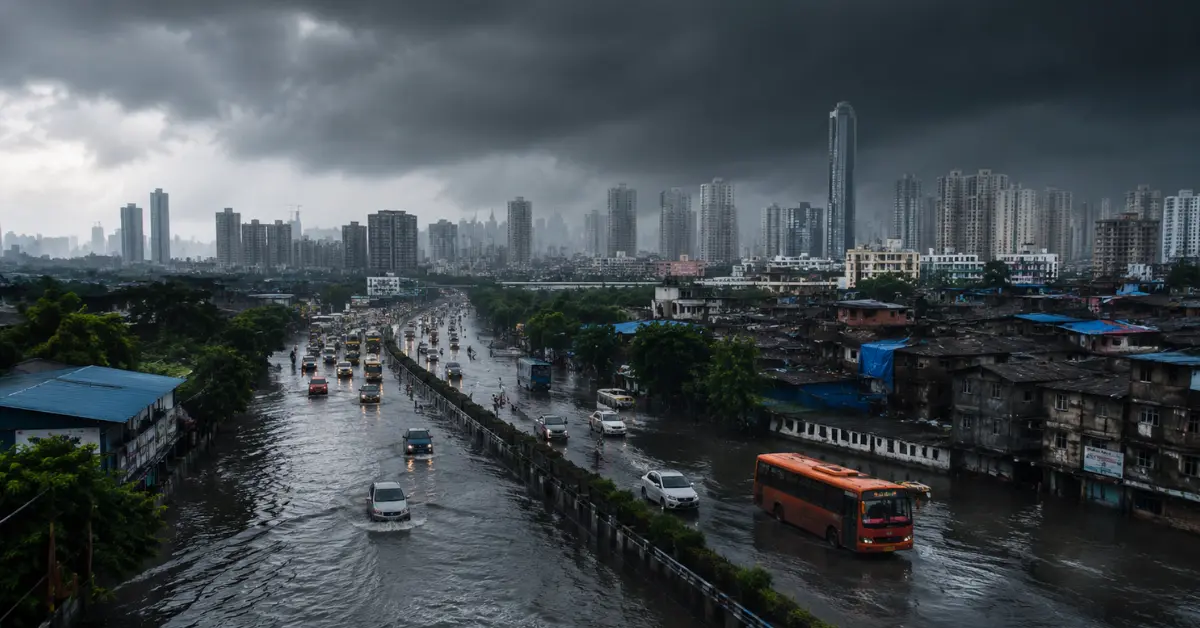

El Niño can increase the chance of a weaker or less reliable monsoon across parts of India, but it does not remove the risk of serious urban flooding. A city can receive below-normal rainfall across the entire season and still face flooded roads, overflowing drains and water entering homes during one short period of intense rain.
The reason is simple: seasonal rainfall measures how much rain falls over several months, while urban flooding depends heavily on how quickly the rain falls in one place.
Regular moderate rain gives drains, lakes, soil and natural channels more time to receive and move water. A sudden downpour sends a large volume of water into the same system within minutes. When the rain arrives faster than the city can drain it, water begins collecting on roads and in low-lying areas.
This is why the phrase “weak monsoon” can create the wrong impression. It may describe the total rainfall across a wide region but it cannot show whether one city may receive a dangerous burst of rain.
How a Weak Monsoon Can Still Produce Heavy Rain
El Niño affects broad weather patterns but it does not control every rain event over India. It can weaken the wider monsoon circulation, increase dry gaps and make rainfall less consistent across the season.
That does not mean rain stops completely.
Local thunderstorms, Bay of Bengal low-pressure systems, moisture from the Arabian Sea and changes in the monsoon trough can still produce intense rainfall over a city or district. These active spells may last only a few hours or days, while the rest of the month remains much drier than normal.
A city may therefore experience:
- A long period with little useful rain
- One sudden spell of very heavy rainfall
- Severe local waterlogging
- A monthly or seasonal rainfall deficit despite the flooding
These conditions do not contradict each other. They show how uneven monsoon rainfall can become.
An El Niño-influenced monsoon may reduce the number of steady rainy days without preventing a few powerful downpours. For cities, those short bursts can create more immediate damage than several days of lighter rain.
Also Read: How El Niño Could Affect Grocery Prices in India
Total Rainfall and Rainfall Intensity Measure Different Risks
People often look at the seasonal rainfall percentage and assume that a lower total means a lower flood risk. That assumption ignores rainfall intensity.
A city that receives 100 millimetres of rain across several days may manage the water without major disruption. The same amount falling within a few hours can overwhelm drains, flood underpasses, and stop traffic.
Urban drainage systems have a limited carrying capacity. When rainfall crosses that limit, water collects faster than the drains can remove it.
The problem becomes worse when rain concentrates over one part of the city. A weather station in another area may record a much lower total, while one neighbourhood faces severe flooding.
This local variation explains why citywide rainfall data may not match what residents see outside their homes. One part of the city may remain usable while another part receives water deep enough to enter shops and houses.
Why Indian Cities Flood Faster Than Rural Land
Natural land slows rainwater. Soil, vegetation, ponds, open fields and wetlands absorb or hold part of the water before it reaches rivers and drains.
Cities replace many of these surfaces with rooftops, roads, parking areas, pavements and concrete courtyards. Water cannot soak easily into these sealed surfaces, so it begins moving across the ground almost immediately.
The more concrete a neighbourhood has, the more water reaches the drainage system at the same time.
A city may continue using drains designed when the area had fewer buildings, fewer roads and more open land. As construction expands, the same rainfall produces more surface runoff than it did earlier.
This change can turn an ordinary drainage problem into repeated urban flooding. The rain may not have increased dramatically but the city’s ability to absorb it has declined.
Also Read: How to Reduce Indoor Heat During El Niño Conditions
Blocked Drains Turn Heavy Rain Into Street Flooding
Drainage capacity depends on more than the original size of the drain. Plastic waste, leaves, mud, sand, construction material, and silt can reduce the space available for water.
A partly blocked drain may still handle light rain. During a sudden heavy spell, the same blockage can cause water to rise quickly.
The first major rain after a long dry period can create additional pressure. Waste and loose material often collect near road edges and drain openings during dry weather. The first strong flow carries that material into the drainage network.
Water then begins collecting near the blockage even when other parts of the system remain open.
This is one reason a city can flood quickly after weeks of dry weather. The lack of recent rain does not always leave the drainage system prepared. It may allow more waste and sediment to build up before the next intense spell.
Lost Wetlands and Water Channels Increase the Pressure
Lakes, ponds, wetlands, streams and low-lying open areas form part of a city’s natural drainage system. They hold excess rainwater and release it more slowly.
When construction fills, narrows or disconnects these areas, the water loses part of its natural path.
A road, wall, building, or raised plot can redirect runoff toward older neighbourhoods. A lake may remain visible but fail to protect the area if waste, encroachment, or blocked outlets prevent water from entering and leaving properly.
Cities often depend heavily on underground drains after losing natural storage areas. Drains can move water, but they cannot always replace the capacity of lakes, wetlands, and floodplains during an intense downpour.
When rainfall arrives quickly, every lost storage area sends more water toward roads and residential zones.
Also Read: El Niño 2026 and India’s Monsoon Outlook
Long Dry Gaps Can Make Sudden Flooding Worse
A long dry period may create the impression that the ground will absorb the next rain easily. In many urban areas, the opposite can happen.
Compacted soil absorbs water slowly. Construction activity, vehicle movement, paved surroundings, and loss of vegetation reduce the ground’s ability to take in rainfall.
Dry, hardened surfaces may allow the first rush of water to flow directly toward roads and drains. The rain also carries dust, rubbish, and loose soil into drainage openings.
This combination can create rapid runoff and fresh blockages at the same time.
El Niño can increase concern about longer dry gaps during the monsoon. When intense rain follows one of these gaps, the city may face sudden waterlogging even though the wider season remains dry.
Why Some Neighbourhoods Flood While Others Stay Clear
Urban flooding depends strongly on local elevation and water movement.
A low-lying road can collect runoff from several higher streets. A railway line, raised highway, boundary wall, or new building can block an older water path. A narrow culvert can create flooding on one side while the other side remains relatively dry.
New construction can also change the direction of runoff. When one property raises its ground level, water may move toward nearby homes that sit lower.
These local changes explain why two neighbourhoods receiving the same rain may experience very different outcomes.
Residents often notice the first signs during moderate rainfall. Water may begin collecting near a gate, road junction, drain opening, basement ramp, or underpass. If the water drains more slowly than before, the area may face a greater problem during a stronger downpour.
Also Read: Dengue Platelet Count Warning Signs Families Should Know
A City Can Flood Without a River Overflowing
People often connect flooding with a river crossing its danger level, but urban waterlogging can begin without any major river flood.
River flooding usually develops when rain falls across a large catchment and raises water levels over time. Urban flooding can develop within minutes when rain falls faster than local drains can carry it away.
A city may therefore face deep road water, flooded basements, and overflowing drains while nearby rivers remain within their banks.
This distinction matters because residents may wait for a river warning even when the immediate risk comes from local rainfall and drainage failure.
Short-duration rain forecasts often provide more useful information for city flooding than the overall monsoon status.
Also Read: 9 Harmful Effects of Soil Erosion on Land and Water
Which Weather Signs Matter Most During an El Niño Monsoon
Residents should not judge the city’s flood risk only by the seasonal rainfall deficit or the number of dry days.
The more useful signs include forecasts for very heavy rain over a short period, strong thunderstorm development, low-pressure systems, and a sudden return of active monsoon conditions after a long dry gap.
Local conditions also matter. Water taking longer to leave after moderate rain, recurring drain overflow, new construction near old water paths, and repeated flooding at the same junction can reveal where the city may struggle during a stronger event.
A below-normal monsoon can still contain a few dangerous rainfall episodes. El Niño may make the season less consistent, but that unevenness can leave cities facing both water shortages and sudden flooding within the same year.
For urban areas, the real question is not only how much rain the monsoon delivers. It is whether the city can handle the rain when a large amount falls within a very short time.
Frequently Asked Questions
Why does less seasonal rain not mean a lower flood risk?
Seasonal rainfall totals combine all rain received over several months. They do not show whether most of that rain fell gradually or arrived during a few intense downpours that overwhelmed city drainage.
Does El Niño directly cause urban flooding?
El Niño influences the wider monsoon pattern, but it does not directly cause every flood. Local thunderstorms, low-pressure systems, moisture movement, drainage capacity, construction and city geography determine whether a particular rainfall event causes flooding.
Can El Niño bring dry weather and flooding in the same season?
Yes. El Niño can contribute to long dry gaps and uneven rainfall. A city may remain dry for weeks and then receive a large amount of rain within a few hours, causing sudden waterlogging.
