
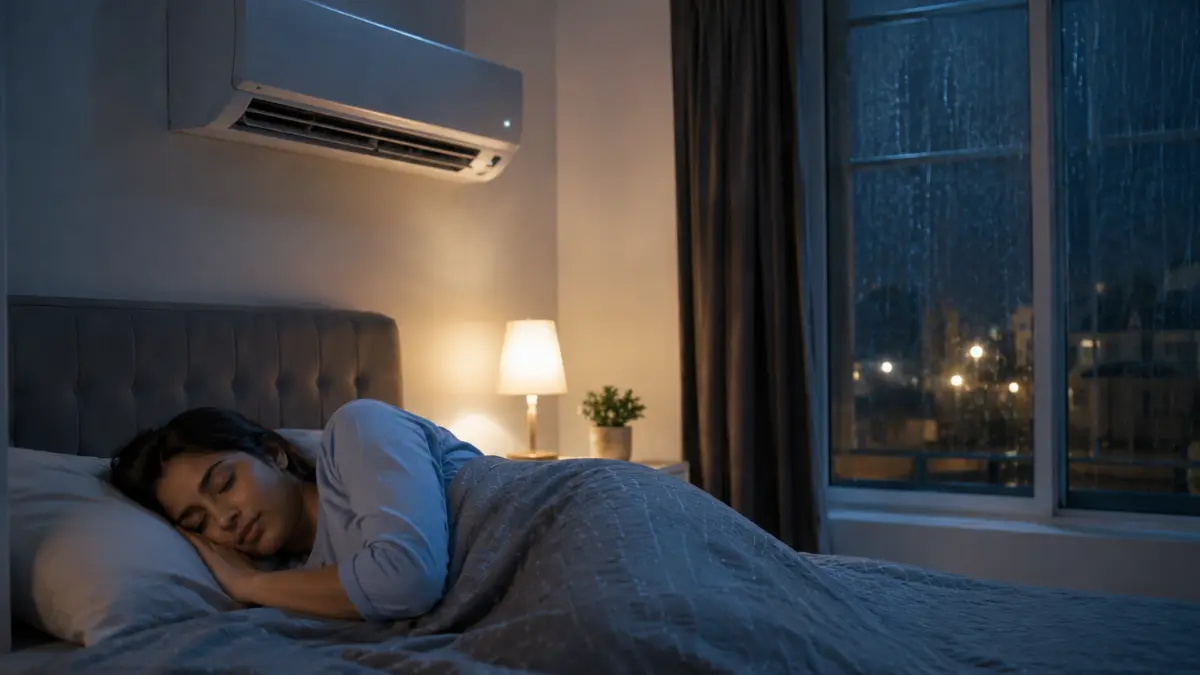

You can generally leave AC dry mode on throughout a humid monsoon night when the room feels damp or sticky but does not feel extremely hot. Dry mode removes excess moisture from indoor air while providing mild cooling, which can make a bedroom more comfortable without the strong cooling that cool mode produces.
However, dry mode does not suit every night or every air conditioner. Some AC models control humidity automatically, while others run the compressor and fan according to a fixed internal cycle. You should consider the room temperature, humidity level, AC manual and your comfort before using it until morning.
When Dry Mode Works Well Throughout the Night
Dry mode works best when humidity causes most of the discomfort.
During monsoon weather, a room may feel sticky even when the temperature does not seem very high. Moist air slows sweat evaporation, so your body may feel warmer than the thermometer suggests. Dry mode lowers indoor humidity by passing room air over the AC’s cold evaporator coil, where moisture condenses and drains away.
Manufacturers commonly recommend dry mode for humid or rainy conditions. Samsung describes it as a dehumidification setting that adjusts air volume and compressor operation according to indoor temperature and humidity. Mitsubishi Electric also recommends using dry mode during high-humidity monsoon conditions.
Leaving dry mode on overnight may make sense when:
- The room feels humid, damp or sticky.
- The temperature feels warm but not intensely hot.
- Bedsheets feel slightly damp because of the weather.
- Cool mode makes the room uncomfortably cold.
- You want mild cooling with moisture control.
- Your AC manages dry mode automatically.
In these conditions, reducing moisture may improve comfort more effectively than aggressively lowering the temperature.
Also Read: Is It Safe to Eat Rice Left in a Cooker Overnight?
Dry Mode May Not Cool a Hot Bedroom Enough
Dry mode primarily targets humidity. It does not provide the same predictable temperature reduction as cool mode.
Many air conditioners lower the fan speed and cycle the compressor during dry operation. This allows moisture to condense on the cooling coil but it may also limit the amount of cold air entering the room. Samsung notes that some units may operate above or below the selected temperature while trying to maximise dehumidification.
Dry mode may therefore feel insufficient when:
- The bedroom remains hot after sunset.
- Several people sleep in a small room.
- The room receives heat from the roof or walls.
- Electronics continue producing heat.
- The outdoor temperature remains high all night.
- The room has poor insulation or frequent air leakage.
When heat causes the main discomfort, use cool mode first. You can lower the room temperature to a comfortable level and then switch to dry mode if humidity continues to make the air feel sticky.
Some people may find that sleep mode or cool mode at a moderate temperature provides more consistent overnight comfort than dry mode.
Will Running Dry Mode All Night Damage the AC?
Normal overnight use should not damage a properly installed and maintained air conditioner that includes a dry-mode function. Manufacturers design modern room air conditioners to operate for extended periods and to cycle the compressor when necessary.
Dry mode does not usually force the compressor to run continuously at maximum output. Depending on the model, the AC may adjust compressor power, fan speed or operating intervals as room conditions change.
However, the operating pattern varies between brands and models. Some advanced units use humidity sensors and regulate moisture throughout the operating period. Panasonic, for example, describes models that continuously monitor relative humidity and adjust dry-mode operation to keep the room below a specified humidity level. Basic models may not offer that level of control.
Check the product manual when you do not know how your model handles dry mode. The manual may explain whether the temperature remains adjustable, whether the fan speed changes automatically and whether the mode includes a timer.
Overnight operation can reveal an existing AC problem but it does not necessarily cause that problem. Stop using the unit and arrange an inspection when you notice:
- Water dripping from the indoor unit
- A blocked or overflowing drain pipe
- Burning or electrical smells
- Unusual rattling, grinding or buzzing
- Frequent automatic shutdowns
- Weak airflow despite a clean filter
- Heavy condensation around the vents or walls
A blocked drain line matters particularly during humid weather because dry mode can remove a considerable amount of moisture from the room.
Also Read: How to Treat an Itchy Fungal Rash During Monsoon
Can Dry Mode Make the Room Too Dry?
Dry mode can lower humidity more than necessary in some rooms, especially when the weather changes during the night or when the AC lacks an accurate humidity sensor.
Most homes do not need extremely dry indoor air. The US Environmental Protection Agency recommends keeping indoor relative humidity below 60 percent and ideally between 30 and 50 percent. A small digital hygrometer can show whether the room remains excessively humid or becomes too dry.
You may need to shorten dry-mode operation when you wake with:
- A noticeably dry throat
- Dry nasal passages
- Uncomfortable skin dryness
- A room that feels colder than expected
- Humidity readings that remain unusually low
These signs do not prove that dry mode caused the discomfort but they provide a reason to adjust the timer, airflow or operating mode.
A model with automatic humidity control may reduce this risk. Panasonic describes certain dry-mode systems that repeatedly measure humidity and adjust operation instead of removing moisture at an unchanged rate throughout the night.
Does Dry Mode Save Electricity Overnight?
Dry mode may consume less electricity than aggressive cooling under the right conditions, but you should not treat it as a guaranteed power-saving mode.
When the room already has a moderate temperature, dry mode may run the compressor less intensively than cool mode. Removing moisture can also make the room feel more comfortable without requiring a very low temperature setting.
However, electricity use depends on:
- The AC model and star rating
- Inverter or fixed-speed technology
- Indoor and outdoor temperature
- Humidity level
- Room size
- Air leakage
- Compressor operating time
- The temperature selected in cool mode
- How long each mode runs
A dry-mode cycle that operates for eight hours may consume more electricity than cool mode used briefly before an automatic shutdown. A modern inverter AC may also control cool mode efficiently enough that the difference remains small.
Manufacturer claims about dry-mode savings often apply to particular models under controlled test conditions. They do not establish a universal saving for every AC or bedroom. Use your electricity meter, smart plug or AC energy display when you want to compare actual consumption.
Also Read: El Niño and Sudden City Flooding in India
How to Use Dry Mode Comfortably at Night
A few practical steps can make overnight dry-mode use more comfortable and efficient.
Cool the Room First When Necessary
When the bedroom feels both hot and humid, run cool mode for a short period before sleeping. Once the temperature becomes comfortable, switch to dry mode to manage the remaining humidity.
Do not expect dry mode to remove a large amount of stored heat from walls, ceilings and furniture as quickly as cool mode.
Keep Doors and Windows Closed
Open doors and windows continuously allow humid outdoor air to enter the room. The AC must keep removing newly introduced moisture, which can increase operating time and reduce comfort.
Close obvious gaps where practical, but do not block any ventilation system that the building or appliance requires.
Clean the Air Filter
Dust restricts airflow and reduces the AC’s ability to cool and remove moisture. Check the manufacturer’s cleaning instructions and clean reusable filters at the recommended interval.
Monsoon conditions can also encourage musty smells when filters, drain trays or internal components remain dirty.
Avoid Direct Airflow on the Bed
Point the louvres away from your face and upper body. Even mild air can feel uncomfortable when it blows directly on one area for several hours.
Daikin recommends avoiding direct airflow during overnight AC use and describes a room temperature of approximately 26°C to 28°C with humidity around 50 percent as comfortable for many hot nights. Actual comfort still varies between individuals and rooms.
Use a Timer Before Choosing All-Night Operation
Start with a two- or three-hour timer when you have not previously used dry mode overnight. Check how the room feels when you wake.
You can extend the operating period if humidity returns quickly or the room becomes uncomfortable after the AC stops.
Check the Humidity Rather Than Guessing
A basic hygrometer can help you distinguish a humidity problem from a temperature problem.
When humidity remains above roughly 60 percent, moisture control may help. When humidity has already fallen to a comfortable range but the room still feels hot, cool mode may suit the conditions better. The EPA recommends keeping indoor humidity below 60 percent to limit excessive indoor moisture.
Dry Mode or Cool Mode or Sleep Mode
Choose the mode according to the main source of discomfort.
| Bedroom condition | More suitable option |
|---|---|
| Mild temperature but sticky, humid air | Dry mode |
| Hot and humid room | Cool mode first, then dry mode if needed |
| Hot room with moderate humidity | Cool mode |
| Comfortable room that needs gentle overnight temperature control | Sleep mode |
| Persistent dampness despite AC use | Inspect ventilation, leaks and drainage |
| Humidity remains high every day | Consider a dedicated dehumidifier |
Dry mode cannot solve moisture entering through roof leaks, damp walls, plumbing problems or frequent outdoor-air infiltration. Address the moisture source when the room remains damp despite regular AC use.
Should You Leave Dry Mode On Until Morning?
You can leave dry mode on until morning when humidity causes the discomfort, the room does not remain excessively hot and your AC operates normally. Use a timer initially, keep the filter and drain system clean and check the room’s humidity when possible.
Switch to cool mode when the bedroom remains hot. Reduce the operating time when the room becomes too cold or dry. Most importantly, follow the instructions for your particular AC because dry-mode behaviour differs across models.
Dry mode offers useful monsoon comfort, but the weather and the room—not the name of the setting—should determine whether you run it all night.
Frequently Asked Questions
Is AC dry mode safe for sleeping?
Dry mode is normally safe for sleeping when the air conditioner works correctly and receives regular maintenance. Keep the airflow away from your face and adjust the operating time if you wake with a dry throat, cold discomfort or nasal irritation.
Does AC dry mode save electricity overnight?
Dry mode may use less electricity than strong cooling when the room already has a moderate temperature. However, it does not guarantee lower consumption. Energy use depends on the AC model, compressor cycles, room size, outdoor weather and operating duration.
What temperature should I set in AC dry mode?
Some air conditioners control the temperature automatically in dry mode, while others allow limited adjustment. Check the user manual for your model. Avoid choosing an unnecessarily low setting when the main goal involves reducing humidity.
Does dry mode remove monsoon dampness from a room?
Dry mode can lower moisture suspended in the indoor air but it cannot repair damp walls, roof leaks, plumbing problems or water entering from outside. Persistent dampness requires you to identify and correct the underlying moisture source.

1 thought on “AC Dry Mode All Night During Monsoon Safety Guide”