
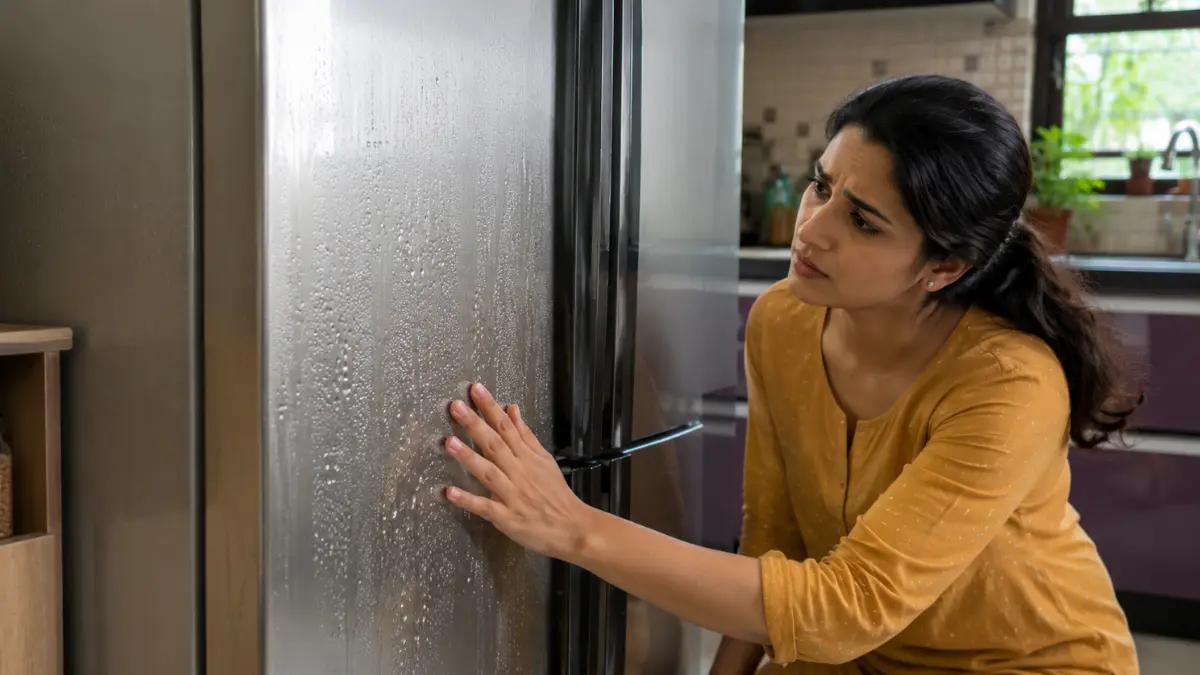

Water droplets on the outside of a refrigerator during monsoon usually form because humid room air touches the refrigerator’s cooler outer surface. The same process creates moisture on a cold bottle taken out of the fridge. A small amount of temporary condensation can therefore occur without indicating a serious appliance fault.
However, heavy sweating that continues for hours, repeatedly soaks the floor or concentrates around one section of the door may point to another issue. The refrigerator door may not close completely, the rubber gasket may have dirt or damage, the appliance may stand in an excessively damp location or a model-specific humidity-control setting may need adjustment.
The location, amount and persistence of the moisture can help you decide whether you only need to manage humidity or arrange an appliance inspection.
Also Read: AC Dry Mode All Night During Monsoon Safety Guide
Why Refrigerators Sweat More During Monsoon
Monsoon air contains more moisture than dry-season air. When this warm, humid air reaches a sufficiently cool surface, some of the water vapour changes into liquid droplets.
This often becomes more noticeable around a refrigerator because the appliance maintains a large temperature difference between its cooled interior and the surrounding kitchen. Moisture may appear on the door surface, around the rubber seal, near the divider between doors or along the cabinet’s outer panels.
High indoor humidity does not affect every refrigerator in the same way. The amount of condensation can vary according to:
- The refrigerator model and cabinet design
- The temperature and humidity inside the kitchen
- How often people open the refrigerator
- Whether the door closes tightly
- The condition of the rubber gasket
- The appliance’s distance from a window, sink or damp wall
- Whether the model uses an anti-condensation heater
- Whether an energy-saving setting disables that heater
Manufacturers commonly recognise high humidity as a cause of external refrigerator condensation. Samsung notes that moisture can appear on exterior surfaces during humid weather, while LG identifies high temperature, high humidity and poor door closure as common causes of moisture outside the cabinet.
Where the Moisture Appears Matters
Not all refrigerator moisture has the same cause. Check exactly where the droplets collect before assuming that the appliance leaks.
Moisture Across the Door or Side Panel
A light film of moisture across a broad outer surface usually points to humid room air meeting the cooler cabinet.
This type of sweating may increase after heavy rain, while cooking, or when the kitchen has poor ventilation. It may reduce when the weather becomes drier or when indoor humidity falls.
Wipe the surface dry and observe whether the moisture quickly returns. Occasional light condensation during very humid weather may remain within normal operating conditions.
Water Around the Door Gasket
Condensation around the rubber door seal deserves closer attention.
Cold air can escape when the door does not close tightly. That cold air meets warm, humid air around the gasket and creates water droplets. LG specifically identifies an incompletely closed door as a cause of condensation on the door gasket.
The door may remain slightly open because:
- A bottle, container or food package blocks it
- An overloaded shelf pushes items against the door
- A drawer does not sit correctly
- Dirt prevents the gasket from sealing
- The refrigerator stands unevenly
- The gasket has become loose, cracked or worn
Correcting the obstruction may stop the moisture without requiring a repair.
Moisture Between Two Refrigerator Doors
Some double-door and French-door models develop condensation around the centre divider or hinged seal between the doors.
Certain refrigerators use a small heater in this area to reduce moisture. On some models, an energy-saving setting reduces or switches off this heater. The exact operation varies by manufacturer, so check the owner’s manual before changing a setting.
Samsung and Whirlpool both explain that some energy-saving controls affect heaters designed to reduce exterior moisture around door seals or dividers.
Do not assume that every refrigerator has this feature. Follow only the instructions written for your exact model.
Water Under the Refrigerator
Water on the floor underneath or behind the refrigerator does not automatically count as exterior sweating.
A floor puddle may come from:
- A blocked defrost drain
- A damaged drain pan
- A loose water connection
- An ice-maker supply line
- Meltwater from inside the refrigerator
- Condensation dripping from an outer surface
Dry the floor and cabinet, then observe where the water first appears. Arrange professional service when you cannot identify the source or when the puddle repeatedly returns.
Also Read: Is It Safe to Eat Rice Left in a Cooker Overnight?
Normal Condensation Versus a Possible Problem
A small amount of exterior moisture may remain normal during intensely humid weather. Heavy, persistent or localised water requires more attention.
Condensation Is More Likely to Be Weather-Related When
- It appears mainly during rainy or highly humid days
- It forms as a light film rather than a flowing leak
- It affects a wide area of the outer cabinet
- The refrigerator continues cooling normally
- The doors close firmly
- The moisture reduces after you wipe it
- The problem improves when room humidity decreases
A Door or Gasket Problem Is More Likely When
- Water repeatedly forms around one edge of the door
- The door does not stay fully closed
- You can see dirt, deformation, gaps or cracks in the gasket
- Food containers prevent the door from closing
- Cold air escapes from a specific point
- Frost or excess moisture also develops inside
- The compressor appears to run more than usual
Professional Inspection May Be Necessary When
- Water continuously runs down the cabinet
- A large puddle repeatedly forms on the floor
- The refrigerator no longer cools properly
- The door has become misaligned
- The gasket has torn or separated
- You hear unusual mechanical or electrical noises
- Moisture reaches electrical controls, wiring, a plug or a socket
- Condensation continues even when room humidity becomes moderate
Do not open electrical panels or attempt internal repairs unless you have the proper training.
How to Reduce Refrigerator Sweating During Monsoon
You can perform several simple checks before arranging a repair.
Wipe the Cabinet and Gasket Dry
Use a clean, soft cloth to remove moisture from the outer surface and door seal. Leaving water around the gasket may encourage dirt, odour or mould to develop over time.
Drying the area also helps you identify where new moisture first appears.
Avoid abrasive pads, harsh chemicals or excessive water around electronic controls. Follow the manufacturer’s cleaning instructions for the appliance finish.
Check Whether the Door Closes Completely
Open the door and inspect shelves, drawers, bottles and food packages. Move anything that touches the door or prevents it from closing.
After cleaning the refrigerator, confirm that every shelf and drawer sits in its correct position. A misaligned drawer may extend far enough to keep the door slightly open.
Close the door gently and check whether it rests evenly against the cabinet.
Clean the Rubber Door Gasket
Food residue, grease and dust can prevent the gasket from making full contact with the refrigerator cabinet.
Clean the gasket using the method recommended in the owner’s manual. A soft cloth and mild cleaning solution usually suit many models, but product instructions can vary.
Inspect the folds of the gasket rather than cleaning only the visible front edge.
Inspect the Gasket for Damage
Look for cracks, torn sections, loose corners, hardened rubber or areas that no longer sit flat.
A damaged gasket may allow cold air to escape and humid air to reach the door area. Whirlpool, LG and Samsung all identify gasket sealing as an important condensation check.
Contact an authorised technician when the gasket requires replacement or the door needs alignment.
Reduce Unnecessary Door Opening
Every long or frequent door opening allows warm, humid air to interact with the refrigerator’s cooled surfaces.
Organise frequently used food so you can remove it quickly. Decide what you need before opening the door, and avoid leaving the door open while preparing food.
This step may not completely stop exterior condensation, but it can reduce moisture around the door area and help the refrigerator maintain a stable internal temperature.
Improve Kitchen Ventilation
Cooking, boiling water, drying clothes indoors and poor airflow can raise kitchen humidity.
Use available ventilation while cooking and allow moist air to leave the room. Keep the refrigerator away from direct steam where possible.
Do not push the appliance tightly against a wall unless the installation instructions allow it. Refrigerators need the clearances specified by the manufacturer for ventilation and heat release.
Check the Refrigerator’s Placement
A refrigerator near an open window, damp wall, balcony door or frequently wet floor may receive more humid air than one installed in a drier part of the kitchen.
Samsung India advises considering a less humid location when external condensation persists.
Before moving the appliance, check the installation requirements and ensure the new position provides a level floor, ventilation clearance and safe access to the power supply.
Review Humidity-Control or Energy-Saver Settings
Some refrigerator models include a humidity-control, moisture-control or energy-saving setting. On certain appliances, an energy-saving mode reduces power to a heater that helps prevent condensation around the door divider.
Do not change settings based on advice for another brand or model. Read the control-panel section of your refrigerator manual.
When the manual says that switching off Energy Saver activates an anti-condensation heater, you can follow that model-specific instruction during humid weather. Other refrigerators may operate differently.
Reduce Room Humidity When Necessary
When the kitchen remains extremely humid, reducing indoor moisture may help.
You can:
- Improve ventilation after cooking
- Use an exhaust fan when available
- Repair water seepage or plumbing leaks
- Avoid drying wet clothes near the refrigerator
- Keep rainwater away from nearby windows
- Use an appropriate dehumidification method for the room
A refrigerator cannot correct a wider dampness problem caused by leaking walls, roofs or pipes.
Also Read: How to Treat an Itchy Fungal Rash During Monsoon
What Not to Do When the Refrigerator Sweats
Avoid actions that can damage the appliance or create a safety risk.
Do not:
- Cover the refrigerator with plastic to block humidity
- Block its ventilation openings
- Pour water directly onto the cabinet or gasket
- Use a heater or hair dryer on the rubber seal
- Scrape the gasket with sharp tools
- Apply oil or unapproved chemicals to the seal
- Open electrical covers
- Ignore water near a plug or socket
- Assume every puddle comes from harmless condensation
A refrigerator cover that traps heat or blocks airflow may interfere with normal operation. Use decorative covers only when the manufacturer permits them and ventilation remains unobstructed.
When to Call a Refrigerator Technician
Arrange service when basic humidity and door checks do not solve the problem.
A technician may need to inspect:
- Door alignment
- Gasket condition
- Cabinet insulation
- Anti-condensation heaters
- Temperature sensors
- Drainage components
- Water connections
- Control settings
- Cooling performance
Take a clear photograph of the moisture before wiping it away. Note the time, weather conditions, refrigerator settings and exact location of the droplets. This information can help the technician understand whether the problem follows humidity, door use or appliance operation.
External refrigerator sweating during monsoon often comes from the combination of humid air and a cool cabinet. Light, temporary condensation may not indicate a fault. Persistent water around one door edge, a poor seal, cooling problems or repeated floor puddles require closer inspection.
Start by drying the surface, checking the door, cleaning the gasket and reviewing the model’s humidity-control instructions. Seek professional service when the moisture remains heavy, reaches electrical areas or appears alongside declining refrigerator performance.

2 thoughts on “Fridge Sweating Outside During Monsoon Safety Guide”